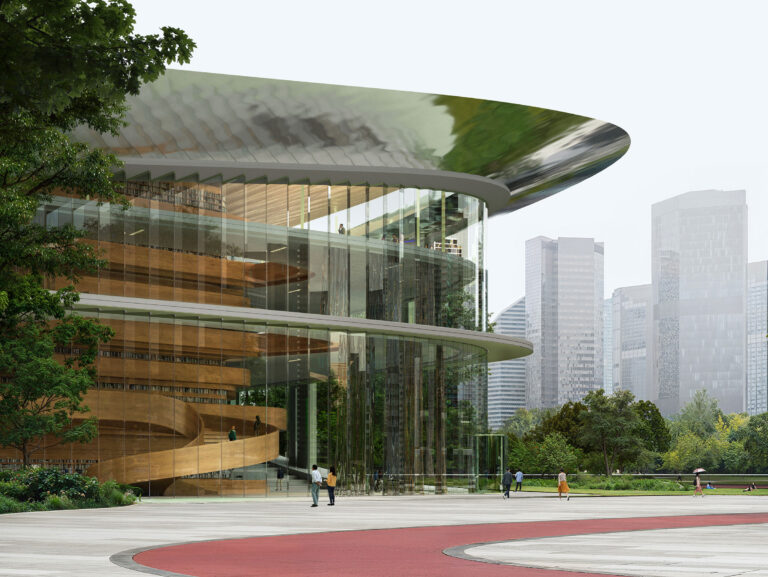
SHARE ザハ・ハディド・アーキテクツによる、中国・杭州市の、図書館とユースセンター。かつて工業地帯だった湾岸での計画。図書館は、地域の“玉工芸”の歴史に着想を得て“石質タイル”で構成されたファサードを考案。ユースセンターは、水辺の場所性と呼応する幾何学的形態として内部まで連続させる

ザハ・ハディド・アーキテクツによる、中国・杭州市の、図書館とユースセンターです。
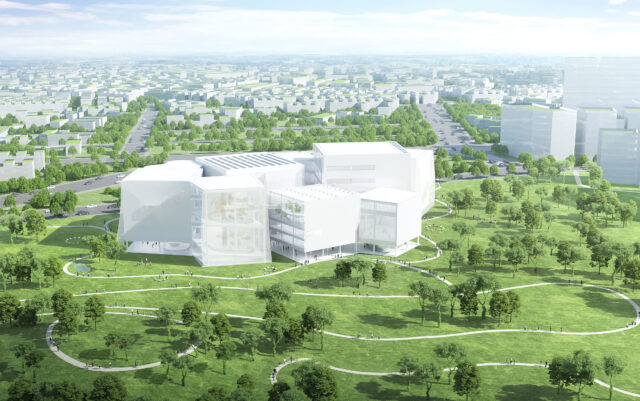
かつて工業地帯だった湾岸での計画です。図書館は、地域の“玉工芸”の歴史に着想を得て“石質タイル”で構成されたファサードを考案しました。ユースセンターは、水辺の場所性と呼応する幾何学的形態として内部まで連続させています。
こちらはリリーステキストです(翻訳:アーキテクチャーフォト / 原文は末尾に掲載)
ZHAがチエンタン湾文化地区を設計
中国・杭州市
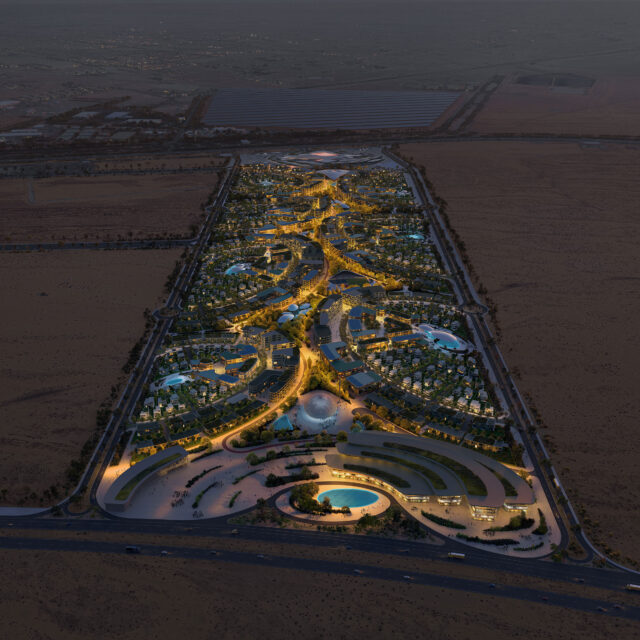
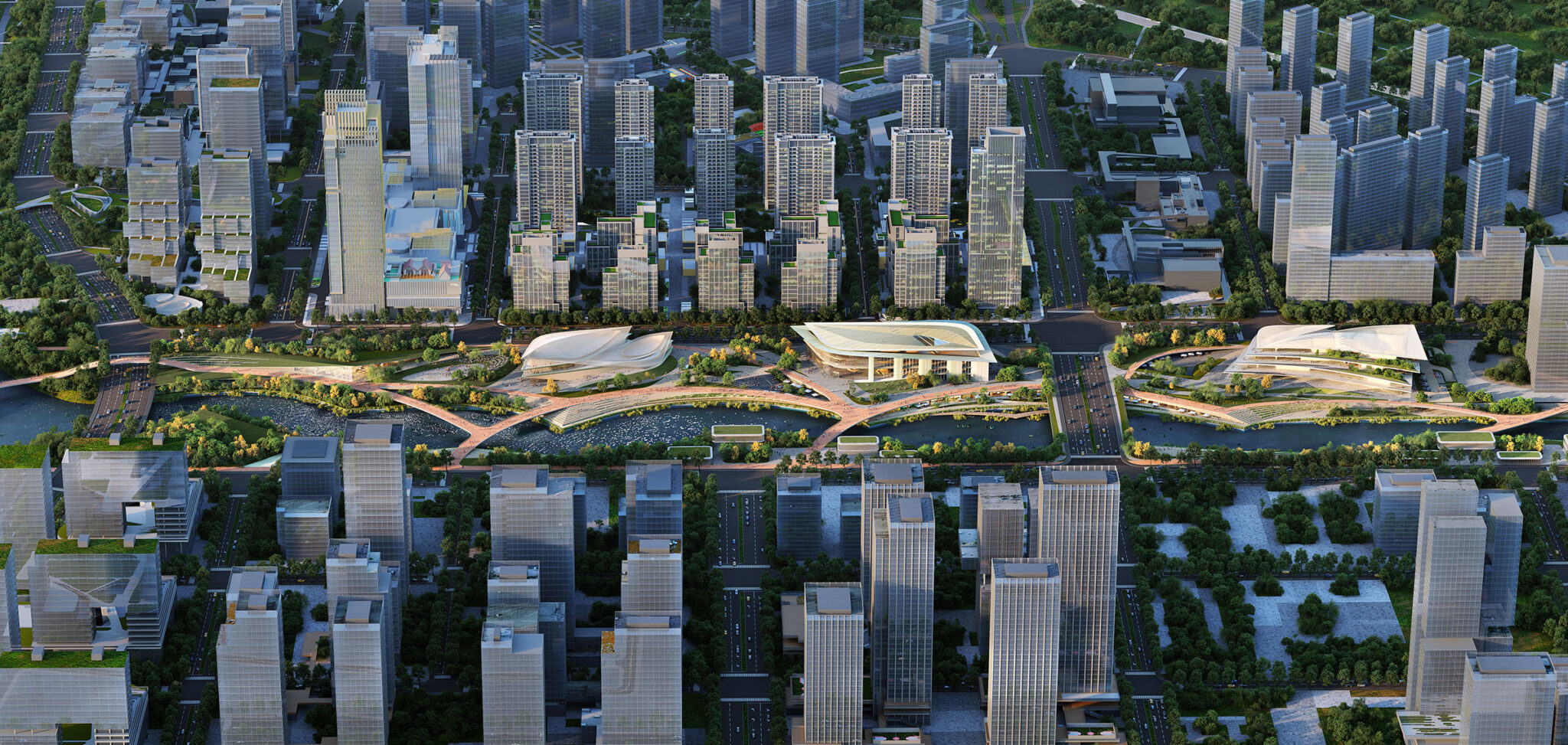
チエンタン湾中央ウォーター・アクシスは、杭州市シャオシャン区に位置するジェートン運河に沿って、新たに造園された公園緑地、テラス、庭園の連なりを創出し、運河流域における旧工業地帯を、都市の中心部を縫うように通る新たな緑の回廊へと再定義します。
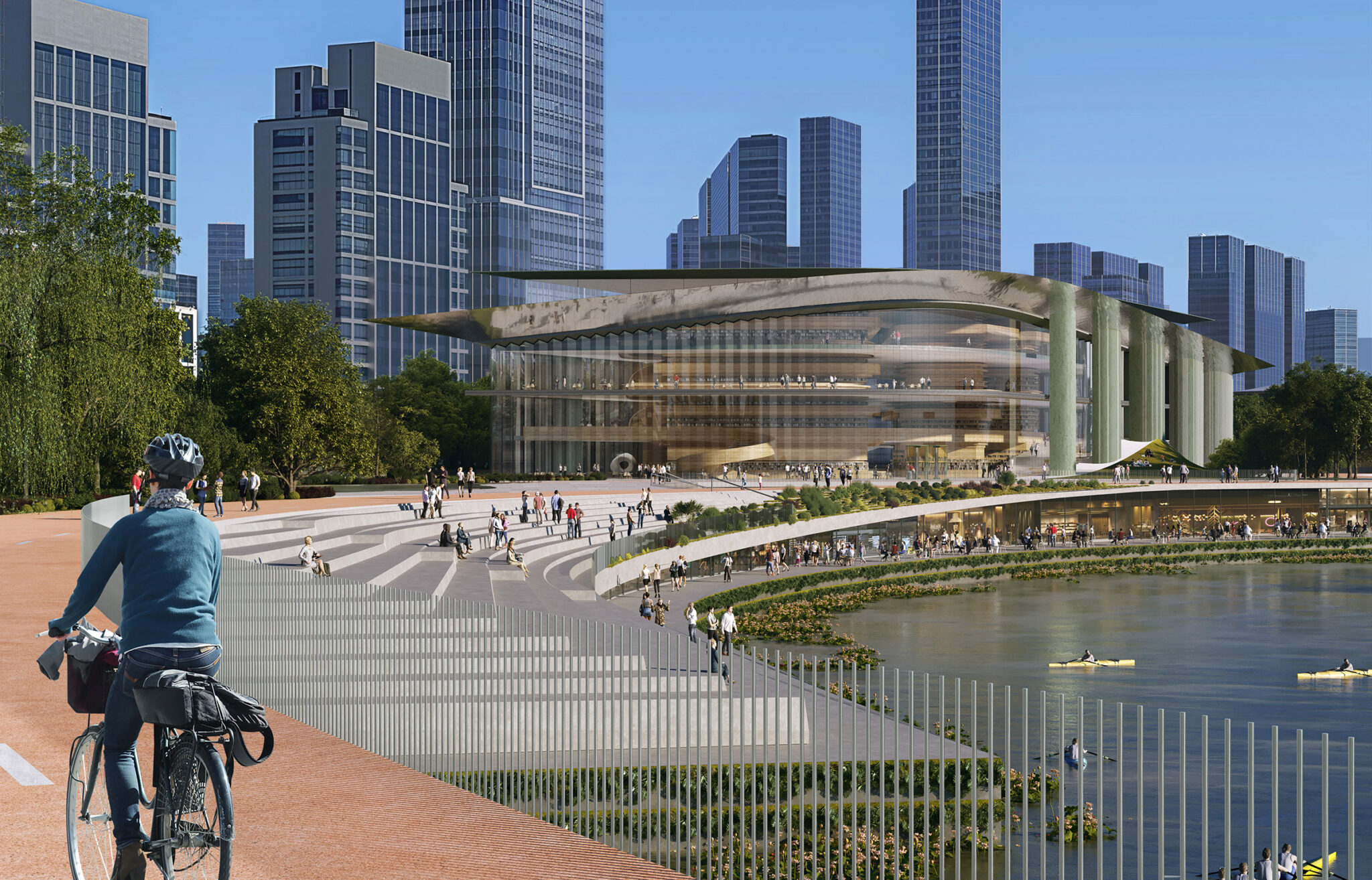
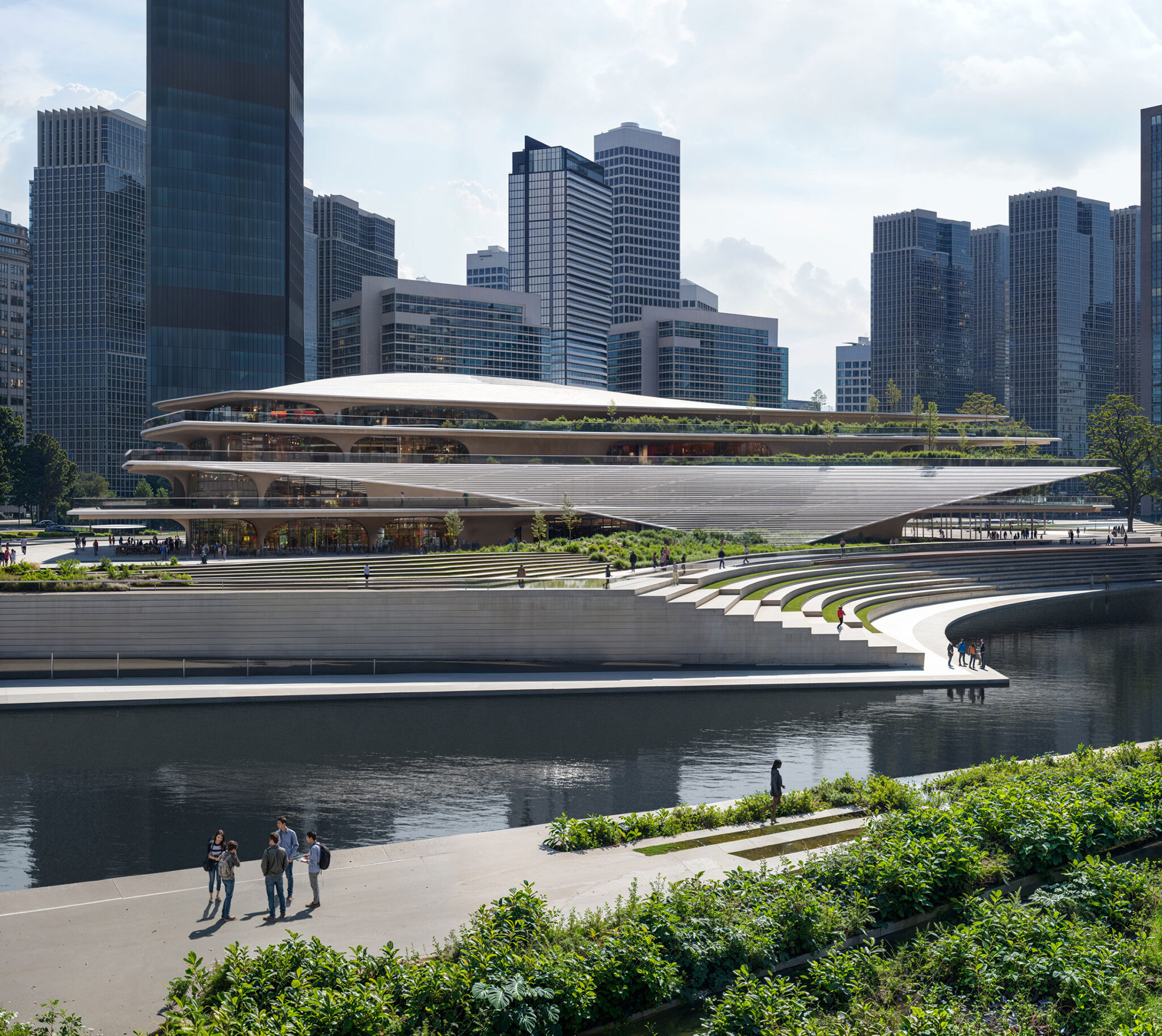
これらの水辺景観の中で、文化施設および教育施設が運河沿いに並び、それぞれが、広場、遊歩道、パフォーマンス空間といった、レクリエーション、くつろぎ、集いのための水辺の新たな公共空間と呼応するよう、配置および設計されています。
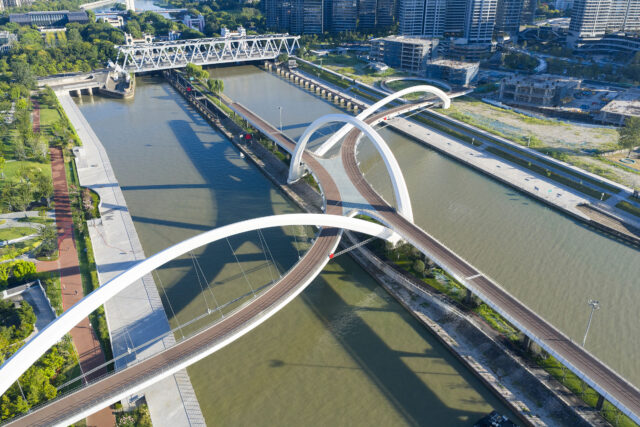
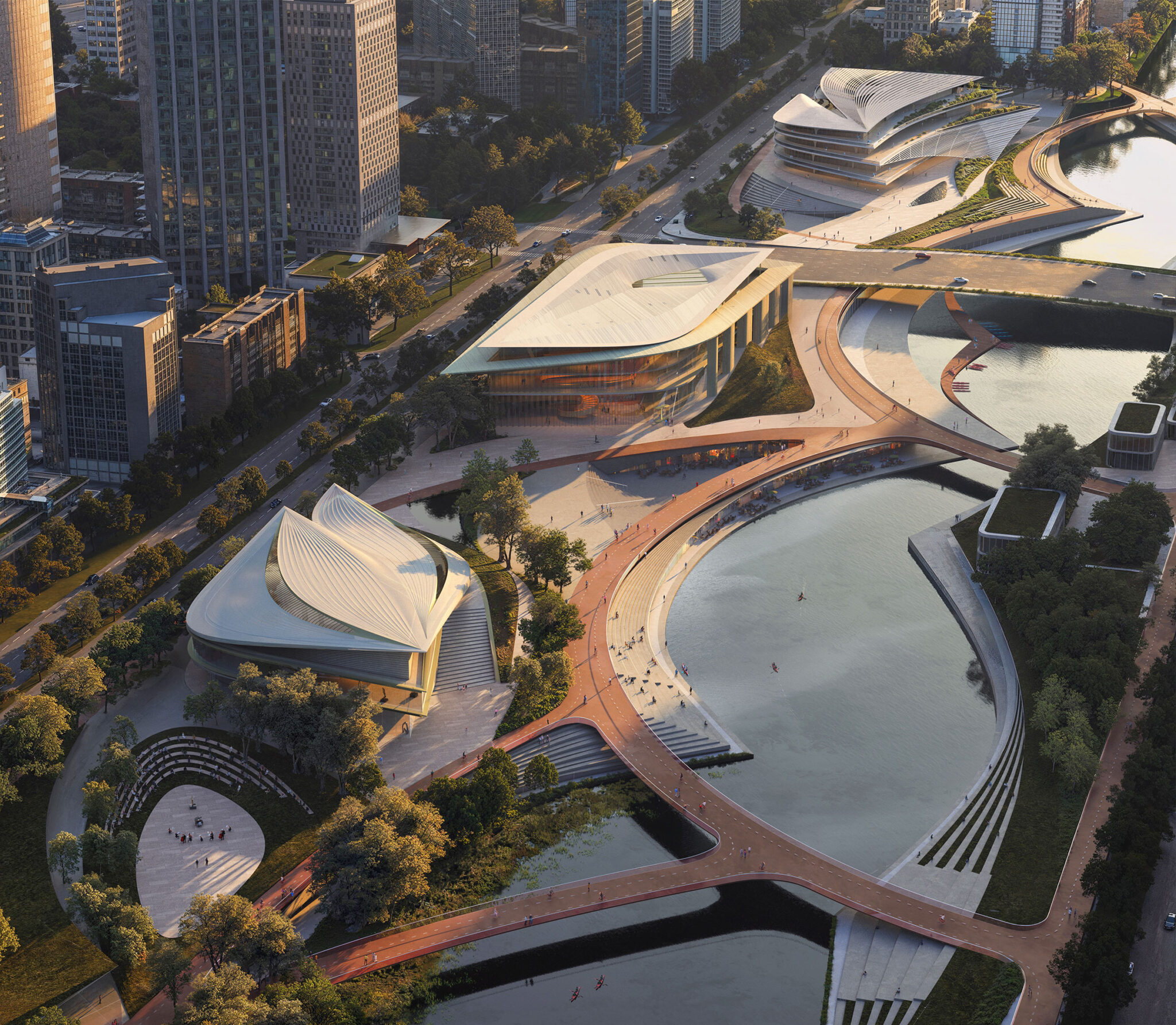
橋と歩道からなるネットワークが運河の両岸を結び、周辺市街地と、新たな中央ウォーター・アクシスの造園された庭園や公園とを接続します。これらの新たな公共空間に組み込まれたZHA設計の文化施設は、地区の自然地形、眺望および視点に加え、公共の動線や年間を通じて変化する日射条件によって形づくられています。
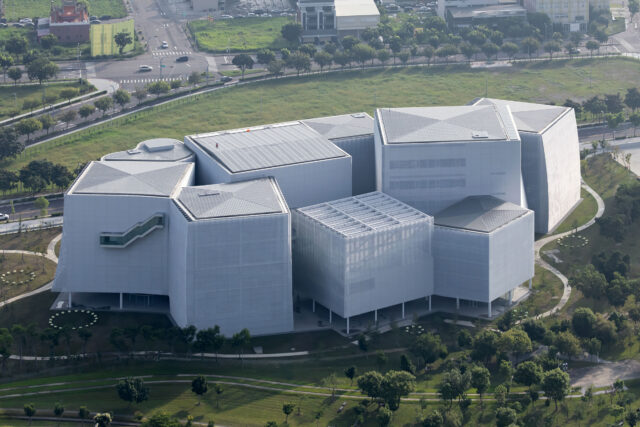
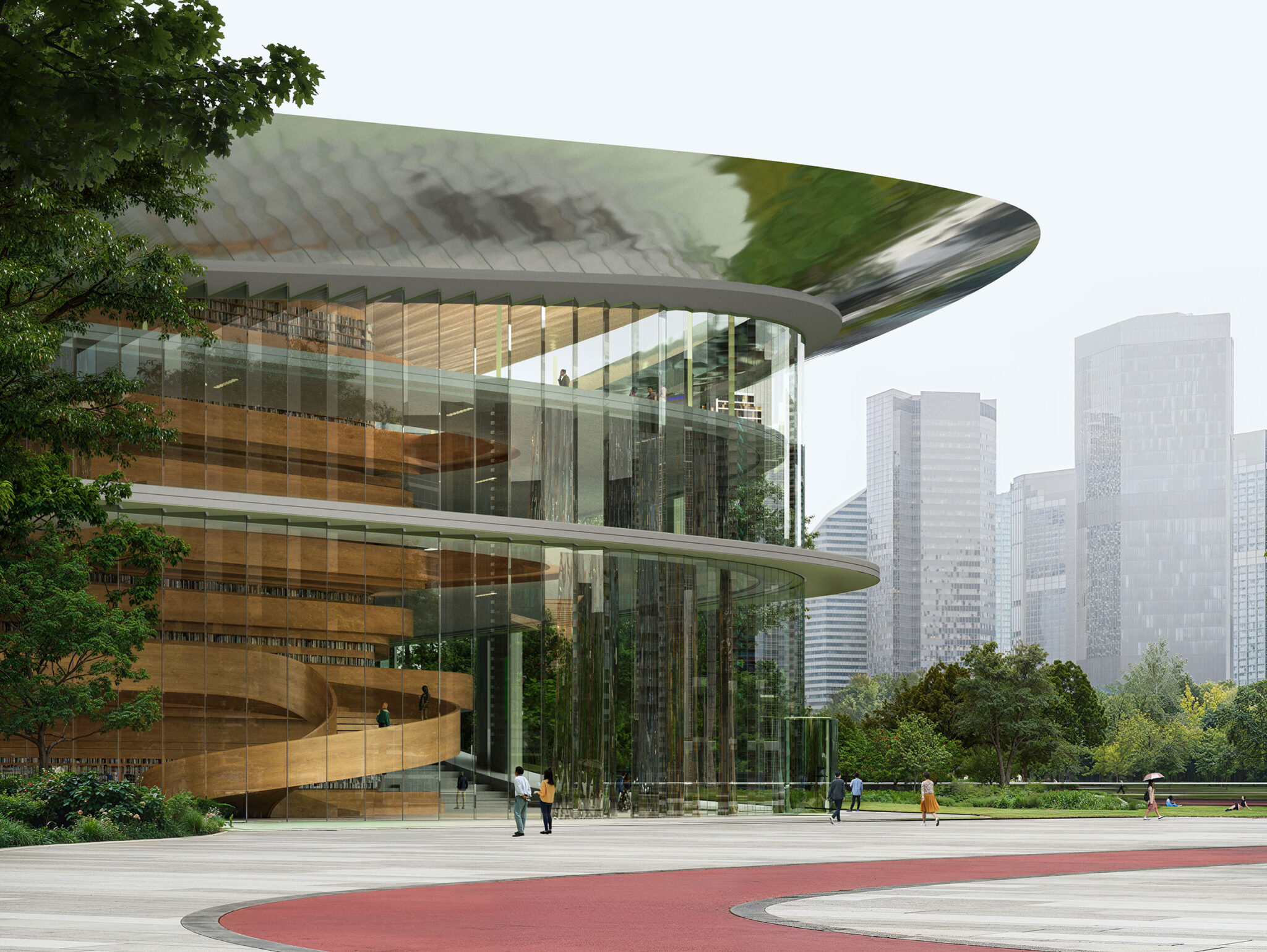
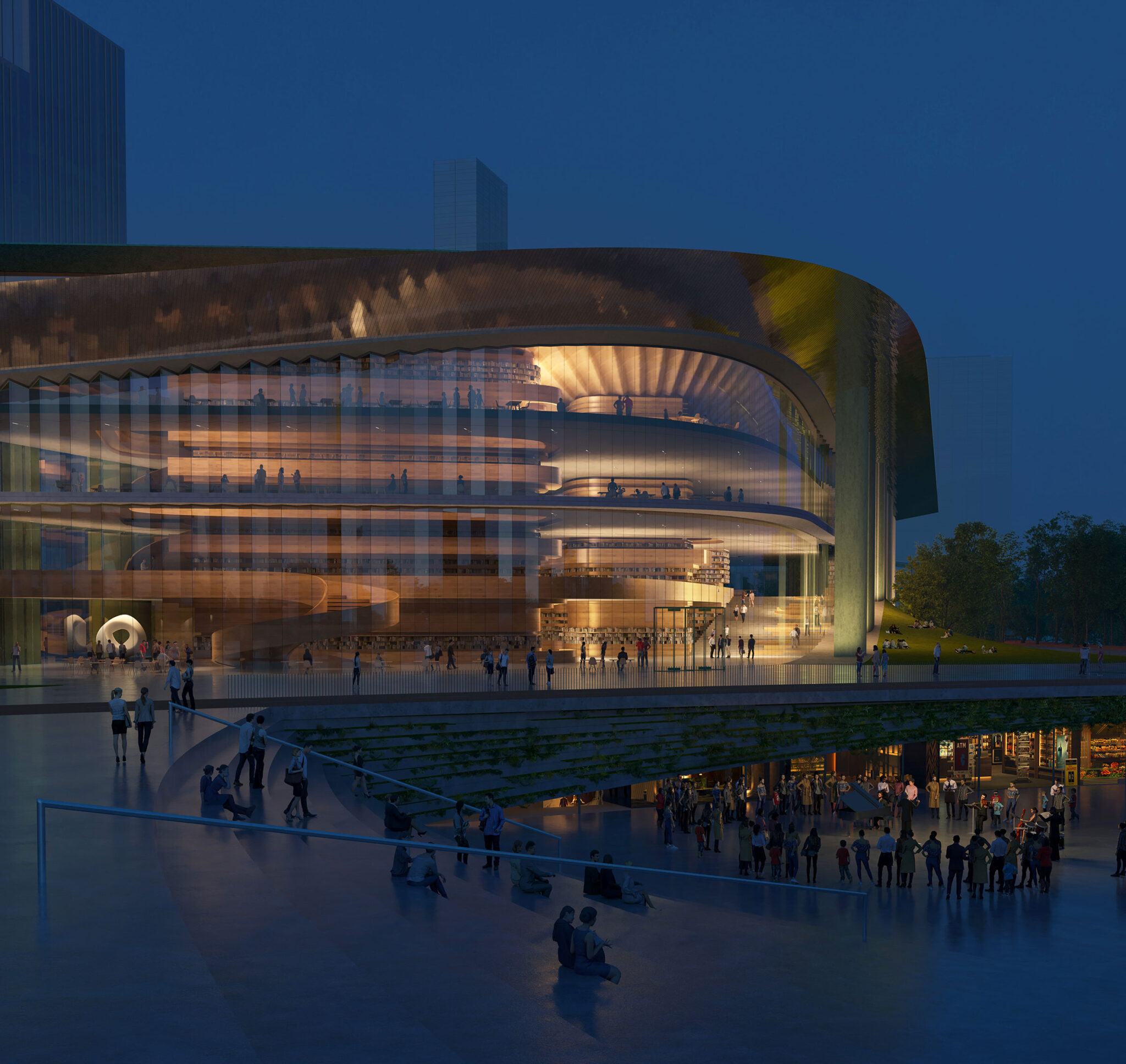
この新たな運河沿いの文化地区において、ZHAが設計する図書館は、人が入れる内部を備えた建築的な柱を連続的に取り入れています。これらの柱は、構造的な支持体として機能すると同時に、組み合わされた「知の石」として施設のアイデンティティを形づくり、図書館の膨大な蔵書や文書アーカイブに加え、閲覧室やコミュニティ空間を収容します。
この地域における五千年にわたる玉工芸の歴史に着想を得て、図書館のファサードは、この土地の価値ある石である玉の色調に着想した、精緻に加工された石質タイルによって構成されています。ファサードに組み込まれた折り重なるガラス要素が、内部全体に自然光を拡散し、読書、学習、思索に適した柔らかく光に満ちた雰囲気をもたらすと同時に、建物の奥深くまで昼光を導きます。
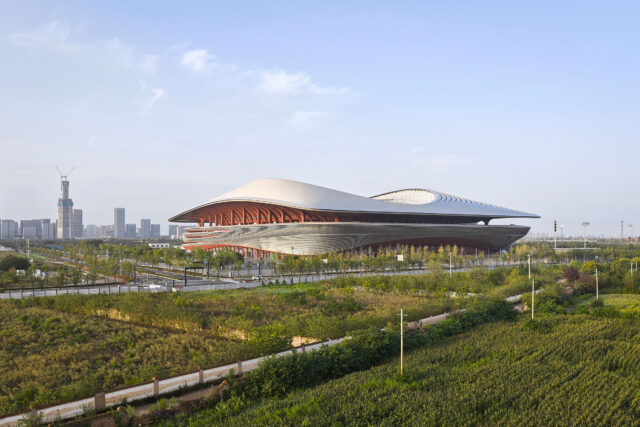
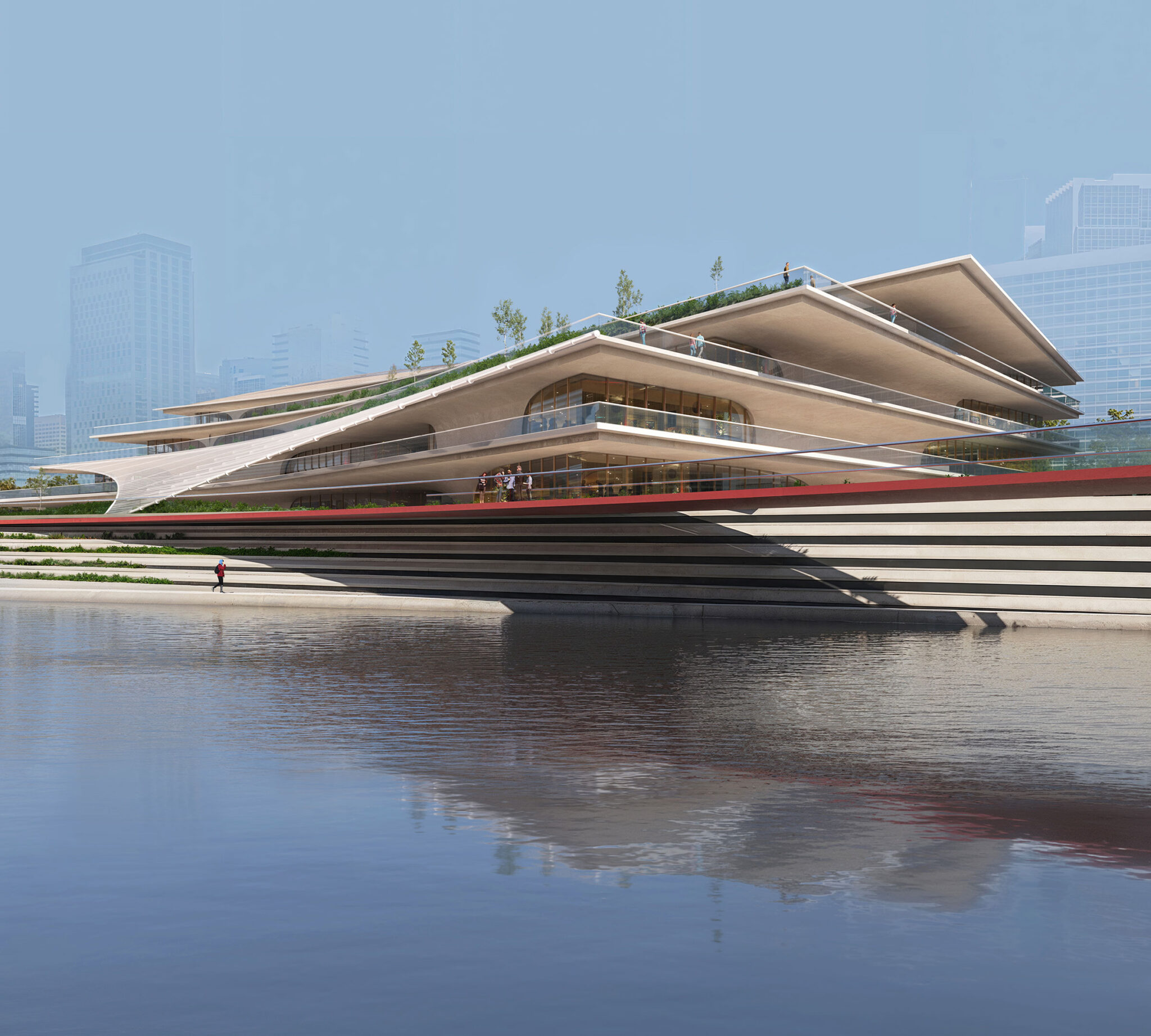
図書館を補完する、ZHAが設計する新たな国際ユース・センターは、市内の学生や来訪者が集い、交流し、協働するための空間を提供します。このセンターの幾何学的な構成は、その水辺のロケーションによって形づくられています。これらの幾何学的形態は、彫り込まれた内部空間の中に、相互に連結した複数の講堂やスタジオとして続くとともに、セミナー、会議、展示、パフォーマンスのための空間が設けられています。運河を望むテラスは、このセンターのプログラムを屋外へと広げ、市民の集い、イベント、交流のための場を提供します。
地域の生態系および気候条件によって定められた持続可能な戦略が設計に組み込まれ、省エネルギーシステムや敷地内発電を用いて、開発全体にわたる環境性能を向上させています。
洪水防止のために整備された杭州市のスポンジシティ・インフラに不可欠な中央ウォーター・アクシスのランドスケープは、透水性舗装、植栽されたスウェール、ならびに保水機能を備えた要素を取り入れることで雨水管理を強化し、低負荷で高性能な公共環境を生み出すとともに、杭州の長期的な生態系の健全性を支え、都市のレジリエンスに寄与しています。
以下の写真はクリックで拡大します
以下、リリーステキストです。
ZHA to design Qiantang Bay Cultural District
Hangzhou, China
The Qiantang Bay Central Water Axis creates a series of new landscaped parklands, terraces and gardens along the Zhedong Canal within the Xiaoshan district of Hangzhou—redefining the former industrial areas of the canal basin into a new green corridor and that weaves through the heart of the city.
Within these waterside landscapes, cultural and educational buildings line the canal—each orientated and designed to engage with the new civic spaces along the waterfront with plazas, promenades and performance spaces for recreation, relaxation and gatherings.
A network of bridges and paths link both sides of the canal and connect the surrounding city with the landscaped gardens and parks of the new Central Water Axis. Integrated within these new civic spaces, cultural buildings designed by ZHA are defined by the district’s natural terrain, panoramas and viewpoints, in addition to public circulation routes and varying solar irradiation throughout the year.
Within this new canal-side cultural district, the library’s design by ZHA incorporates a sequence of inhabitable architectural columns. Serving as structural support and defining the institute’s identity as assembled ‘stones of knowledge’, these columns will accommodate the library’s extensive literary collections and archives, as well as reading rooms and community spaces.
Drawing on the region’s 5,000-year history of jade artistry, the library’s facade is composed of precision crafted masonry tiles inspired by the tonal qualities of this local precious stone. Folded glass elements within the facade diffuse natural light throughout the interiors, providing a soft, luminous ambience tailored for reading, study and reflection, while bringing daylight deep into the building.
Complementing the library, ZHA’s design of the new International Youth Centre offers spaces for the city’s students and visitors to meet and collaborate. The centre’s geometric composition is defined by its waterfront location. These geometries continue within its carved interior as a series of interlinked auditoriums and studios, together with spaces for seminars, conferences, exhibitions and performances. Terraces overlooking the canal extend the centre’s programming outdoors, providing areas for civic gatherings, events and socialising.
Determined by local ecology and climatic conditions, sustainable strategies are embedded within the design to enhance environmental performance across the development using energy-efficient systems and on-site power generation.
Integral to Hangzhou’s sponge-city infrastructure established to prevent flooding, the Central Water Axis landscape incorporates permeable surfaces, planted swales, and water-retention features that enhance stormwater management—creating a low-impact, high-performance civic environment which supports Hangzhou’s long-term ecological health and contributes to the resilience of the city.
■建築概要
Architect: Zaha Hadid Architects (ZHA)
ZHA Principal: Patrik Schumacher
ZHA Competition Project Directors: Lei Zheng, Simon Yu
ZHA Competition Associate: Jinqi Huang
ZHA Competition Project Architect: Yenfen Huang
ZHA Competition Project Leads: Yenfen Huang, Charles Harris, Sonia Magdziarz
ZHA Competition Team: Joshua Anderson, Nils Fischer, Charles Harris, Jinqi Huang, Yenfen Huang, Yvonne Huang, Ruzena Maskova, Sonia Magdziarz, Svenja Siever, Yaobin Wang, Ke Yang, Simon Yu, Lei Zheng