SHARE ザハ・ハディド・アーキテクツがリードアーキテクトを務める、イタリアの「マルペンサ病院」。自然遺産に恵まれた地域での計画。地域社会の新たな交流の場としても考慮し、人間中心の設計思想を基にリハビリや休息のための様々な緑あふれる空間を備えた建築を考案

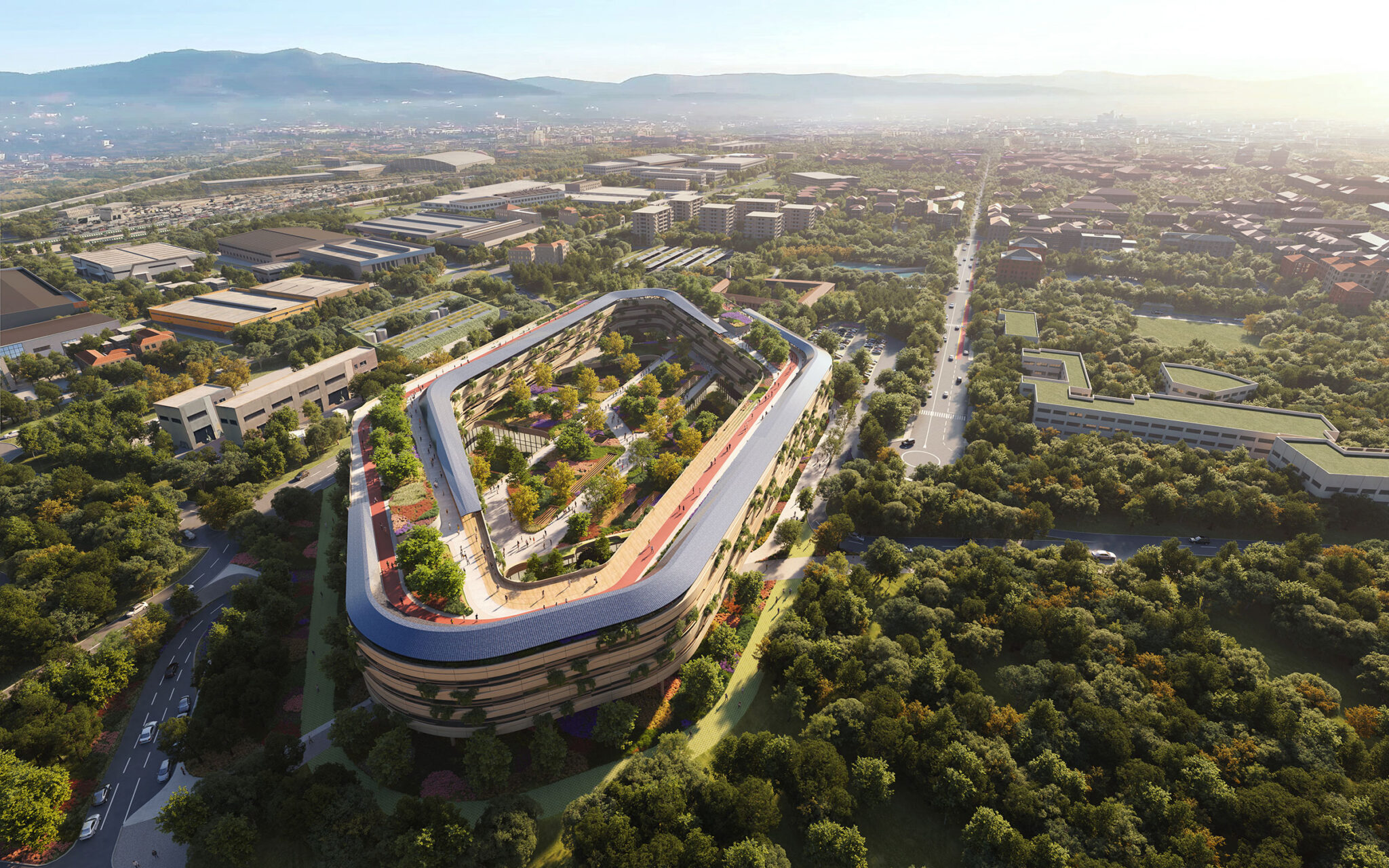
ザハ・ハディド・アーキテクツがリードアーキテクトを務める、イタリアの「マルペンサ病院」です。
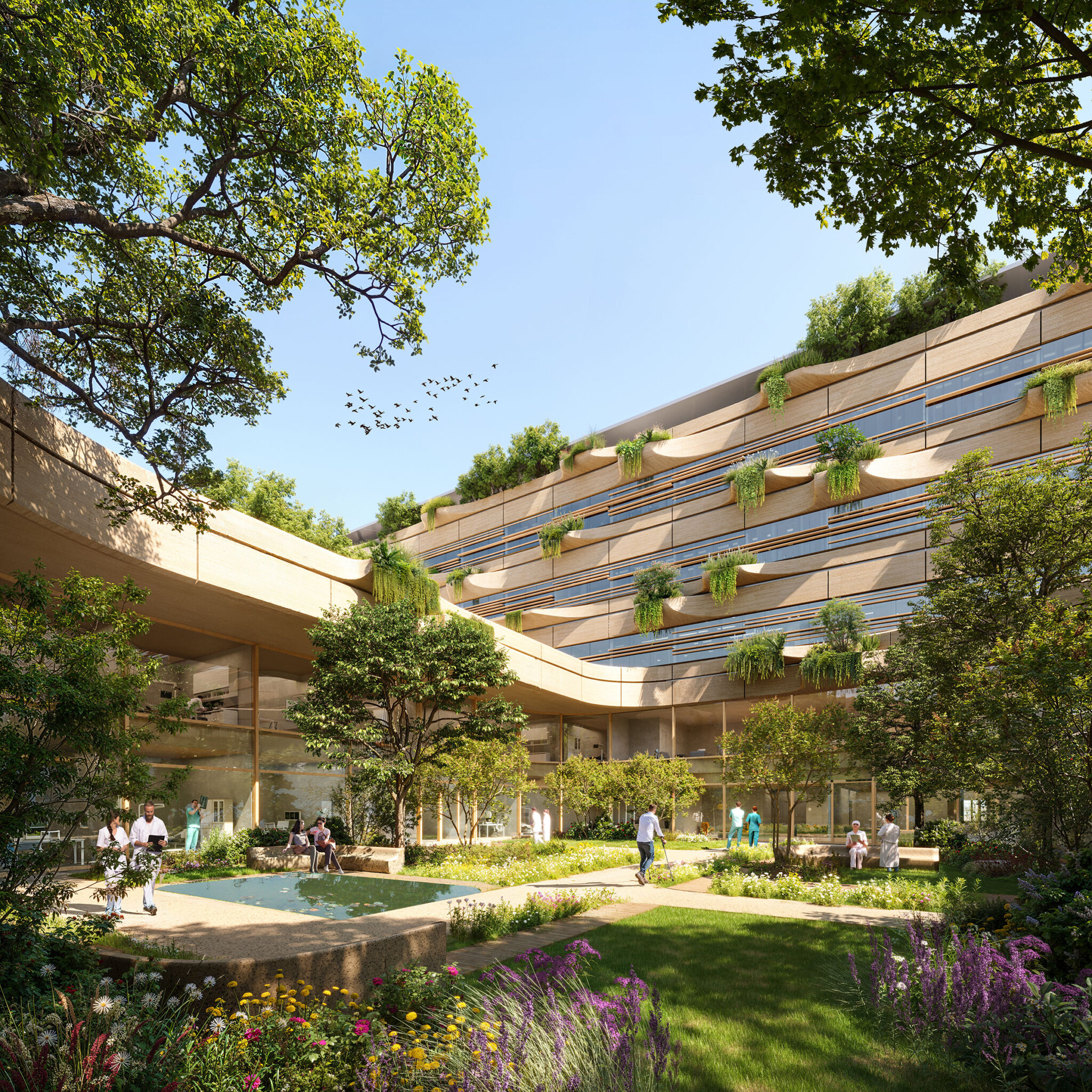
自然遺産に恵まれた地域での計画です。建築家は、地域社会の新たな交流の場としても考慮し、人間中心の設計思想を基にリハビリや休息のための様々な緑あふれる空間を備えた建築を考案しました。
こちらはリリーステキストです(翻訳:アーキテクチャーフォト / 原文は末尾に掲載)
ZHAとパートナーがマルペンサ病院を設計
イタリア・マルペンサ
マルペンサ病院(グランデ・オスペダーレ・デッラ・マルペンサ)の設計に関する国際コンペティションは、ザハ・ハディッド・アーキテクツ(ZHA)と、リナ(チームリーダー)、スタジオ・プリッキ、WSP、STIエンジニアリング、BCビルディング・コンサルティングのパートナーシップに授与されました。新たな医療キャンパスは、旧ガッララーテ病院とブスト・アルシーツィオ病院を統合し、ミラノとヴァレーゼの間に位置する地域に住む約100万人の住民に向けて、21世紀型の医療を提供する施設となります。
ロンバルディア州保健局の委託により設計されるマルペンサ病院は、オローナ渓谷の進化するニーズに対応しつつ、運用の有効性と効率性を損なうことなく、新たな技術を受け入れられる柔軟性を確保します。
新病院の設計は、三つの基本的な優先事項に取り組んでいます。すなわち、地域の高まる医療需要への対応、先進医療技術と人間中心のデザインの統合、そして地域社会が最高水準の医療サービスにアクセスできることの確保です。
本プロジェクトは、医療の革新、地域の遺産保全、そして生態系の再生を包括的に統合したものであり、今日の地域社会に貢献しつつ、将来のニーズにも適応できる包摂的で持続可能なキャンパスを創出します。
進化する健康課題や気候条件に対応するために設計されたこの病院は、モジュール構造を採用しており、将来的な拡張や緊急時の迅速な再構成を可能にします。このアプローチは、地域の高まる医療ニーズに応えると同時に、先進的な医療技術と個々の快適さに焦点を当てたデザインを融合させています。
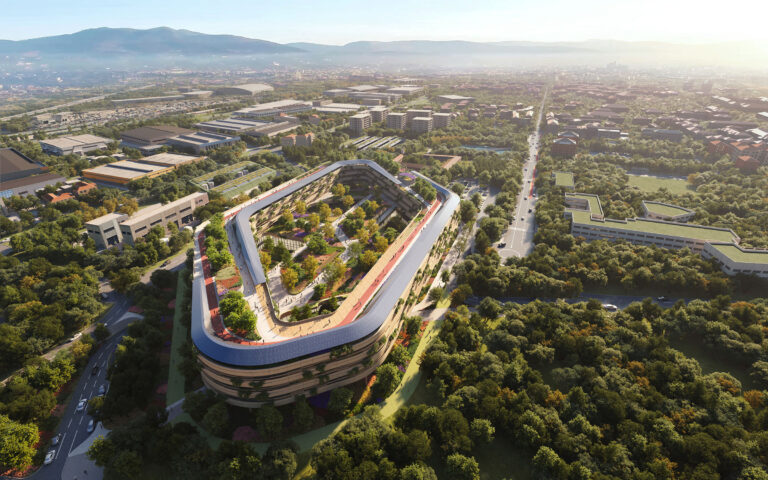
地上5階・地下1階からなるコンパクトな構造を持つこの病院は、約90,000㎡の規模で、医療の重症度に応じて構成されており、救急医療、外科、集中治療を含む多機能手術ブロック内に放射線科、インターベンション室、診断室を備えています。
この病院には、広範な外来・入院施設、母子ケア病棟に加え、診断および治療ゾーンと治療室が設けられます。この設計には、一次・二次診療クリニック、母子医療のための追加の診療所、さらにリハビリ、検査室、物流などの専門エリアも含まれています。病院内のすべての施設は、変化するニーズに柔軟に対応できるよう、容易に再構成できるように設計されています。
病院の来訪者、患者、職員、物資のための専用の動線は、干渉を最小限に抑え、感染リスクを低減します。一般の利用者が通行するルートと、技術者や医療従事者が使用するルートは明確に分離されます。医療物資、物品、廃棄物のための専用エレベーターは、患者や来訪者との干渉を避けるよう戦略的に配置されています。病院全体に自動搬送システムを導入することで、患者と職員は最も効率的な物流サービスの恩恵を受けることができます。
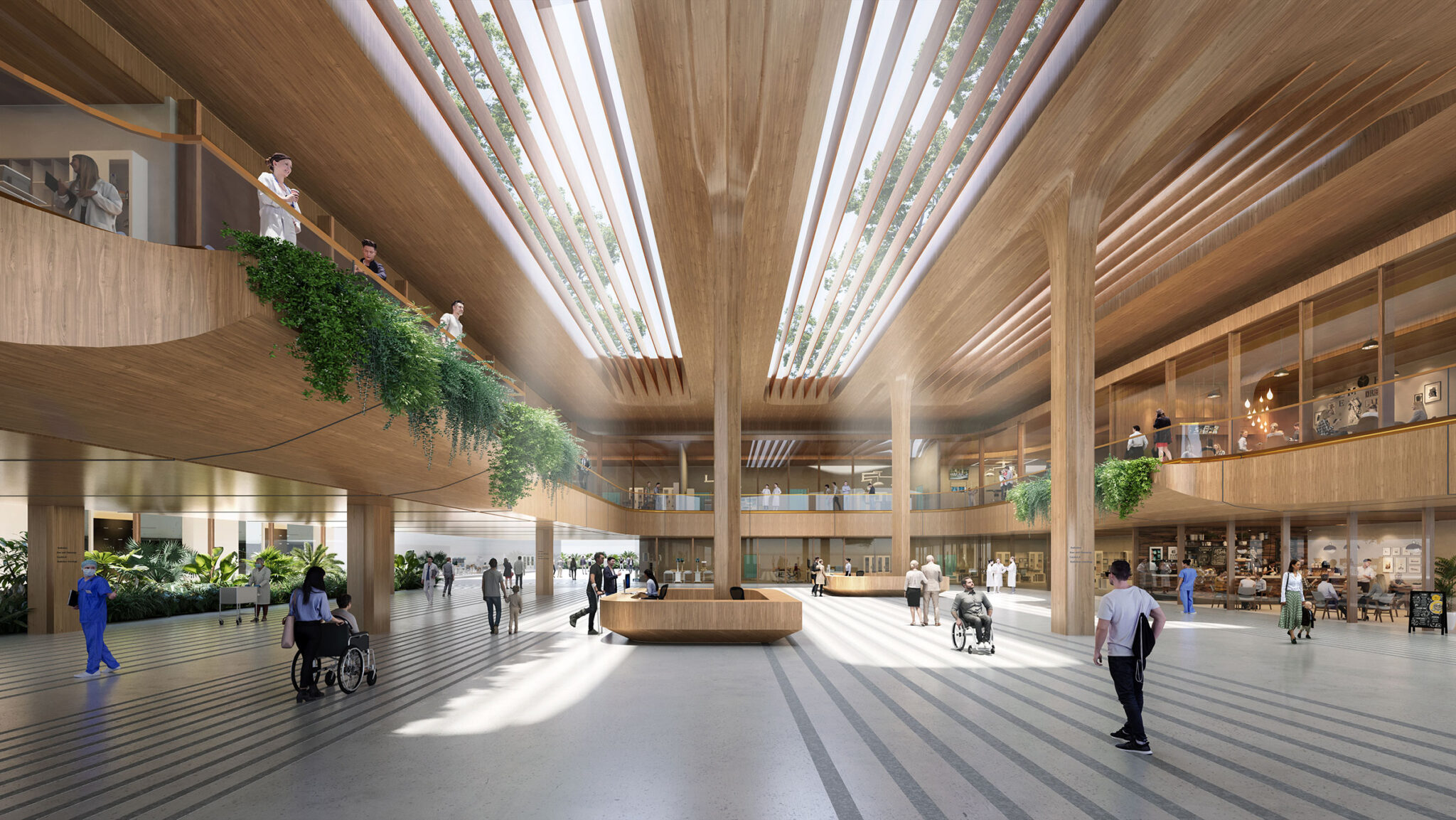
この設計は、患者と職員の双方に同様に休息ゾーンを設けることで、不安を軽減し、プライバシーと快適性を重視しています。地上階には中央の「メインストリート」が公共の軸として機能し、エントランス広場とランドスケープエリアをつなぐことで、アクセシビリティと地域社会との一体性を高めます。屋内空間は自然光と音響の快適性を最適化するように設計されており、健康とウェルビーイングを支える環境が創出されています。
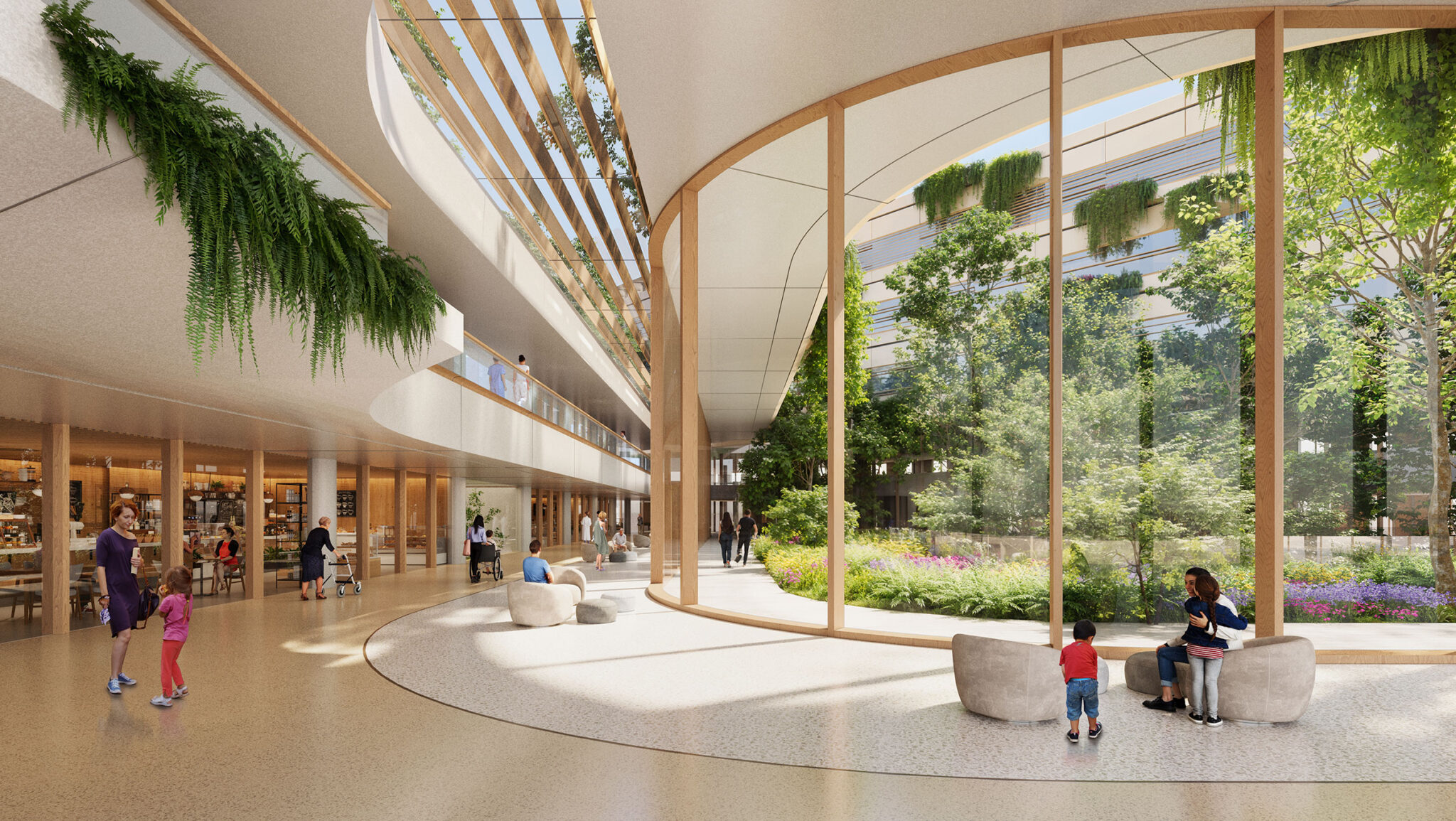
人間中心の設計理念がこの建築の根幹にあり、リハビリやリラクゼーションのための多様な空間を提供する庭園や中庭、造園された屋上テラスが設けられています。内装は、治療的な環境を促進する素材のパレットによって構成されています。交流、教育、文化活動のためのエリアは、患者ケアのあらゆる側面を向上させるために、病院が地域社会との強固な関係を築くことを可能にします。また、ユニバーサルデザインにより、触知図、多言語表示、バリアフリー動線が統合されています。
この敷地は自然遺産に恵まれており、地域エコロジーネットワークの一環として森林や農地に囲まれ、ティチーノ渓谷地域公園にも近接しています。バイオフィリックな原則を取り入れながら、病院のランドスケープ設計はこれらの生態系を保全し、水文への影響を最小限に抑えるとともに、12〜13世紀に遡る歴史的な農村建築群であるカッシーナ・デイ・ポーヴェリをキャンパス内に組み込み、その遺産を称え、地域社会の新たな交流の場を創出します。
効果的なパッシブデザイン戦略を取り入れることで、この病院はCAM適合の環境性能基準を上回るよう設計されており、再生可能エネルギーの活用とスマートビルディングシステムの導入によって、最高水準のサステナビリティ認証を取得する可能性を備えています。
クイント・セッラ通りおよびSS33からの専用の公共アクセス経路によって周辺地域とシームレスにつながるこの新病院は、充実した公共交通機関、自転車道、歩行者専用道からもアクセス可能です。
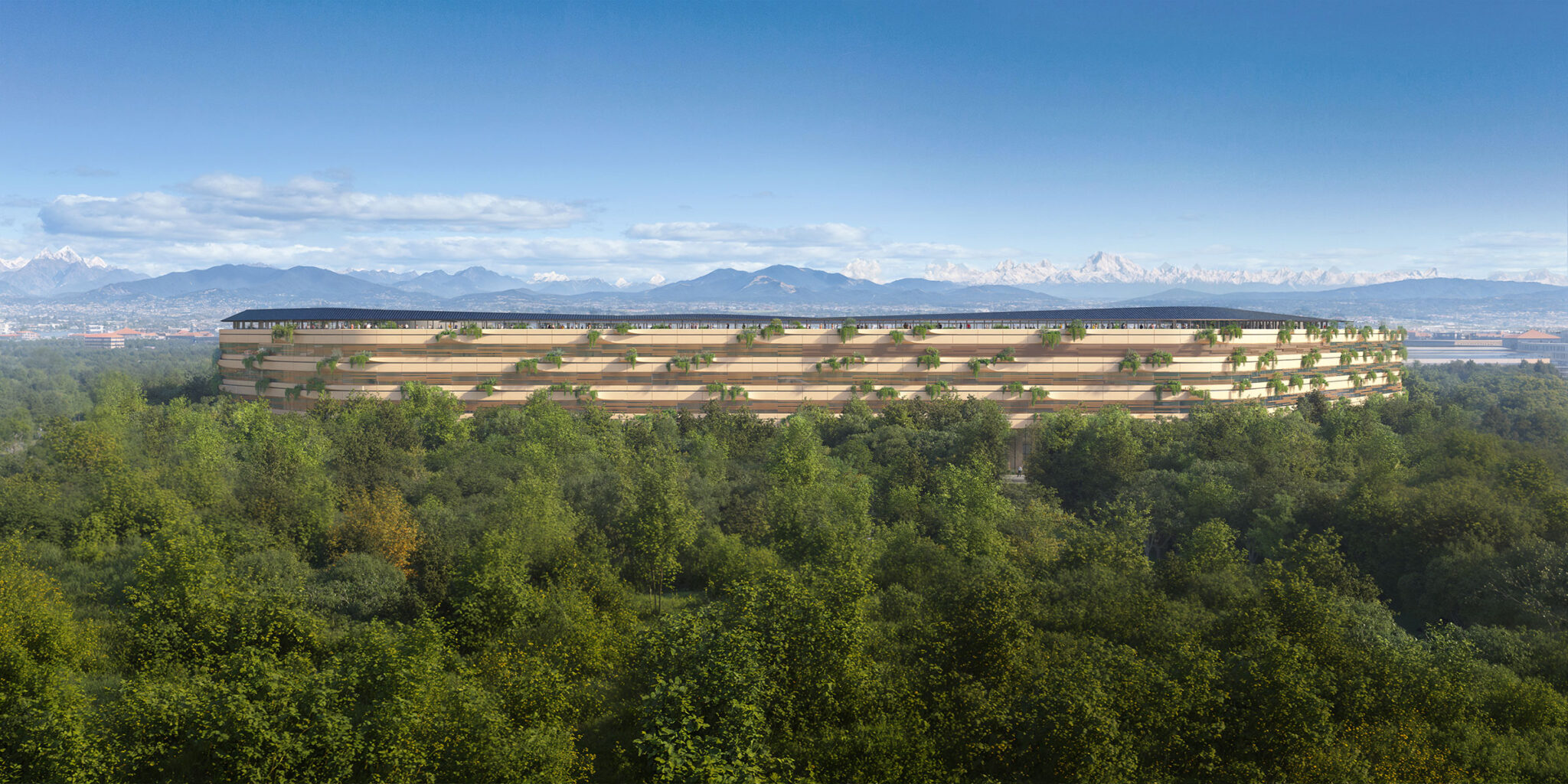
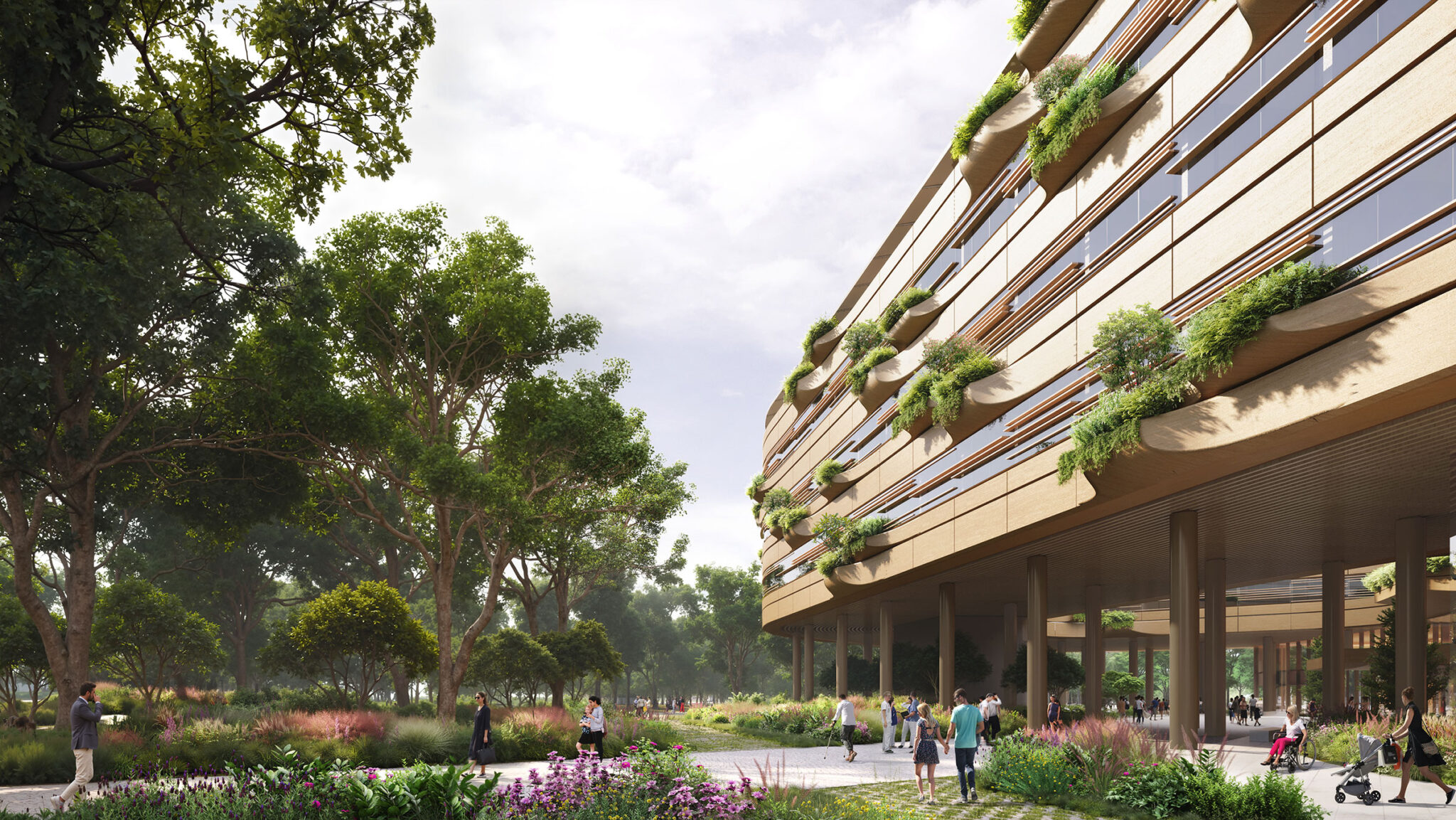
新しい医療キャンパスのファサードは、耐久性、リサイクル性、そして低エンボディドカーボンのために選ばれた、プランターと日除けが組み込まれたモジュール式のアルミ製レインスクリーンパネルで構成されています。内装は木材や織物などの自然な仕上げを特徴としており、すべての患者、来訪者、職員に快適さ、落ち着き、安心感をもたらします。
廃棄物、投資コスト、建設期間を削減するために高度なモジュール型プレハブ技術を採用し、すべての建材は、低いCO₂排出量、再生素材の含有量、そして厳格なEPDおよびLCA基準への適合性を基準に選定されています。キャンパス全体の運用効率は、高性能な建築外皮と日射遮蔽によって高められており、冷房需要を30%削減します。また、1MWpを超える太陽光発電システムが病院の電力需要のおよそ4分の1を供給します。ハイブリッド暖房システムは水素統合のために準備されており、長期的な適応性を確保しています。
高度なビル管理システムやデジタルツインモデルを含む新たなスマート技術を組み込む可能性を持って設計されており、本プロジェクトは、最も効果的な予知保全プログラムを実施し、エネルギー性能を最適化する能力を備えています。
既存の森林を保全しつつ、新たに湿地やバイオスウェールを導入して雨水を捕捉・再利用し、生物多様性を高めることで、キャンパスのランドスケープには、蒸発と灌漑需要を抑えるための耐乾性植物による植栽を備えた新たな公共の公園や庭園が含まれます。
周囲の自然環境に埋め込まれる形で建てられるマルペンサ病院は、革新的で気候対応型、かつ人間中心の医療キャンパスにおいて、最高水準の患者ケアを提供し、先進的な医療とオローナ渓谷における責任ある生態系管理を統合します。
以下の写真はクリックで拡大します
以下、リリーステキストです。
ZHA and partners to design Malpensa Hospital
Malpensa, Italy
The international competition to design Malpensa Hospital (Grande Ospedale della Malpensa) has been awarded to Zaha Hadid Architects (ZHA) in partnership with RINA (team leader), Studio Plicchi, WSP, STI Engineering and BC Building Consulting. The new medical campus will unite the old Gallarate and Busto Arsizio hospitals into a single facility providing 21st century healthcare to serve almost one million residents living in the region between Milan and Varese.
Commissioned by the Lombardy Regional Health Authority, the design of Malpensa Hospital will meet the evolving requirements of the Olona Valley, ensuring flexibility to accommodate new technologies without comprising operational effectiveness and efficiency.
The new hospital’s design addresses three fundamental priorities: meeting the region’s growing demand for healthcare, integrating advanced medical technology with human-centric design and ensuring the community has access to medical services of the highest quality.
The project represents the holistic integration of healthcare innovation, local heritage preservation and ecological regeneration, creating an inclusive and sustainable campus to serve its community today while adapting to the needs of tomorrow.
Designed to respond to evolving health challenges and climate conditions, the hospital’s modular construction enables future expansion and rapid reconfiguration in emergencies. This approach meets the growing healthcare needs of the region while combining advanced medical technologies with a design focused on individual comfort.
A compact structure comprising five above-ground levels and one basement, the hospital will encompass approximately 90,000 sq. m organised by intensity of care that includes emergency services, surgery and critical-care within a multifunctional operating block with radiology, interventional and diagnostic rooms.
The hospital will incorporate extensive outpatient and inpatient facilities, maternal and infant care wards in addition to diagnostic and therapy zones with treatment rooms. The design also accommodates first and second level clinics, further clinics for maternal-infant healthcare, together with specialist areas for rehabilitation, laboratories and logistics. Every facility within the hospital is designed to be easily reconfigured to meet evolving needs.
The hospital’s dedicated circulation pathways for visitors, patients, staff and goods will minimise interference and reduce risk of contamination, with a clear separation between the routes used by the public and routes used by technicians and healthcare providers. Separate elevators for medical materials, goods and waste are strategically located to avoid interference with patients and visitors. The installation of an automated delivery system throughout the hospital will ensure patients and staff benefit from the most efficient logistical services.
The design prioritises privacy and comfort to reduce anxiety by creating respite zones for patients and staff alike. At ground level, a central “Main Street” acts as a public axis, linking the entrance plaza and landscaped areas, reinforcing accessibility and community integration. Indoor spaces are defined to optimise natural light and acoustic comfort, creating an environment that supports health and well-being.
Human-centric design principles underpin the architecture—providing gardens, courtyards and landscaped rooftop terraces offering a variety of different spaces for rehabilitation and relaxation. The interiors are composed with a material palette promoting a therapeutic environment. Areas for socialising, education and cultural activities will enable the hospital to cultivate the strongest relationships with its local communities to enhance every aspect of patient care, while universal design integrates tactile maps, multilingual signage and barrier-free circulation.
The site is rich in natural heritage, surrounded by forests and agricultural land within the Regional Ecological Network and close to the Parco Regionale della Valle del Ticino. Embracing biophilic principles, the hospital’s landscape design preserves these ecosystems, minimizing hydrological impact, and also embedding the historic Cascina dei Poveri—an ancient rural complex dating to the 12th–13th century—within the campus, honouring its heritage and creating a new gathering place for the local community.
Incorporating effective passive design strategies, the hospital is designed to exceed CAM compliance environmental performance standards, with the potential to achieve the highest sustainability certification using renewable energy sources and the implementation of smart building systems.
Seamlessly connected to its surrounding communities by a network of dedicated public access routes from Via Quintino Sella and SS33, the new hospital can also be accessed via its extensive public transport links, cycling paths and pedestrian walkways.
The facades of the new medical campus comprise modular aluminium rainscreen panels with integrated planters and solar shading chosen for durability, recyclability and low embodied carbon. Interiors feature natural finishes such as wood and textiles to enhance the sense of comfort, calmness and security for all patients, visitors and staff.
Employing advanced modular prefabrication technologies to reduce waste, investment and construction time, all materials are selected for their low CO₂ footprint, recycled content and compliance with rigorous EPD and LCA standards. Operational efficiency throughout the campus is enhanced by a high-performance building envelope and solar shading to reduce cooling demand by 30%, while a photovoltaic system exceeding 1 MWp will supply roughly a quarter of the hospital’s electricity needs. A hybrid heating system is prepared for hydrogen integration, ensuring long-term adaptability.
Designed with the possibility to incorporate new smart technologies including advanced building management systems and digital twin models, the project has the capacity to implement the most effective predictive maintenance programmes and optimise energy performance.
Preserving existing woodland while introducing new wetlands and bioswales to capture and reuse stormwater and enhance biodiversity, the landscaping of the campus will include new public parks and gardens with drought-resistant planting to reduce evaporation and irrigation demand.
Embedded within its surrounding natural environment, Malpensa Hospital will provide the highest quality of patient care in an innovative, climate-responsive and human-centred medical campus, unifying advanced healthcare and responsible ecological stewardship of the Olona Valley.
■建築概要
Project Team
Architect: Zaha Hadid Architects (ZHA)
ZHA Principal: Patrik Schumacher
ZHA Project Director: Paolo Zilli
ZHA Competition Project Director: Paolo Zilli
ZHA Competition Associates: Tommaso Casucci and Johannes Elias
ZHA Competition Team: Valentina Cerrone; Daniel Coley; Daniele Ferrentino; Alex He; Yooyeon Noh; Prashant Phirke; Angelica Videla Cardenas
ZHA Environmental & Sustainability Team: Bahaa Alnassrallah; Carlos Bausa Martinez; Jing Xu
───
Consortium
Zaha Hadid Architects: Lead Architect, coordination, and wellbeing.
RINA: TEAM Lead, Civil Engineering, and Safety.
STUDIO PLICCHI: Hospital Specialist and Local Architect
WSP: Environment, Landscape, and Sustainability
STI ENGINEERING: MEP and Fire Strategy
BC – BUILDING CONSULTING: Quantity Surveyor, and Maintenance