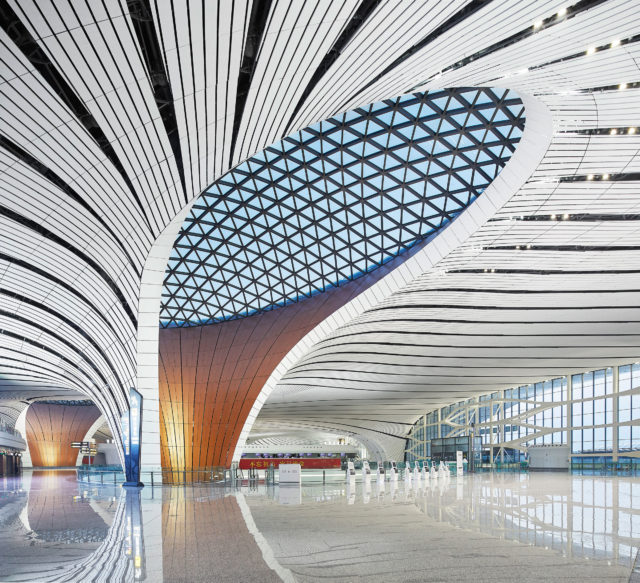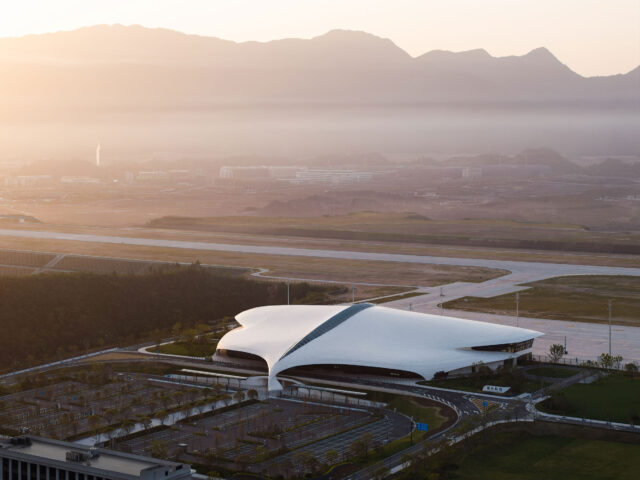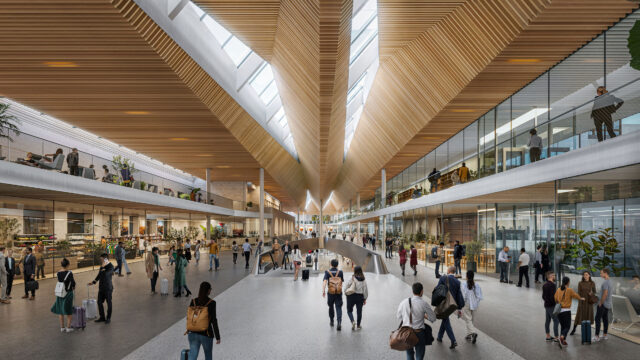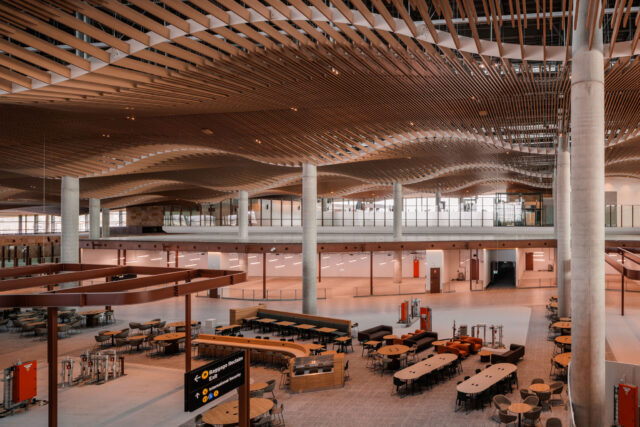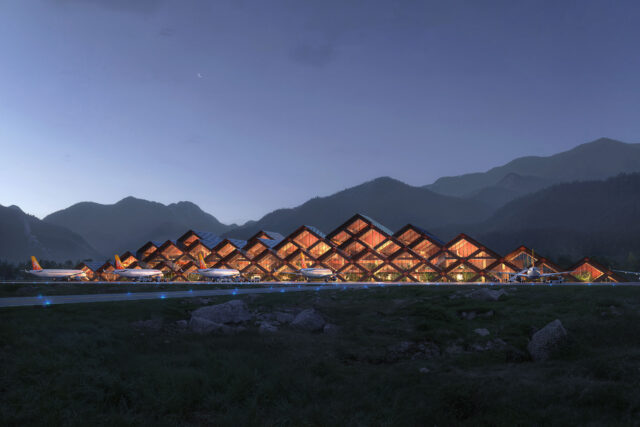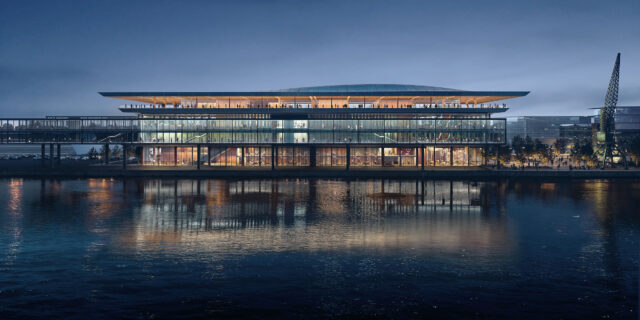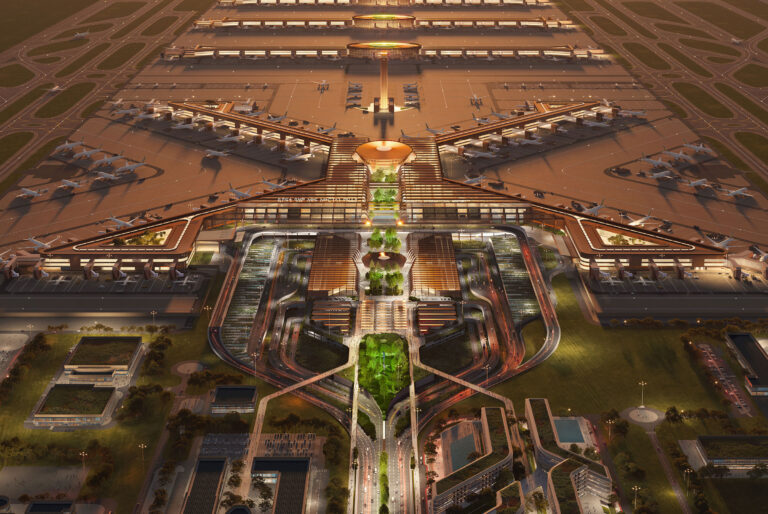
SHARE ザハ・ハディド・アーキテクツによる、エチオピアの「ビショフトゥ国際空港」。大陸最大規模の空港の計画。将来的に年間1億以上の旅客に対応する施設として、地域の“谷”に着想を得て“一本の中央動線”から各棟に移動する構成の建築を考案。地域住民と旅客の其々が楽しめる屋外空間も備える

ザハ・ハディド・アーキテクツによる、エチオピアの「ビショフトゥ国際空港」です。
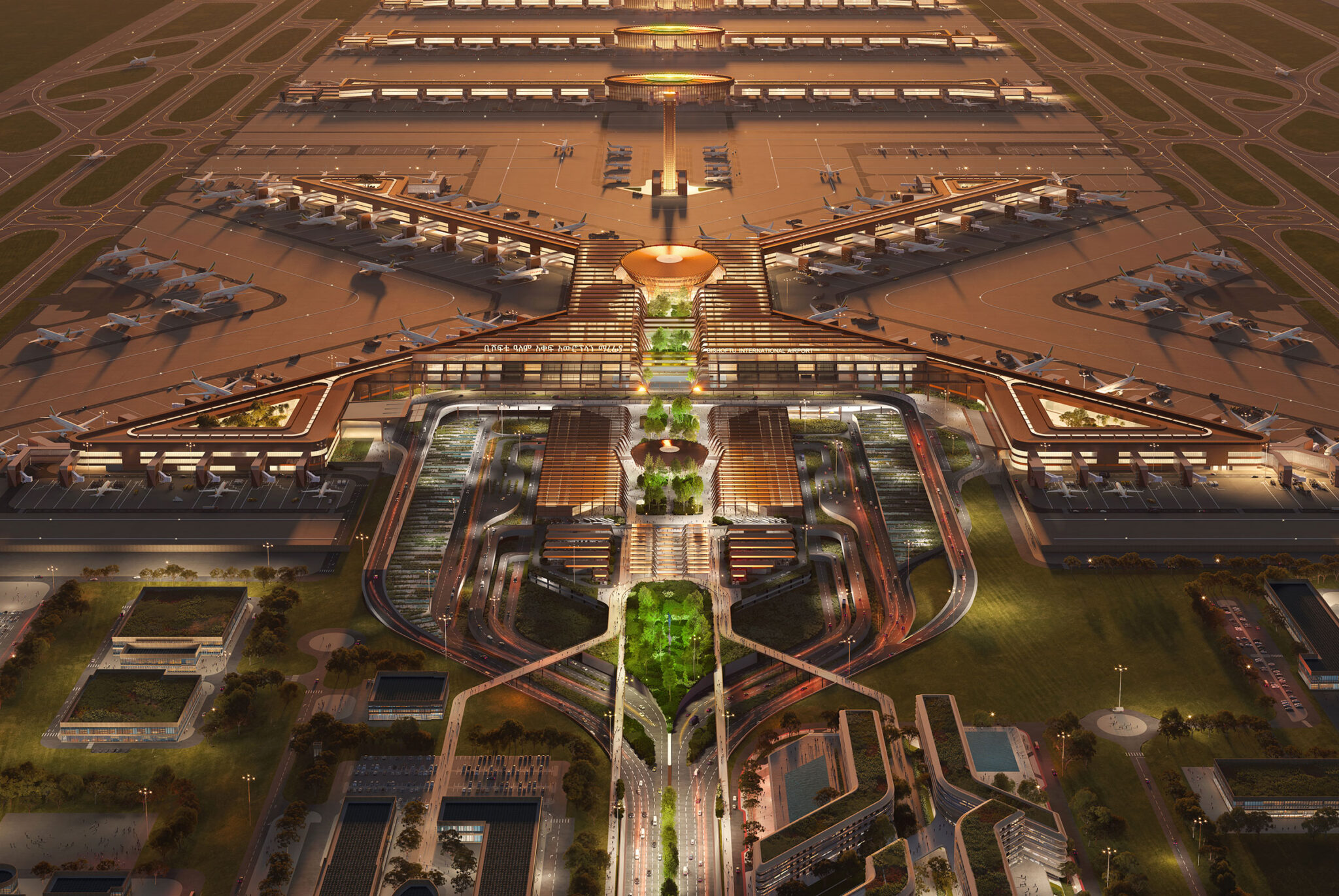
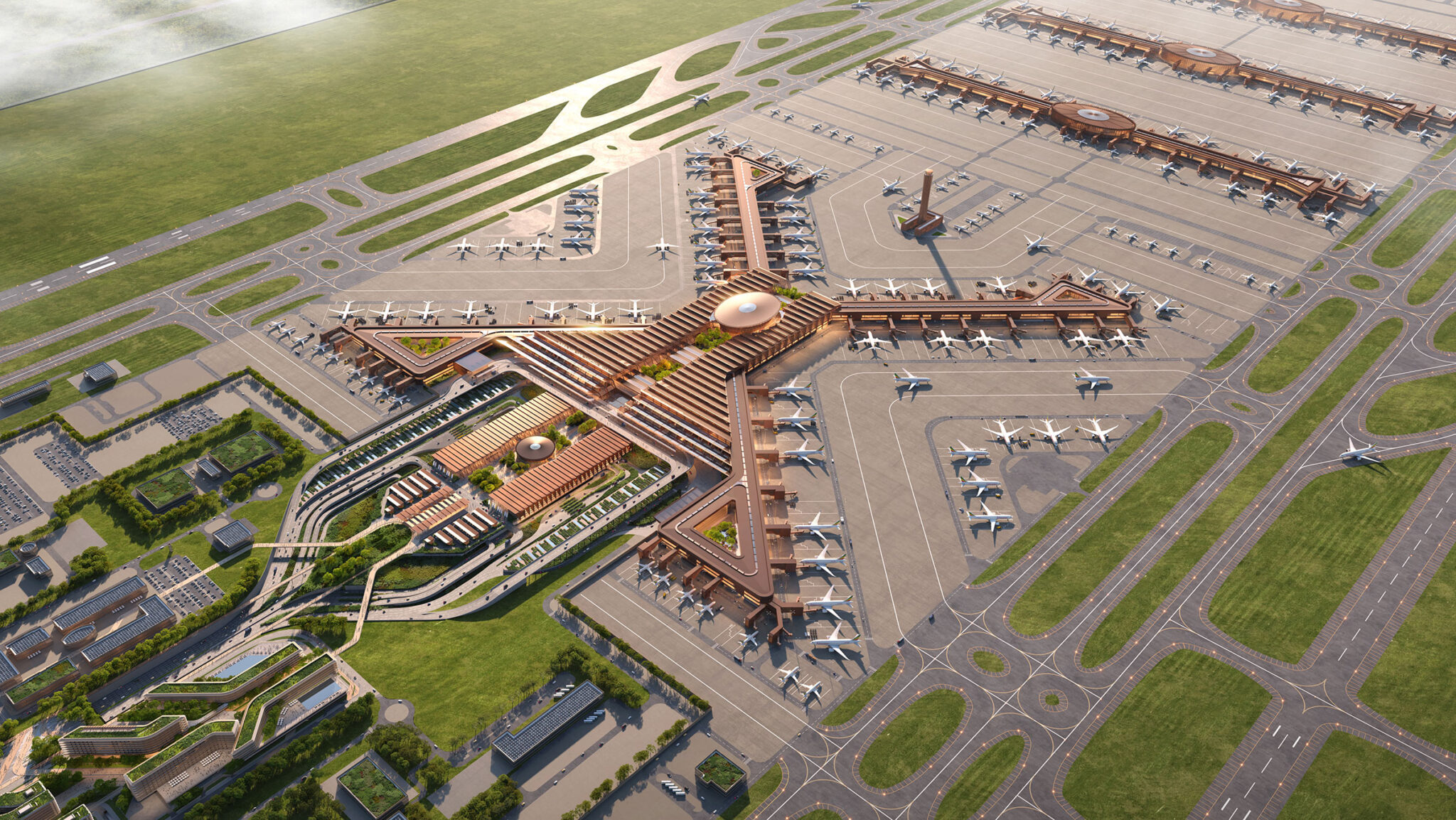
大陸最大規模の空港の計画です。建築家は、将来的に年間1億以上の旅客に対応する施設として、地域を“谷”に着想を得て“一本の中央動線”から各棟に移動する構成の建築を考案しました。また、地域住民と旅客の其々が楽しめる屋外空間も備えています。
こちらはリリーステキストです(翻訳:アーキテクチャーフォト / 原文は末尾に掲載)
ビショフトゥ国際空港の建設が開始
エチオピア・アディスアベバ
アフリカを代表する航空会社であるエチオピア航空グループは、エチオピアの首都アディスアベバから南へ約40kmに位置するビショフトゥにおいて、大陸最大となる空港の建設を開始しました。
新しいビショフトゥ国際空港(BIA)の第1期は、年間6,000万人の旅客に対応します。さらに将来の段階では、4本の滑走路と270機分の駐機施設を備え、年間最大1億1,000万人の旅客に対応する予定です。
旅客需要に関する IATA(国際航空運送協会) の地域別成長予測に対応する形で、BIAへの125億米ドルの投資は、アフリカ・アジア・中東の交差点に位置するエチオピアの地理的優位性を最大限に高め、21世紀の世界的な交通ハブとしての地位を最適化します。
エチオピアの首都アディスアベバから南へ約40kmに位置する新しいビショフトゥ国際空港(BIA)の建設が開始されました。エチオピアのアビィ・アハメド・アリ首相(Abiy Ahmed Ali)は、2026年1月10日(土)に行われた同空港の起工式で定礎を行いました。
「ビショフトゥ国際空港は、アフリカの航空インフラ史上最大のプロジェクトとなり、今後2~3年で現在の交通量に対して限界に達するエチオピアの現行主要空港の4倍以上の処理能力を備えることになります」と首相は述べました。
BIAは、アフリカ最大の航空会社であるエチオピア航空に対応します。航空会社の将来的な旅客需要および運航上の要件を満たすためにザハ・ハディド・アーキテクツによって設計されたBIAは、乗り継ぎ旅客に重点を置いた最高水準の施設を提供し、アフリカの世界的な航空ハブとなります。
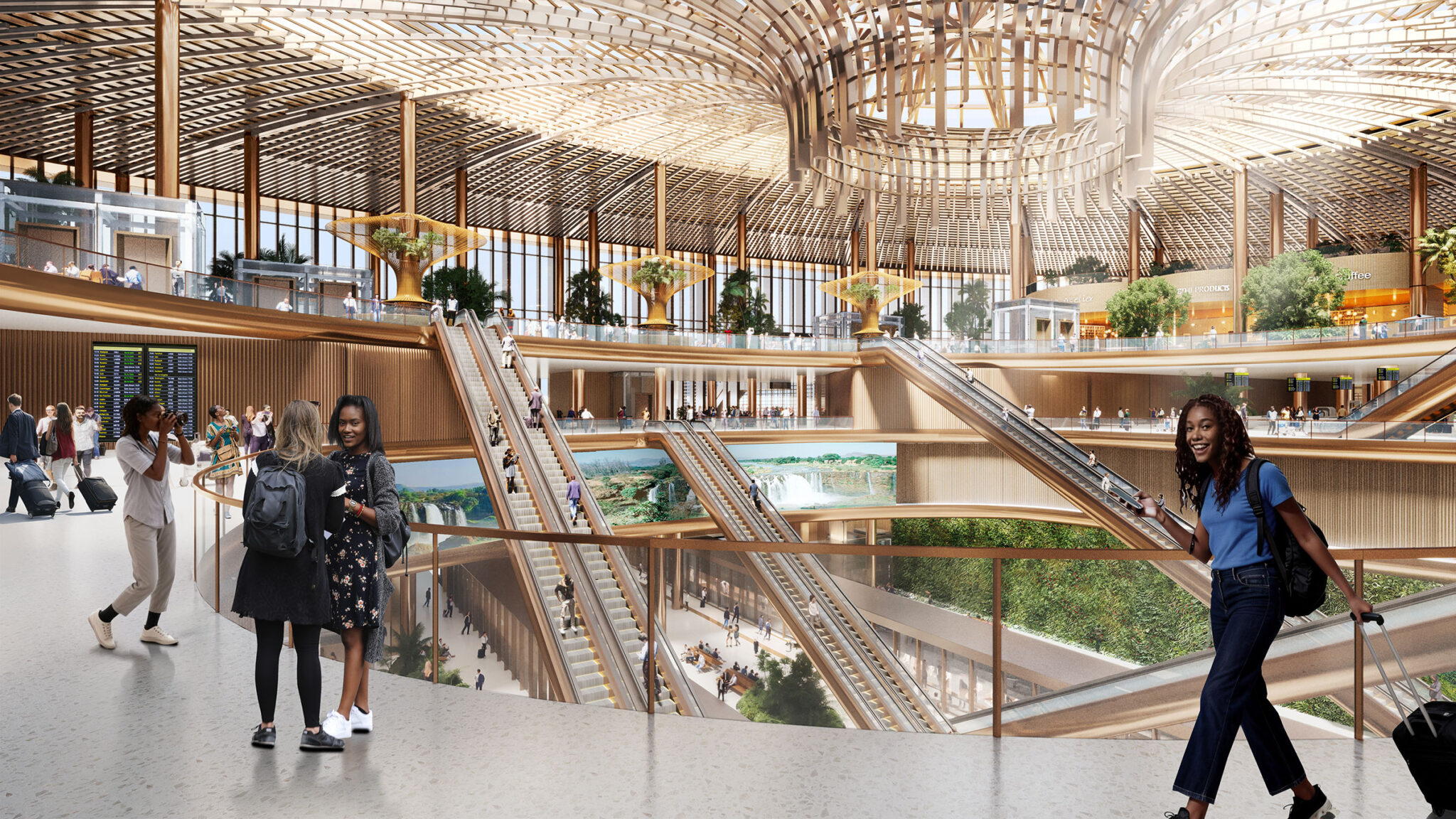
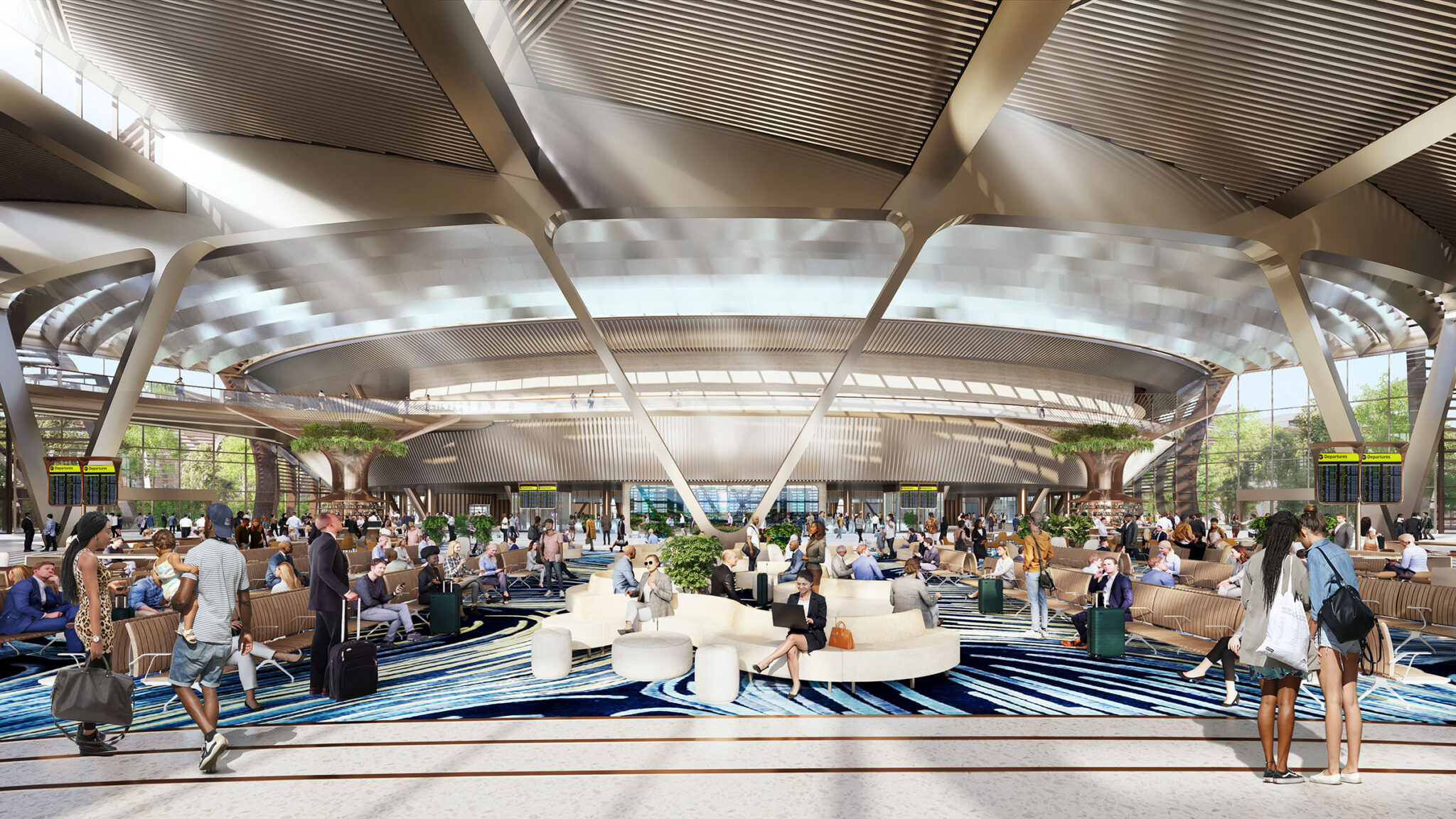
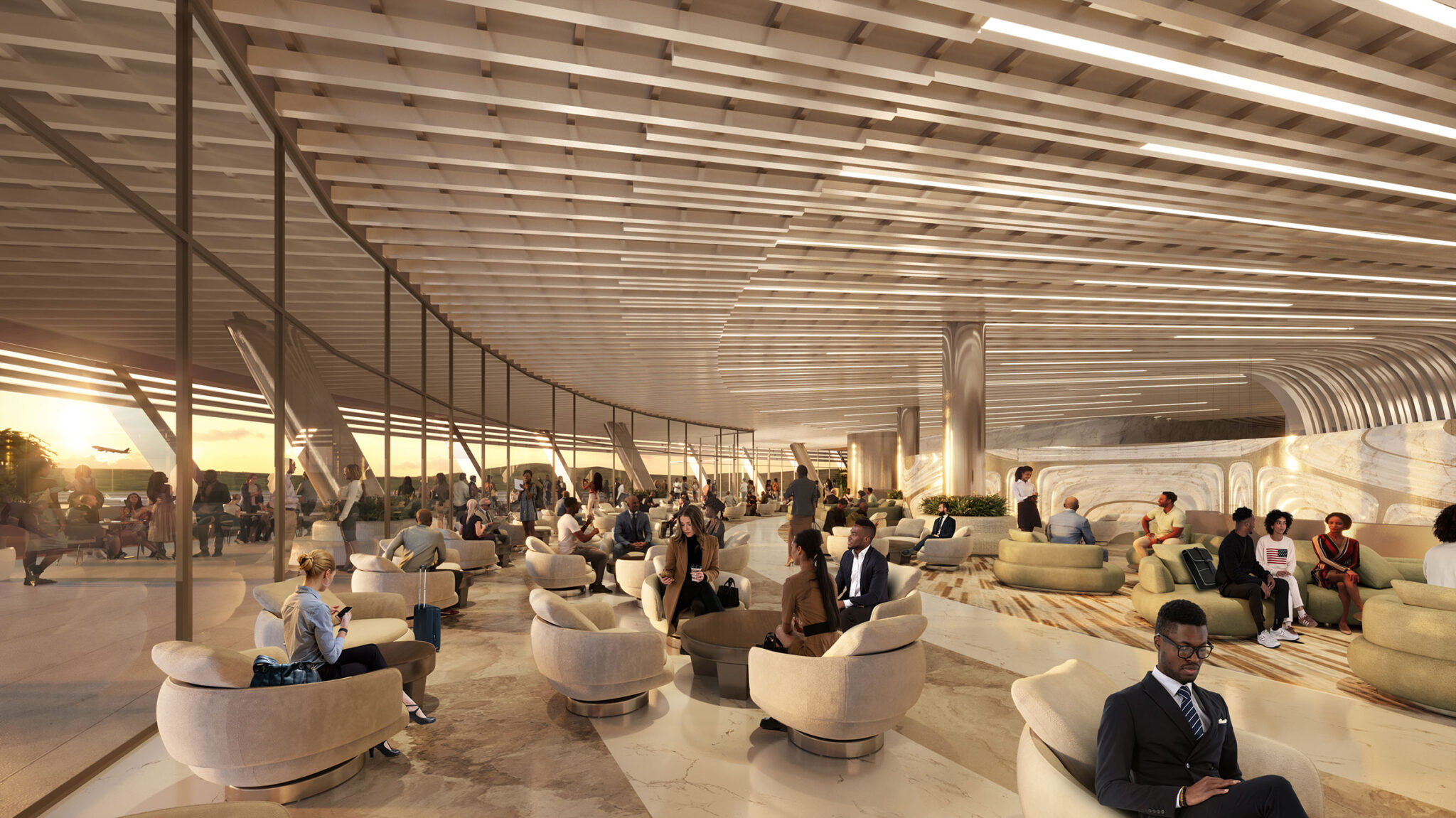
最大で旅客の80%が空港外に出ることなく目的地間を乗り継ぐことから、BIAはこうした要件に対応するよう設計されていて、350室を備えるエアサイドホテル、多彩な飲食・エンターテインメント施設、さらにくつろぎのための屋外庭園や中庭などを含んでおり、乗り継ぎ旅客向けの充実したアメニティを取り入れています。
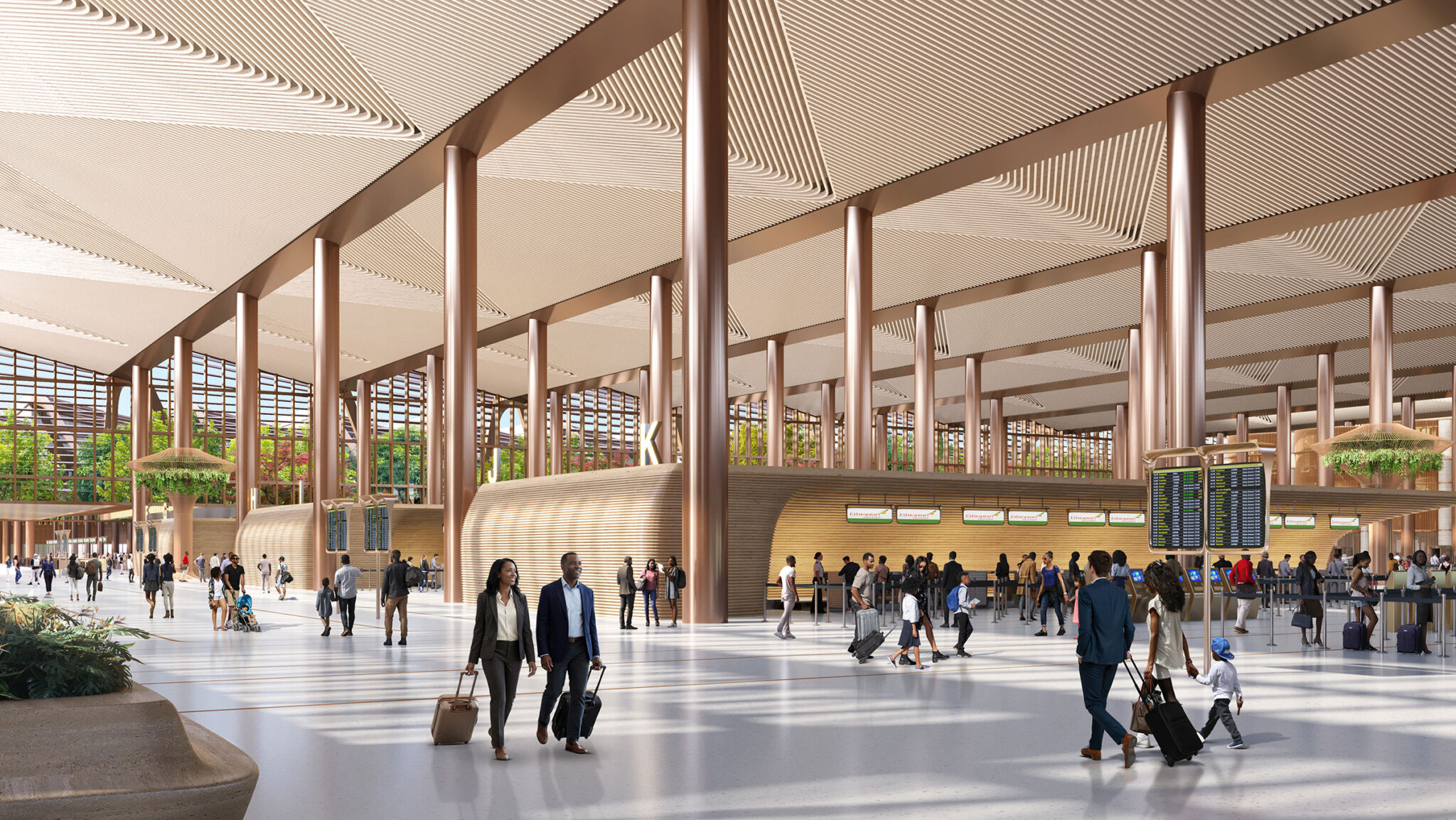
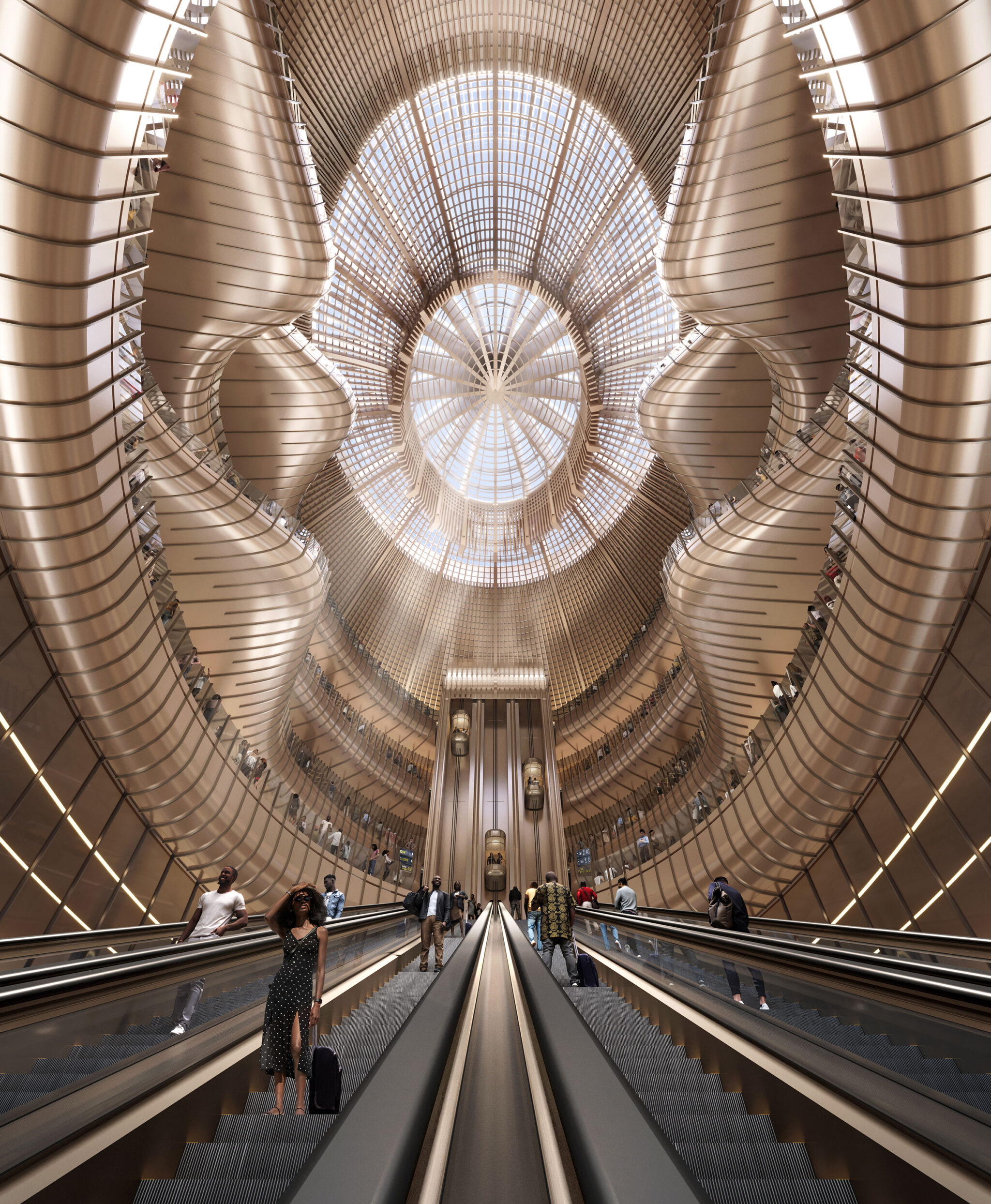
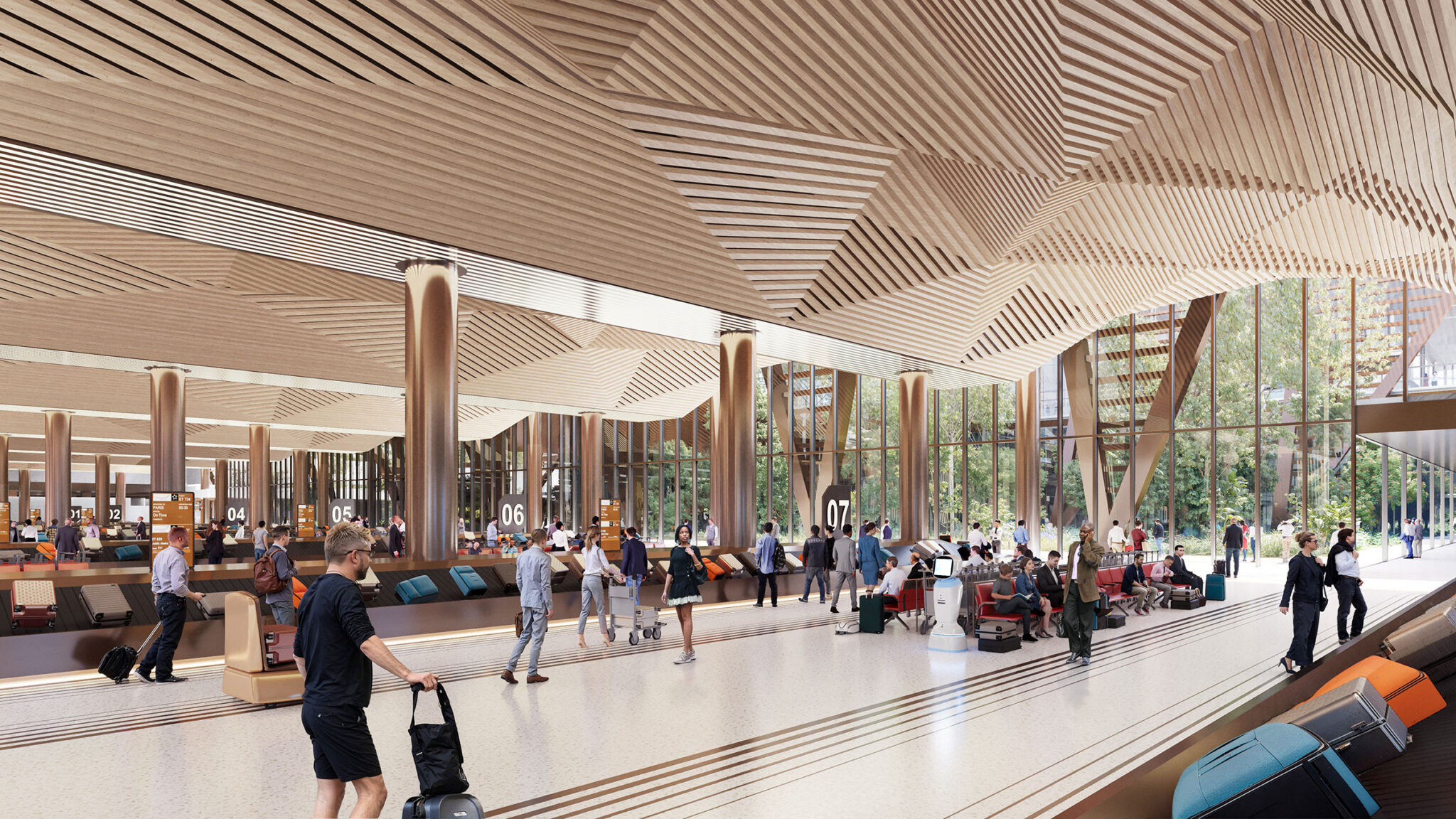
各ターミナルの搭乗棟には、エチオピアの多様な地域性を反映するため、独自の内装素材とカラーパレットが取り入れられています。国土を横断し、ビショフトゥ近郊を通過するグレート・リフト・バレーから着想を得て、一本の中央動線がターミナルの各施設と搭乗棟を結び、乗り継ぎ距離を最小限に抑えるとともに、乗り継ぎ旅客が次の出発ゲートへ容易に移動できるようにしています。
BIAは、アディスアベバにある既存のボレ国際空港よりも標高が約400メートル低く、さらに滑走路が長いことから、航空機の性能向上が見込まれ、エチオピア航空は最新鋭機材の最大離陸重量(MTOW)を最適化することが可能となります。これにより、より少ない燃料で、より多くの旅客と貨物を、より遠方の世界各地へノンストップで輸送できるようになります。
2030年の初期開業を目標に、BIAは複数の段階に分けて建設されます。第1期には、独立運用が可能なコード4Eの平行滑走路2本と、年間6,000万人(60MAP)の旅客に対応する延べ床面積66万㎡のターミナルが含まれます。後続する段階では、滑走路4本と270機分の駐機スペースを備え、BIAは年間最大1億1,000万人の旅客を受け入れられるようになります。
ザハ・ハディド・アーキテクツの航空部門ディレクターであるクリスティアーノ・チェッカート・デ・サバタ(Cristiano Ceccato de Sabata)は、述べています。「ビショフトゥ国際空港は、エチオピアおよびアフリカ全体にとって先見性のあるプロジェクトです。空港は人々を結びつけ、国家間の隔たりを橋渡しします。ZHAはその開発に参画できることを光栄に思っており、この開発はアフリカの世界的な玄関口として、大陸のあらゆる地域を結びつけるものです」
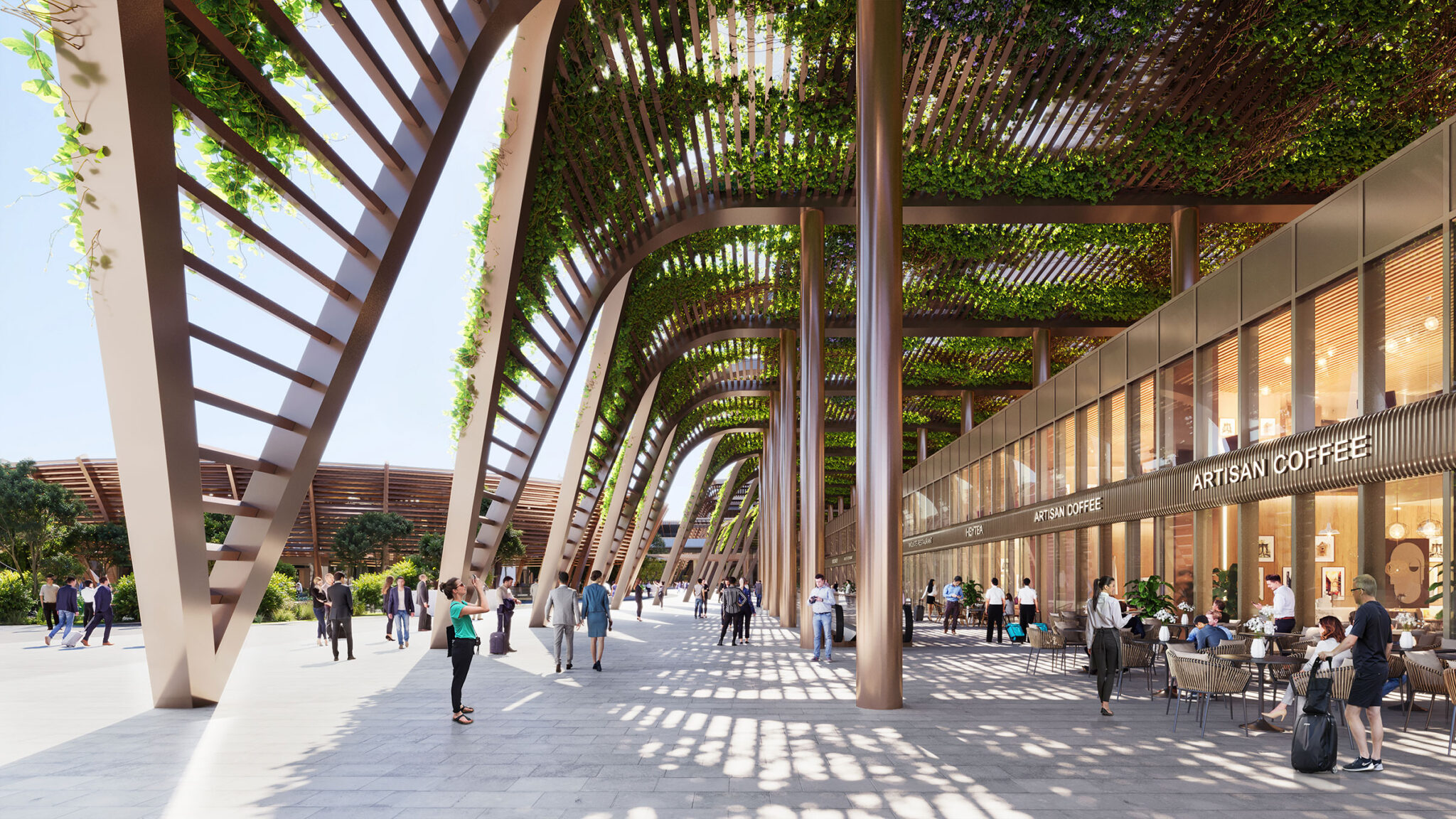
エチオピアのオロミア地域の温暖な亜熱帯高地気候の中にあるBIAの旅客ターミナルは、LEEDゴールド認証の取得を目指して設計されています。ターミナルは、効果的な日射遮蔽とともに自然換気され、乗り継ぎ旅客がこの地域の温暖な夏と穏やかな冬を楽しめるよう、半屋外空間や屋外エリアが設けられます。
柔軟性と費用対効果の高い効率性を確保するため、モジュール化された製作および組み立て方式で建設されるBIAの調達においては、ビショフトゥで生産または再生されたコンクリート、骨材、鋼材が取り入れられます。
空港の滑走路、誘導路、エプロンからの雨水および旅客ターミナルや貨物施設の屋根からの雨水は、新設される湿地やバイオスウェイルに導水され、貯留・再利用されるとともに、空港周辺の生物多様性を高めます。BIA全域に設置される太陽光発電設備により、敷地内でのエネルギー生産が可能になります。
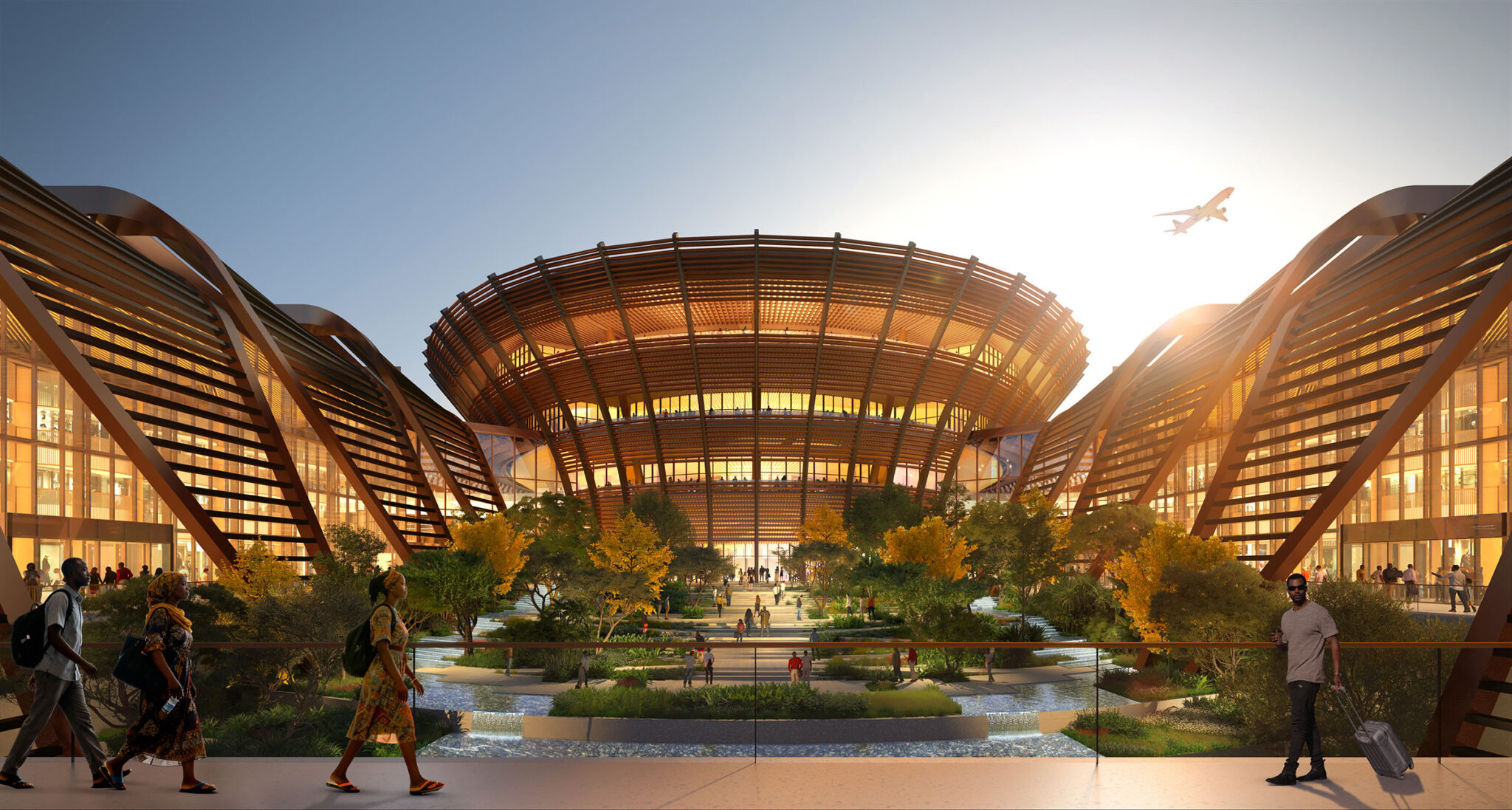
移植された樹木を含む在来の耐乾性植物による植栽が施されたBIAの設計は、地域住民のためのランドサイドの公共公園と、旅客のためのエアサイドの庭園を統合しています。
BIAは高速鉄道によってアディスアベバ中心部および既存のボレ国際空港と結ばれ、新たな地域交通ネットワークの中核となります。門限を設ける必要のない24時間運用のために特別に立地されたBIAと、複合用途の建物から成る一体型のエアポートシティは、8万人の地域住民を支える新たな雇用を創出するとともに、エチオピア航空が急速な成長を継続し、将来の旅客需要に対応することを可能にします。これらの新たな開発は、航空会社の「ビジョン2035」戦略を支えるものであり、技術と効率性に重点を置きつつ、旅客、貨物、MRO(整備・修理・オーバーホール)サービスを提供する世界有数の航空グループへと発展するものです。
以下の写真はクリックで拡大します
以下、リリーステキストです。
Bishoftu International Airport construction begins
Addis Ababa, Ethiopia
Ethiopian Airlines Group, the leading carrier in Africa, has begun construction of the continent’s largest airport, approximately 40 km south of the Ethiopian capital Addis Ababa in Bishoftu.
Phase One of the new Bishoftu International Airport (BIA) will serve 60 million passengers a year. Further phases will serve up to 110 million passengers annually with four runways and parking for 270 aircraft.
Meeting IATA regional growth forecasts for passenger demand, the US$12.5 billion investment in BIA will optimise Ethiopia’s position at the crossroads of Africa, Asia and the Middle East with a global transportation hub for the 21st century.
Construction has begun on the new Bishoftu International Airport (BIA) approximately 40 km south of the Ethiopian capital Addis Ababa. Ethiopia’s Prime Minister Abiy Ahmed Ali laid the cornerstone at the airport’s groundbreaking ceremony on Saturday 10th January 2026.
“Bishoftu International Airport will be the largest aviation infrastructure project in Africa’s history, more than four times the capacity of Ethiopia’s current main airport which will reach its limits on existing traffic in the next two to three years,” said the Prime Minister.
BIA will serve Ethiopian Airlines, Africa’s largest carrier. Designed by Zaha Hadid Architects to meet the airline’s future passenger demand and operational needs, BIA will become Africa’s global aviation hub, providing facilities of the highest standard with a strong focus on transferring passengers.
With up to 80% of passengers transiting between destinations without leaving the airport, BIA has been designed to accommodate these requirements—incorporating extensive amenities for transiting passengers including airside hotel with 350 guestrooms, a wide variety of dining and entertainment facilities, as well as outdoor gardens and courtyards for relaxation.
Each of the terminal’s piers incorporates a unique interior materiality and colour palette to reflect the diverse regions of Ethiopia. Inspired by the Great Rift Valley that passes near Bishoftu as it crosses through the country, a single central spine connects the terminal’s facilities and aircraft piers—minimising transfer distances and ensuring connecting passengers can easily navigate to their next departure gate.
BIA’s elevation at almost 400m lower than Addis Ababa’s existing Bole Airport—in addition to BIA’s longer runways—will enhance aircraft performance, enabling Ethiopian Airlines to optimise the maximum take-off weight (MTOW) of their modern fleet of aircraft—using less fuel to carry more passengers and cargo on longer-range, non-stop flights to further global destinations.
Targeting an initial opening in 2030, BIA will be constructed in multiple stages. The first phase will include two Code 4E independent-operating parallel runways and 660,000m² terminal serving 60 million passengers annually (60MAP). Further phases will enable BIA to accommodate up to 110 million passengers every year with four runways and parking for 270 aircraft.
Cristiano Ceccato de Sabata, Zaha Hadid Architects’ Director of Aviation, said: “Bishoftu International Airport is a visionary project for Ethiopia and Africa as a whole. Airports bring people together and bridge national divides. ZHA is honoured to be part its development—connecting every region of the continent as Africa’s global gateway”
Situated within the temperate subtropical highland climate of Ethiopia’s Oromia region, BIA’s passenger terminal is designed to achieve LEED Gold certification. The terminal will be naturally ventilated with effective solar shading and will include semi-enclosed spaces and outdoor areas for transferring passengers to enjoy the region’s warm summers and mild winters.
Constructed using modular fabrication and assembly to ensure flexibility and cost-effective efficiency, BIA’s procurement will incorporate concrete, aggregates and steel that have been produced or recycled locally in Bishoftu.
Stormwater from the airport’s runways, taxiways and aprons—as well as the roofs of the passenger terminal and cargo buildings—will be channelled into new wetlands and bioswales for storage and reuse while also enhancing the airport’s local biodiversity. Photovoltaic arrays installed throughout BIA will enable on-site energy production.
Landscaped with native drought-resistant planting including resettled trees, BIA’s design integrates landside public parks for local residents and airside gardens for passengers.
BIA will be connected to the centre of Addis Ababa and the existing Bole Airport via a high-speed rail link, serving as the cornerstone of a new regional transport network. Specifically located for 24-hour operations without the need for a curfew, BIA and its integrated Airport City of mixed-use buildings will create new jobs supporting a local population of 80,000 and enable Ethiopian Airlines to continue its rapid growth and meet future passenger demand. These new developments support the airline’s ‘Vision 2035’ strategy, becoming a leading global aviation group offering passenger, cargo, and MRO (Maintenance, Repair, and Overhaul) services with a focus on technology and efficiency.
■建築概要
Project Team
Client: Ethiopian Airlines (Federal Government of Ethiopia)
Lead Consultant and Airport Planner: DAR (Dar Al Handasah)
Terminal Planner and Design Architect: Zaha Hadid Architects (ZHA)
ZHA Project Director: Cristiano Ceccato de Sabata
ZHA Project Manager: Paul Brislin
ZHA Project Leader: Clara Martins
ZHA Board Oversight: Charles Walker, Mouzhan Majidi
ZHA Project Architects: Leo Alves (Planning), Sai Prateik Bhasgi (Design), Electra Mikelides (Airport City)
ZHA Project Team: Abhilash Menon, Abhishek Jain, Adam Twigger, Aditya Ambare, Afsoon Eshaghi, Akis Polykandriotis, Aleksander Mastalski, Amin Divshali, Arnon van Embden Spanjaard, Aurora Santana, Bahaa Alnassrallah, Bechara Malkoun, Canon Lee, Carlos Bausa Martinez, Charles Walker, Chiara D’Anna, Christoph Geiger, Clara Martins, Cristiano Ceccato de Sabata, Cristina Barrios Cabrera, Dahyun Kim, Danae Mavridi, David Fogliano, Disha Shetty, Electra Mikelides, Elizabeth Konstantinidou, Evgeniya Yatsyuk, Fara Tengku Nasrudin, Genci Sulo, Ghanem Younes, Haohao Chen, Haoyue Zhang, Hyun Jin Kim, Jasmine Abu Hamdan, Jing Xu, Juan Fernandez Castanada, Julian Lin, Jung Yeon Kwak, Karmung Sze, Ken Bostock, Khaled Omara, Laetitia Khachwajian, Lars Elseth, Lenie Mets, Leo Alves, Liam Rogers, Marcella Fedele, Marco Cosmi, Maria Bystrova, Maria-Christina Manousaki, Mariagrazia Lanza, Matt Walker, Meenakshi Sharma, Michael O’Reilly, Michael Rogers, Michelle Sin, Mouzhan Majidi, Murathan Alp Ozok, Nassim Eshaghi, Nicolas Tornero, Ninad Katdare, Ningxin Zheng, Paul Brislin, Pavlos Symianakis, Peter Safranka, Ruzena Maskova, Sai Prateik Bhasgi, Shajay Bhooshan, Shao-wei Huang, Shibani Choudhury, Simona Viviani, Tul Srisompun, Ulrich Blum, Vasiliki Sargkani, Vegard Elseth, Vishu Bhooshan, Wo Lin, Yara Manla, Yaseen Bhatt
───
Consultants
Contractors: Beijing Urban Construction Group (Enabling Works), China Communications Construction Company (Infrastructure)
Lead Consultant and Executive Architect: DAR Dar Al Handasah
Executive Interiors Architect: Pascall + Watson
Structural Engineers: DAR
Geotechnical Engineers: DAR
Cost Management: DAR
Environmental Sustainability: DAR
Façade Engineering: Maffeis
MEP Engineering: DAR
VHT Engineering: DAR
Transport Consultant: DAR
Fire Engineer: DAR
Landscape Consultant: DAR UK
Architectural Lighting Design: Spectrum
Acoustic Consultant: DAR
Baggage Handling System: BNP Associates Inc.
ICT & Low Voltage: DAR
Security Planning: DAR
Wayfinding: DAR
Retail Planning & Analytics: Portland Design
Airfield and Apron Planning: Landrum & Brown
Airfield City Planner: SPADA Ltd.
Airport Master Planner: DAR + ZHA