SHARE 妹島和世+西沢立衛 / SANAAによる、台湾・台中の「Taichung Green Museumbrary」。広大な公園内の美術館と図書館の複合施設。気軽に関われる“開かれた建築”として、メタルメッシュで覆われた量塊を持上げて地上レベルを開放した建築を考案。二つの用途を組合せて多面的な学びの空間の創出も意図

妹島和世+西沢立衛 / SANAAによる、台湾・台中の「Taichung Green Museumbrary」です。
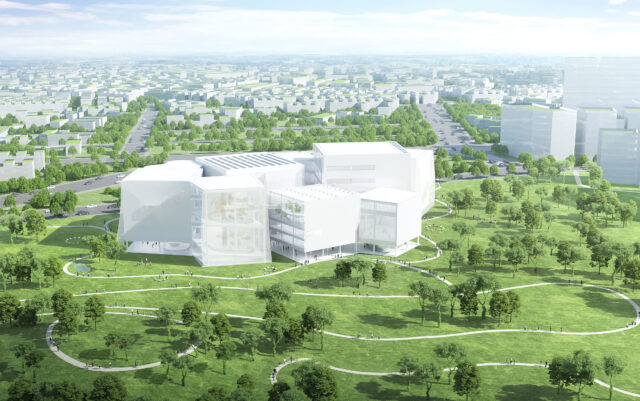
広大な公園内の美術館と図書館の複合施設です。建築家は、気軽に関われる“開かれた建築”として、メタルメッシュで覆われた量塊を持上げて地上レベルを開放した建築を考案しました。また、二つの用途を組合せて多面的な学びの空間の創出も意図されました。
こちらはリリーステキストです(抄訳:アーキテクチャーフォト / 原文は末尾に掲載)
台湾の画期的な新たな文化的ランドマーク、プリツカー賞受賞建築家SANAAが設計したTaichung Green Museumbraryが、20か国以上から70名を超えるアーティストによる大規模展覧会とともに開館
・プリツカー賞および2025年RIBAロイヤル・ゴールド・メダルを受賞した日本の建築家SANAAによるこれまでで最大の文化プロジェクトであり、67ヘクタールの緑地公園内にある8つの相互に連結したヴォリュームを含んでいます。
・新たに開館する台中美術館(Taichung Art Museum)が、台湾のアーティスト、マイケル・リン(Michael Lin)と韓国のアーティスト、ヘグ・ヤン(Haegue Yang)によるパブリックスペース・コミッションを公開します
・台中美術館の開館記念展「A Call of All Beings」には、20か国以上から70名を超えるアーティストが参加しています
2025年における台湾で最も重要な文化的開発とされるTaichung Green Museumbraryが、台湾第2の都市である台中にて、2025年12月13日(土)、市長をはじめ各地から訪れる要人、美術館館長、キュレーター、アーティストらが出席する開会式の後、正式に一般公開されます。この新たな国際的文化拠点は、都市型の美術館と市の中央図書館を統合した台湾初の施設であり、芸術機関の新たなモデルを提示しています。
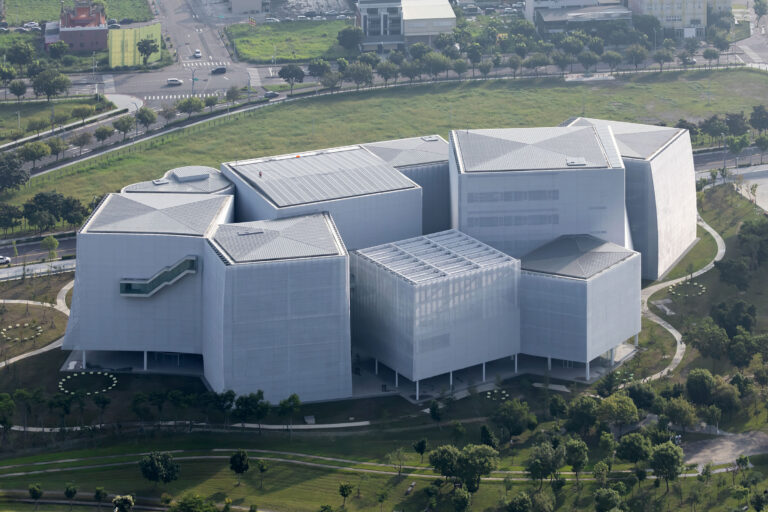
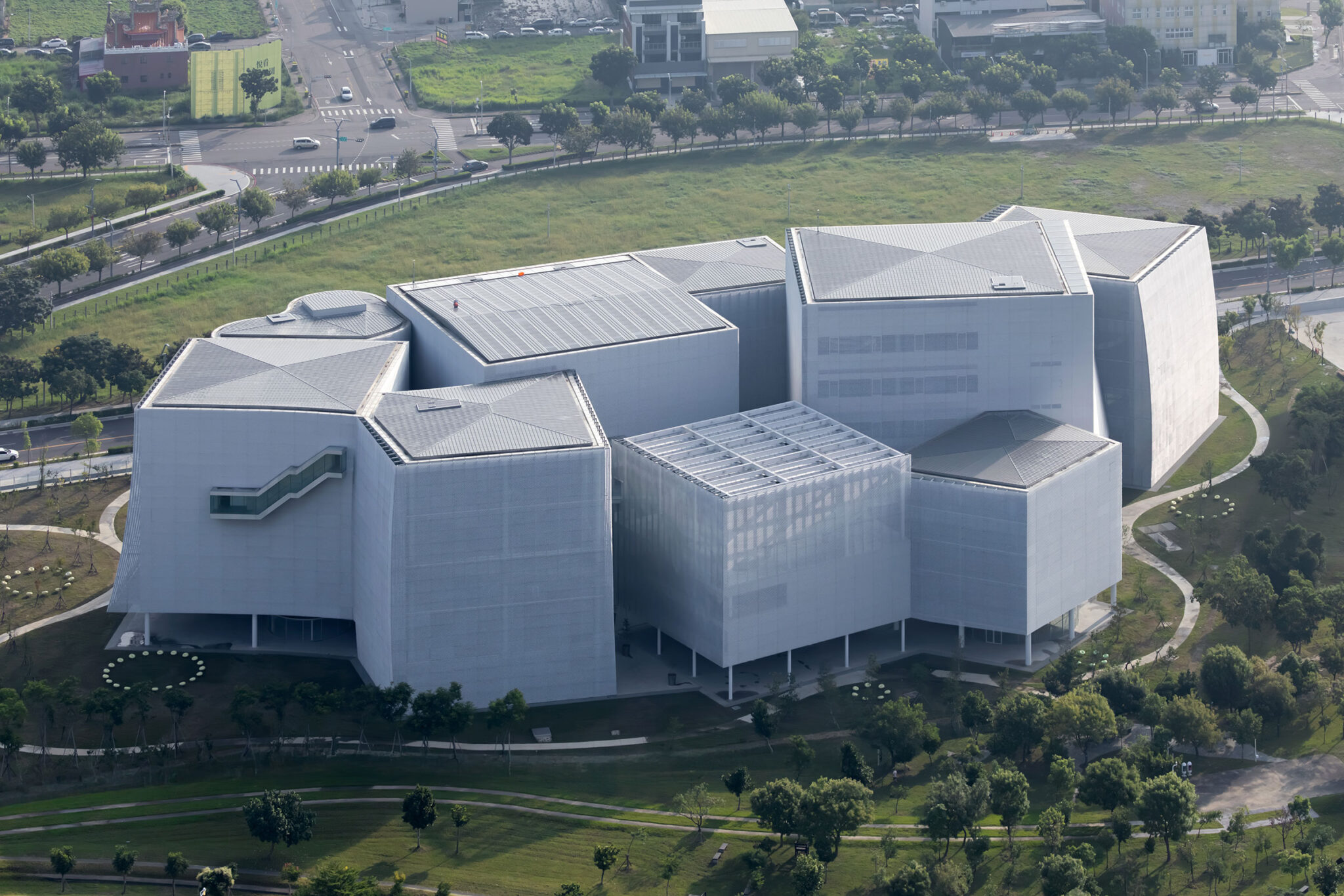
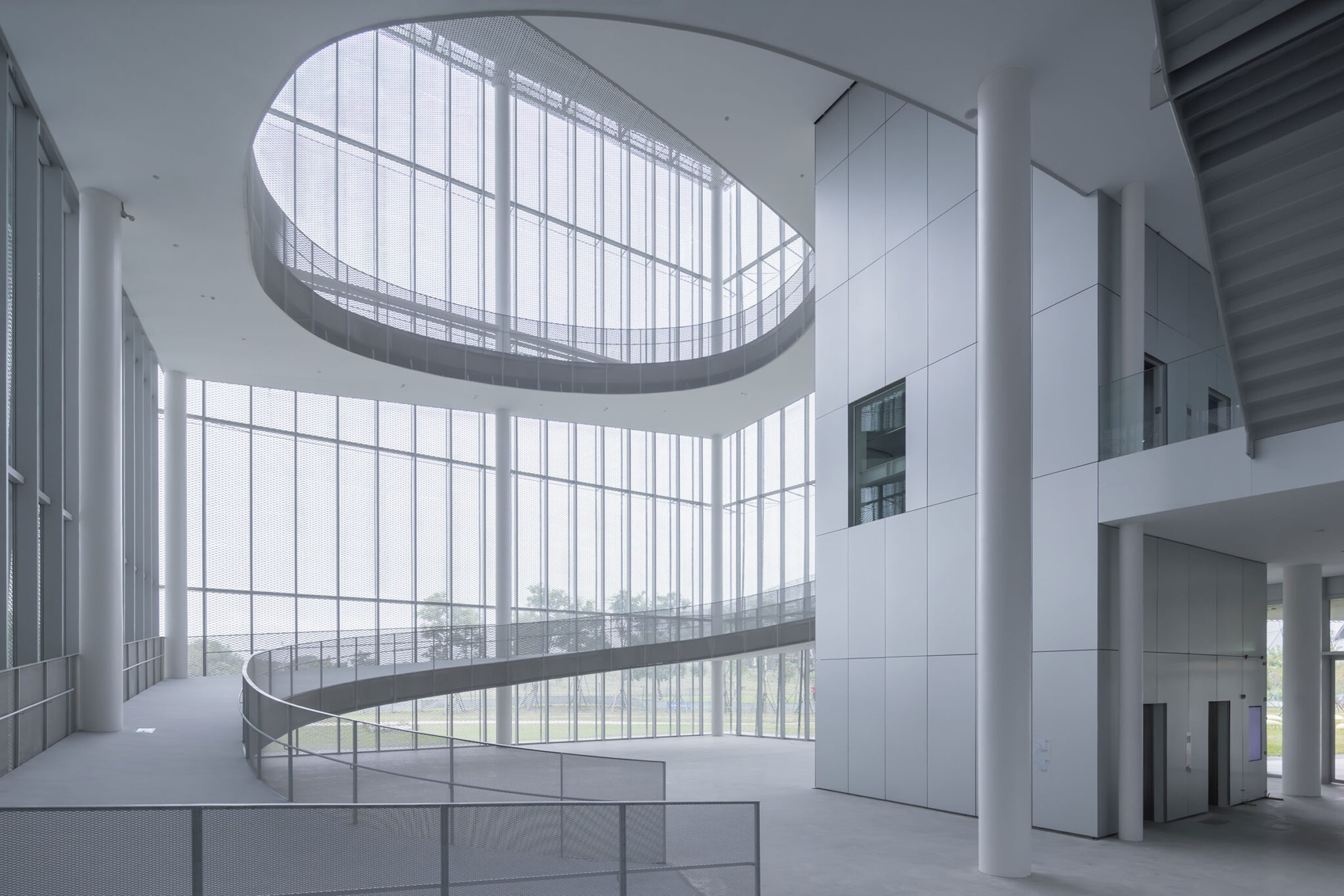
台中の67ヘクタールにおよぶセントラルパーク内に位置するTaichung Green Museumbraryは、新設された台中美術館と台中公共図書館(Taichung Public Library)を併設する施設です。この壮観な美術館と図書館から成る複合施設は、2010年プリツカー賞受賞者である妹島和世と西沢立衛が率いる日本の著名な建築チームSANAAと、台湾のRicky Liu & Associates Architects + Plannersとの国際的な協働によって設計されました。この建物の延べ床面積は57,996㎡におよび、SANAAにとって台湾で初の公共建築であると同時に、これまでで最大の文化的プロジェクトでもあります。この設計は、透明性と流動性というSANAAの特徴的なテーマを反映しており、ガラスと金属で覆われた大小さまざまな8つの連結されたボリュームから成り、それら全体が純白のエキスパンドメタル製カーテンファサードに包まれています。
台中美術館(TcAM)は、2025年12月13日から2026年4月12日まで、台湾、ルーマニア/韓国、アメリカからなる国際的なキュレーター・チームが企画した開館記念展「A Call of All Beings: See you tomorrow, same time, same place」で開幕します。この展覧会には20か国以上から70名を超えるアーティストが参加し、地域の視点とグローバルな洞察が融合されています。同館はまた、ヘグ・ヤンとマイケル・リンによる初のTcAMパブリックスペース・アート・コミッションを公開し、国際的な対話に取り組むことで、現代美術における文化的な力としての地位を確立します。
台中美術館館長のイーシン・ライ(Yi-Hsin Lai)は、次のように述べました。「台中美術館と台中公共図書館、そして公園との統合は、環境、文化、人々、そして都市についての私たちの思考を活性化させました。開館記念展と特別なコミッションを通じて、私たちは世代や文化を超えた芸術的対話を融合させるだけでなく、美術館が都市とその住民の日常生活に入り込み、創造性と想像力を喚起するという可能性を実現することにも努めています。私たちは、訪れる人々がそれぞれに特別な思い出や体験を生み出せる、温かく迎え入れる空間となることを楽しみにしています」
台中市政府文化局局長のジャジュン・チェン(Jia-Jun Chen)は、次のように述べました。「Taichung Green Museumbraryの完成は、台中市による継続的な文化投資における重要な節目となります。これは、台中市の先進的な文化政策とイノベーションへの取り組みを象徴するものです。私たちは、近隣から遠方まであらゆる来訪者が楽しめる、この並外れて親しみやすい建築の傑作を台中市に贈ってくれたSANAAに深く感謝しています」
建築
台湾第2の都市である台中市(人口280万人)に位置するTaichung Green Museumbraryは、2004年に閉鎖された旧軍用空港の跡地に整備された、254ヘクタールのスイナン経済貿易地区内にある67ヘクタールのセントラルパークの北端に立地しています。SANAAの設計は、「公園の中の図書館、森の中の美術館」というTaichung Green Museumbraryの理念を体現しており、空間的な特徴としては以下の点が挙げられます。
境界のない、包摂的な空間
この施設は、美術館と図書館の従来の境界を取り払い、展示と読書が交わる、開かれた包摂的な環境を創出しています。台中公共図書館には、100万点を超える紙の書籍とデジタル資料が所蔵されています。
屋外の屋上庭園
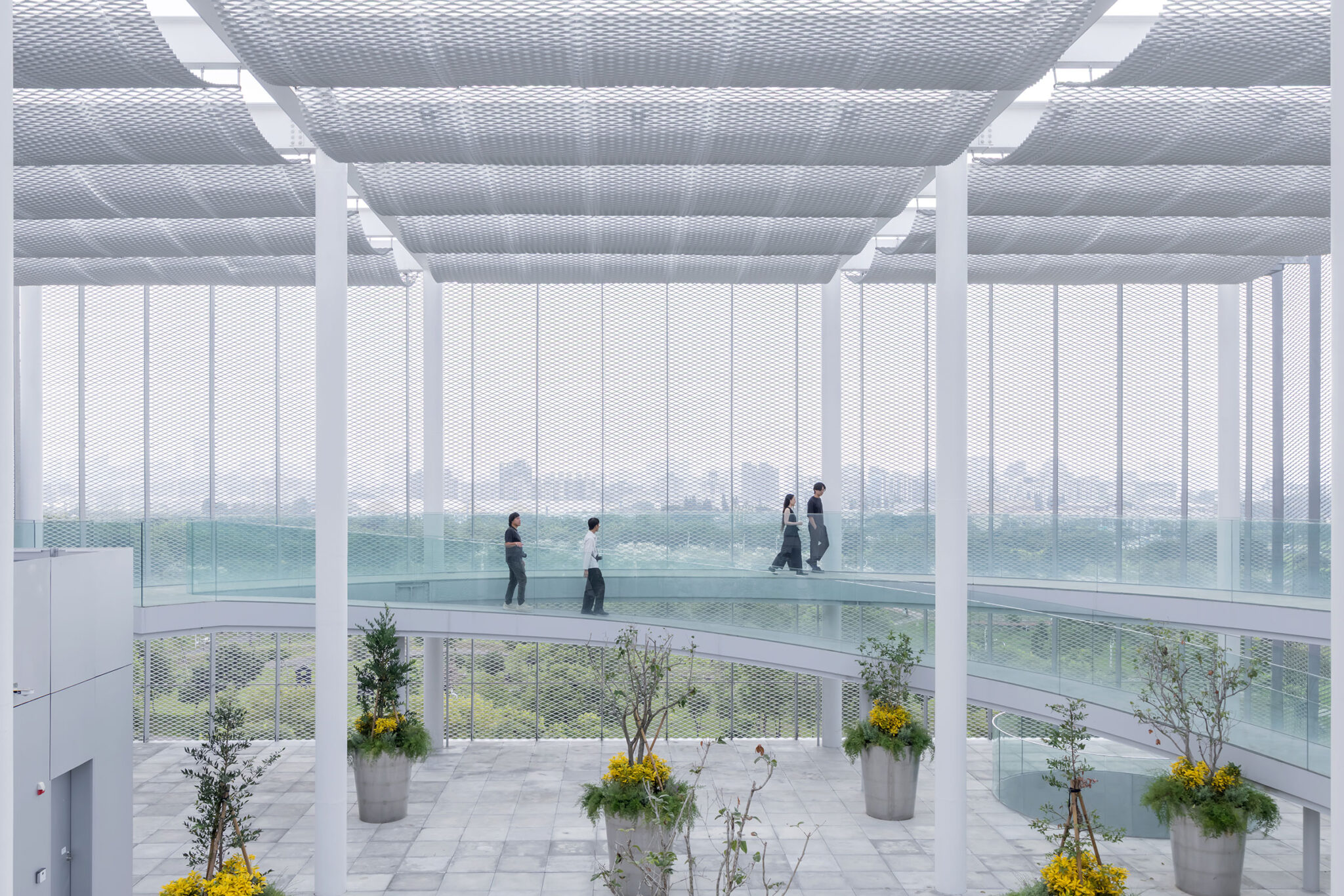
屋外の屋上庭園カルチャー・フォレストは、セントラルパークの豊かな緑と都市のスカイラインを一望できる絶好の展望スポットを来訪者に提供します。セントラルパークという特有の立地を称えることを意図して設計されたこの屋上庭園は、美術館や図書館を訪れる人々が、この特有の景観に屋上から浸ることを促しています。
透明性と開放性
外装は二重構造のファサードとなっており、内側には高性能な低放射ガラスまたは金属パネル、外側にはアルミ製のエキスパンドメタルメッシュが用いられています。この銀白色のヴェールは、建物に軽やかさと透明感を与えています。建築ヴォリュームは持ち上げられており、公園の風や自然光が自由に通り抜けられるようにすることで、建物とその周囲とのつながりを高めています。地上階に設けられた日陰の広場により、近隣地域からもセントラルパーク側からも、あらゆる方向から建物へアクセスできるようになっており、開かれた魅力的な公共空間を生み出しています。
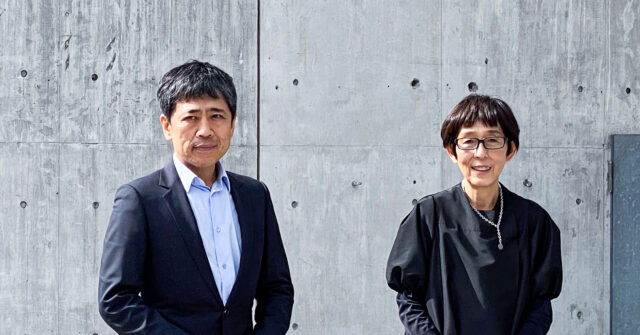
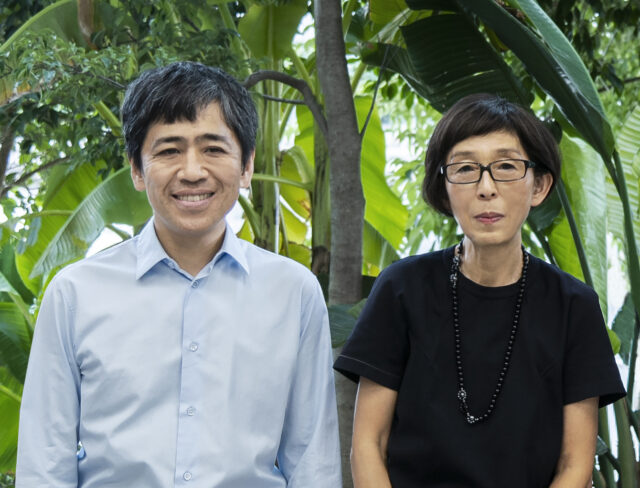
SANAAのパートナーである妹島和世と西沢立衛は、次のように述べました。「私たちは、多くの人々が気軽に関わることのできる開かれた建物をつくることを常に願ってきました。美術を通じた視覚的な学びを提供する美術館であれ、文学を通じた教育を提供する図書館であれ、この二つを組み合わせて新たな多面的な学びの空間を創出することこそが、この建物の主要な特徴の一つであると私たちは考えています。私たちは、人々にとって学びと交流をつなぐ場所をつくるために、これら二つの存在をどのようにやわらかく結びつけるかを慎重に考えてきました。」
以下の写真はクリックで拡大します





以下、リリーステキストです。
Taiwan’s Groundbreaking New Cultural Landmark, Taichung Green Museumbrary, Designed by Pritzker-Winning Architects SANAA, Opens with Major Exhibition with over 70 Artists from 20 Nations
・Pritzker Prize and 2025 RIBA Royal Gold Medal-winning Japanese architects SANAA’s largest cultural project to date, including 8 interconnecting volumes located in a 67-hectare green park
・The new Taichung Art Museum unveils public space commissions by Taiwanese artist Michael Lin and Korean artist Haegue Yang
・Taichung Art Museum’s opening exhibition ‘A Call of All Beings’ includes over 70 artists from 20 nations
Considered Taiwan’s most important cultural development of 2025, Taichung Green Museumbrary, located in Taiwan’s second largest city Taichung, will officially open to the public tomorrow, Saturday 13 December 2025, after an opening ceremony attended by the Mayor as well as dignitaries, museum directors, curators and artists who will have travelled to the city from far and wide. The new international cultural destination is Taiwan’s first venue to integrate a metropolitan art museum and the city’s central library – presenting a new model for arts institutions.
Located within Taichung’s 67-hectare Central Park, Taichung Green Museumbrary is home to the new Taichung Art Museum and the Taichung Public Library. The spectacular dual-venue complex was designed through an international collaboration between SANAA – the renowned Japanese architectural team led by 2010 Pritzker Prize laureates Kazuyo Sejima and Ryue Nishizawa – and Taiwan’s Ricky Liu & Associates Architects + Planners. The building covers a total floor area of 57,996 square metres and is both SANAA’s first public building in Taiwan and their largest cultural project to date. The design reflects SANAA’s signature themes of transparency and fluidity, comprising eight interconnected volumes of varying sizes clad in glass and metal, which are enveloped by a pristine white expanded metal mesh curtain facade.
Taichung Art Museum (TcAM) opens with the inaugural exhibition ‘A Call of All Beings: See you tomorrow, same time, same place’ (13 December 2025 – 12 April 2026), curated by an international team from Taiwan, Romania/South Korea and the United States. The exhibition brings together more than 70 artists from over 20 nations, blending local perspectives with global insights. The museum will also unveil the first TcAM Art Commissions in Public Space from Haegue Yang and Michael Lin, establishing itself as a cultural force in contemporary art with a commitment to international dialogues.
Yi-Hsin Lai, Director of Taichung Art Museum, said, “The integration of Taichung Art Museum with Taichung Public Library and the park has activated our thinking about the environment, culture, people and the city. With the inaugural exhibition and the special commissions, we not only combine artistic dialogues across generations and cultures, but also strive to fulfil the potential of an art museum to enter the everyday life of the city and its residents, as well as to inspire creativity and imagination. We look forward to making this a welcoming space for visitors to create unique memories and experiences of their own.”
Jia-Jun Chen, Director of the Cultural Affairs Bureau of Taichung City Government, said, “The completion of Taichung Green Museumbrary is a milestone in the city’s sustained investment in culture. It is emblematic of the city’s forward-thinking cultural policy and commitment to innovation. We are grateful to SANAA for gifting this extraordinarily welcoming architectural marvel to our city for all visitors from near and afar to enjoy.”
Taichung Art Museum
Under the leadership of Director Yi-Hsin Lai, Taichung Art Museum is dedicated to supporting local artistic practices while fostering international exchange and dialogue between Taiwanese and global art communities. Its exhibition programme embraces open and cross-disciplinary perspectives, inviting the public into new experiences of exploration and sensory immersion. Central to the museum’s vision are reflections on environmental concerns, cultural infrastructure, and urban development, as well as a unique partnership with the Public Library. The museum is the most important addition to Taiwan’s vibrant art scene following the founding of the Taipei Biennial (1998), Taipei Art Week (2024), and New Taipei City Art Museum (2025).
Opening Exhibition ‘A Call of All Beings: See you tomorrow, same time, same place’
Co-curated by Taichung Art Museum’s curatorial team alongside Ling-Chih Chow (Taiwan), Alaina Claire Feldman (USA) and Anca Mihulet-Kim (Romania/South Korea), Taichung Art Museum’s opening exhibition ‘A Call of All Beings: See you tomorrow, same time, same place’ draws inspiration from the natural and urban landscape surrounding the museum, interweaving architectural openness with diverse artistic perspectives across generations. Featuring works by more than 70 artists from over 20 countries, the curatorial collaboration weaves multiple methodologies – from Daoist philosophies to indigenous cosmologies, from embodied knowledge to non-Western perspectives – creating a multivocal framework that resists singular narratives about nature, culture, and interspecies relations.
The exhibition draws from the museum’s collection and new commissions to trace how human-nature relationships have been imagined and transformed. Central Taiwan masters establish historical grounding: Chen Ting-Shih’s The First Crack of Thunder (1972) renders natural forces through cane fibre relief; Yeh Huo-Cheng captures Mount Huoyan’s mineral-rich earth with impasto; Wang Ching-Shuang’s lacquer work employs maki-e and mother-of-pearl inlay. Chen Hsing-Wan’s The Song of the Earth No.1 uses cowhide as ground for hardened fabric forms—the leather pulsing with vitality while textiles congeal into permanence.
Contemporary commissions extend these investigations. Chen Yin-Ju’s Evocative of Mountains and Seas reconstructs mythical animals from the 2,000-year-old Chinese bestiary through sound, scent, and minimal text. Au Sow Yee’s The Broadcast Project II: A Many Splendored Thing of the Coconut, a Belle from Penang and the Secret Agent II interweaves colonial histories of Malaya through fictional narratives of coconut palms and fragmented archives. Hong-Kai Wang’s collaborative publication Our Words Don’t Suit Prophecies Anymore asks how we might listen to beings without language.
International contributions complicate human-nature binaries. Joan Jonas’ By a Thread in the Wind – bamboo paper kites suspended overhead – evokes uncanny species, requiring upward rather than forward-facing attention. Loukia Alavanou’s VR installation On the Way to Colonus reimagines Greek tragedy within Athens’ Roma settlement, transforming marginalised peripheries into sites of dignity. Karolina Bregula documents coastal communities confronting rising seas. Haitian artist Myrlande Constant’s beaded Vodou flags (drapos) blend faith, history, and social reality, presenting a cosmology where deities and humans coexist.
Artists engage architectural and performative dimensions. Seung Hyun Moon’s On Thin and Transparent Things activates galleries through bodies negotiating spatial barriers – the artist, born with cerebral palsy, interrogates relationships between consciousness and space. TAI Body Theatre’s performances invoke Truku mythology where giants’ bodies become island topography, transforming the museum into a “dwelling place of giants.”
The exhibition incorporates pivotal historical positions: Joseph Beuys’ late sculptures transform therapeutic objects into vessels for healing; Ana Mendieta’s final earth-body works merge corporeal and terrestrial surfaces; Chris Marker’s Bestiaire series explores reciprocal gazes between humans and animals; Antoine de Saint-Exupery’s Little Prince manuscripts provide meditations on care and imagination.
TcAM Art Commission in Public Space: Haegue Yang and Michael Lin
Taichung Art Museum responds to the visual permeability of architectural language with art commissions in the public spaces of the building on a biennial basis. TcAM Art Commission not only resonates with the architecture, but also the museum’s identity, integrating with its ecological and cultural landscape. Haegue Yang (South Korea) and Michael Lin (Taiwan) unveil their inaugural commissions within the museum.
Yang’s installation, Liquid Votive – Tree Shade Triad (2025) in the museum’s soaring 27-metre atrium encircled by a spiral ramp is her first large-scale commissioned piece in Taiwan. Inspired by the universal tradition of venerating old trees in South Korea, Taiwan, and beyond, her work pays homage to the local as well as transcultural spiritual beliefs in nature.
Based in Taipei and Brussels, Michael Lin has deep family roots in Taichung. His commissioned work, Processed (2025), orchestrates monumental painting installations that re-conceptualise and reconfigure public spaces using patterns and designs appropriated from traditional Taiwanese textiles.
Architecture
Located in Taiwan’s second largest city of Taichung (population 2.8 million), Taichung Green Museumbrary occupies the northern edge of the 67-hectare Central Park within the 254-hectare Shuinan Trade and Economic Park, the site of a former military airport decommissioned in 2004. SANAA’s design embodies the ethos of the Taichung Green Museumbrary as ‘a library in a park and an art museum in a forest’, with spatial highlights including:
A boundless, inclusive space
The facility dissolves traditional boundaries between museums and libraries, creating an open, inclusive environment where exhibitions and reading converge. The Taichung Public Library houses over 1,000,000 physical books and digital resources.
An outdoor rooftop garden
The outdoor rooftop Culture Forest offers visitors an exceptional vantage point to enjoy the sweeping views of Central Park’s lush greenery and the city skyline. Conceived to celebrate the site’s distinctive Central Park setting, it encourages museum and library visitors to immerse themselves in this unique landscape from the rooftop garden.
Transparency and openness
The exterior features a dual-layer facade: an inner layer of high-performance low-emissivity glass or metal cladding, and an outer layer of aluminium expanded metal mesh. This silvery-white veil gives the building a sense of lightness and transparency. The building volume has been lifted to allow the park’s breeze and natural light to flow freely through, enhancing the building’s connection to its surroundings. The shaded plazas at ground level enable visitors to access the building from all directions – both from the neighbourhood and from the Central Park – creating an open and inviting public space.
Kazuyo Sejima and Ryue Nishizawa, Partners of SANAA, said, “We have always hoped to create an open building that many people can easily participate in. Whether it is the museum providing visual learning through art or the library offering education through literature, combining the two to create a new multifaceted learning space is what we believe to be one of the main characteristics of this building. We have carefully considered how to gently link the two entities together to create a place that connects learning and communication for people.”
A Call of All Beings: See You Tomorrow, Same Time, Same Place
Taichung Art Museum
13 December 2025 – 12 April 2026
Open Hours: Tue-Sun, 9AM–5PM., Sat, 9AM–8PM, Open on national holidays
No. 2201, Zhongke Rd., Xitun Dist., Taichung City
[https://www.tcam.museum/en](https://www.tcam.museum/en)
Under the auspices of the Taichung City Government
Organised by the Cultural Affairs Bureau of Taichung City Government and Taichung Art Museum