SHARE OMA / 重松象平が空間デザインを手掛けた、東京・墨田区の、江戸東京博物館のリニューアル。菊竹清訓設計の博物館の改修。公共体験の向上を目指し、“アイデンティティの明確化”や“再訪動機の創出”を実現する計画を志向。伝統的な文様や版画に加えて都市の情景などの映像を投影するピロティ空間を考案

OMA / 重松象平が空間デザインを手掛けた、東京・墨田区の、江戸東京博物館のリニューアルです。
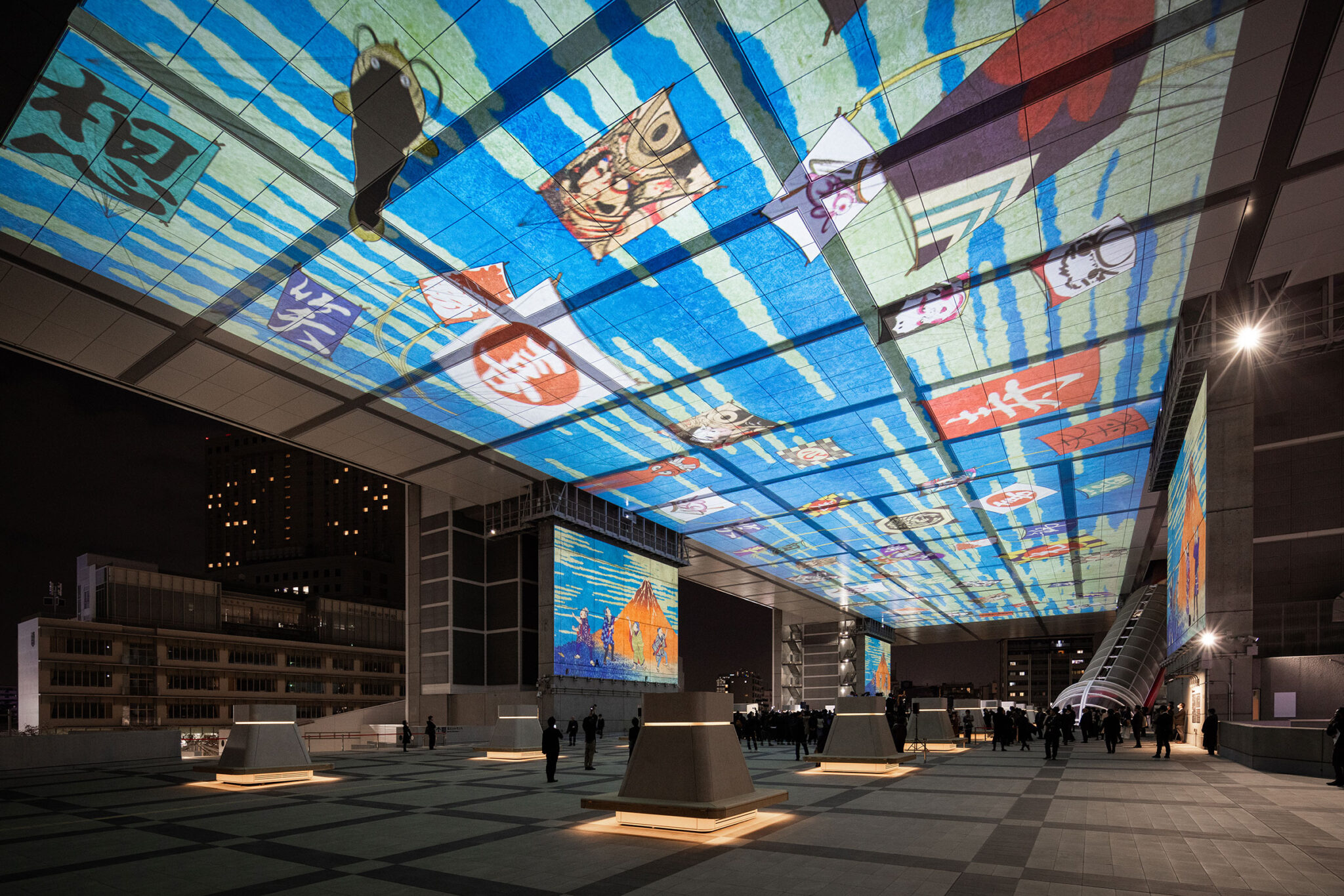
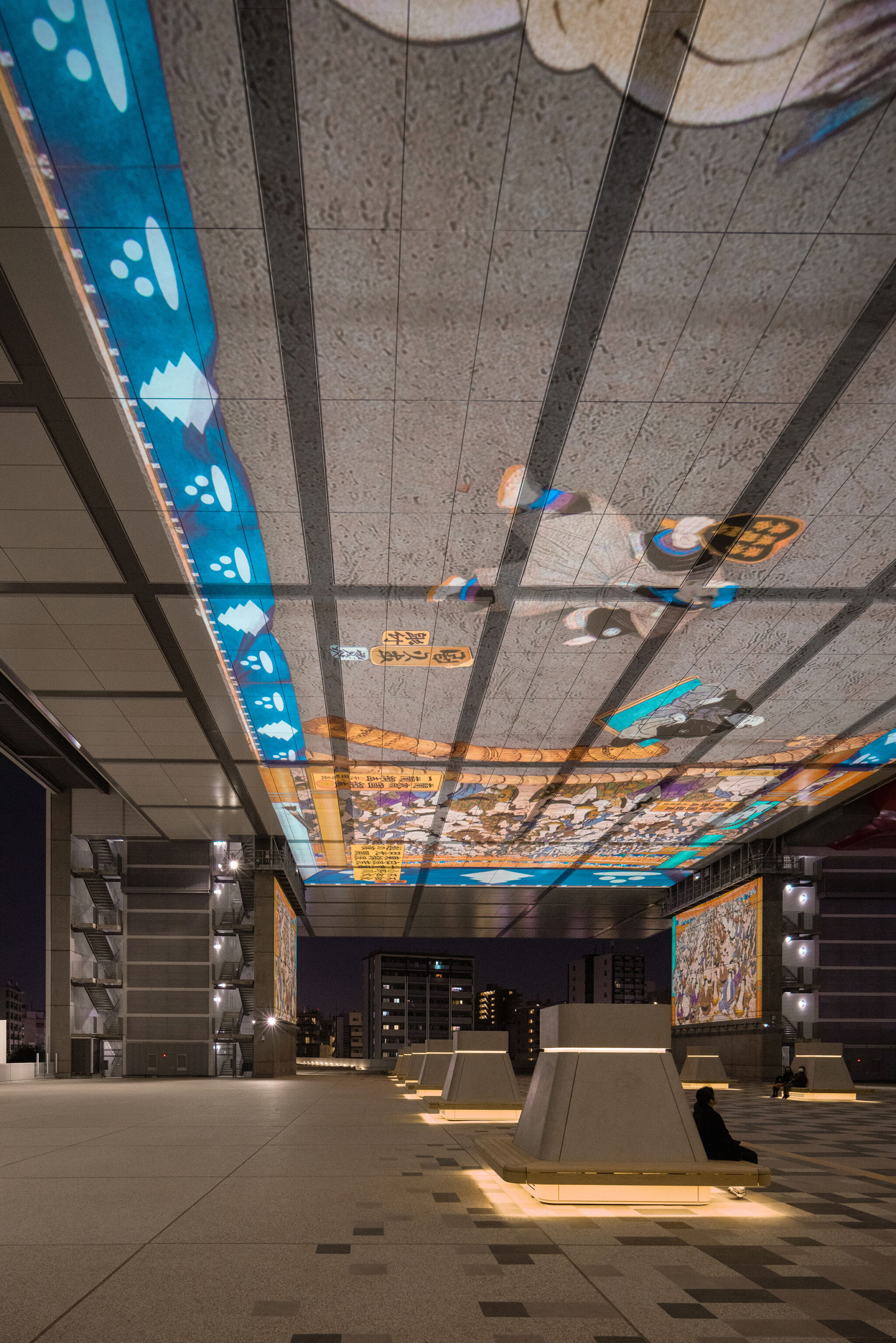
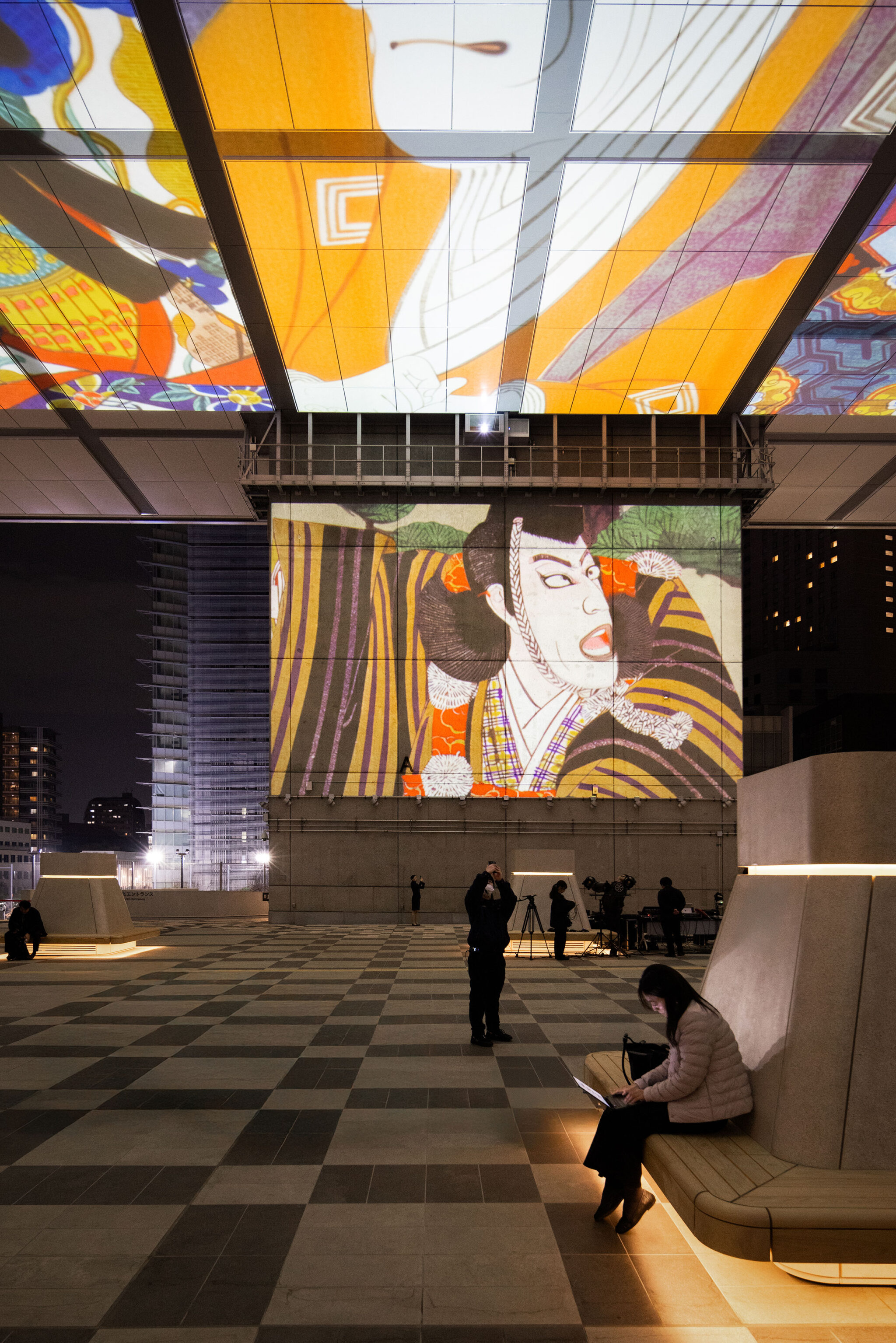
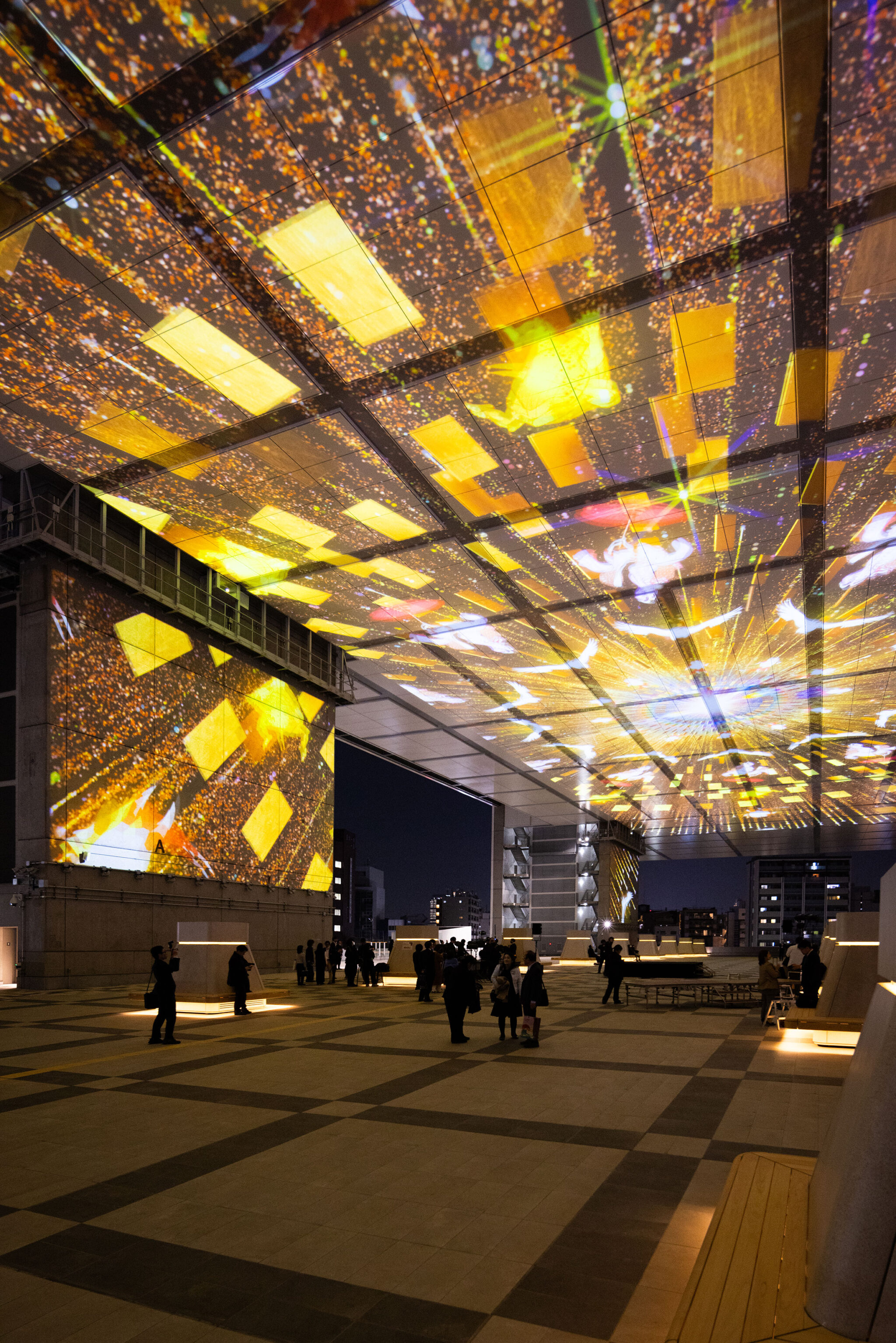
菊竹清訓設計の博物館を改修するプロジェクトです。建築家は、公共体験の向上を目指し、“アイデンティティの明確化”や“再訪動機の創出”を実現する計画を志向しました。そして、伝統的な文様や版画に加えて都市の情景などの映像を投影するピロティ空間を考案しました。
また、エグゼクティブアーキテクトしてトータルメディア開発研究所が、リノベーションアーキテクトとしてプランテックが参画しています。(詳細なクレジットは記事末尾に記載)
こちらはリリーステキストです(翻訳:アーキテクチャーフォト / 原文は末尾に掲載)
OMA / 重松象平が江戸東京博物館におけるサイトスペシフィックな介入を完成させる
東京都江戸東京博物館は、約4年にわたる改修を経て再開し、OMA / 重松象平によって設計されたサイトスペシフィックな介入およびインスタレーションが導入されています。本プロジェクトは、OMAにとって日本における初の公共プロジェクトとなります。
江戸東京博物館は、東京の歴史に特化した最初の博物館です。1993年の開館以来、この機関は江戸時代初期から現在に至るまでの都市の変遷を探求してきました。メタボリズム建築家・菊竹清訓による象徴的な建築の更新にあたり、OMAは、都市に対してそのアイデンティティをより明確に伝え、再訪の動機を創出し、よりアクセスしやすくすることで、博物館の公共体験を向上させる役割を担いました。OMAの提案は菊竹の建築を補完し、最も特別でありながら十分に活用されていなかった空間を、精緻で演出的な介入のためのキャンバスとして扱っています。
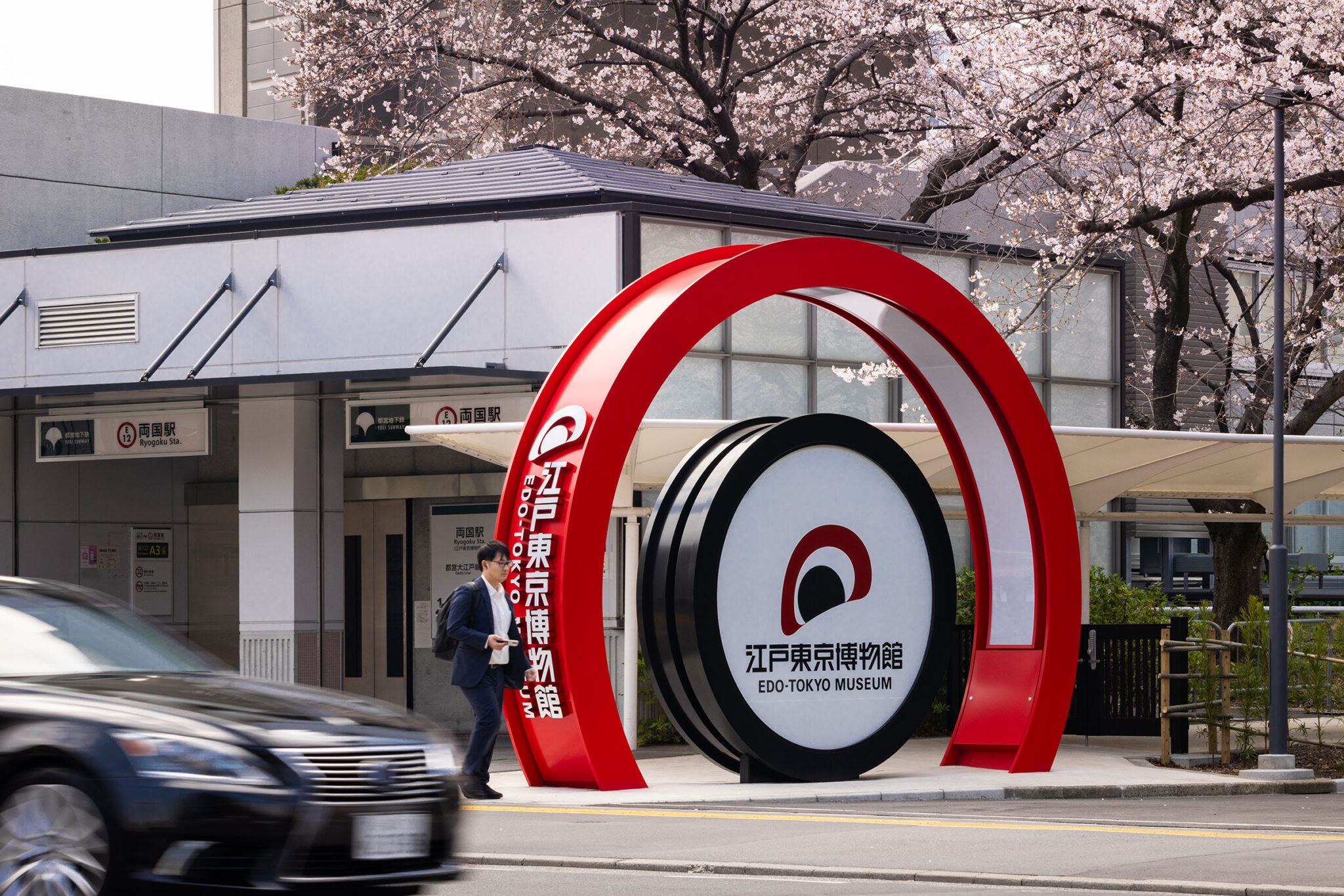
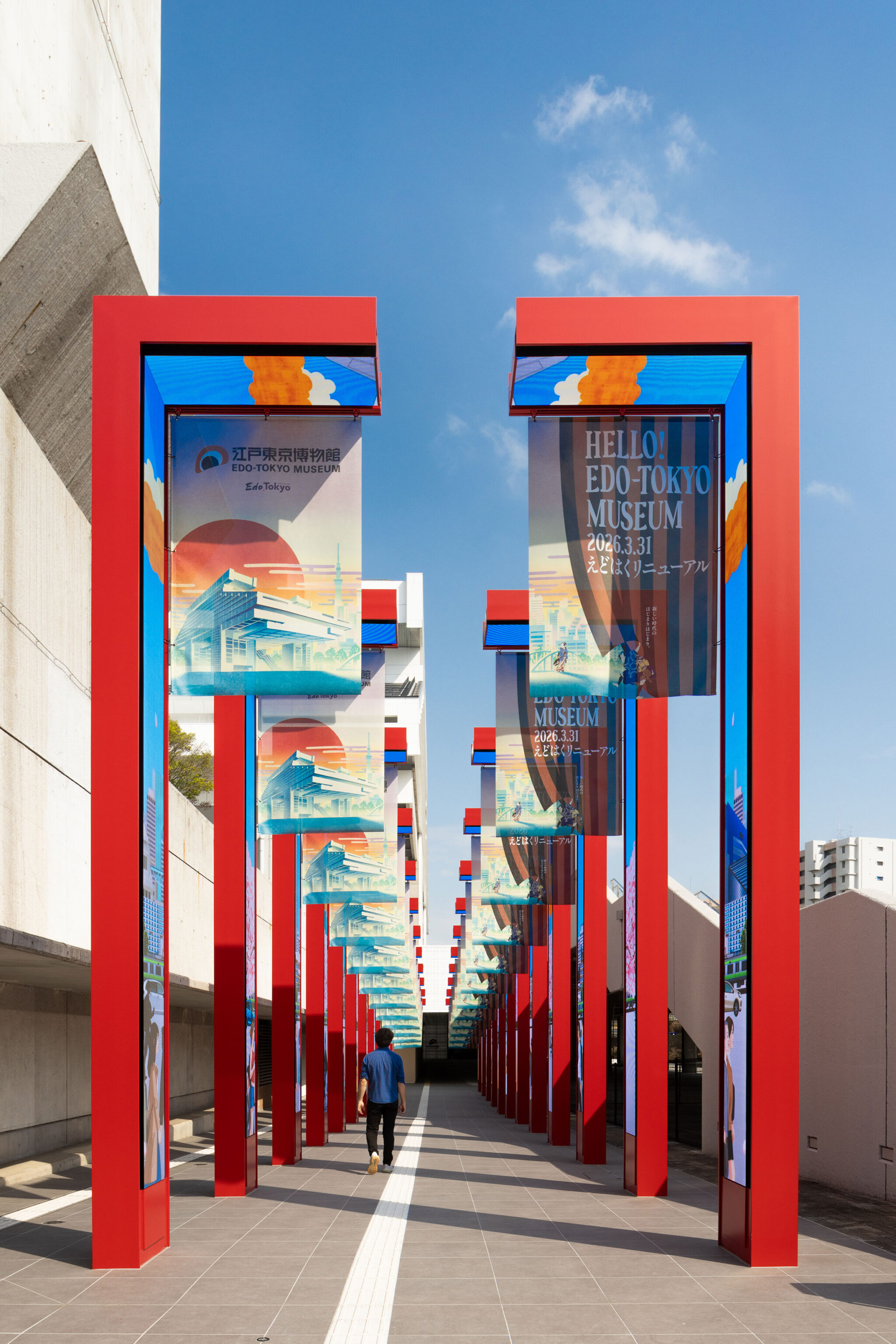
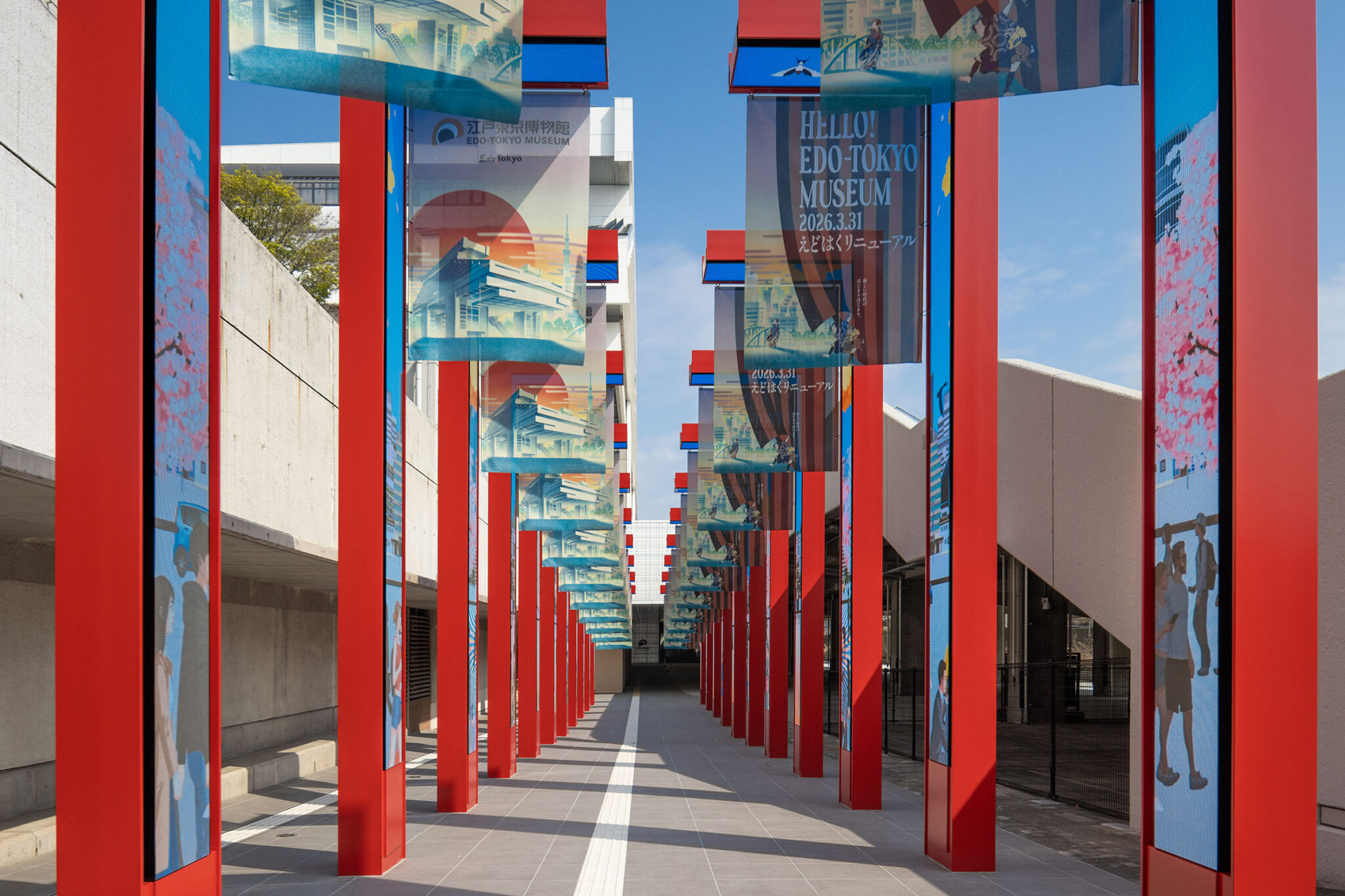
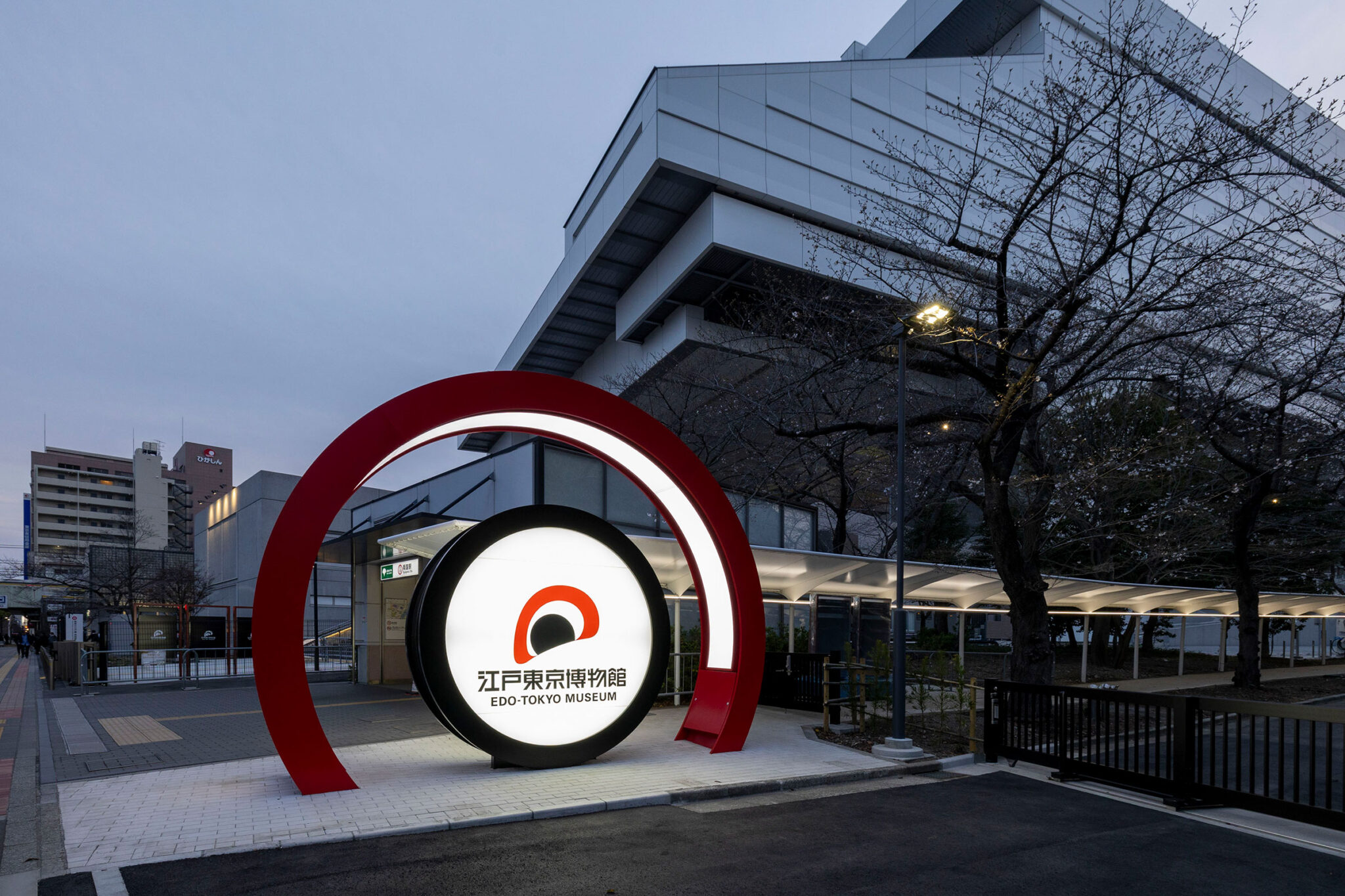
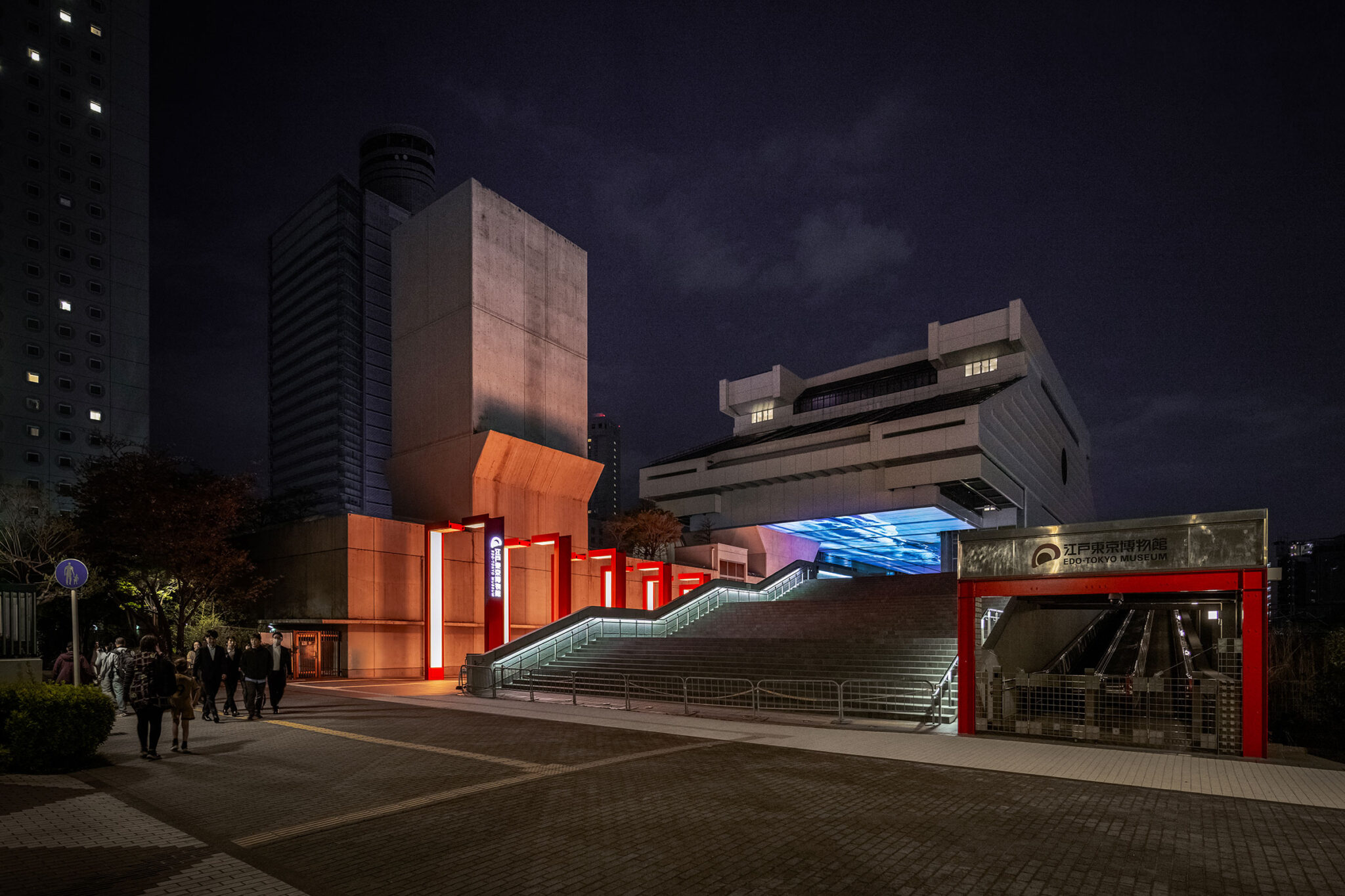
新たな庇は、特に近隣の交通機関からの動線との関係において、博物館への到着の流れを明確にし、明るくしています。西側の入口は、日本の伝統的な鳥居に着想を得た門を連続して通り抜ける動線となり、この空間に対する菊竹の当初の提案を想起させます。東側では、円形のサインが、著名な浮世絵の肖像に描かれた目を基にした博物館のロゴを想起させます。
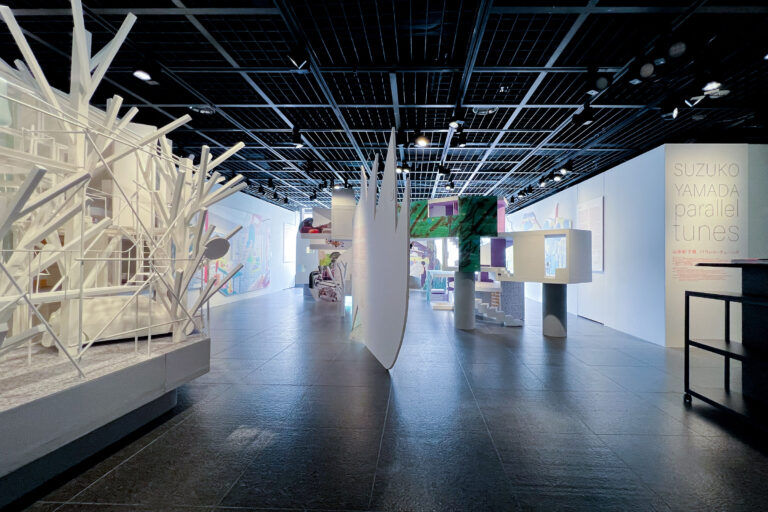
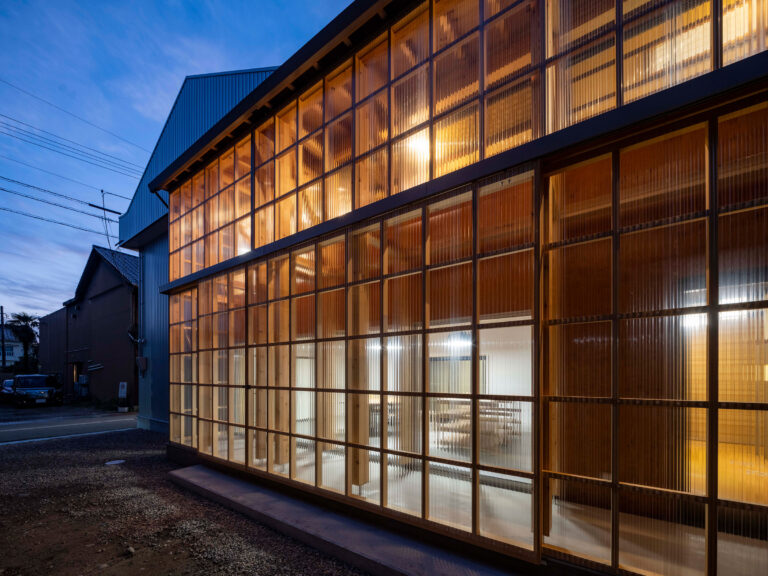
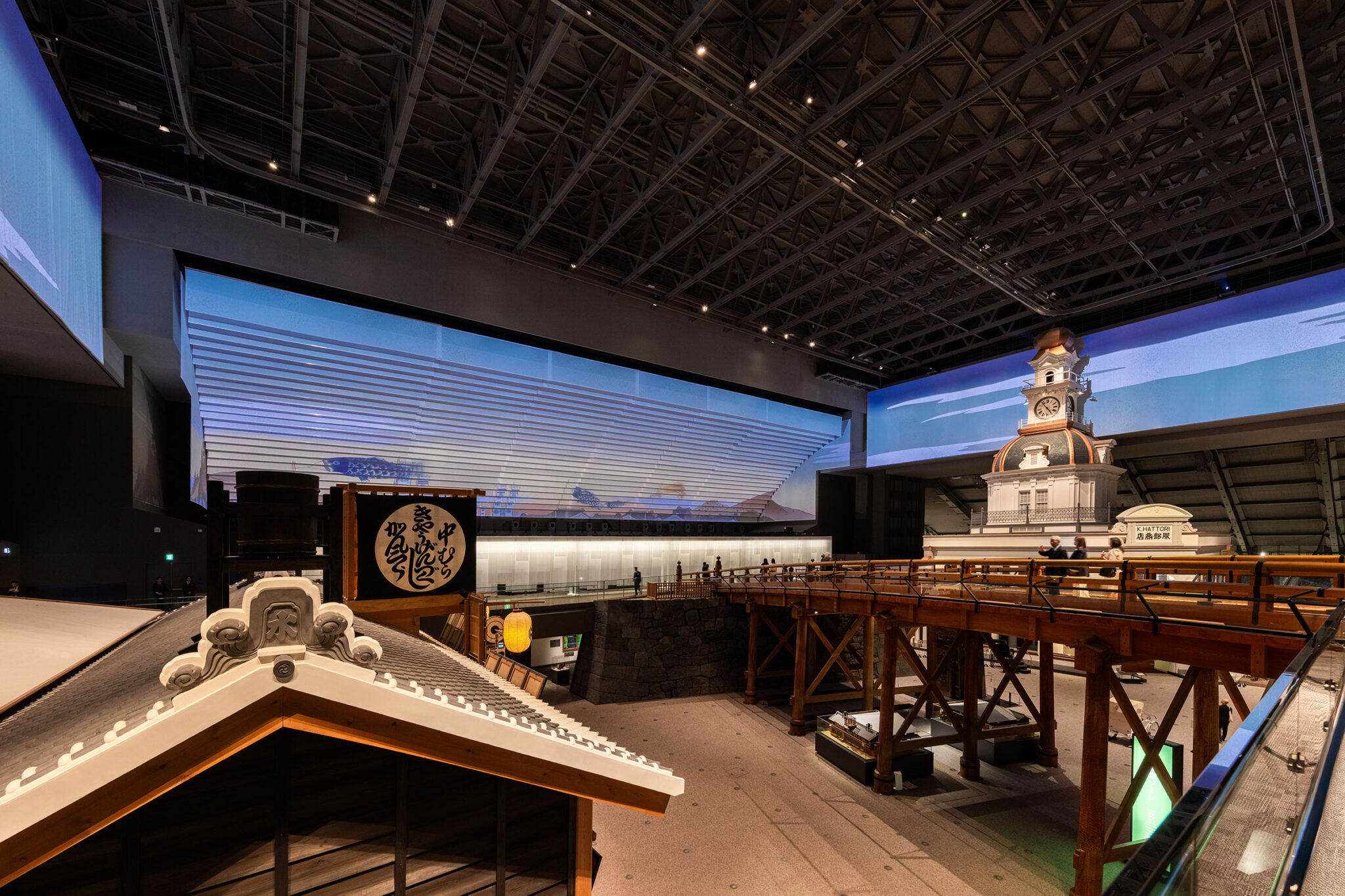
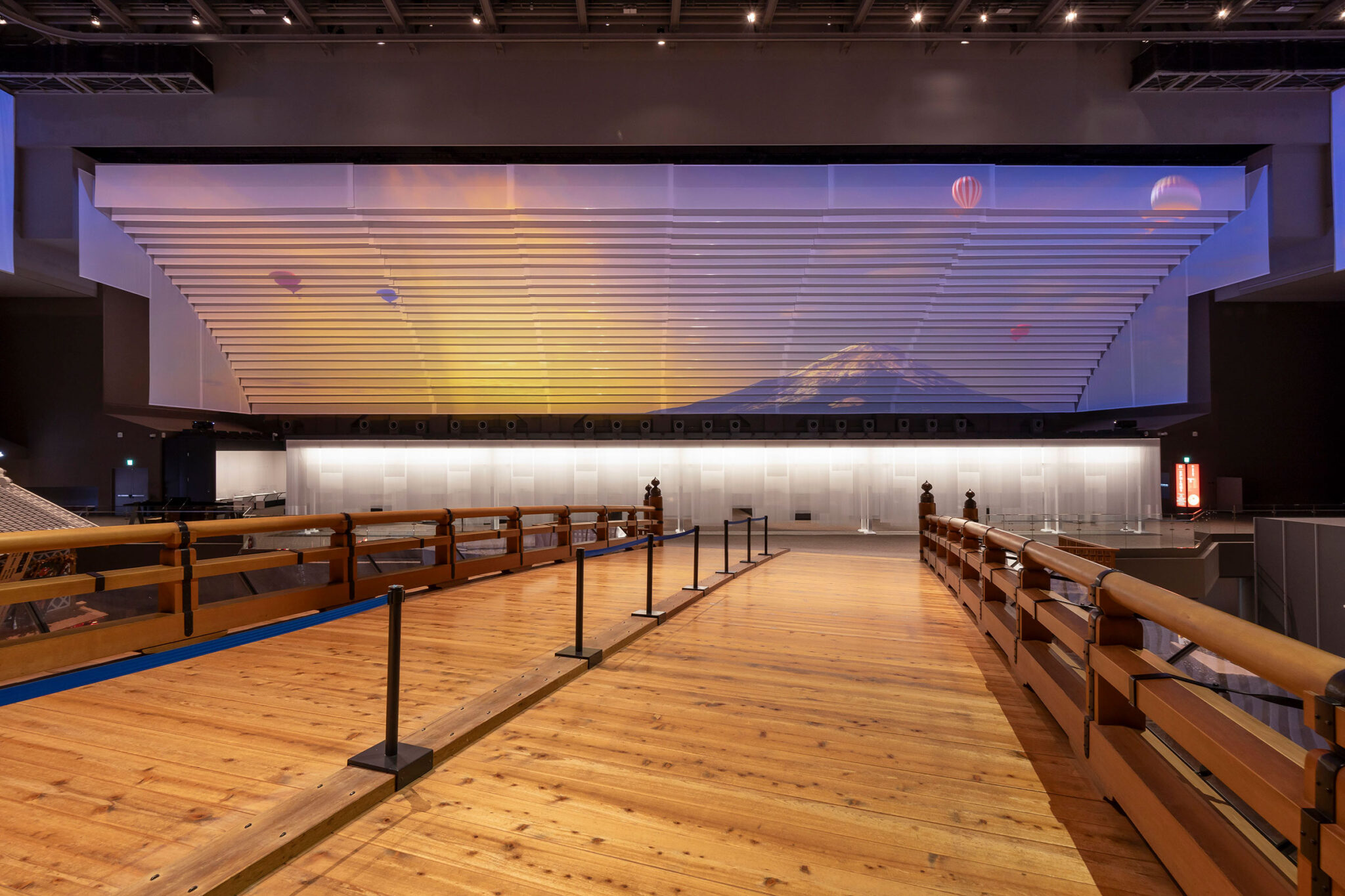
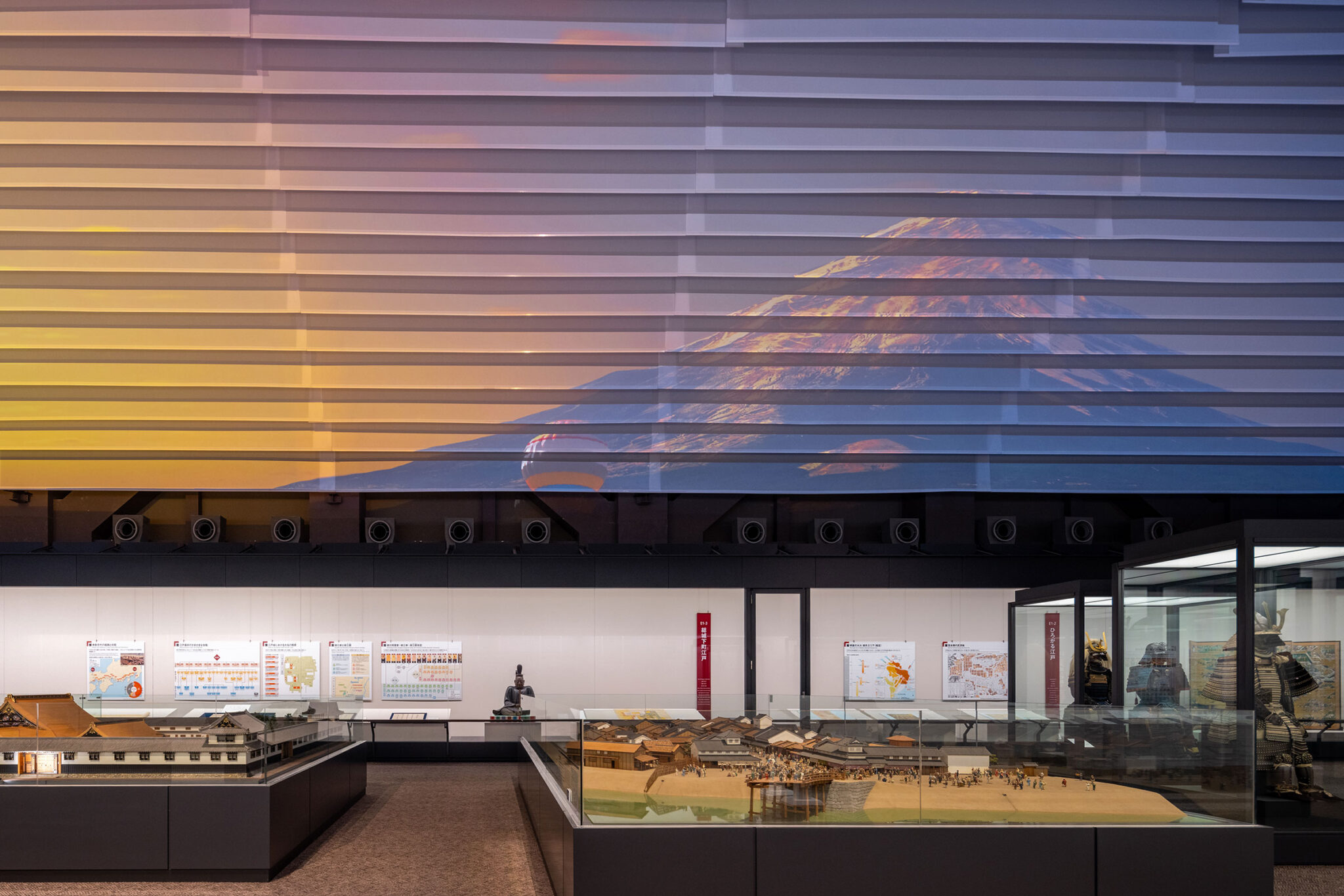
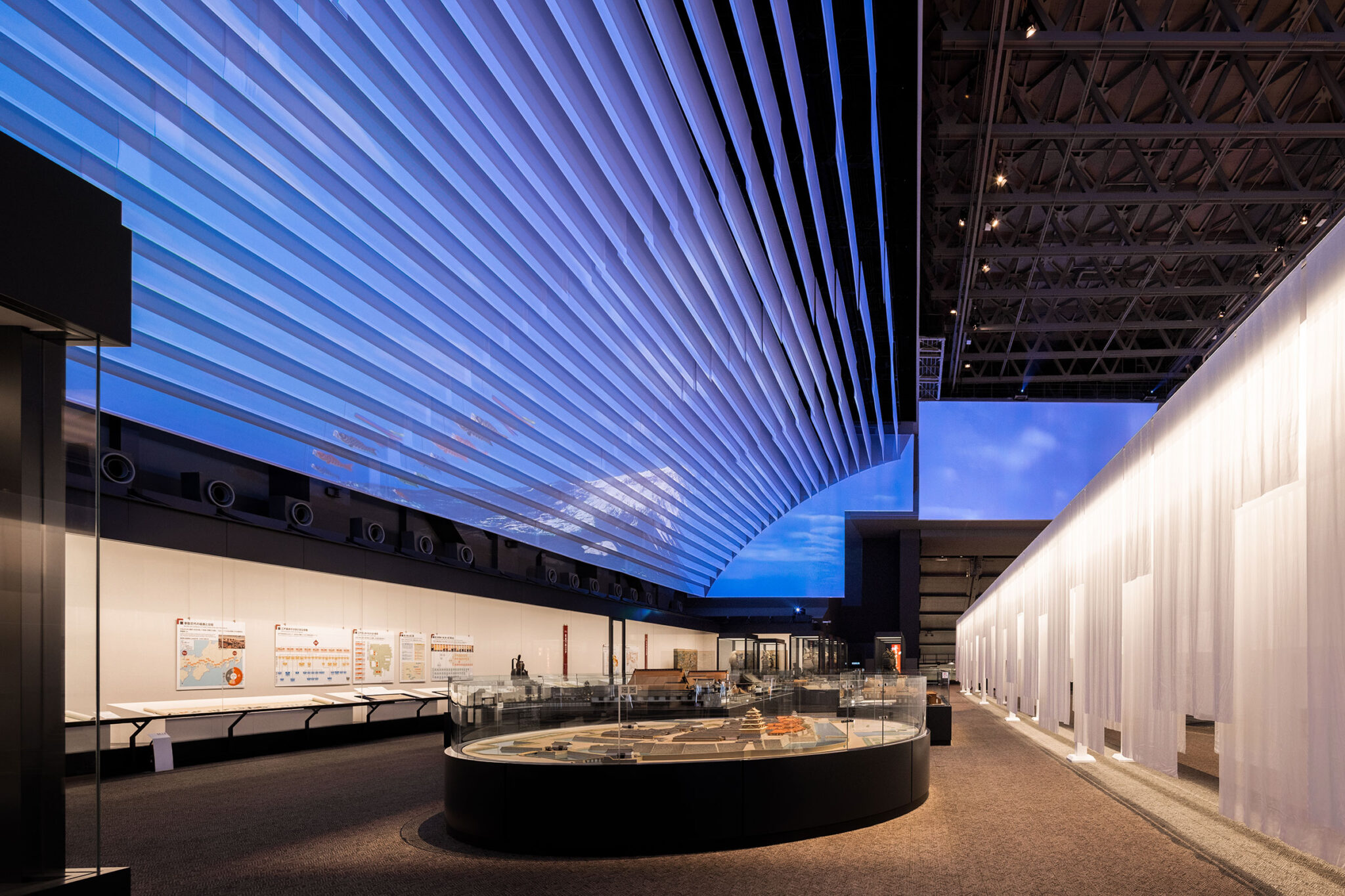
展示室では、6階の天井へのプロジェクションが展示を没入型の環境へと変え、人々を過去へと連れていきます。変化する空の下で、来館者は建物や街区の実物大および縮尺模型と出会い、それらが展示物に生命を与えます。パノラマ効果は、垂直ルーバーと隣接する壁面から構成された曲面スクリーンに投影することによって生み出されます。
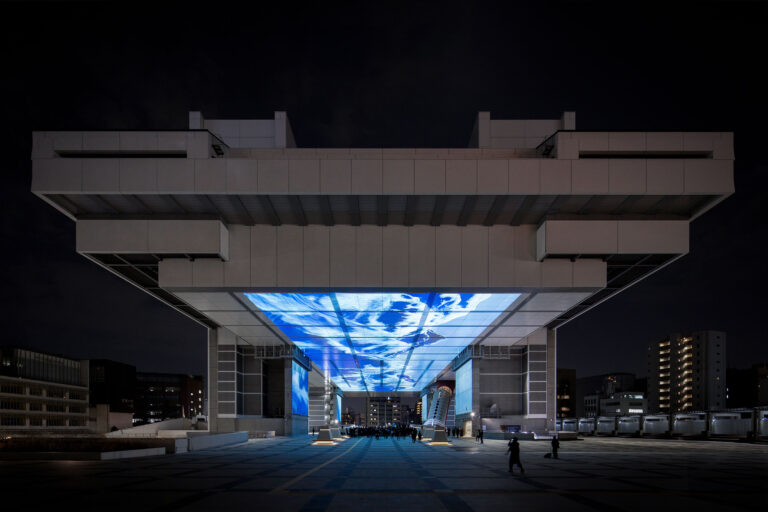
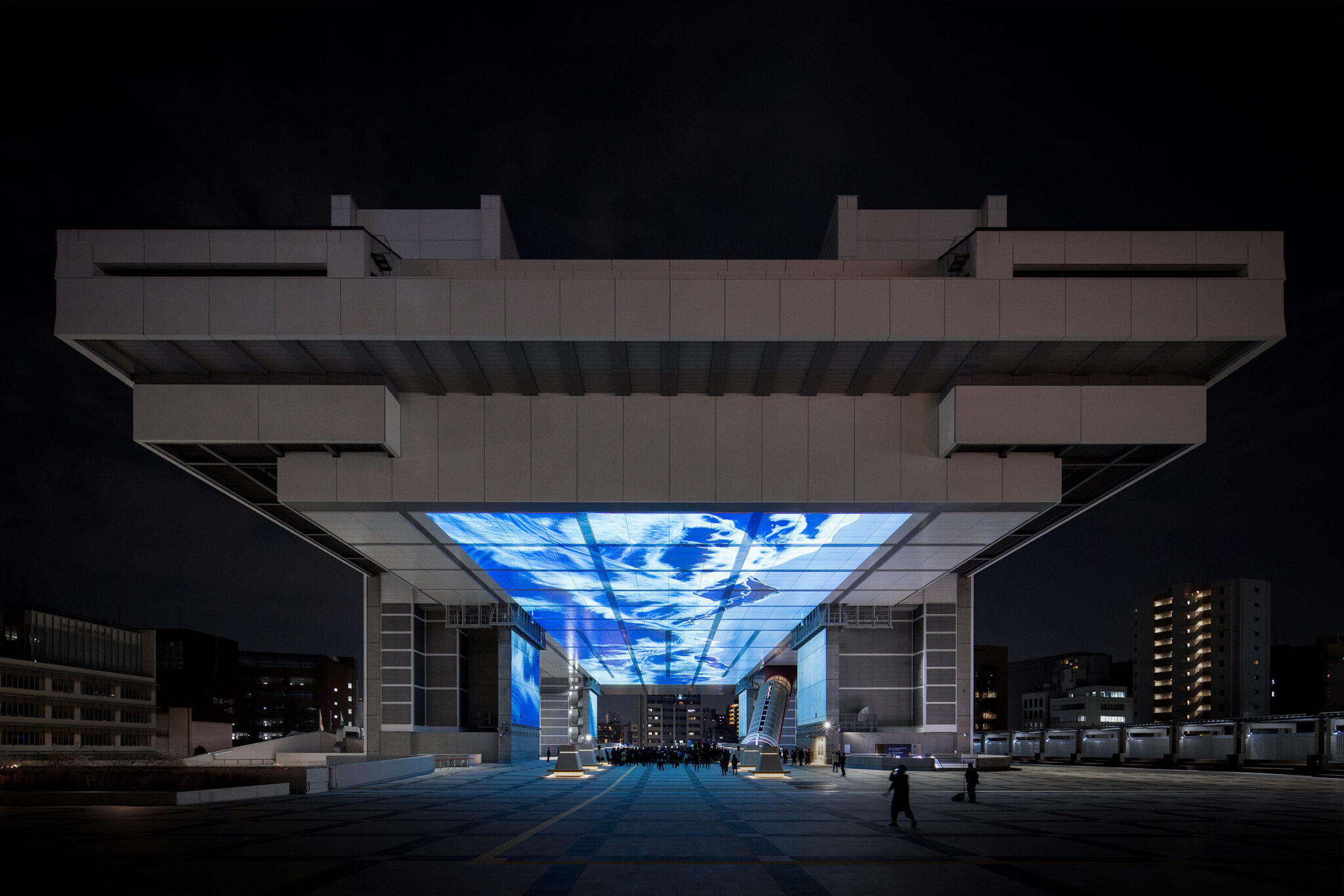
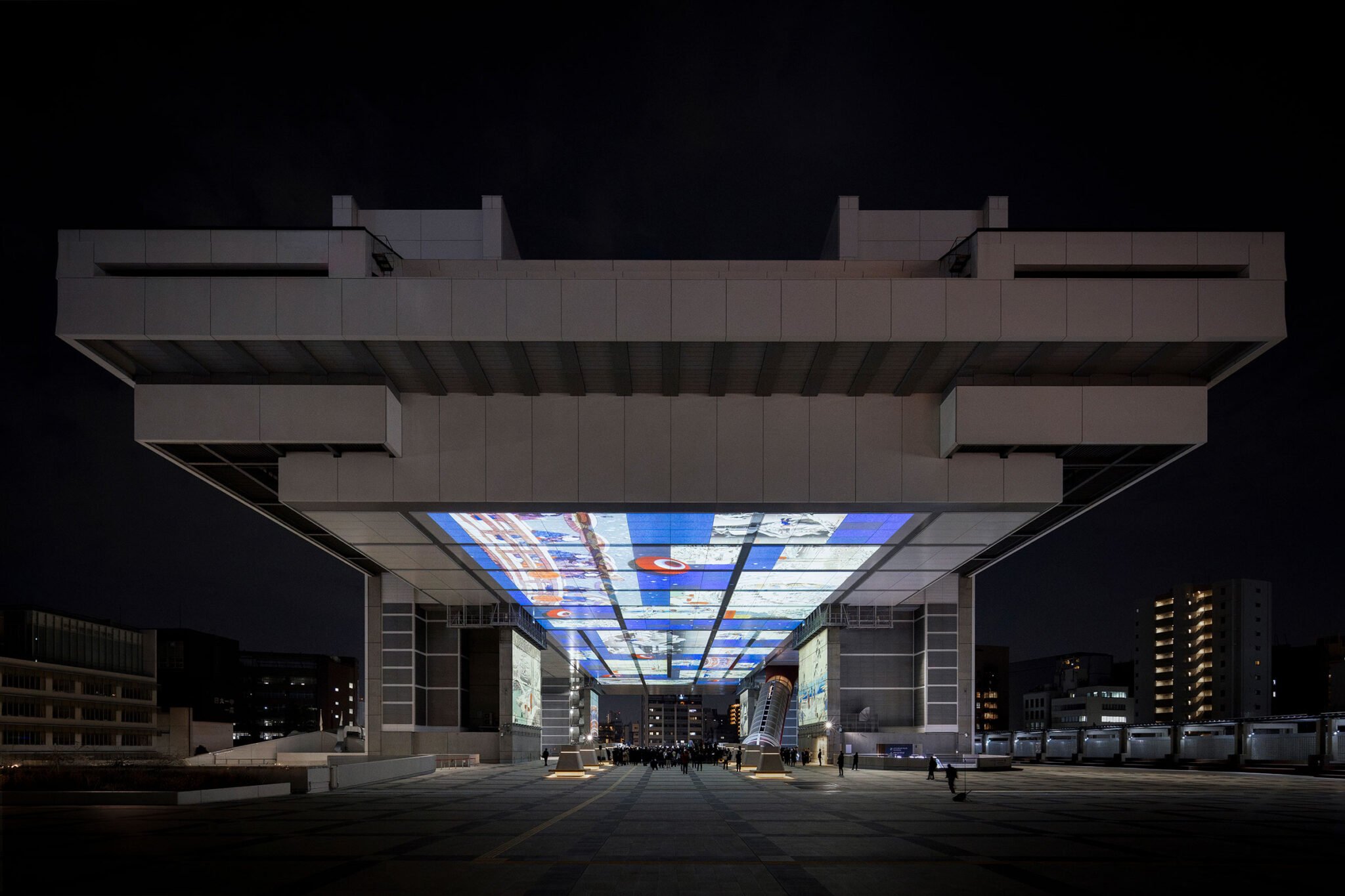
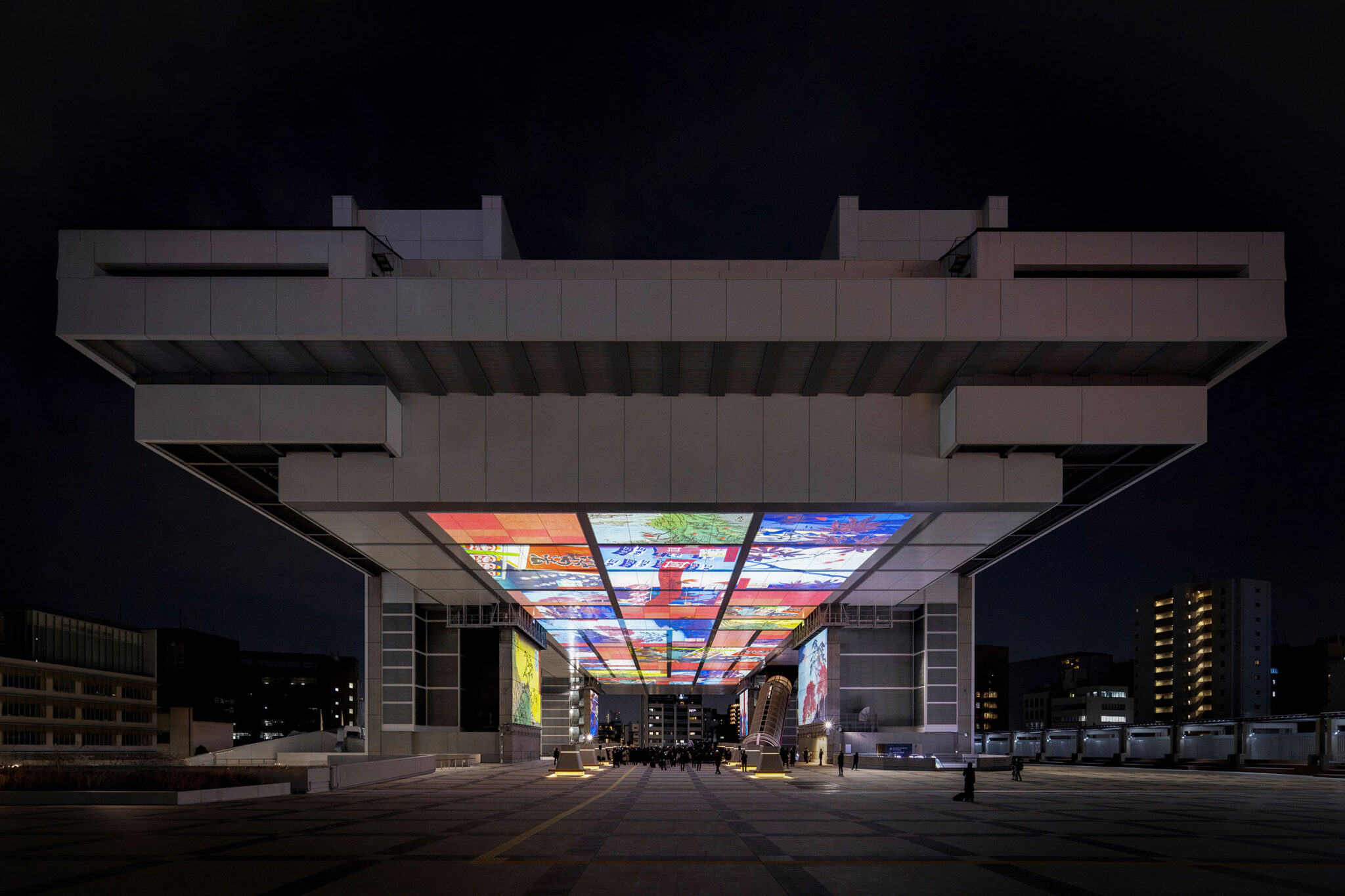
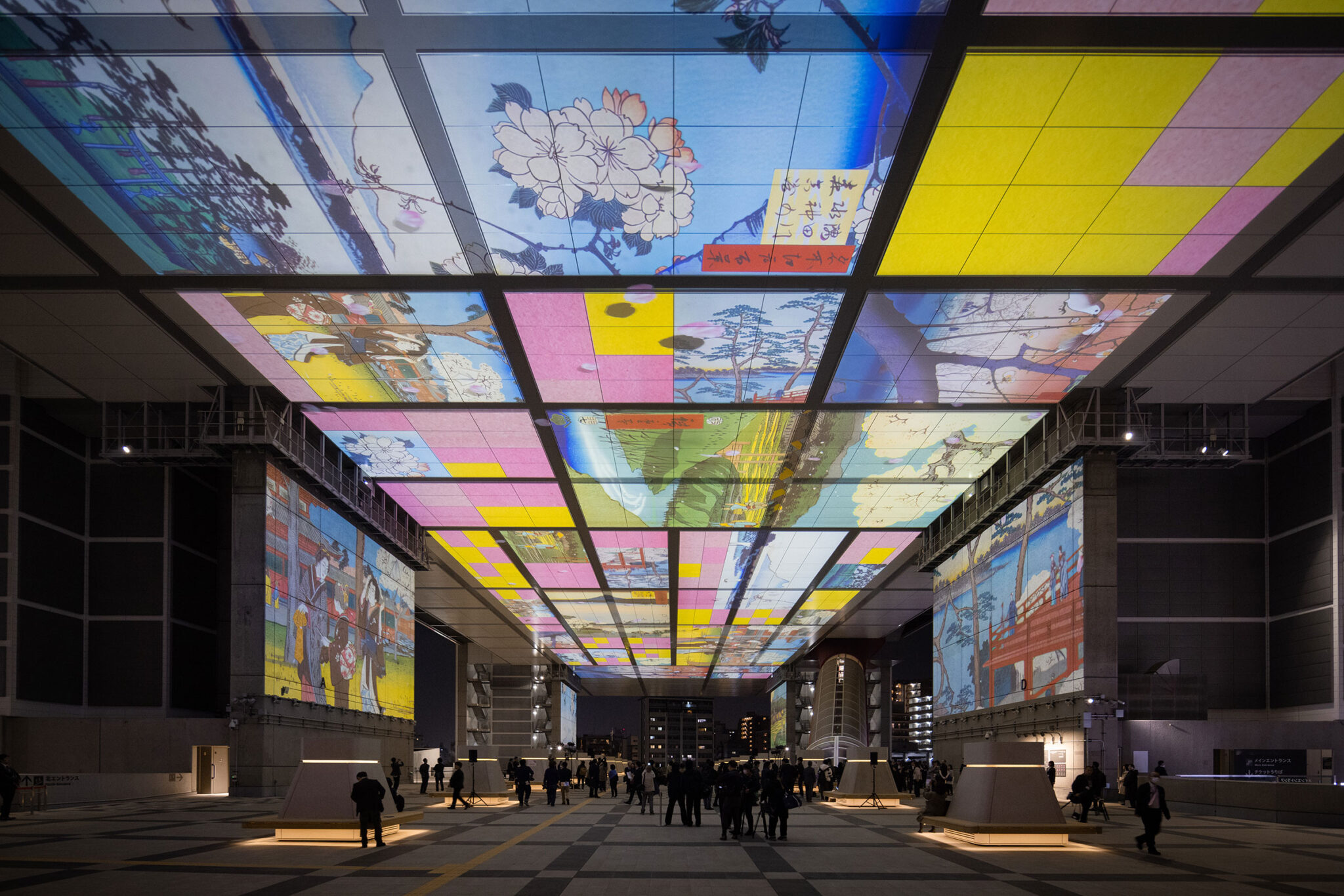
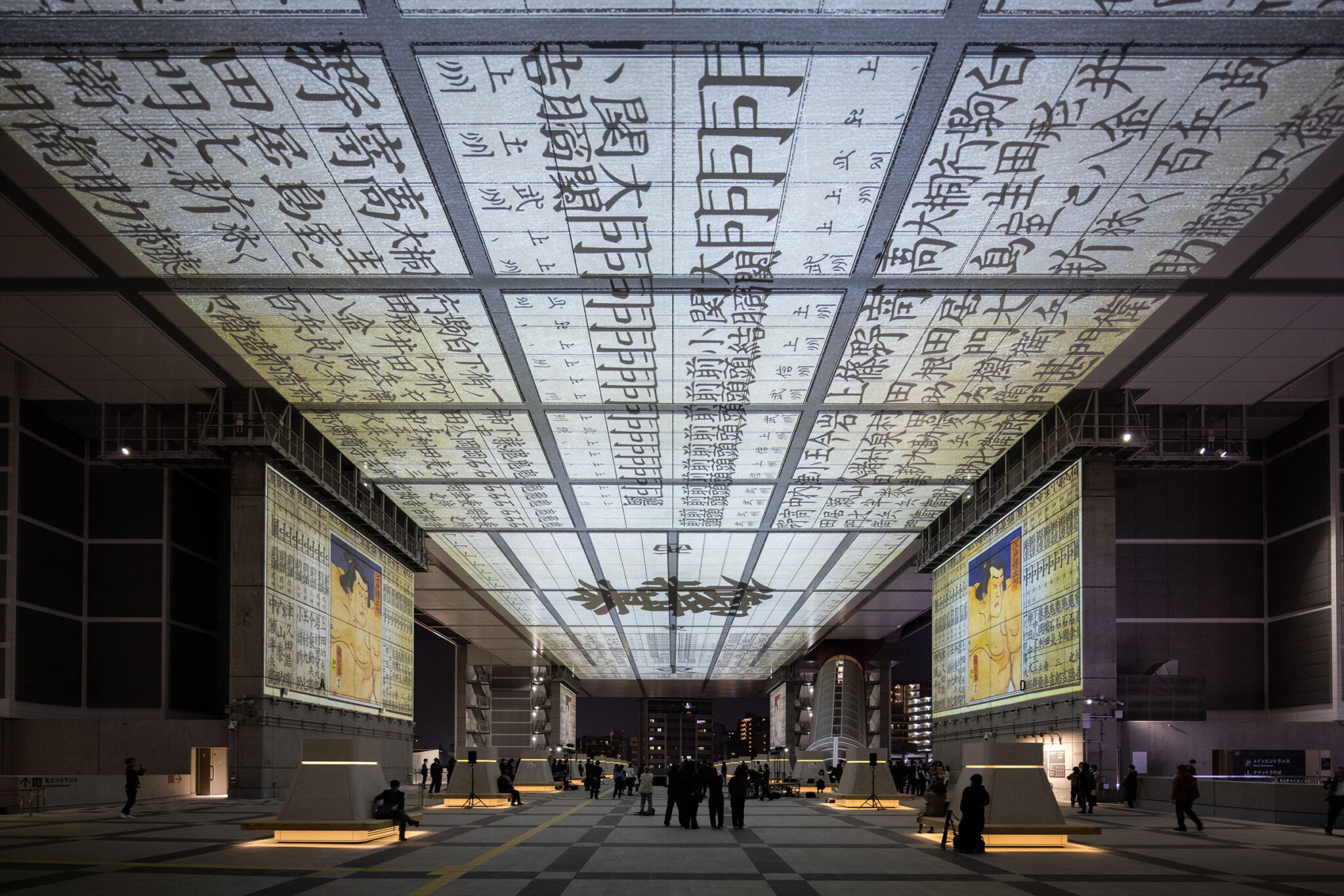
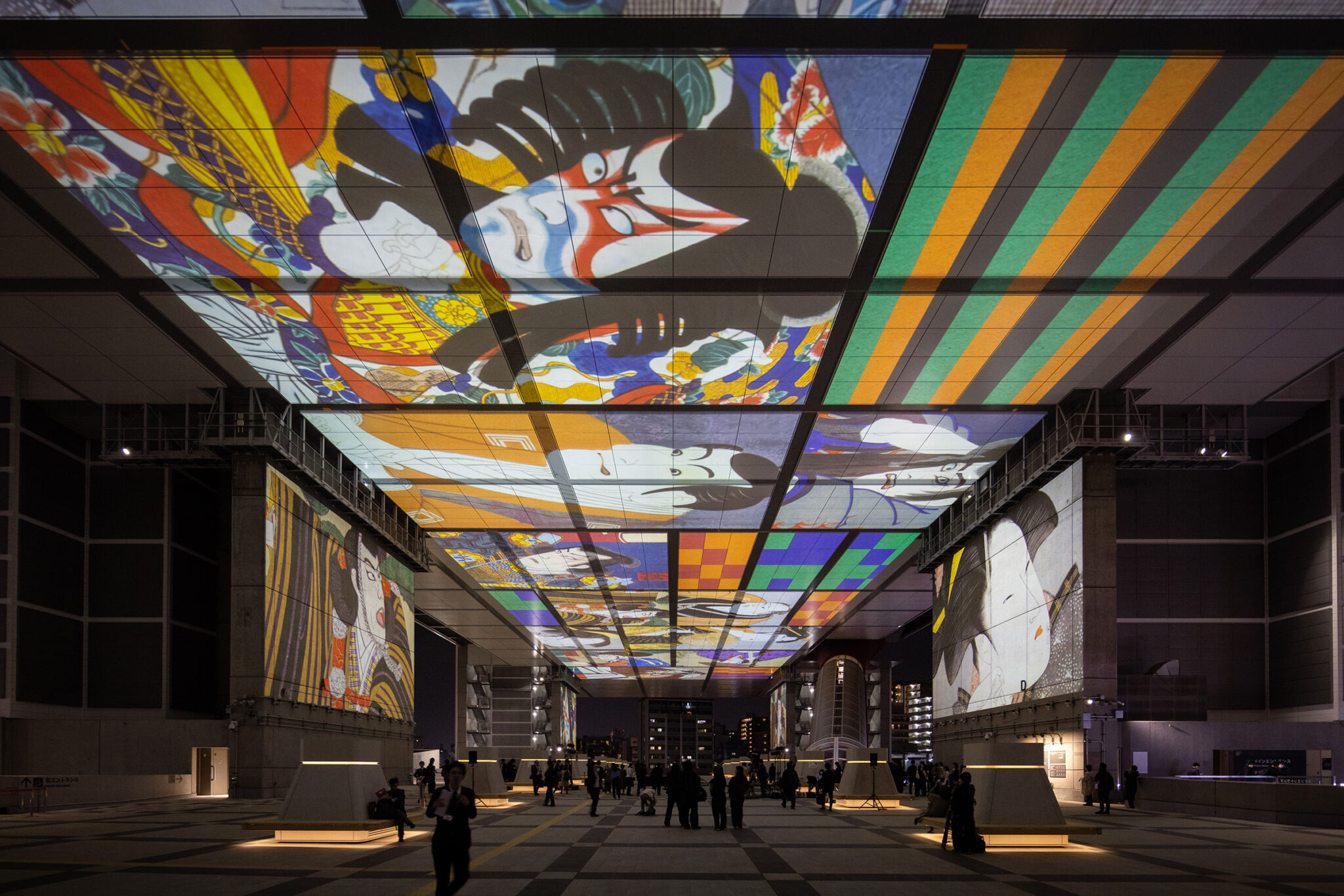
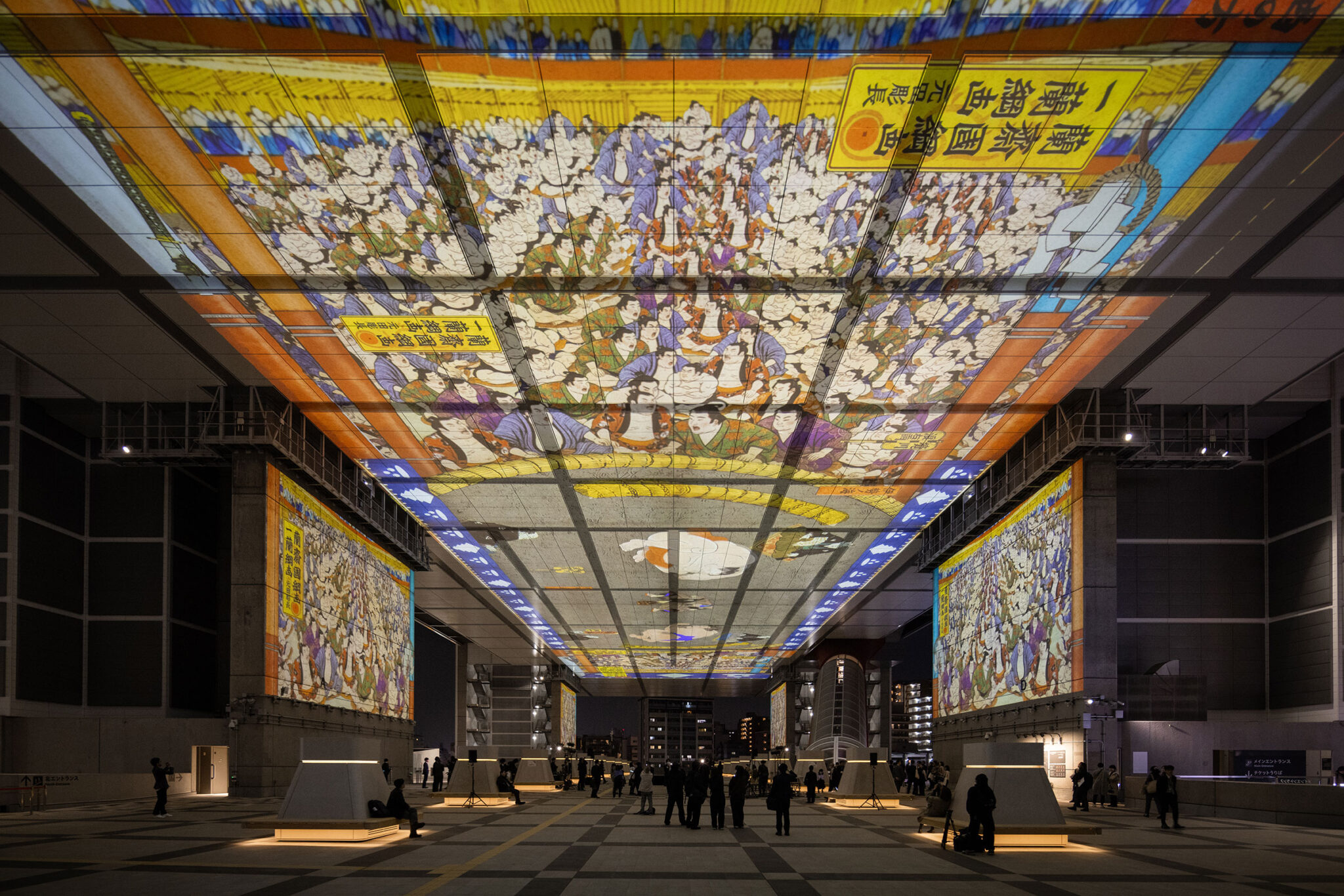
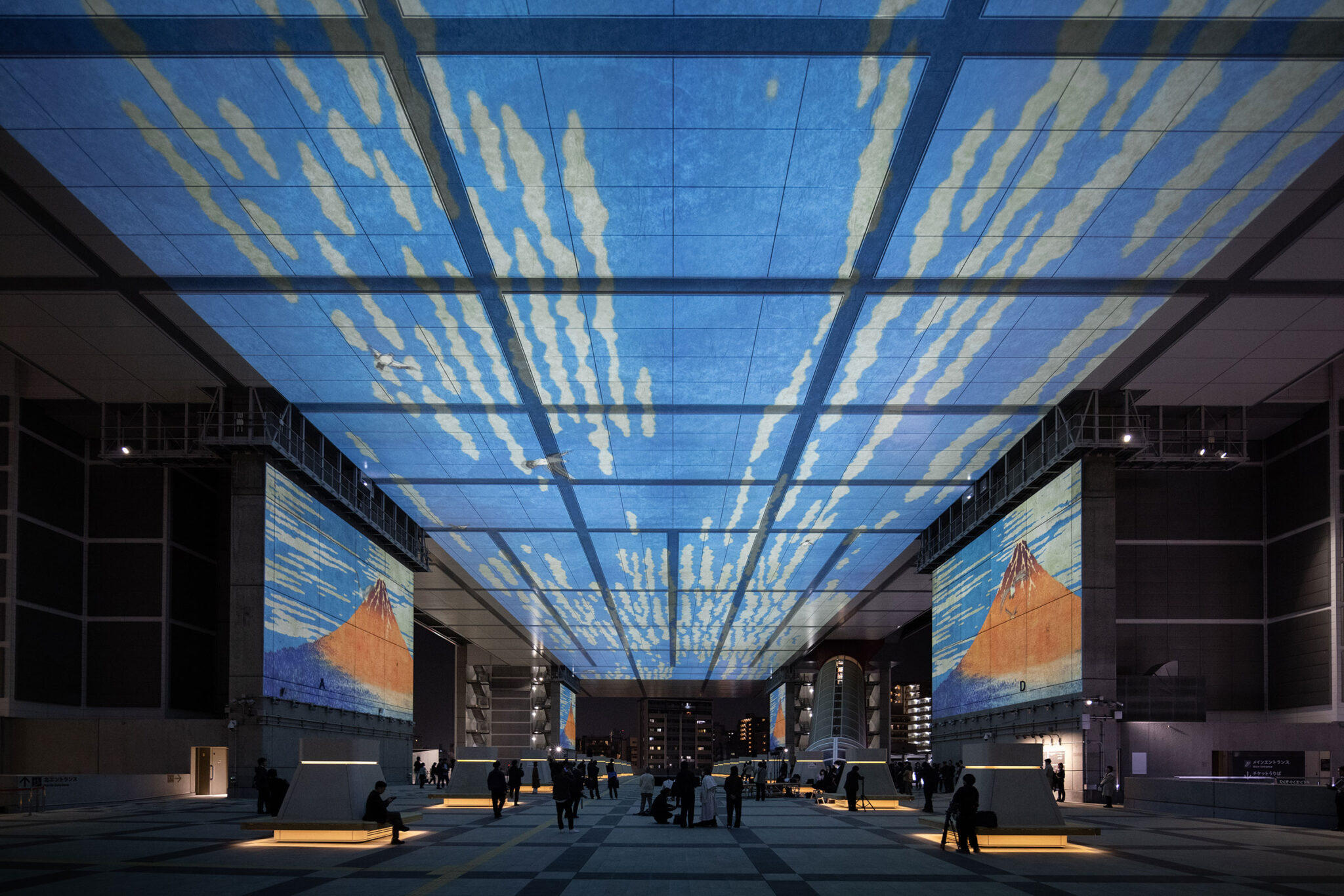
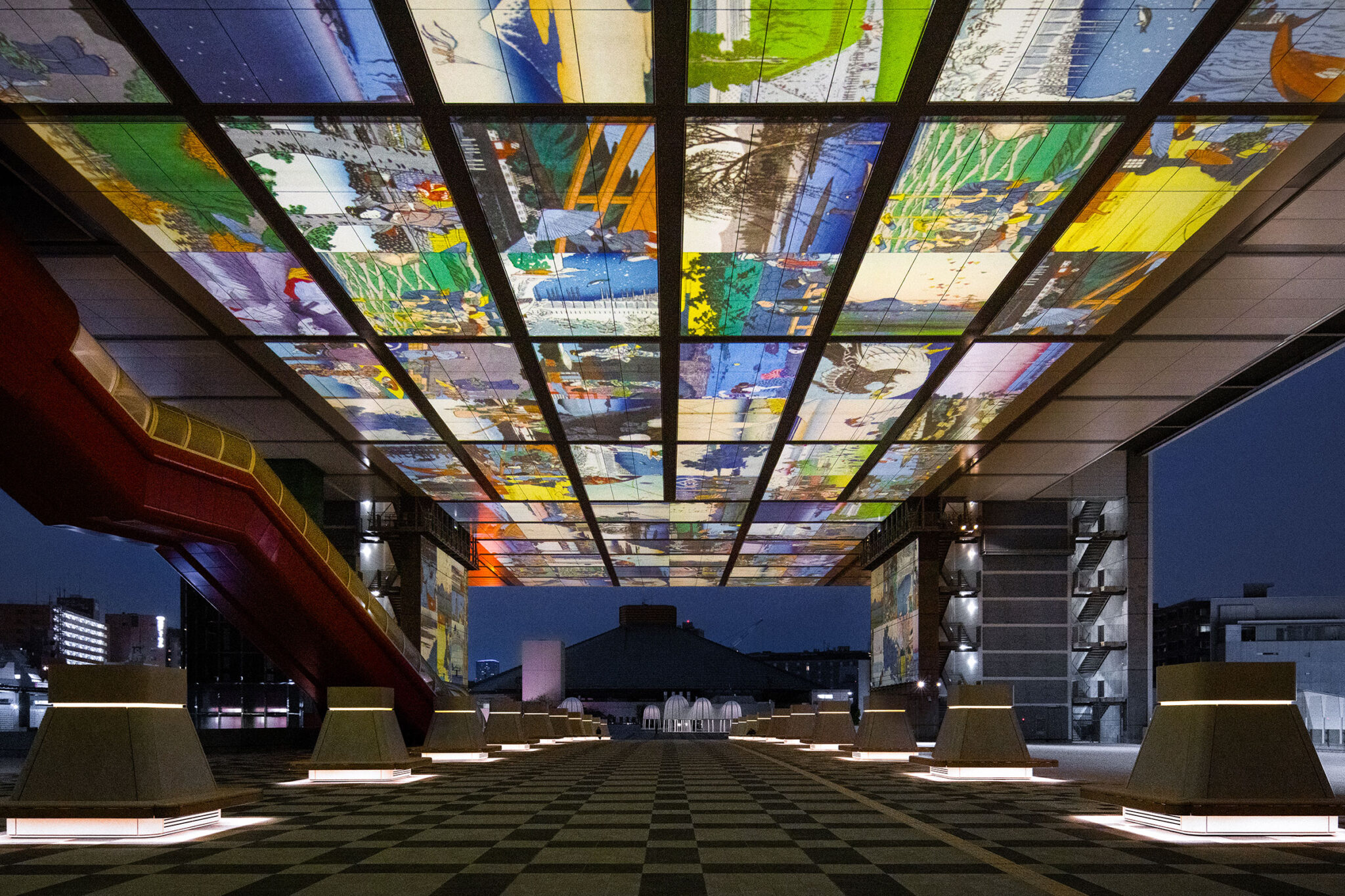
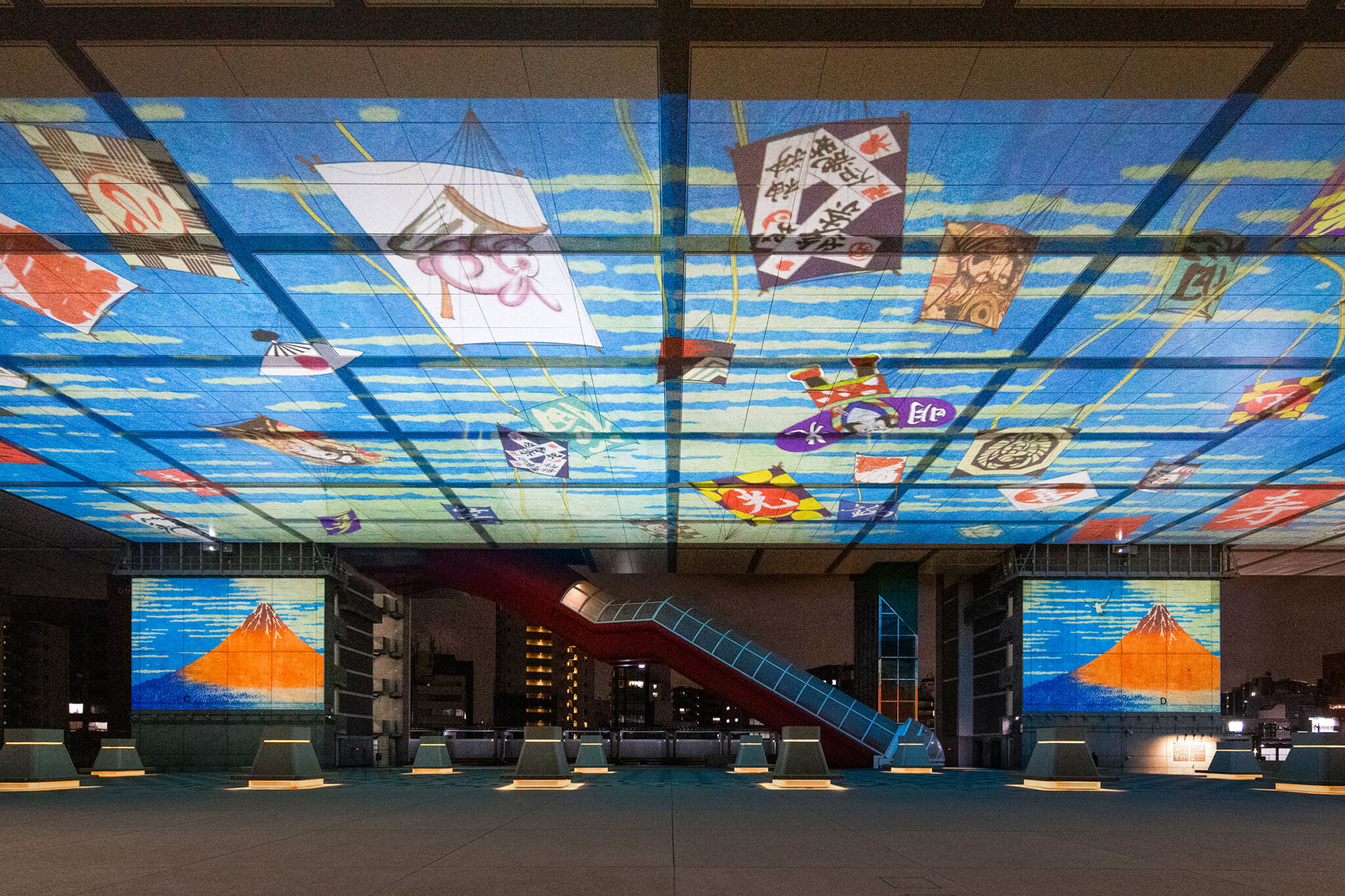
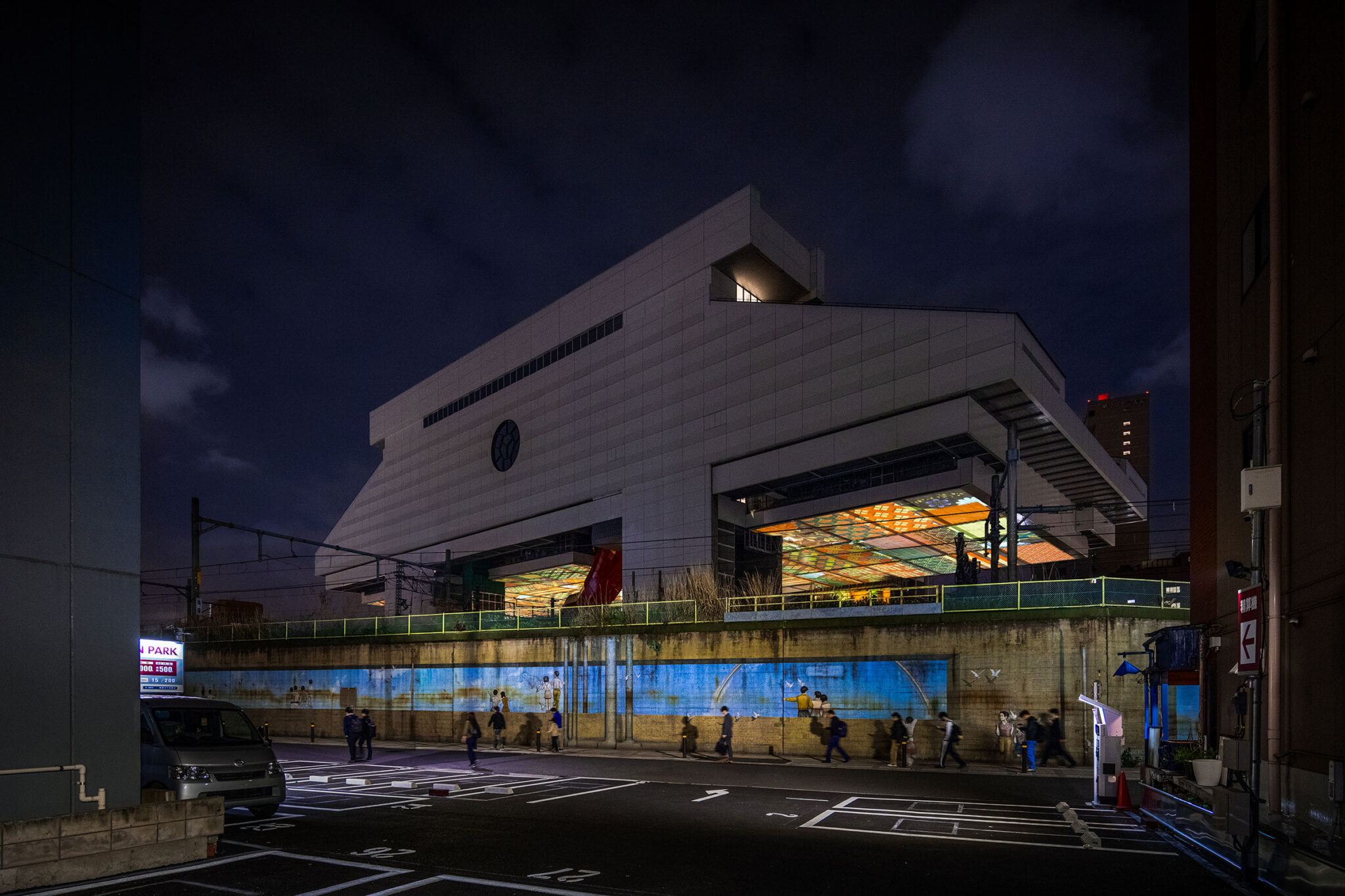
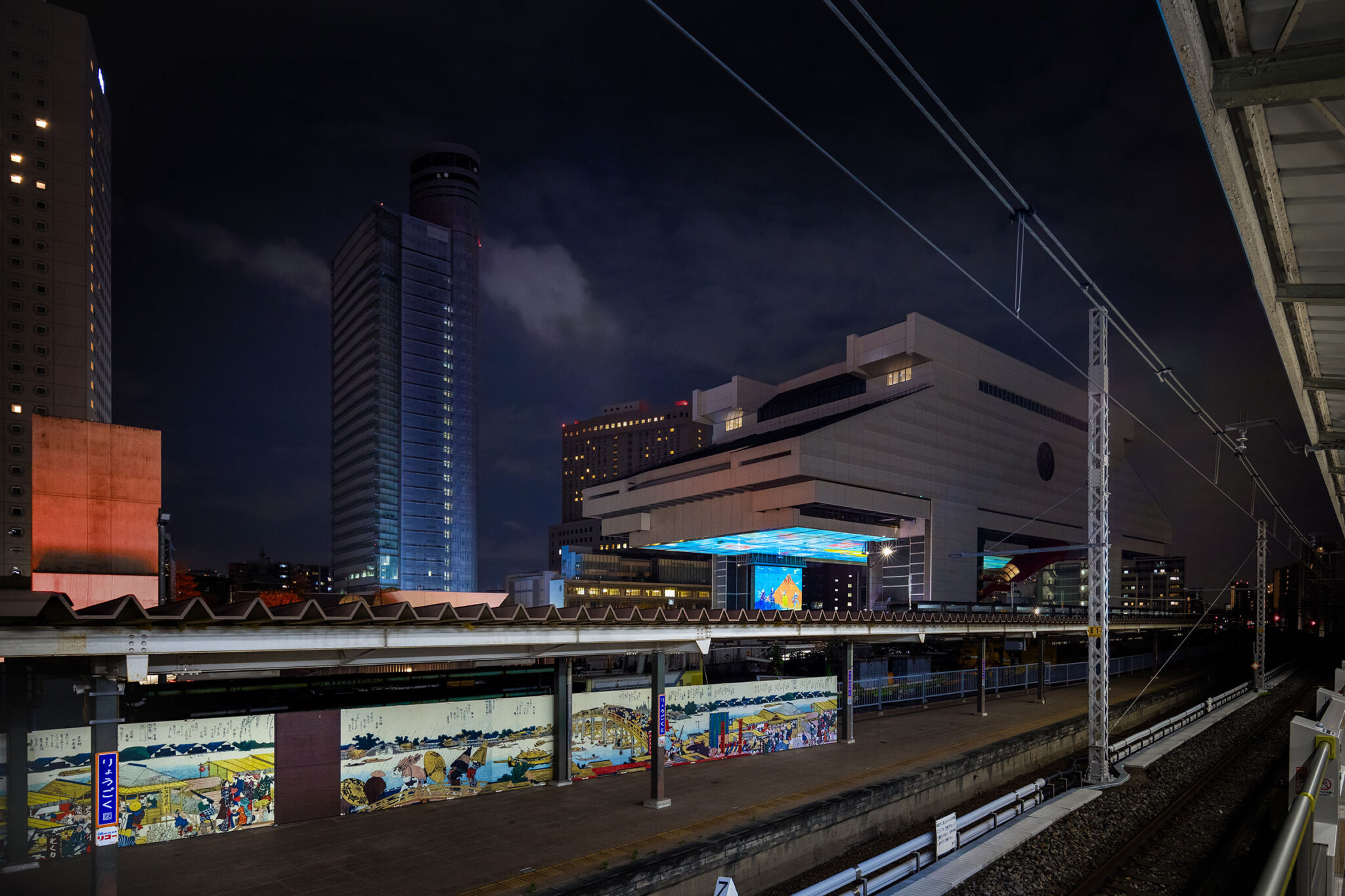
3階では、広大な屋外広場が活性化され、来館者が博物館を退出する際に印象的な締めくくりを生み出します。開館時間中および閉館後には、日本の伝統的な文様、空や植生、所蔵コレクションの版画や挿絵、そして江戸および現代の都市生活の情景といった映像が、建物の全面的な下面および巨大なピロティに投影されます。
この規模での投影を行うために、プロジェクターが広場の全長にわたって並べられています。それらは視界から隠され、江戸時代に普及した灯籠である辻行灯の幾何学に基づいた構造体に収められており、同時に新たな広場の座席としても機能します。地元で調達された木材から作られた柔軟なモジュール式家具は、イベントやカジュアルな集まりに使用することができます。この広場の持ち上げられた開放的な屋外の状態により、この映像は遠方からも視認可能となり、都市はこのインスタレーションの背景となります。
OMA パートナーの重松象平は述べています。「国際的に活動する建築家として日本における初の公共プロジェクトにあたり、日本の歴史と文化の中で最も長く基盤的な時代を保存し現代の観客と共有することに専念する機関である江戸東京博物館に貢献できることを光栄に思います」
「既存の建築を物理的に変更するのではなく、やや「非建築的」なアプローチを取り、その独自の空間を最大限に活性化し、卓越したコレクションを際立たせることに注力しました。プロジェクションと光を用いることで、建物は博物館の刷新されたアイデンティティを外部へと伝達する媒体となり、より開かれたアクセスしやすい体験を一般の人々にもたらします。菊竹の最も重要な作品の一つの継続する営みの一部となることは特に意義深く感じられ、私たちの貢献は、建築と都市が一つの有機体であるという彼の哲学に敬意を表することを目的としています」
以下の写真はクリックで拡大します

以下、リリーステキストです。
OMA / Shohei Shigematsu Completes Site-Specific Interventions at the Edo-Tokyo Museum
April 15, 2026 – Tokyo, Japan – The Tokyo Metropolitan Edo-Tokyo Museum has reopened after a nearly four-year renovation, with site-specific interventions and installations designed by OMA / Shohei Shigematsu. The project marks OMA’s first public project in Japan.
The Edo-Tokyo Museum is the first museum dedicated to Tokyo’s history. Since opening in 1993, this institution has explored the city’s evolution from the early Edo period to today. For the renewal of its iconic building by Metabolist architect Kiyonori Kikutake, OMA was tasked to enhance public experience of the museum by better communicating its identity to the city, creating incentive for repeat visits, and making it more accessible. OMA’s proposal complements Kikutake’s architecture, treating the most special but underutilized spaces as canvases for surgical, scenographic interventions.
New marquees clarify and brighten the museum’s arrival sequences, especially in relation to traffic from nearby transit lines. The west entrance becomes a procession through gates inspired by traditional Japanese torii, and which evoke Kikutake’s original proposal for the space. On the east side, a circular sign recalls the museum’s logo, which is based on an eye in a famous ukiyo-e portrait.
In the galleries, projections at the sixth-floor ceiling transform exhibits into immersive environments, transporting people back in time. Changing skies, under which visitors encounter life-size and scale models of buildings and neighborhoods, bring artifacts to life. A panoramic effect is produced by projecting onto a curved screen composed of vertical louvers and adjacent walls.
On the third floor, the expansive outdoor plaza is activated to create a memorable conclusion for visitors as they exit the museum. During and after museum hours, moving images of traditional Japanese patterns, skies and foliage, prints and illustrations from the museum’s collection, and scenes from Edo and modern city life are projected on the building’s entire underside and massive pilotis.
To project at this scale, projectors are lined across the plaza’s full length. Hidden from view, they’re housed in structures informed by the geometry of tusjiandons, lanterns that were popularized during the Edo period, and double as new plaza seating. Flexible modular furniture made from locally sourced wood can be used for events and informal gatherings. The plaza’s raised, open-air condition makes this imagery visible from afar, and the city a backdrop to the installation.
Shohei Shigematsu, Partner, OMA: “For our first public commission in Japan as an architect working internationally, it’s an honor to contribute to the Edo-Tokyo Museum, an institution devoted to preserving and sharing the longest and most foundational period of Japan’s history and culture with contemporary audiences.”
“Rather than physically altering the existing architecture, we took a somewhat ‘non-architectural’ approach, focusing on fully activating its unique spaces and highlighting its extraordinary collection. Using projection and light, the building becomes a medium that communicates the museum’s renewed identity outward and creates a more open and accessible experience for the public. It feels especially meaningful to be part of the ongoing life of one of Kikutake’s most important works, and our contribution aims to honor his philosophy—where buildings and the city are one organism.”
■建築概要
PROJECT DATA
Status: Completed March 2026
Client: Tokyo Metropolitan Government, Tokyo Metropolitan Foundation for History and Culture, Tokyo Metropolitan Edo-Tokyo Museum
Location: Tokyo, Japan
Site: Interventions to entrances, outdoor plaza, and F5-6 Gallery of Edo-Tokyo Museum
Program:
Scenography 60,820 sf 5,650 sm
Museum 8,400 sf 780 sm
Total Area 69,220 sf 6,430 sm
───
CREDITS
OMA New York
Partner-in-Charge: Shohei Shigematsu
Associate: Takeshi Mitsuda
Team: Sonia Grobelny, Woowon Chung, Mukey Pingmuang, Paulina Beron
Executive Architect: Total Media Development Institute, Co., Ltd.
General Contractor: Total Media Development Institute, Co., Ltd.
Renovation Architect: PLANTEC