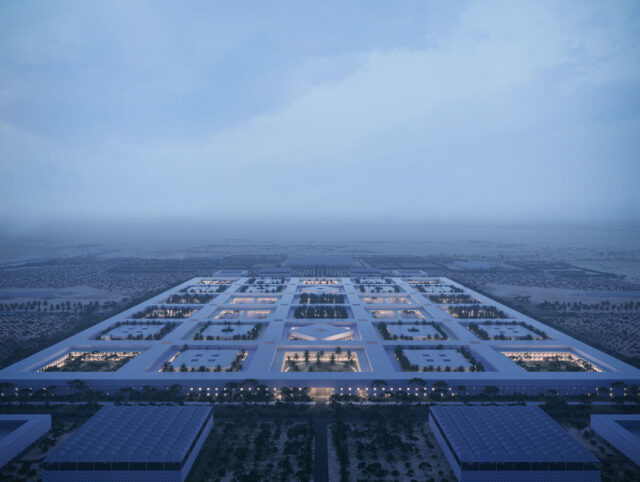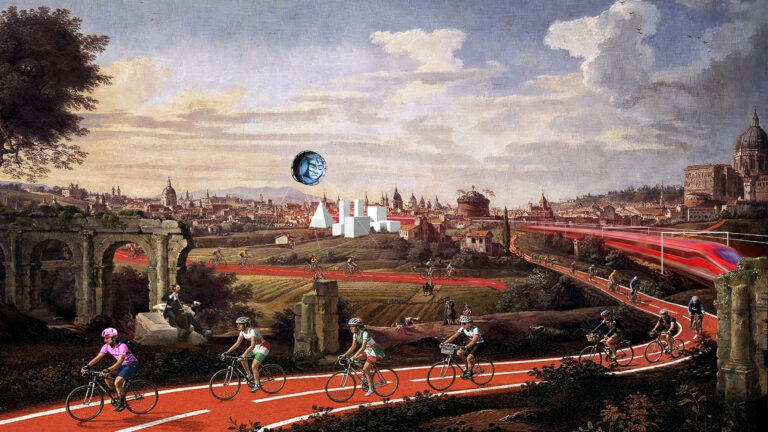
SHARE IT’SとOMAが主導するチームによる「ローマ・コンティヌア」。今後25年に渡るローマの新ヴィジョンの提案。都市の特質を活かしつつ再創造を目指し、ウェルビーイング、美、知識、改革と拡張を中核原則とする計画を考案。拡張主導型の成長から再調整のモデルへの転換を促す

IT’SとOMAが主導するチームによる「ローマ・コンティヌア」です。
今後25年に渡るローマの新ヴィジョンの提案です。チームは、都市の特質を活かしつつ再創造を目指し、ウェルビーイング、美、知識、改革と拡張を中核原則とする計画を考案しました。そして、拡張主導型の成長から再調整のモデルへの転換を促しています。
こちらはリリーステキストです(翻訳:アーキテクチャーフォト / 原文は末尾に掲載)
IT’SとOMAが主導するチームが、ローマの新たなヴィジョンに向けた国際コンペティションで勝利
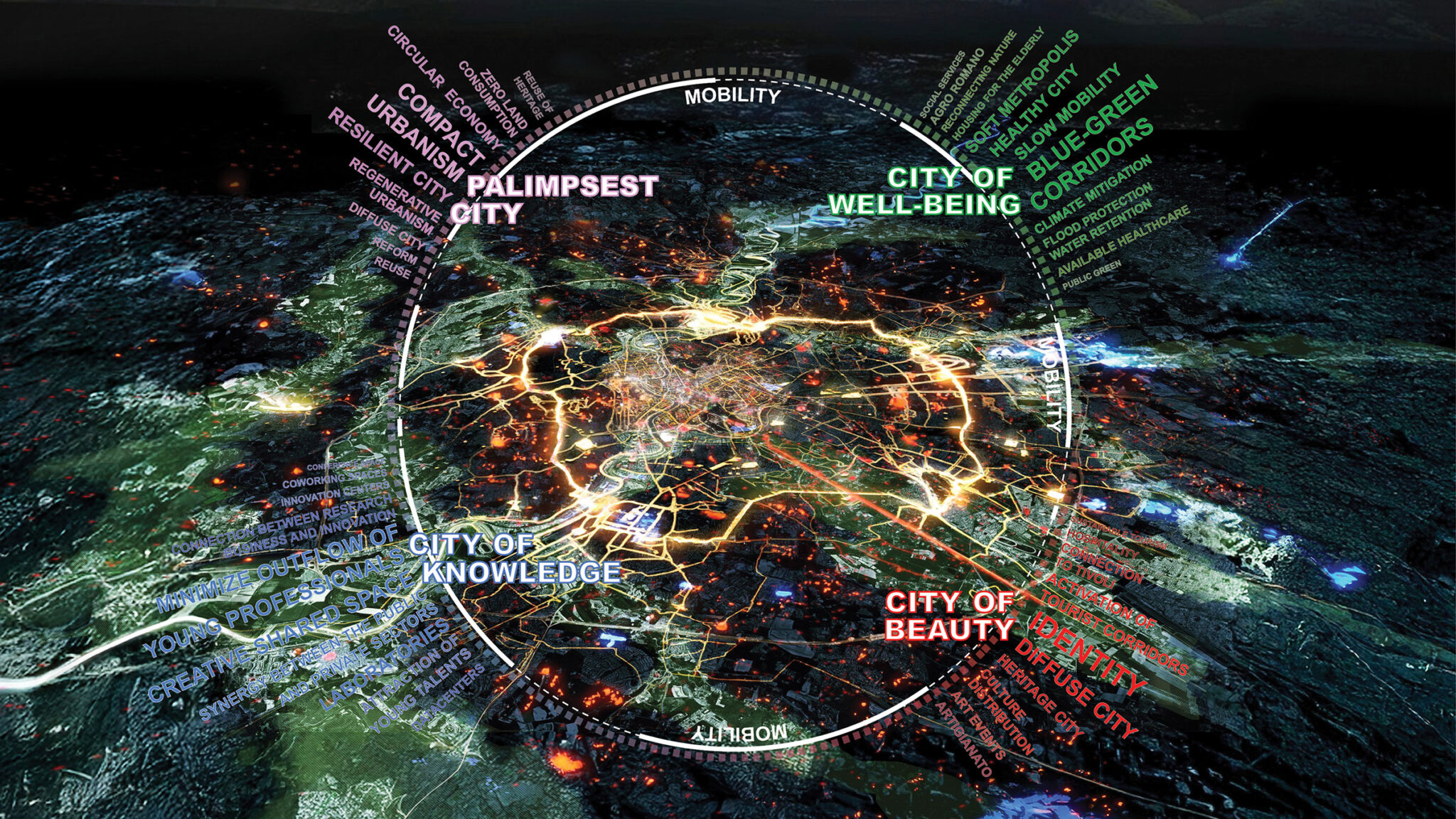
IT’S、OMA、OKRA landscape architects、NET Engineering、およびその他の協力者で構成される国際チームが、イタリアの首都の新たなヴィジョンに向けたアイデアを募るためにローマ・リジェネレーション財団が主催した「ヴィジョン・フォー・ローマ」コンペティションで勝利しました。受賞提案である「ローマ・コンティヌア」は、ウェルビーイング、美、知識、そして「改革と拡張」という4つの中核原則に導かれながら、ローマを生きたエコシステムとして再構想し、都市が本来備えている特質と既存の強みを活かしつつ、時間の経過に応じた適応と再創造のための枠組みを構築します。この提案は、グリーン・コリドー、モビリティ・ハブ、そして住宅とアダプティブ・リユースを統合する新たなプログラムを含む、複数のスケールにわたる対象を定めた介入を導入します。
OMAマネージング・パートナー、建築家のデイヴィッド・ジャーノッテンは次のように述べています。「私たちのヴィジョナリーな計画は、歴史、文化、そして権力によって深く形づくられてきた現代都市において、成長が何を意味するのかを根本的に問い直します。私たちは、多様な専門性を統合されたヴィジョンへと昇華するために、グローバルかつ学際的なチームと協働できたことを大変光栄に思います。それは、アイデンティティを保持し、変革を可能にし、イノベーションを促進しながら、社会的・環境的・経済的な持続可能性を促す新たなレイヤーを加えるための青写真を提示するものです。インフラストラクチャー、自然、そしてリユースを再編成することで、私たちは、ローマが今後25年にわたり、自らのあり方に基づいて進化を続けられる条件を整えることを目指しています」
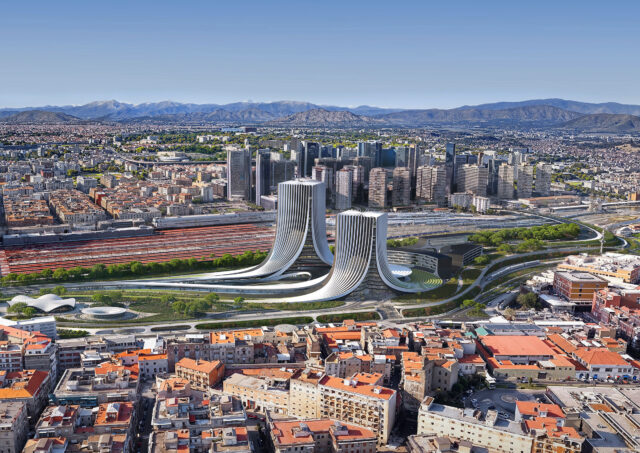
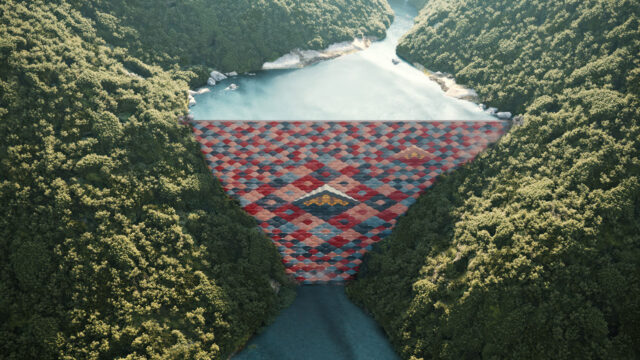
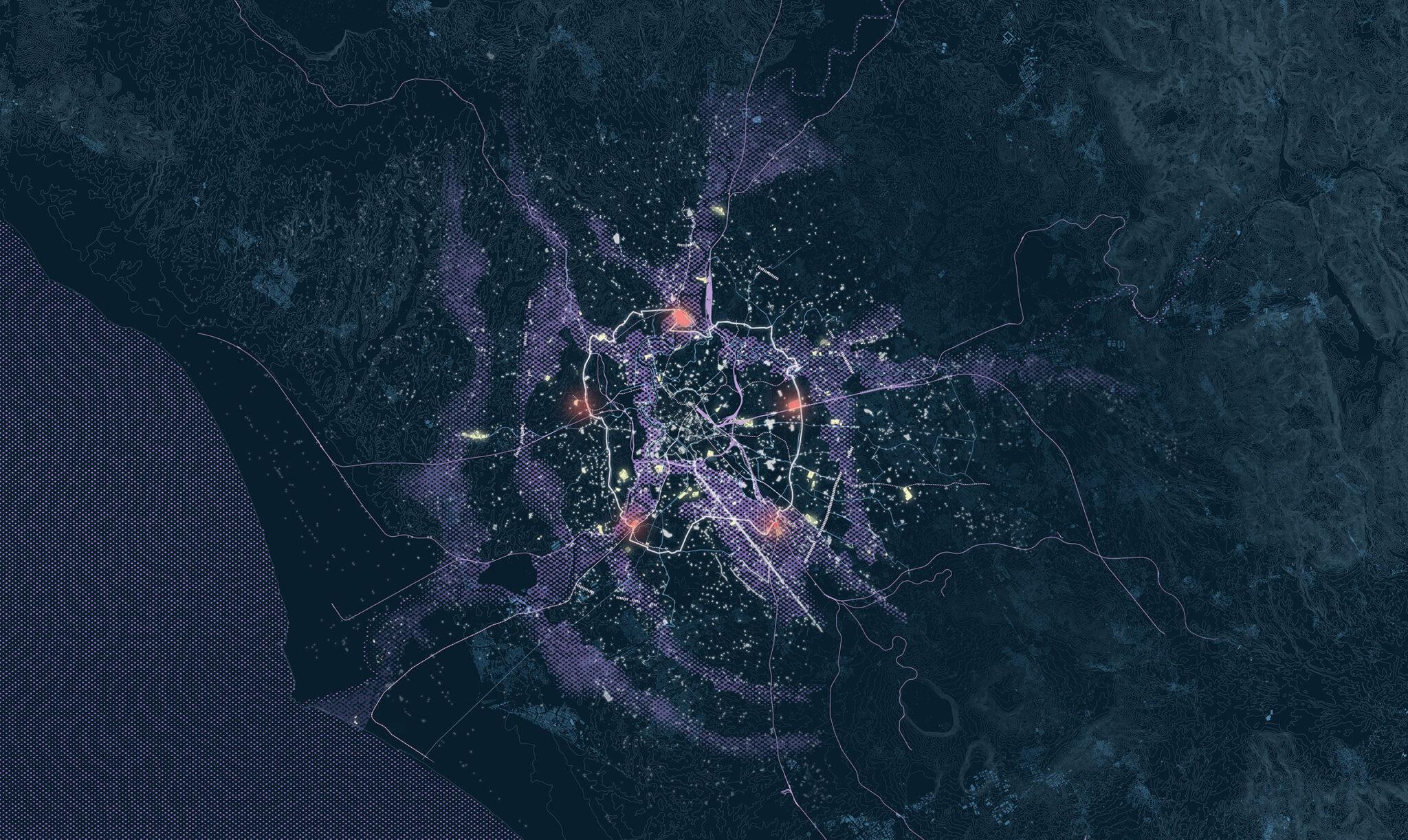
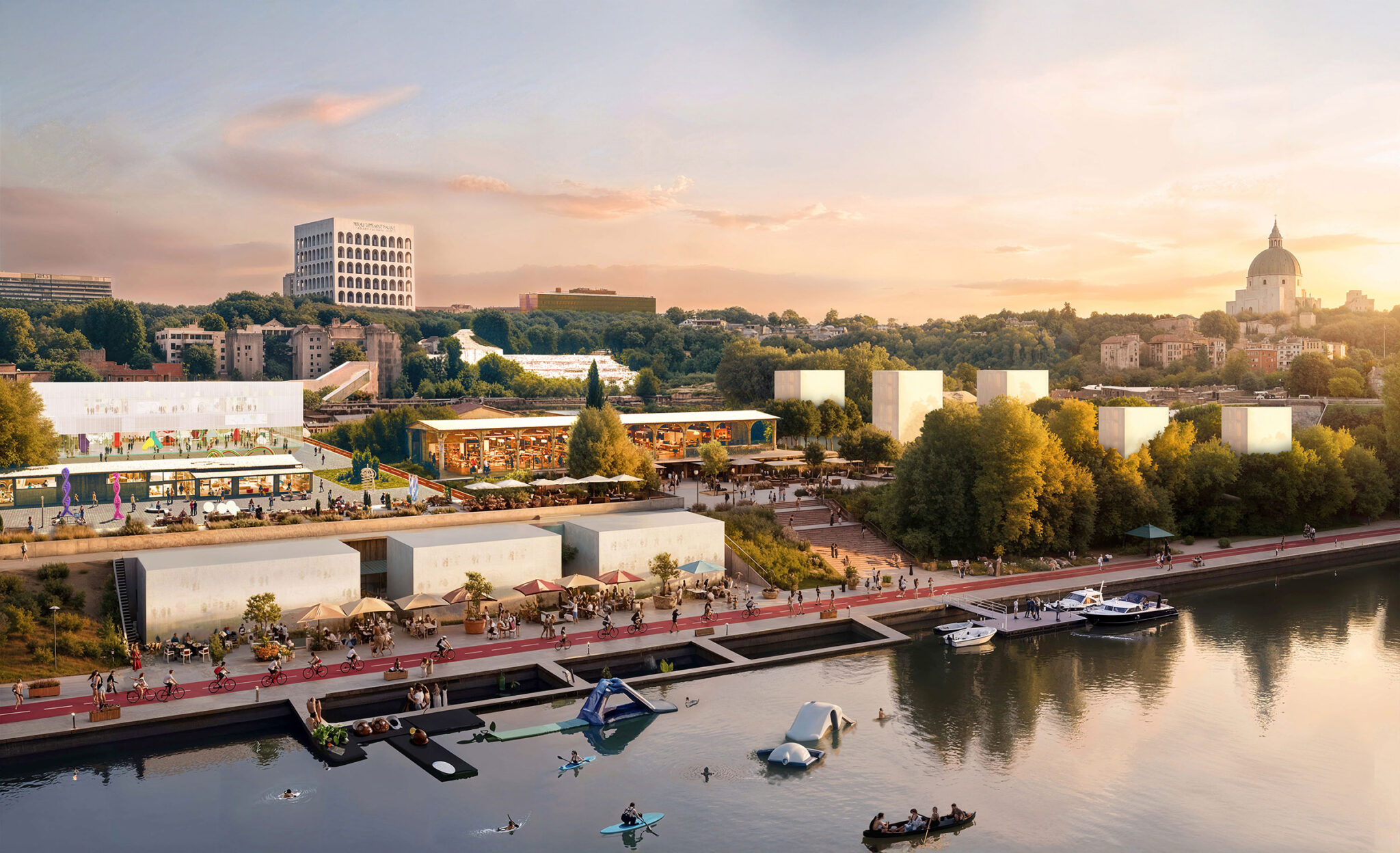
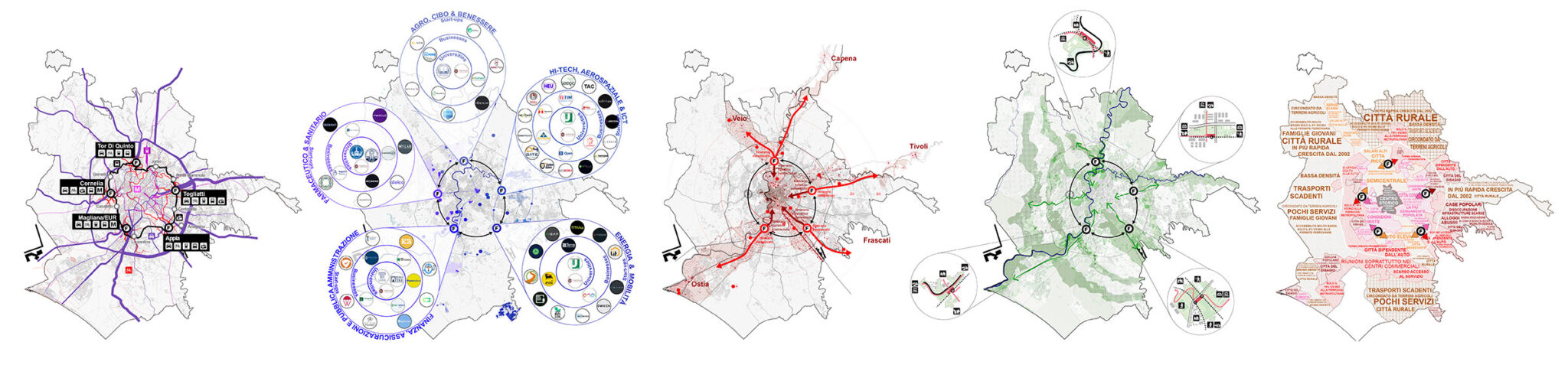
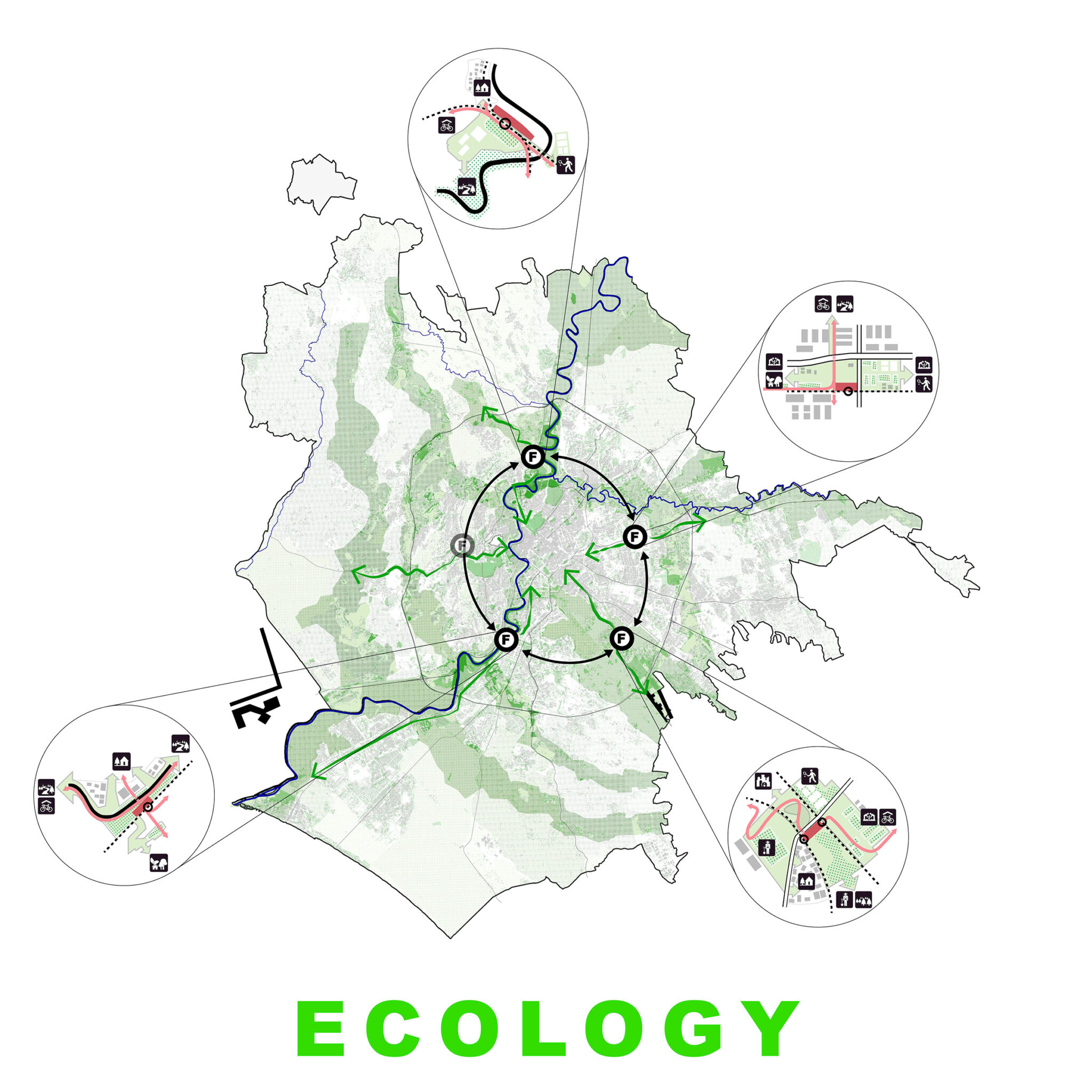
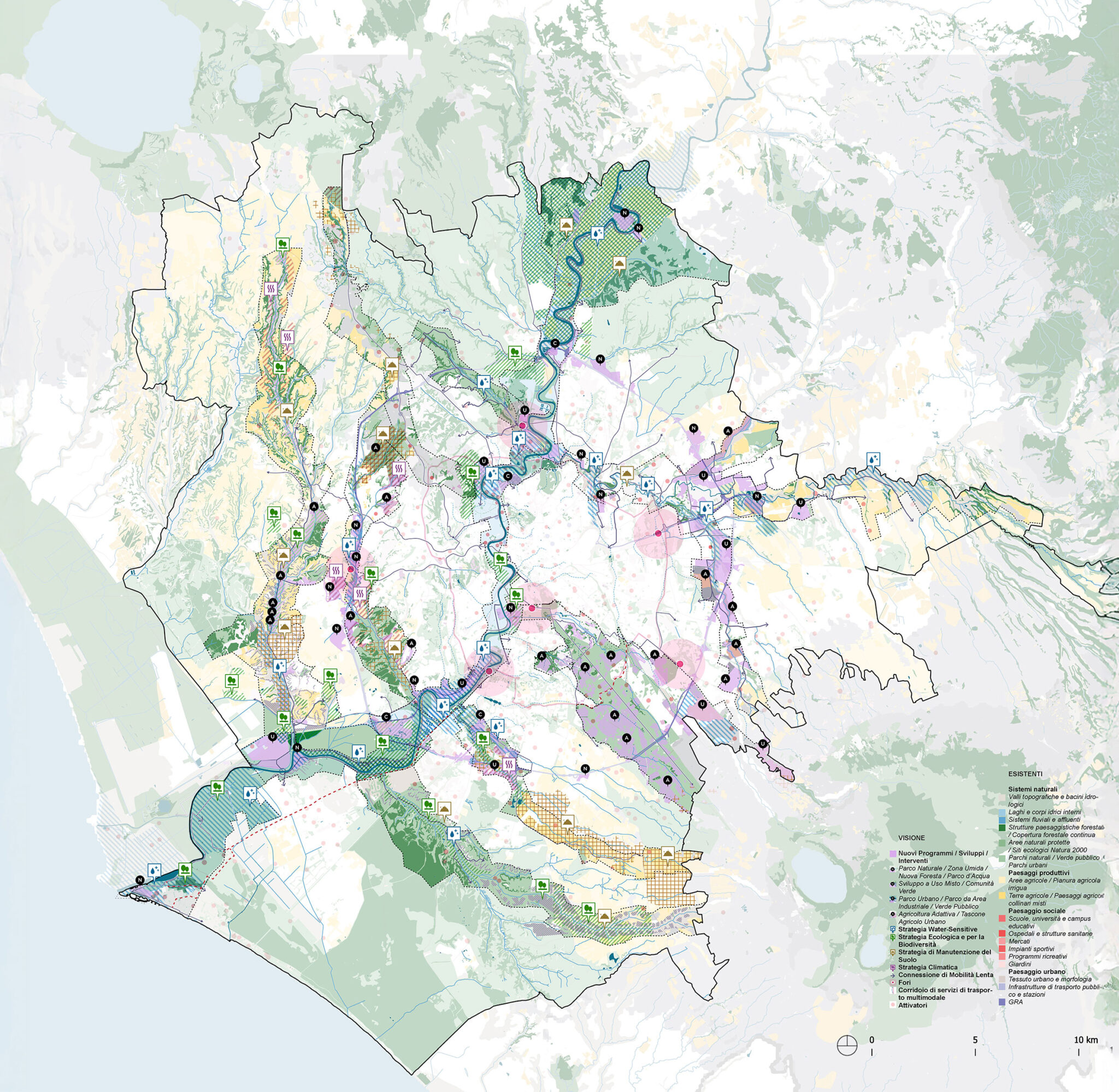
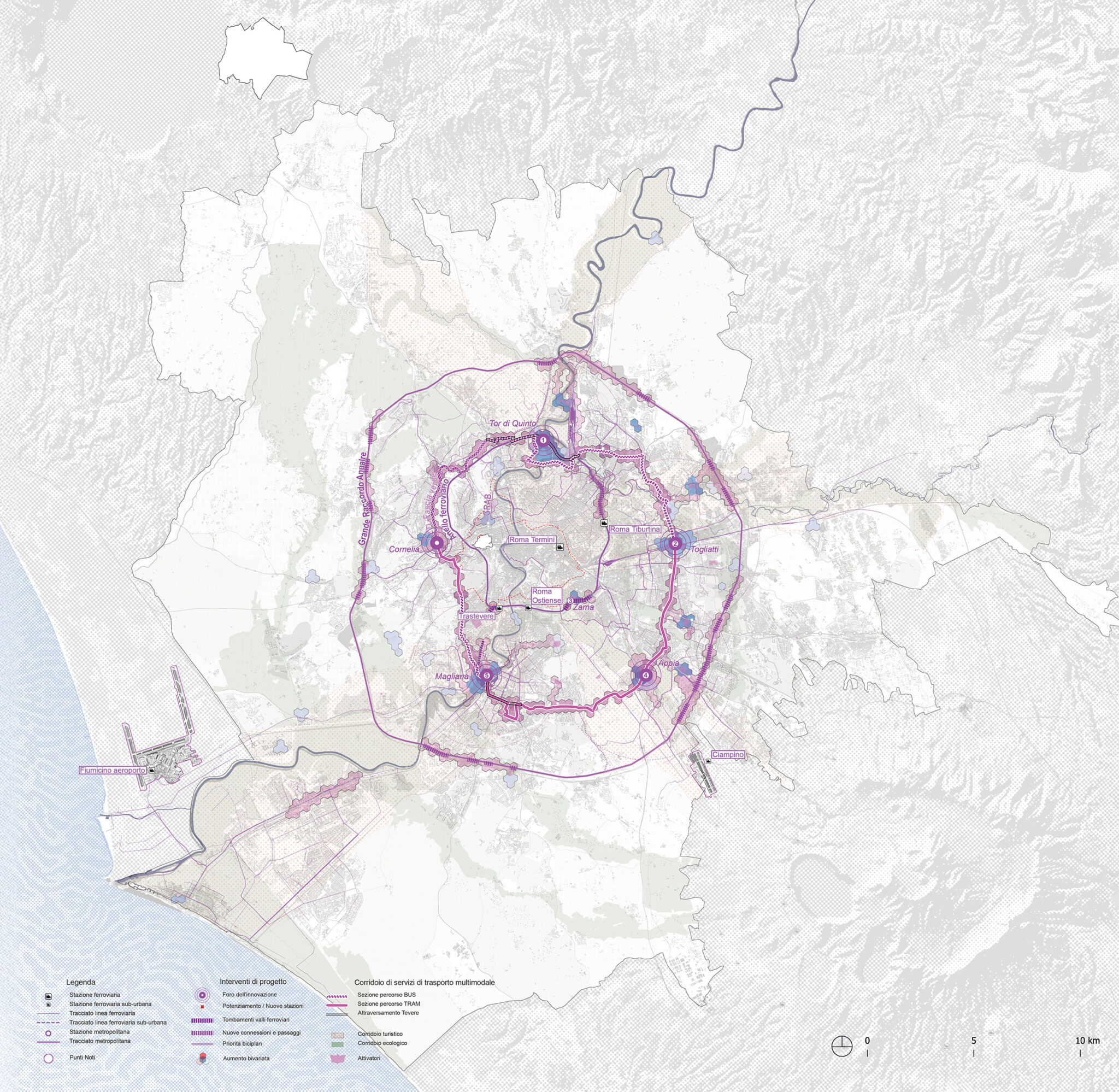
ローマ・コンティヌアは、拡張主導型の成長から、再調整のモデルへの転換を提案しています。ウェルビーイングへの取り組みにおいて、この提案は、ローマの広大なランドスケープを、生態学的かつ社会的な機能を生み出すインフラストラクチャーとして捉え、テヴェレ川とその支流に根差した5つのグリーン・コリドーを設定しています。これらのコリドーに沿って、「イノベーションのフォーラム」として構想された5つのマルチモーダル・モビリティ・ハブが、連続性と明快性を備えた交通ネットワークを形成しています。公共交通機関とラストマイル・ソフトモビリティによって接続されたこれらのハブは、ホスピタリティ、文化プログラム、そして河川空間の活性化を含む、住宅、交通、サービス、公共アメニティを統合し、分断されたシステムを、居住者と来訪者の双方にとって一体的でアクセス可能なネットワークへと変革します。
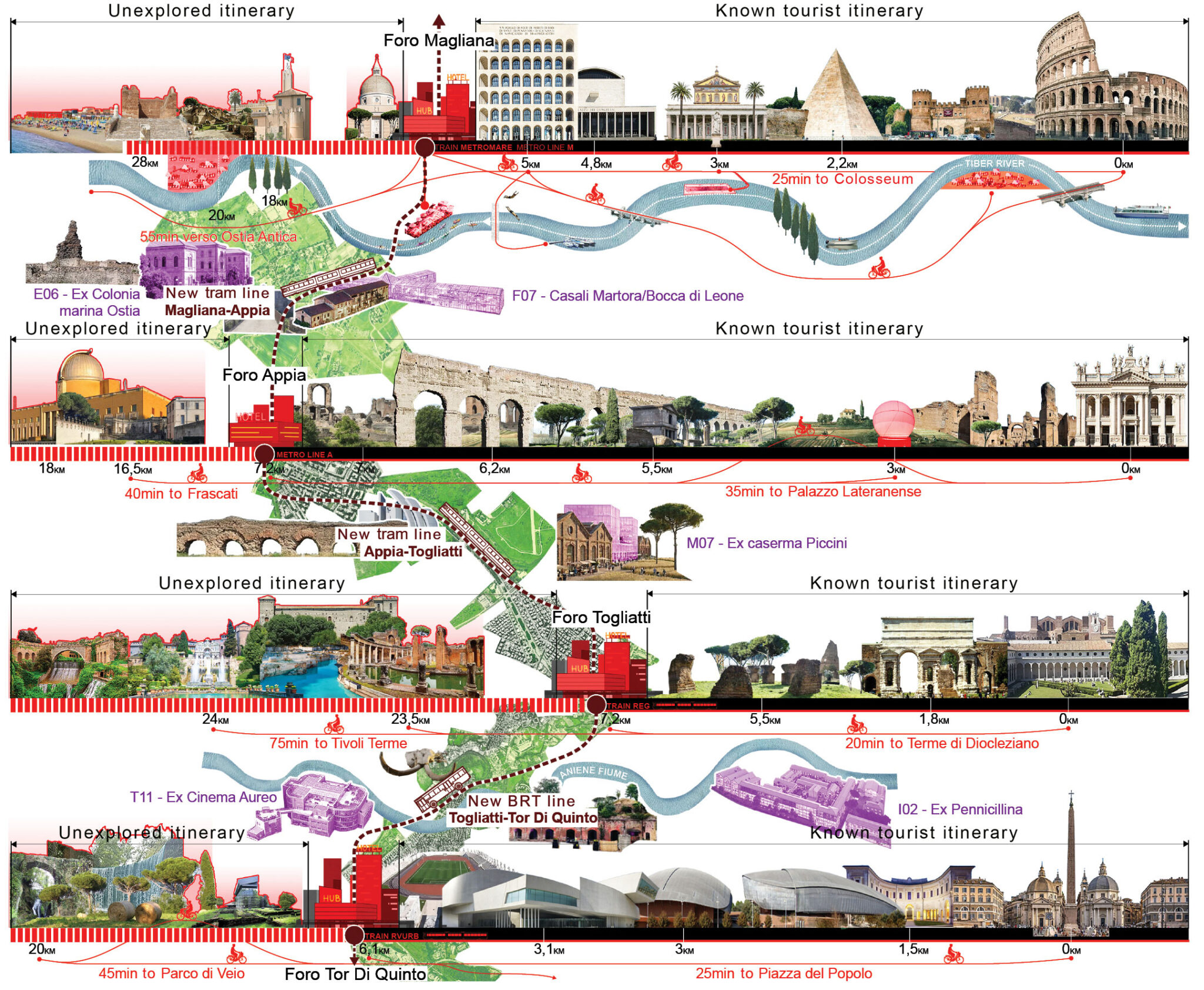
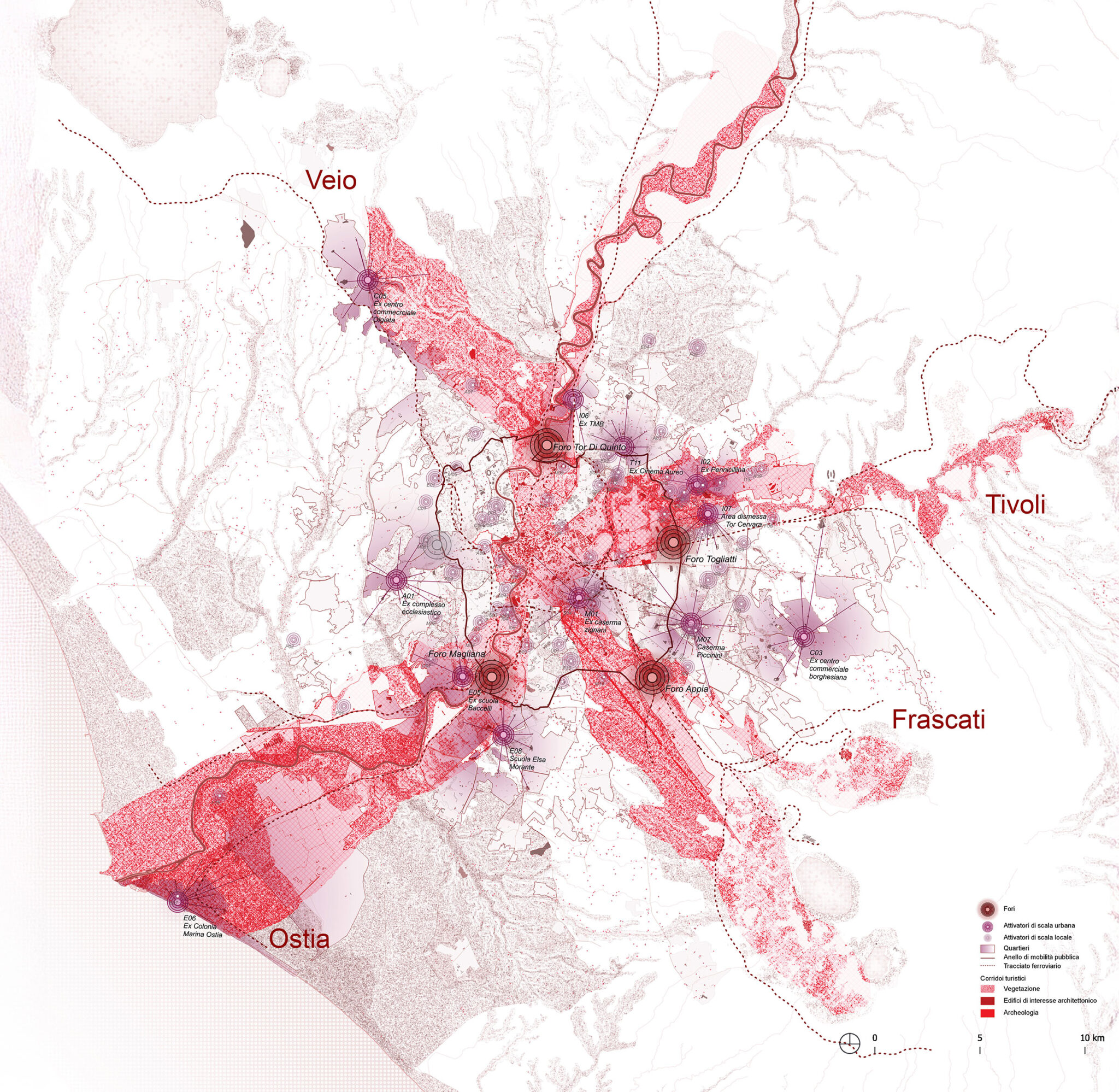
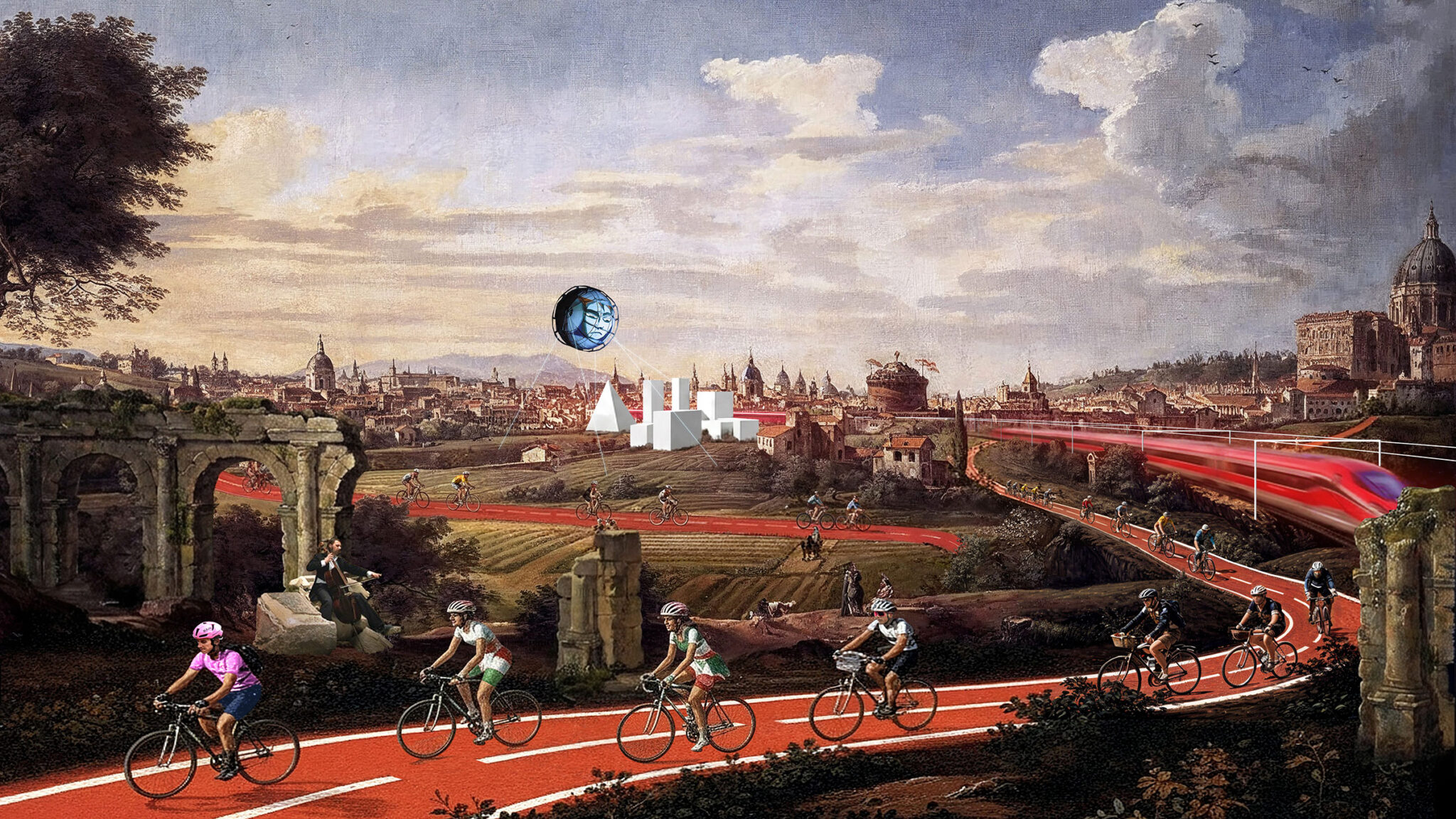
美という原則に応答する形で、この提案は、観光を歴史地区の外へ再分配し、過度な負荷がかかっている地域への圧力を軽減すると同時に、文化体験の地理を拡張します。直通鉄道網は、「イノベーションのフォーラム」を、あまり知られていない目的地と結びつけることで、都市および地域にわたる新たな周遊ルートを創出します。
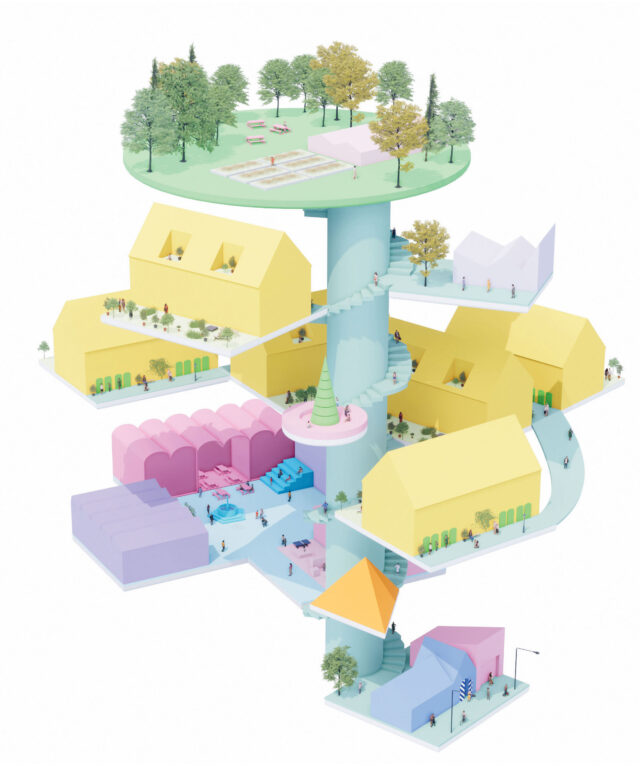
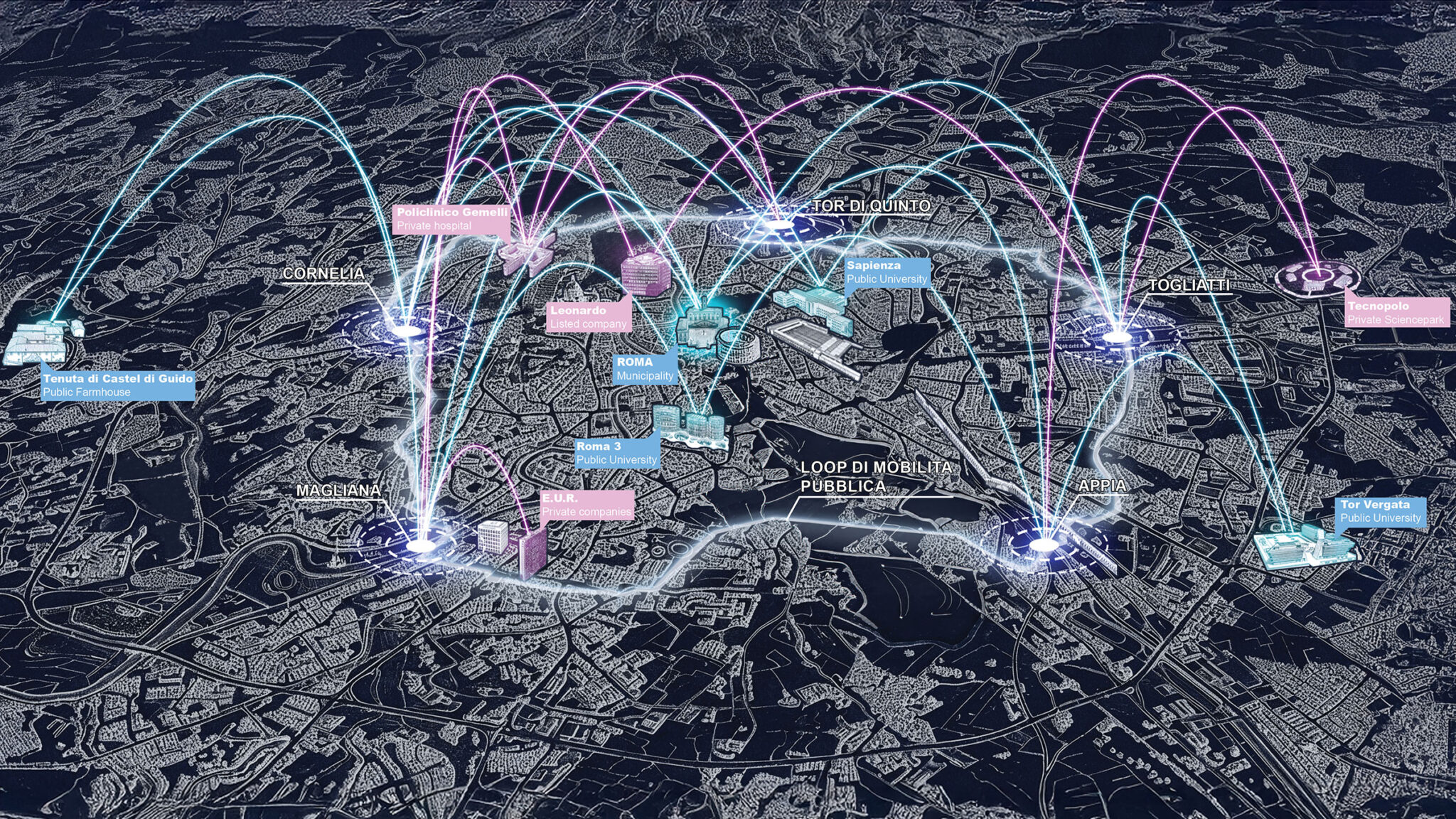
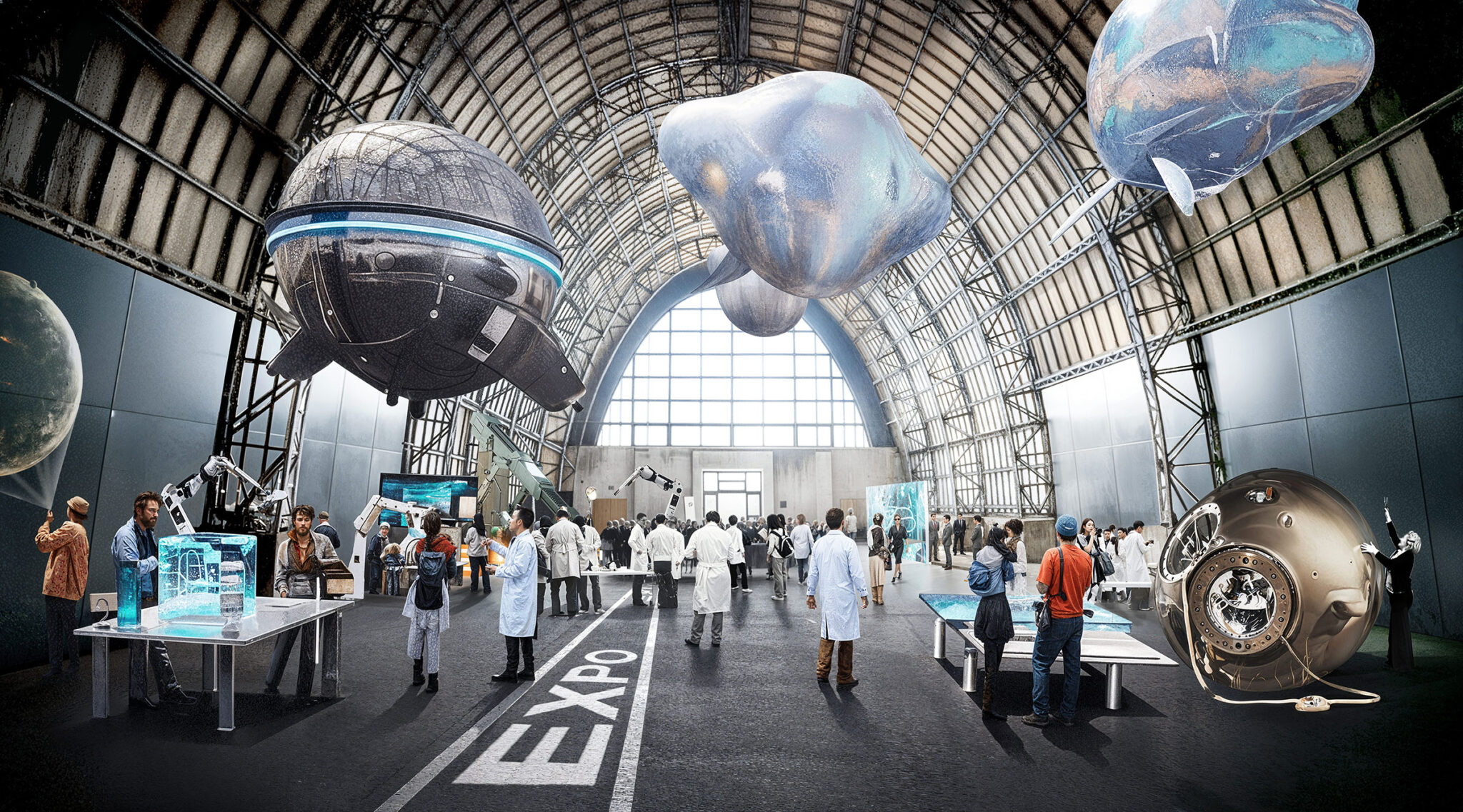
知識を発展させるために、ローマ・コンティヌアは、「イノベーションのフォーラム」の周囲に5つのナレッジ・クラスターを設置しており、それぞれが特定の産業および既存地区の特性と連携しています。気候レジリエンスのあるランドスケープの枠組みに根差した共有施設および公共空間は、スタートアップ、既存産業、そして大学を結びつけ、それらの連携を強化するとともに、新たな協働の機会を育みます。
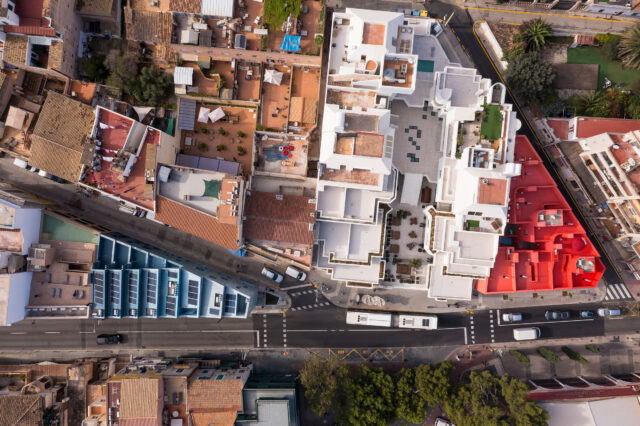
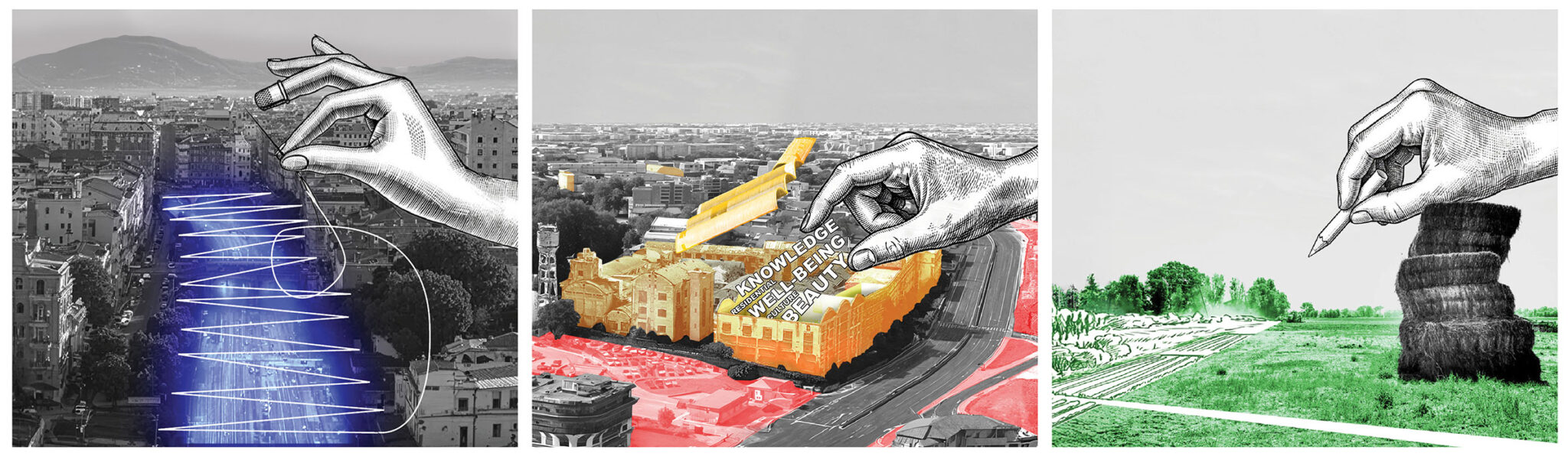
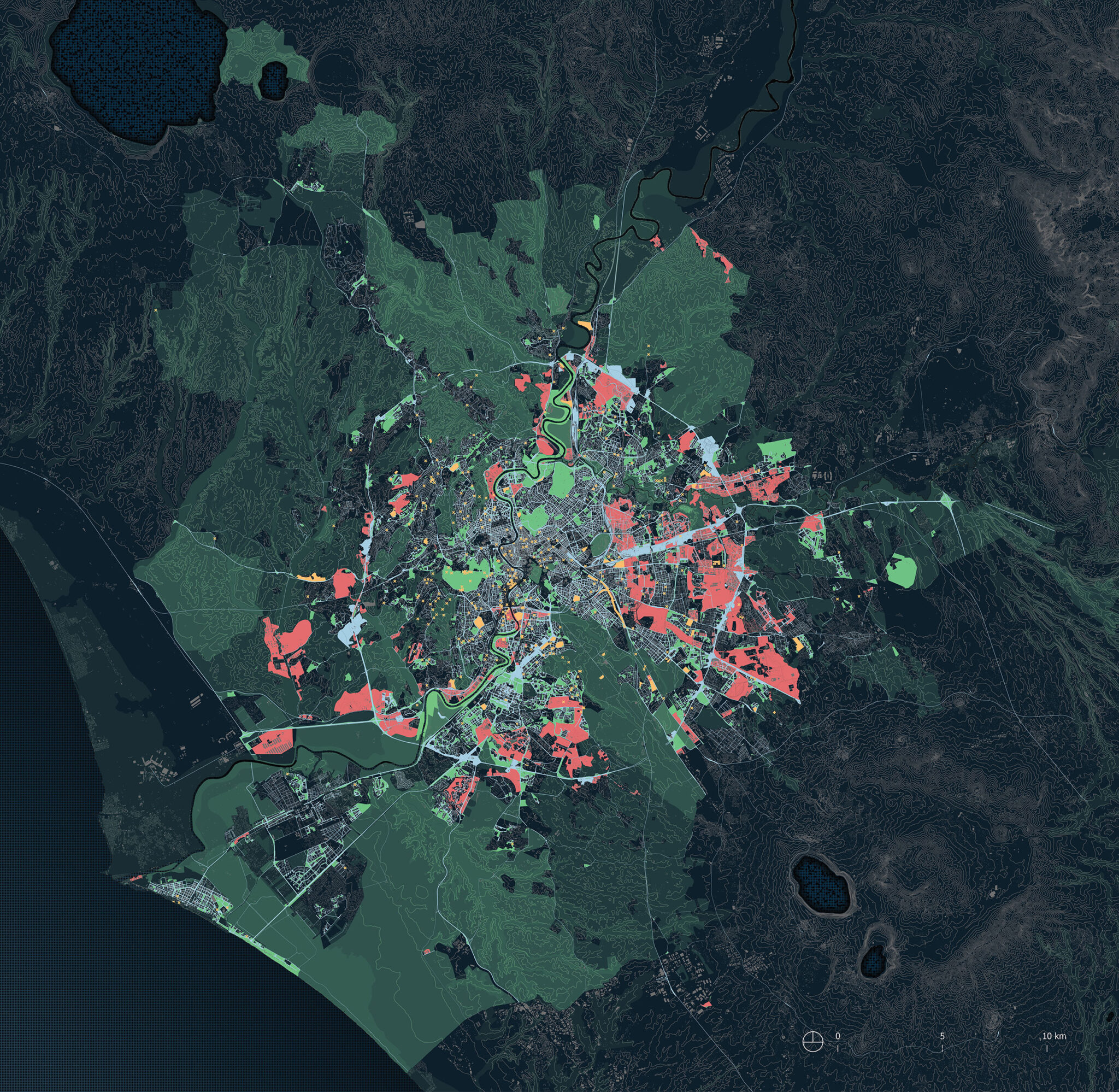
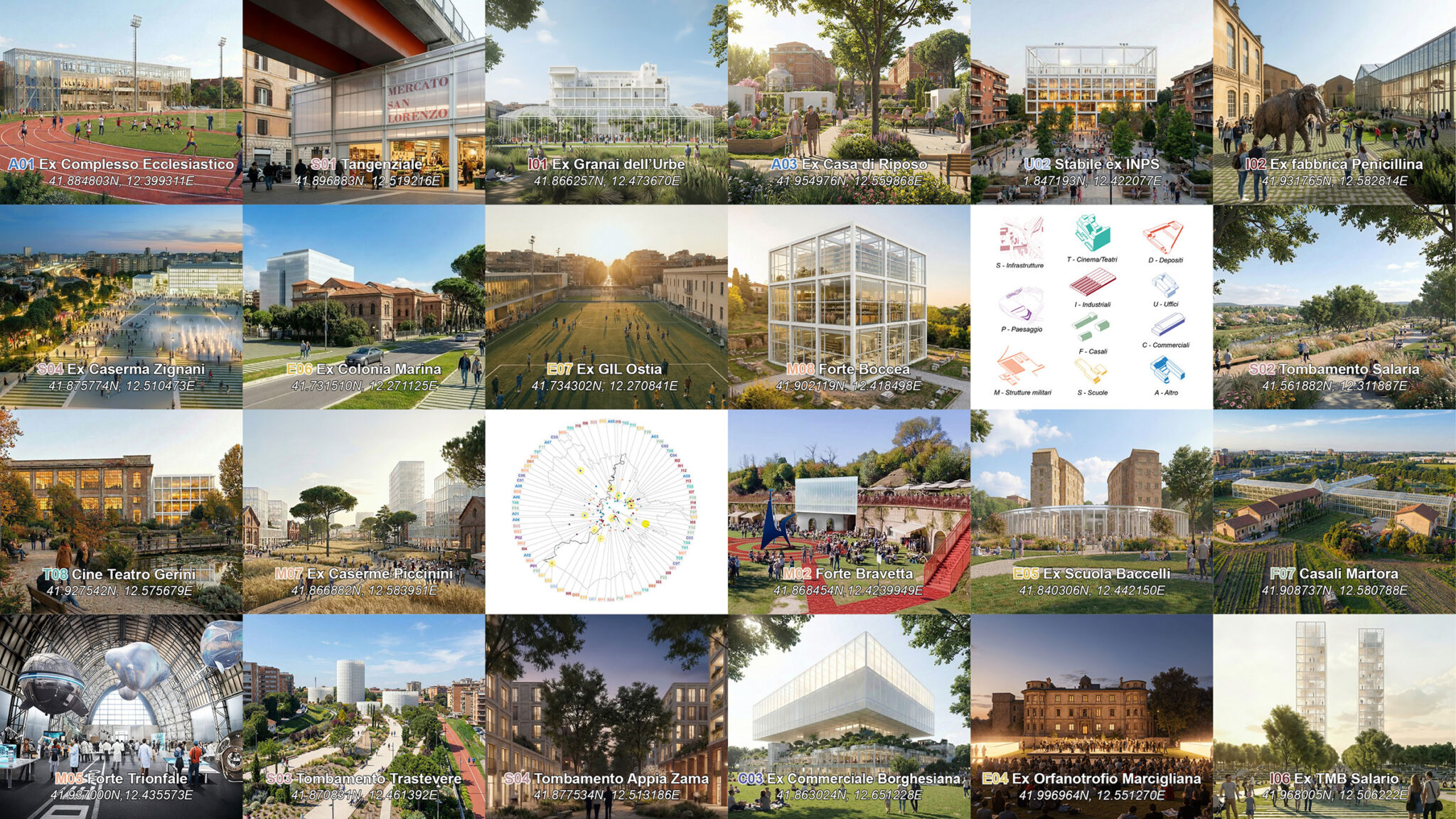
「改革と拡張」という原則のもと、十分に活用されていない敷地は、アダプティブ・リユースと慎重に統合された新築建築を通じて、都市の活性化装置へと転換されます。モビリティ・ネットワークに接続されたこれらの敷地は、日常生活と経済発展を支える、住宅、文化、教育、そして研究のプログラムを受け入れます。
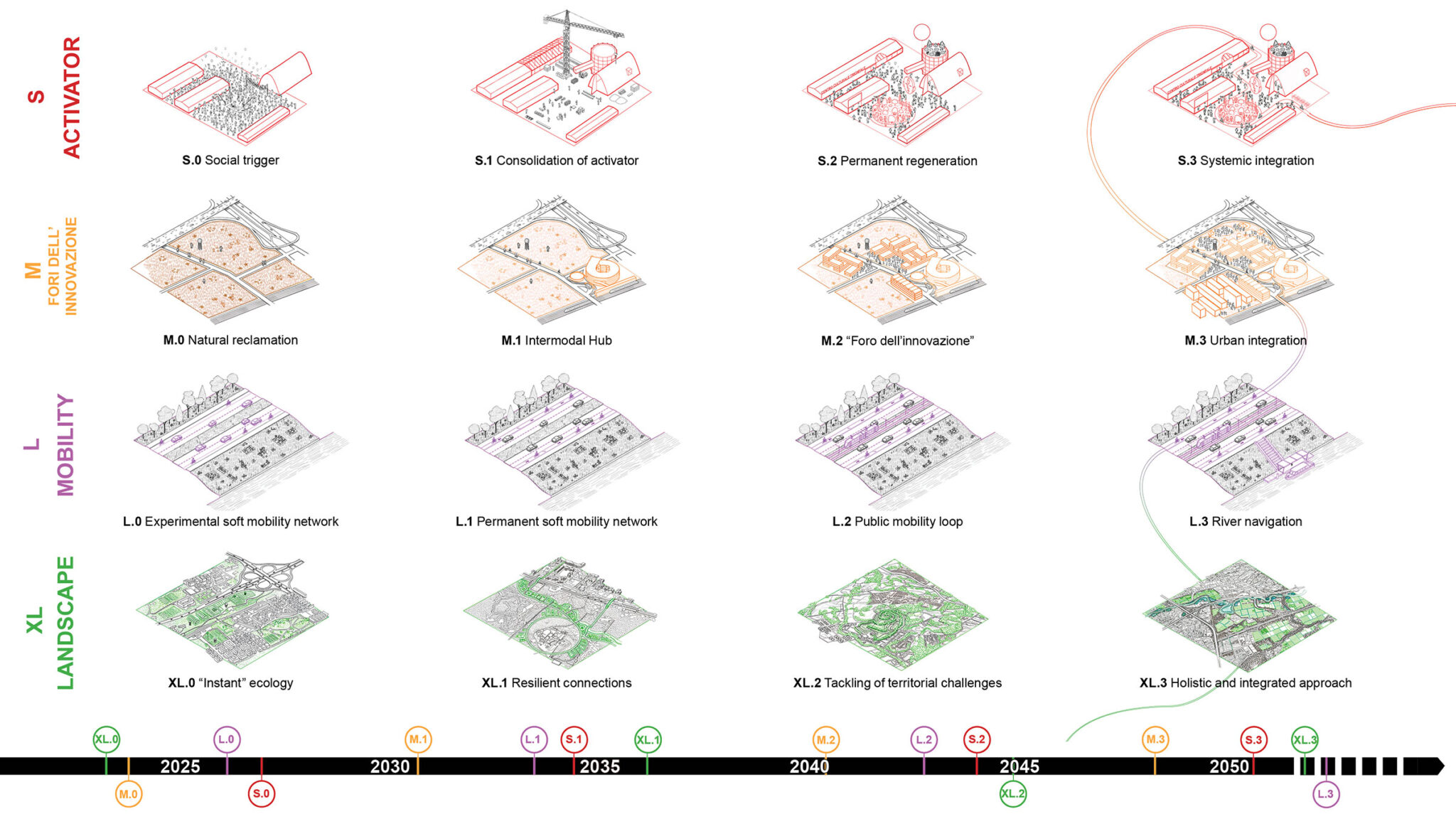
対象を定めた都市介入から都市全体のモビリティおよびランドスケープの変革に至るまで、段階的な実施のために設計されたローマ・コンティヌアは、長期的なヴィジョンを提示しながら、即時的な行動を可能にします。
IT’Sのパートナーであるアレッサンドロ・カンビ(Alessandro Cambi)は次のように述べています。「国際的な専門性を含む幅広いスキルを結集することで、私たちは、ローマの特性に根差した、極めて具体性の高いヴィジョンを構築しました。それは、時間に対して開かれ、適応可能かつ発展的であり、ヴィジョナリーであると同時に実践的で、明日からでも実現可能なものです。ローマ・コンティヌアは、明らかにされ、相互に結びついた場所の星座としてローマを構想するプロジェクトとして理解されるべきです。それは、都市にすでに存在しているものから書き継がれていくパランセストです。それは、再生と再活性化に関する体系的かつ広範なヴィジョンを通じて、美と未来の暮らしの空間を受け入れます」
受賞チームは、IT’S、OMA、OKRA、NET Engineering、LGSMA、Open Impact、Artelia、Atribune、Elena Granata、Fiamma Montezemolo、Costanza Profumo、そしてDavide Marinoによって構成されています。OMAのチームは、デイヴィッド・ジャーノッテンおよびプロジェクト・アーキテクトのアレクサンダル・ヨクシモヴィッチ(Aleksandar Joksimovic)によって率いられました。この提案は、イタリアおよび国際チームによって提出された6つの最終候補案の中から選出されました。
以下の写真はクリックで拡大します
以下、リリーステキストです。
IT’S and OMA–Led Team Wins International Competition for Rome’s Renewed Vision
Rome, 19 May 2026 – An international team comprising IT’S, OMA, OKRA landscape architects, NET Engineering, and other collaborators has won the “Vision for Rome” competition, organized by the Roma REgeneration Foundation to solicit ideas for a renewed vision of the Italian capital. The winning proposal, Roma Continua—guided by four core principles of well-being, beauty, knowledge, and “reform and extension”—reimagines Rome as a living ecosystem, establishing a framework for adaptation and reinvention over time while building on the city’s inherent qualities and existing strengths. The proposal introduces targeted interventions across multiple scales, including green corridors, mobility hubs, and new programmes that integrate housing with adaptive reuse.
OMA Managing Partner – Architect David Gianotten: “Our visionary plan fundamentally questions what growth means for a contemporary city profoundly shaped by history, culture, and power. We are incredibly honoured to have collaborated with a global, interdisciplinary team to translate diverse expertise into a unified vision—one that offers a blueprint for adding new layers that promote social, environmental, and economic sustainability, while preserving identity, enabling transformation, and fostering innovation. By realigning infrastructure, nature, and reuse, we aim to establish the conditions through which Rome can continue to evolve on its own terms over the next 25 years.”
Roma Continua proposes a shift from expansion-led growth toward a model of recalibration. In addressing well-being, the proposal treats Rome’s extensive landscape as generative ecological and social infrastructure, identifying five green corridors anchored in the Tiber and its tributaries. Along these corridors, five multimodal mobility hubs—conceived as “forums of innovation”—form a continuous and legible transport network. Connected by public transit and last-mile soft mobility, the hubs integrate housing, transport, services, and public amenities, including hospitality, cultural programmes, and riverside activation, transforming a fragmented system into a coherent and accessible network for both residents and visitors.
In response to the principle of beauty, the proposal redistributes tourism beyond the historic centre, relieving pressure on overburdened areas while expanding the geography of cultural experience. Direct rail connections link the “forums of innovation” to lesser-known destinations, creating new itineraries across the city and region.’
To advance knowledge, Roma Continua establishes five knowledge clusters around the “forums of innovation,” each aligned with specific industries and the vocations of existing districts. Shared facilities and public spaces—anchored in a climate-resilient landscape framework—bring together startups, established industries, and universities, strengthening connections and fostering new opportunities for collaboration.
Under the principle of “reform and extension,” underused sites are transformed into urban activators through adaptive reuse and carefully integrated new construction. Connected to the mobility network, these sites accommodate residential, cultural, educational, and research programmes that support everyday life and economic development.
Designed for phased implementation—from targeted urban interventions to citywide mobility and landscape transformation—Roma Continua enables immediate action while setting out a long-term vision.
Alessandro Cambi, Partner at IT’S: “Bringing together a range of skills, including international expertise, we developed a highly specific vision rooted in the particularities of Rome—one that is open over time, adaptable and progressive, both visionary and pragmatic, and achievable starting tomorrow. Roma Continua should be understood as a project that envisions Rome as a constellation of places, revealed and interconnected: a palimpsest that continues to be written from what already exists in the city. It welcomes beauty and the spaces of future living through a systemic and widespread vision of recovery and reactivation.”
The winning team comprises IT’S, OMA, OKRA, NET Engineering, LGSMA, Open Impact, Artelia, Atribune, Elena Granata, Fiamma Montezemolo, Costanza Profumo, and Davide Marino. OMA’s team was led by David Gianotten and Project Architect Aleksandar Joksimovic. The proposal was selected from six finalist entries submitted by Italian and international teams.
■建築概要
Roma Continua – A Vision for Rome
Project: Roma Continua – A Vision for Rome
Status: Commissioned Study
Client: ROMA REgeneration
Location: Rome, Italy
Program: Vision Plan (Metropolitan City of Rome Capital: 5,352 km²)
Partner: David Gianotten
Project Leader: Aleksandar Joksimovic
Team: Giovanni Nembrini, Apostolos Thomos, Andreas Karavanas
───
COLLABORATORS
Collaborating Architects: IT’S, LGSMA
Landscape Architect: OKRA landscape architects
Mobility: NET Engineering
Impact Analysis: Open Impact
Environmental Sustainability: Artelia
Communication and Public Participation: Artibune
Cultural Management: Costanza Profumo
Anthropology: Fiamma Montezemolo
Agri-food Economics: Davide Marino
Urban Plan Consultant: Elena Granata