SHARE OMAによる、アメリカ・ニューヨークの、ニューミュージアムの増築。SANAAの美術館の増築計画。拡張した活動と公共的な志向に応える存在として、相乗効果を生む“一対”であると同時に“異なる個性”も主張する建築を志向。新たな“ギャラリー・垂直動線・集いの場”を追加する

OMA / 重松象平+レム・コールハースによる、アメリカ・ニューヨークの、ニューミュージアムの増築です。
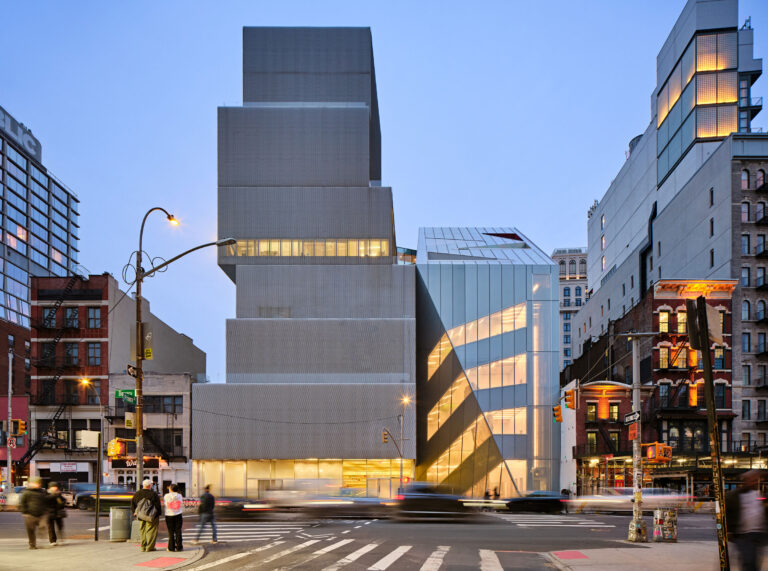
SANAAの美術館の増築計画です。建築家は、拡張した活動と公共的な志向に応える存在として、相乗効果を生む“一対”であると同時に“異なる個性”も主張する建築を志向しました。そして、新たな“ギャラリー・垂直動線・集いの場”を追加しました。
こちらはリリーステキストです(翻訳:アーキテクチャーフォト / 原文は末尾に掲載)
ニューミュージアムは、マンハッタンで唯一、現代美術のみに特化した美術館であり、地元コミュニティのメンバー、支援者、および選出された公職者に向けて、リボンカッティング式典のために再び開館しました。OMA / 重松象平およびレム・コールハースがエグゼクティブアーキテクトのクーパー・ロバートソン(Cooper Robertson)と協働して設計した60,000平方フィート(※約5,574平方メートル)の増築棟は、2026年3月21日に一般公開されます。
ニューヨークにおけるOMA初の文化施設であり、235バワリーにあるSANAA設計の美術館建物への新たな増築は、拡張された活動および高まりつつある公共的な志向に対して必要とされていた空間を提供し、既存建物に隣接する敷地において、プログラムおよび床面積を倍増させるものです。
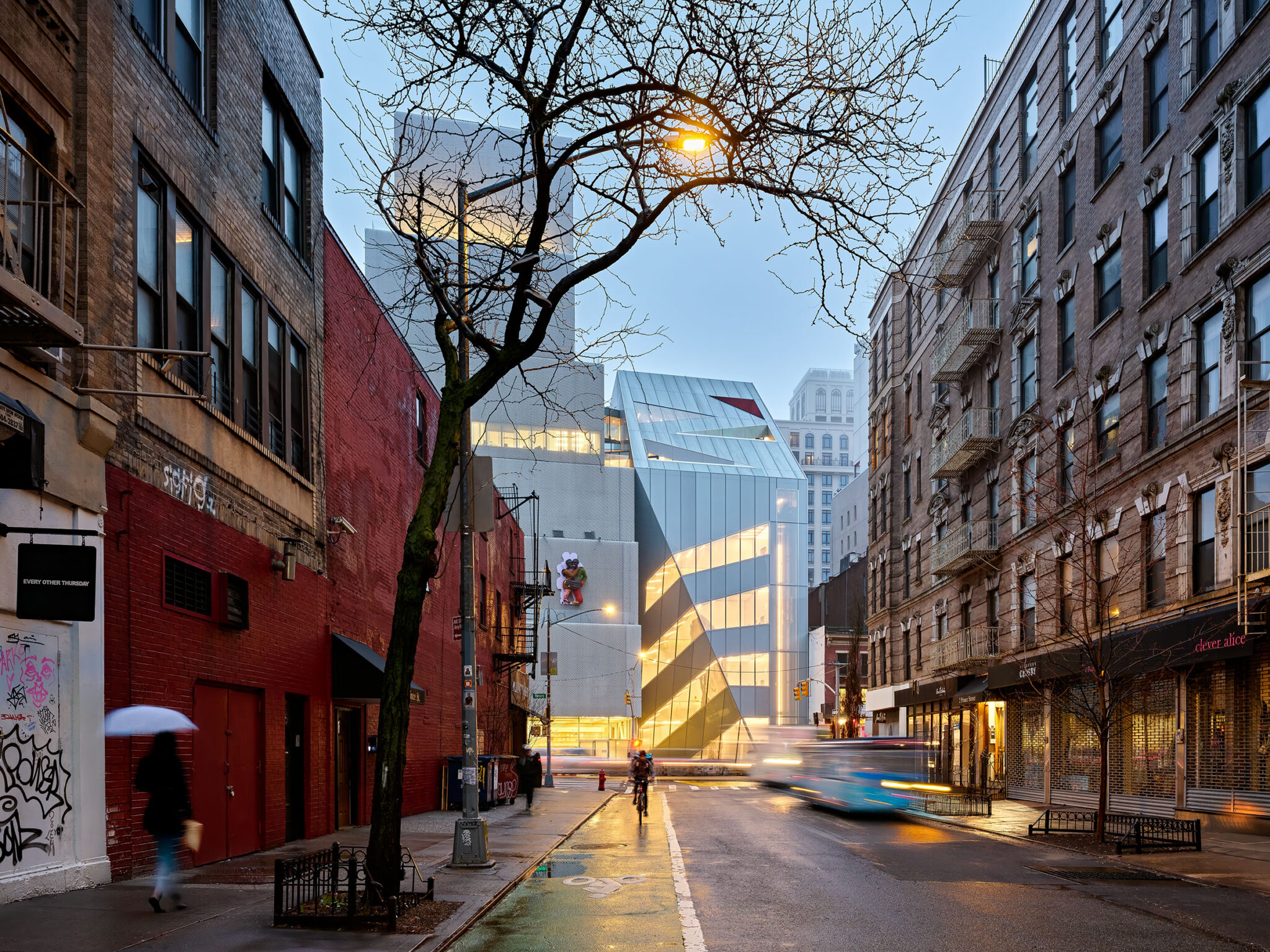
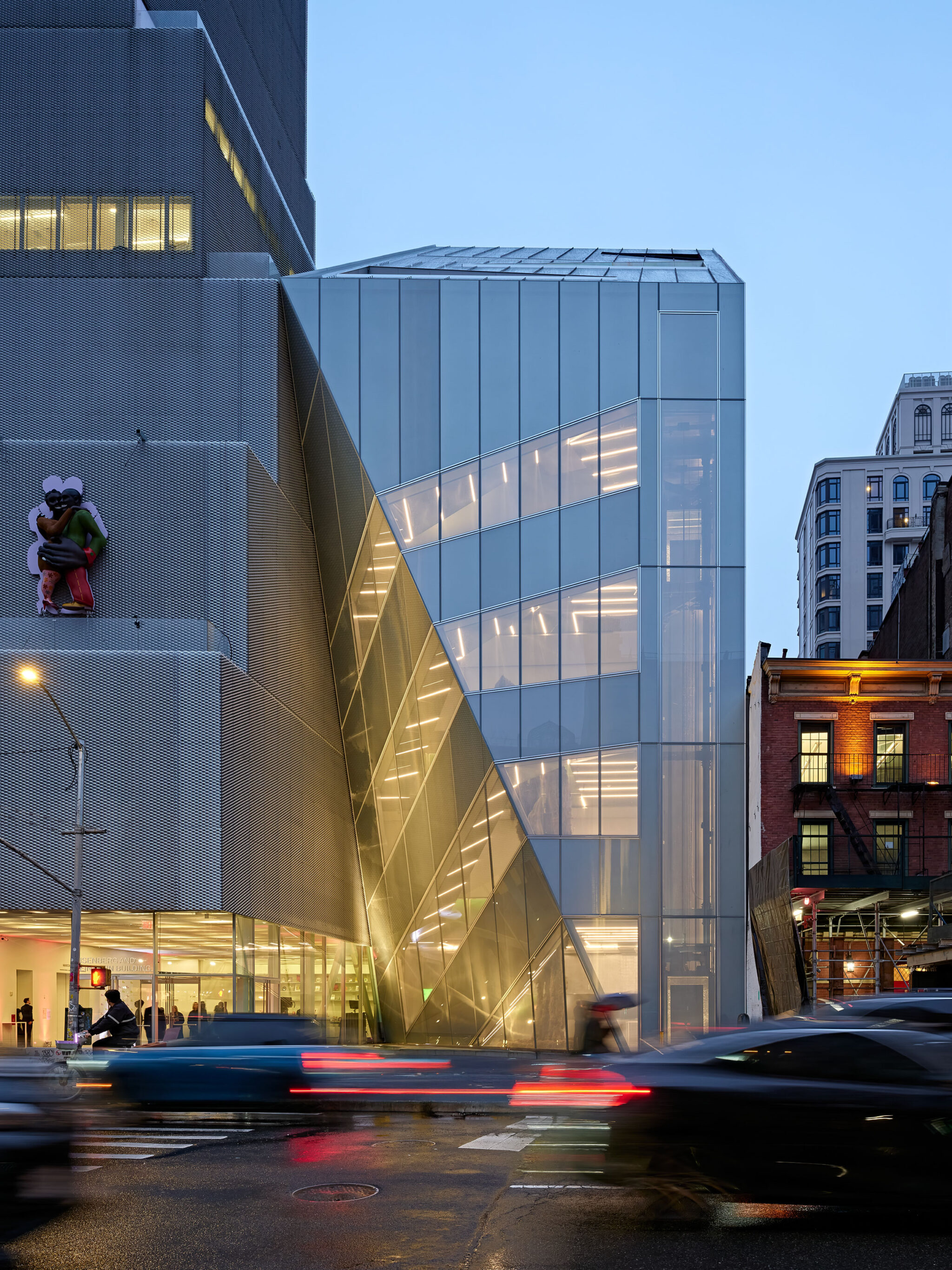
この新しい建物は、展覧会を生み出す機能を超えた、美術館の変化しつつある役割を認識しています。今日、美術館は、プログラムされたものと非プログラムのものの双方において公共参加のための空間であり、都市との新たなつながり、さらには開放性さえも育むことができます。この建物のファサードは、柔軟な内部で展開している活動の動線やその断片を示し、それらを街路に向けて露出させています。ニューミュージアムの増築は、バワリーとプリンス・ストリートの交差点に屋外広場を生み出し、それは人々を内部へと誘い、集いの場として機能します。その結果は、外向的な美術館であり、連続する都市の延長であり、その公共的な生活に参与するものです。
拡張されたフットプリントは、美術館のギャラリー空間を倍増させるとともに、3基のエレベーター、アトリウム階段、エントランス広場の追加によって円滑な動線を提供し、さらに、拡張された7階のスカイルームおよび新たな74席のフォーラムを含む、公共プログラムや特別イベントのための新たな場を導入します。増築された建物の上層階には、アーティスト・イン・レジデンスのための専用スタジオおよび、美術館の文化インキュベーターであるNEW INC.の拠点が設けられます。地上階では、来館者は拡張されたロビー、拡張されたブックストア、そしてオベロン・グループ(Oberon Group)が運営するフルサービスのレストランへと迎え入れられます。
リサ・フィリップス(Lisa Phillips)、ニューミュージアム トビー・デヴァン・ルイス・ディレクター、は述べています。
「約50年前の創設以来、ニューミュージアムは、今日における最も革新的な芸術の拠点であるとともに、それを生み出すアーティストたちの拠り所であり続けてきました。バワリーにある私たちの新たな120,000平方フィート(※約11,148平方メートル)の建物は、新しい芸術と新しいアイデアへの私たちの一層強化されたコミットメント、そしてリスクテイク、協働、実験のための絶えず進化し続ける場としての美術館へのコミットメントを示しています」
重松象平、OMA パートナー・イン・チャージ、は述べています。
「ニューミュージアムは、新たな文化的視点と創造のためのインキュベーターであり、この増築はその開放的な姿勢を体現することを目指しています。既存の美術館の垂直性と堅牢性に対して高度に接続されつつも明確に異なる対となる存在として構想されたこの新しい建物は、キュレーションの多様性のための水平方向に広がるギャラリー、開かれた垂直動線、そして集い、交流、創造のための多様な空間を提供します。この建物はさらに、アクティブな公共的ファサードを形成するように形づくられており、地上の屋外広場、中央アトリウム全体にわたる透明性のある部分、そして上部のテラス状の開口部を含み、周辺コミュニティおよびその先に対して開かれたかたちで働きかけます」
レム・コールハース(Rem Koolhaas)、OMA パートナー・イン・コラボレーション、は述べています。
「ニューヨーク市における私たちの初の公共建築となるこのニューミュージアムとのプロジェクトは、とりわけ意義深いものです——それは、私たちが長年にわたりその先進的な理念を称賛してきた機関です。妹島和世および西沢立衛とのこれまでの協働を基盤として、彼らのオリジナルの建物、すなわちこの都市における最も共鳴力のある建築作品の一つと対話することは、私たちにとって光栄でした。完成した本プロジェクトは、そのレガシーの継承であると同時に拡張でもあります」
ジェイク・フォースター(Jake Forster)、OMA プロジェクト・アーキテクト / アソシエイトは述べています。
「この新しい建物は、既存の美術館を支え、補完し、多様化することで、キャンパスを確立することを目指しています。私たちは、新たな機会と関わりを創出するために、多様な空間、構造、素材をエンジニアリングすることを楽しんできました。この節目に至るまでに、本プロジェクトは、多様なデザイナー、エンジニア、メーカーの情熱と専門性に支えられてきました。私たちの共同の取り組みが、来館者を迎え入れながら現実のものとなるのを見ることを楽しみにしています」
こちらは建築家によるテキストです(翻訳:アーキテクチャーフォト / 原文は末尾に掲載)
私たちのニューヨークにおける最初の文化機関は、235ボウリーにある象徴的なSANAA設計の建物の隣に位置するニューミュージアムへの新しい増築です。ニューミュージアムは、来館者数、展示、そして活動の面で成長してきています。その多様な取り組みは、その大規模な教育プログラム、文化的インキュベーターであるNEW INC、そしてもちろん世界的に認知された展示プログラムを含め、この機関を文化的な実験場へと変革してきています。私たちは、その拡張された活動にとって必要不可欠な空間を提供し、かつ同時に、ますます公共的な志向を反映する新しい建物を追加するよう求められました―既存のSANAA設計の建物に隣接する敷地において、プログラムと床面積を複製し、部分と対となるものとして並置するものです。
この状況は、二項対立の中に深く根付いていました。二項対立は美術館の増築に本質的に内在しているものではありますが、それはその対を成すものの潜在的な可能性を十分に発揮することを抑制し得ます。私たちは、より教訓的でなく、より予期しない、そしておそらくはロマンティックに絡み合った関係に目を向けました。それは、全体を構成する二つの部分の間に存在し得るものです。一方が他方に支援と自由な主体性を与えるために、高度にインフラ的なものとなり得るでしょうか。完全な調和の中で二つの対等な存在となり得るでしょうか。二つは明確に区別され独立していながらも、一対として相互的な関係となり得るでしょうか。
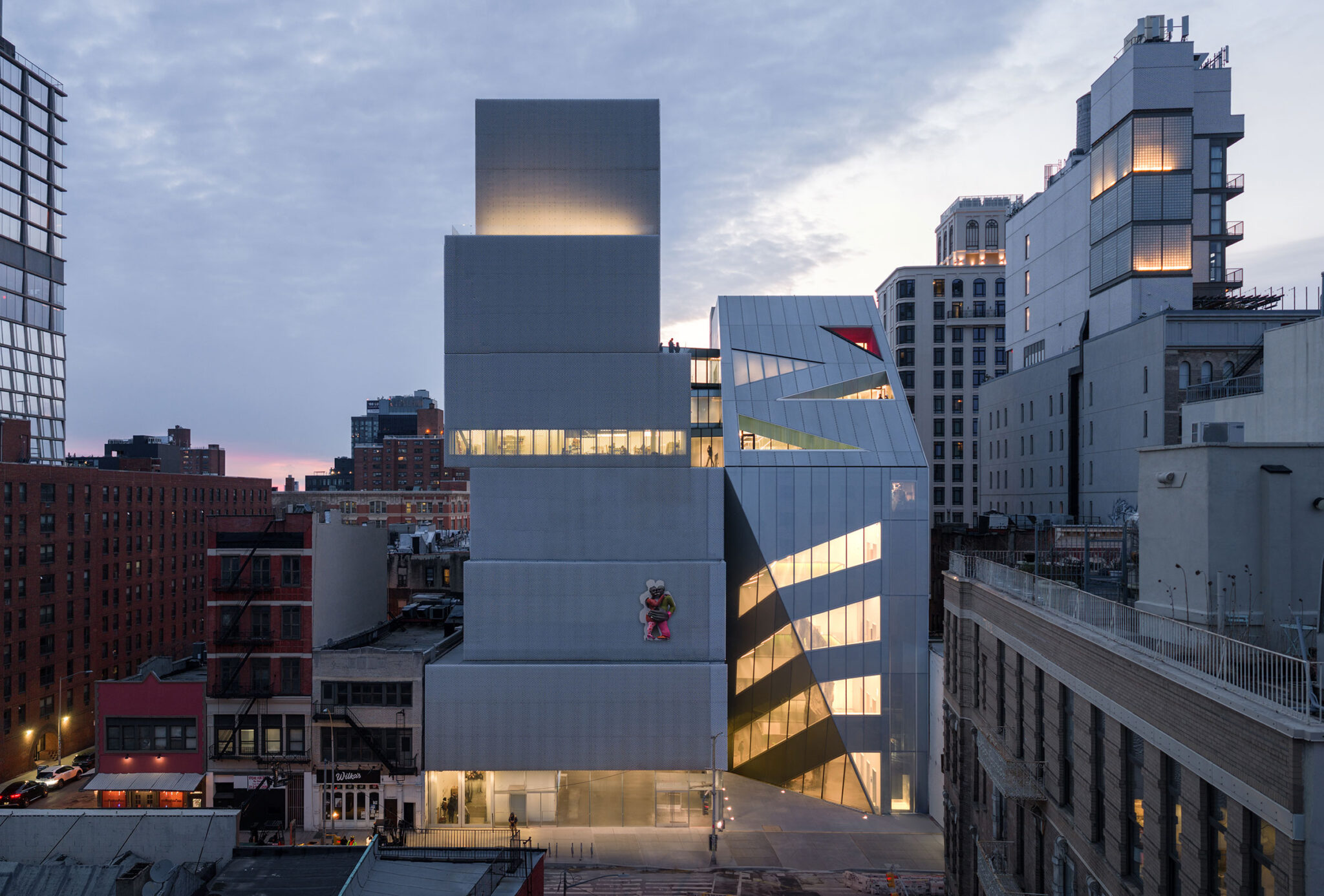
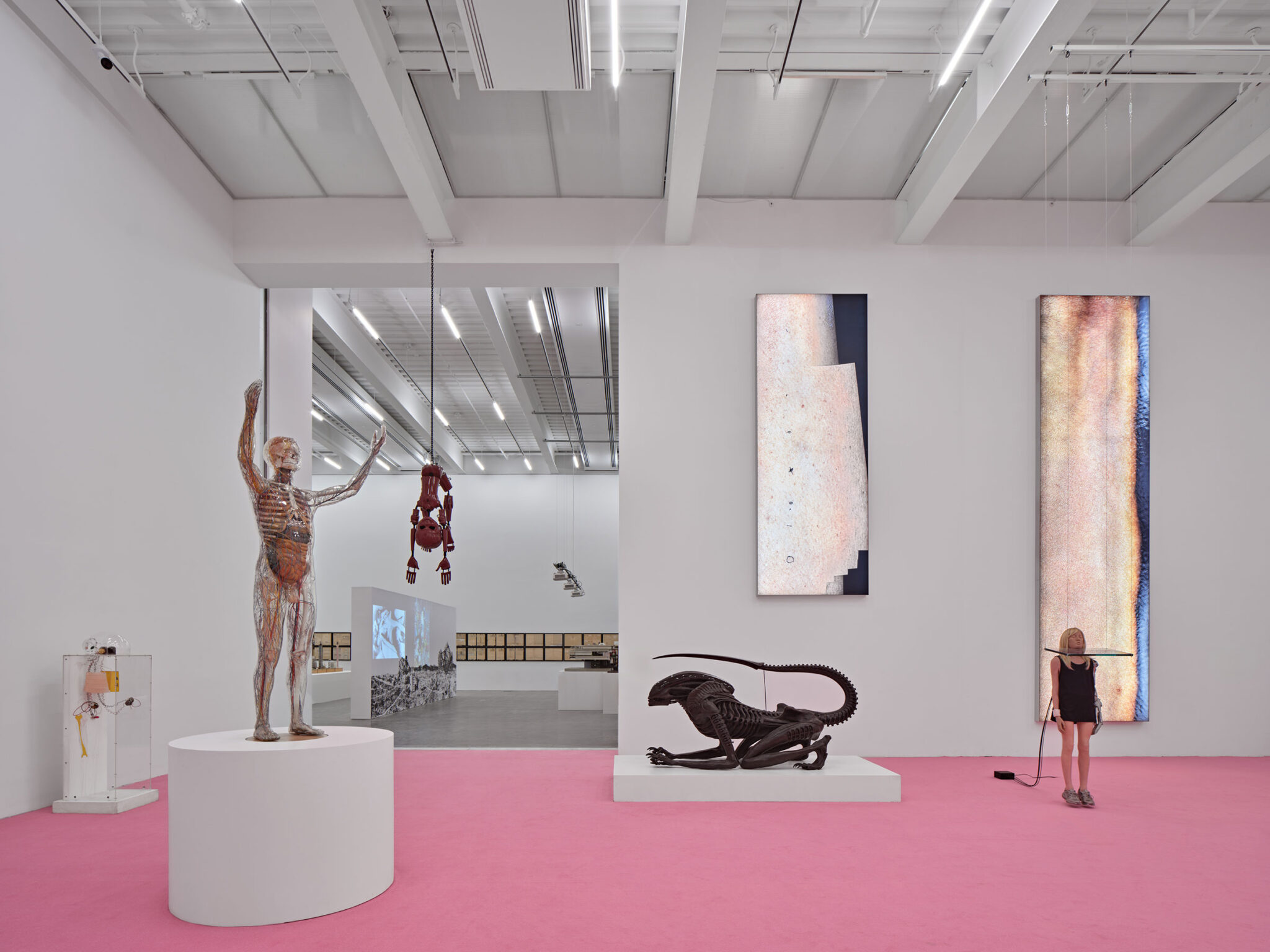
私たちのアプローチは、隣接するSANAA設計の建物の統合性を補完し尊重しつつ、自らの明確に異なるアイデンティティを主張します。ニューミュージアムは、空間的およびプログラム的に連動して機能する相乗効果を生む一対となり、この機関のキュレーション上の志向と多様なプログラムのための空間のレパートリーを提供するものとなります。私たちは、必要とされるプログラムを既存建物と正確に同じレベルに積層しました―すなわち、三層のギャラリー、NEW INCの恒久的な拠点、オフィス、そして多機能な教育およびイベント空間であり、新旧が結合されたものです。新たに接続されたギャラリーの天井高は各階で揃えられており、それによって展示のための拡張された空間と建物間の水平的な流れが生み出されています。
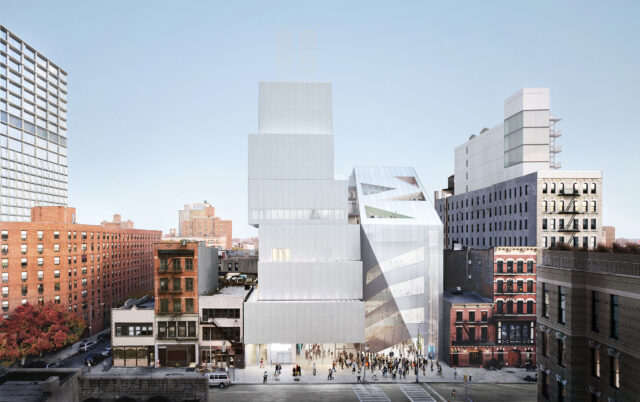
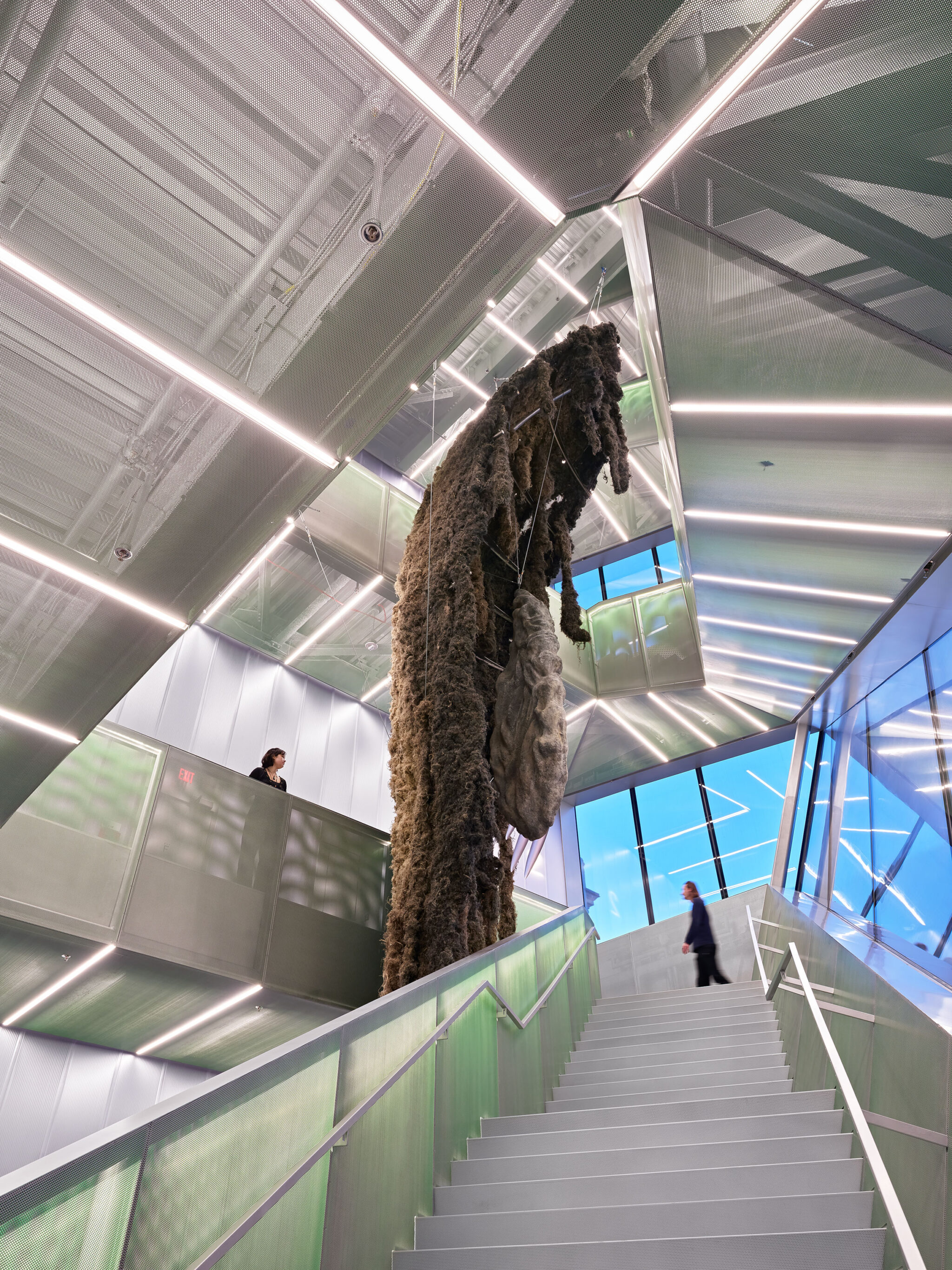
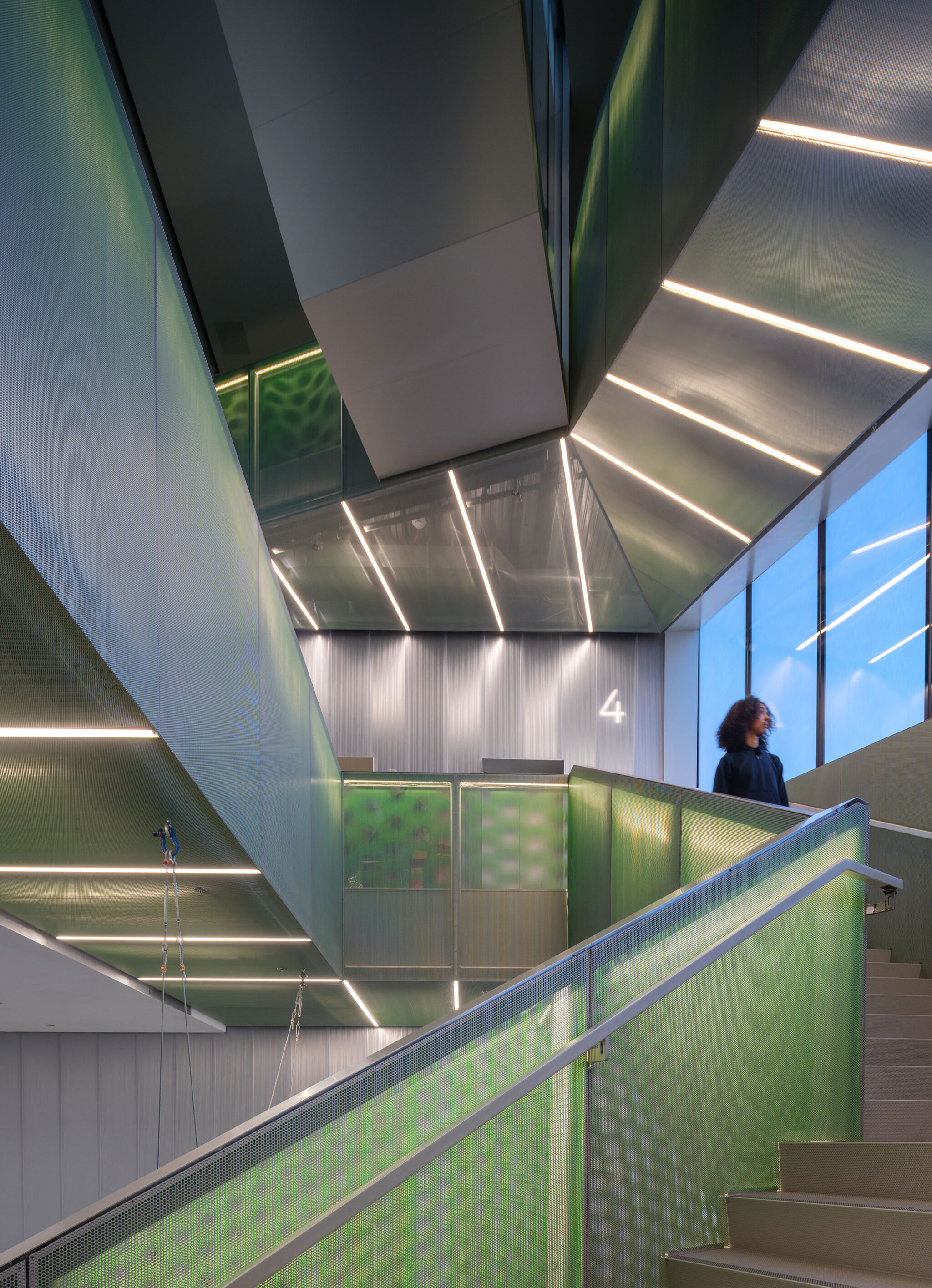
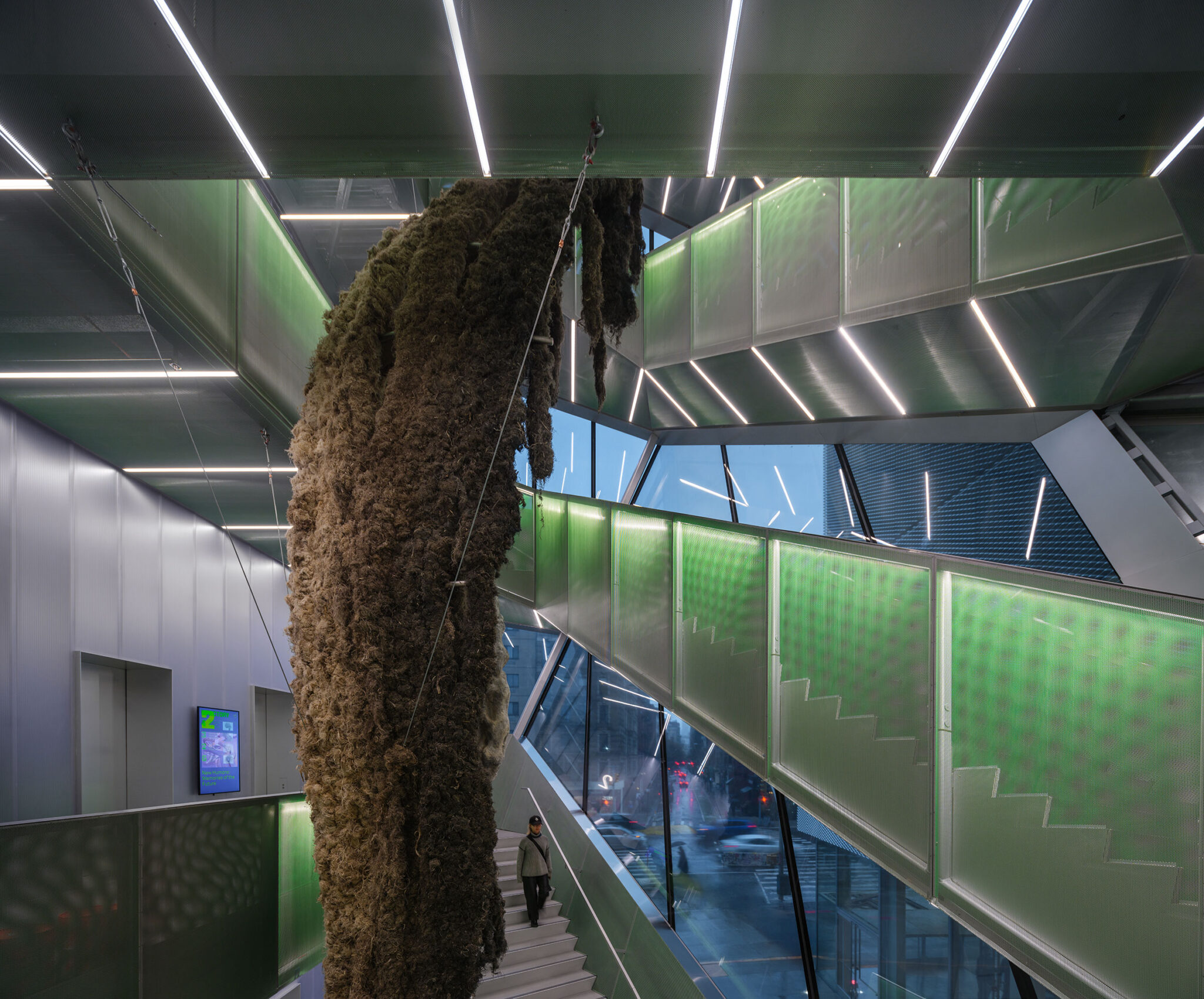
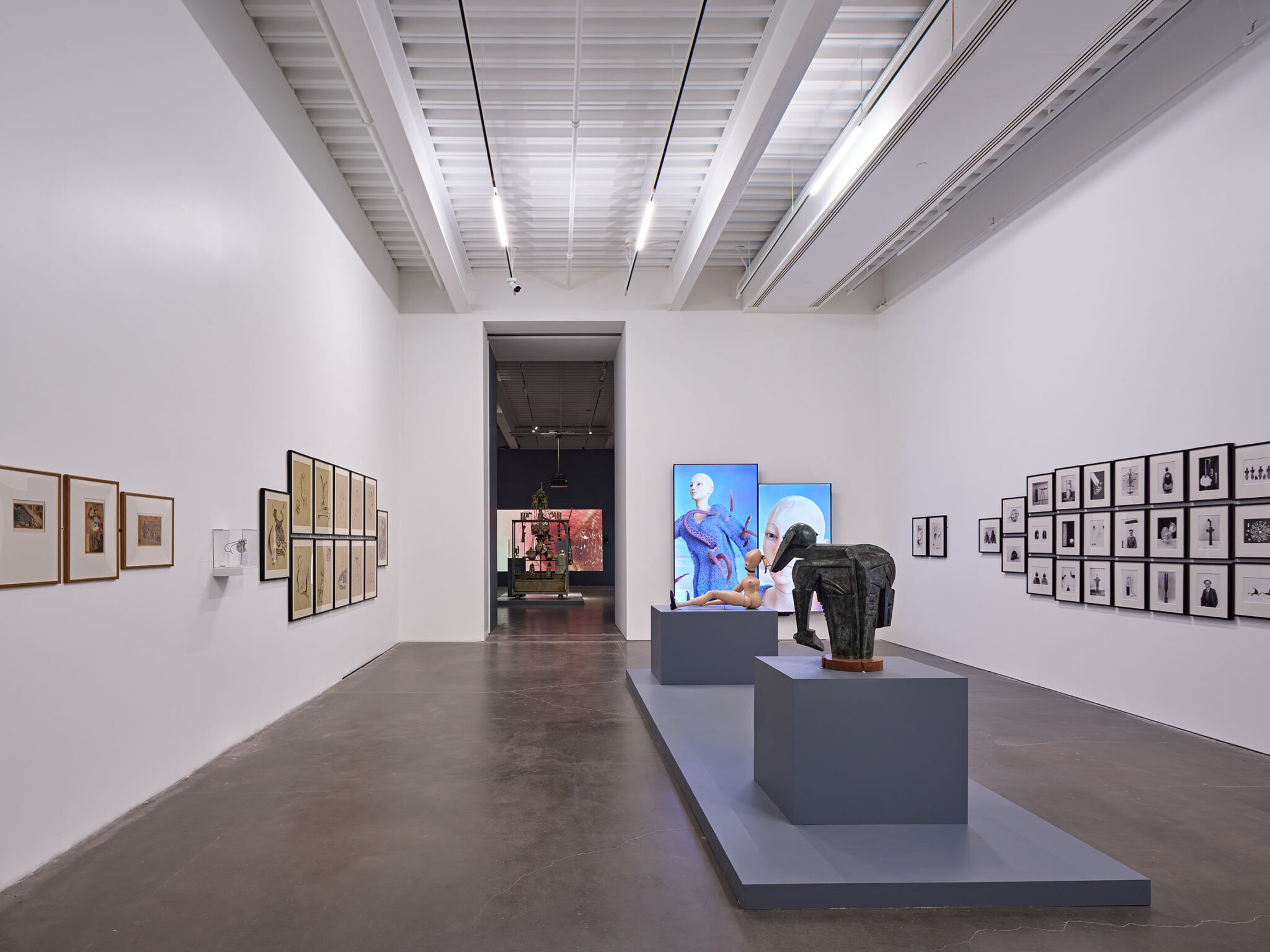
ギャラリーは、より大規模な展示を開催するためにフロアプレート全体にわたって一体的に使用することも、あるいは多様性やキュレーション上の自由のために個別に使用することもできます。敷地の水平性により、新しい建物のギャラリーは上層階に行くにつれて規模が大きくなる一方で、既存の建物のギャラリーは小さくなり、接続された各階ごとの総面積は均衡が保たれています。二つの建物の間の差異は、敷地の奥行きを活用して、アートと都市の間に位置する中間的な空間を挿入することによって生み出されており、それはアトリウム階段および垂直動線の改善のための専用ギャラリーエレベーターを含んでいます。この非常に公共性の高いファサードは、外部の広場とアトリウム階段に始まり、最上部の段状の多目的室へと至るものであり、アートと活動の通り道として、ボウリーおよび都市と関わるための開放性を提供します。
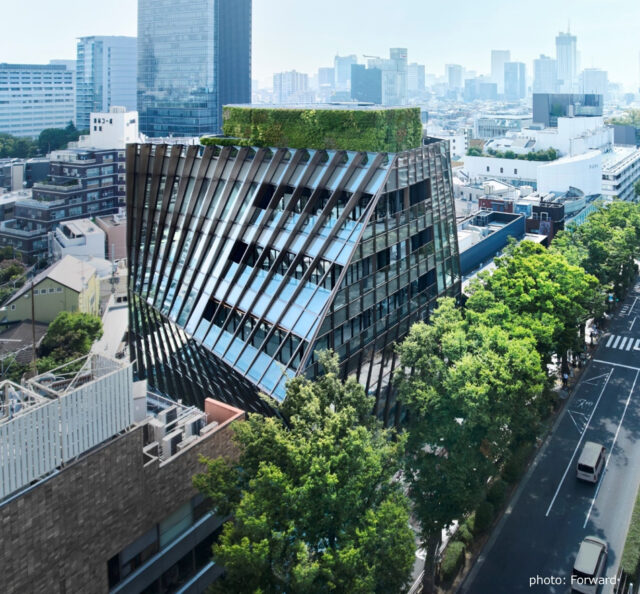
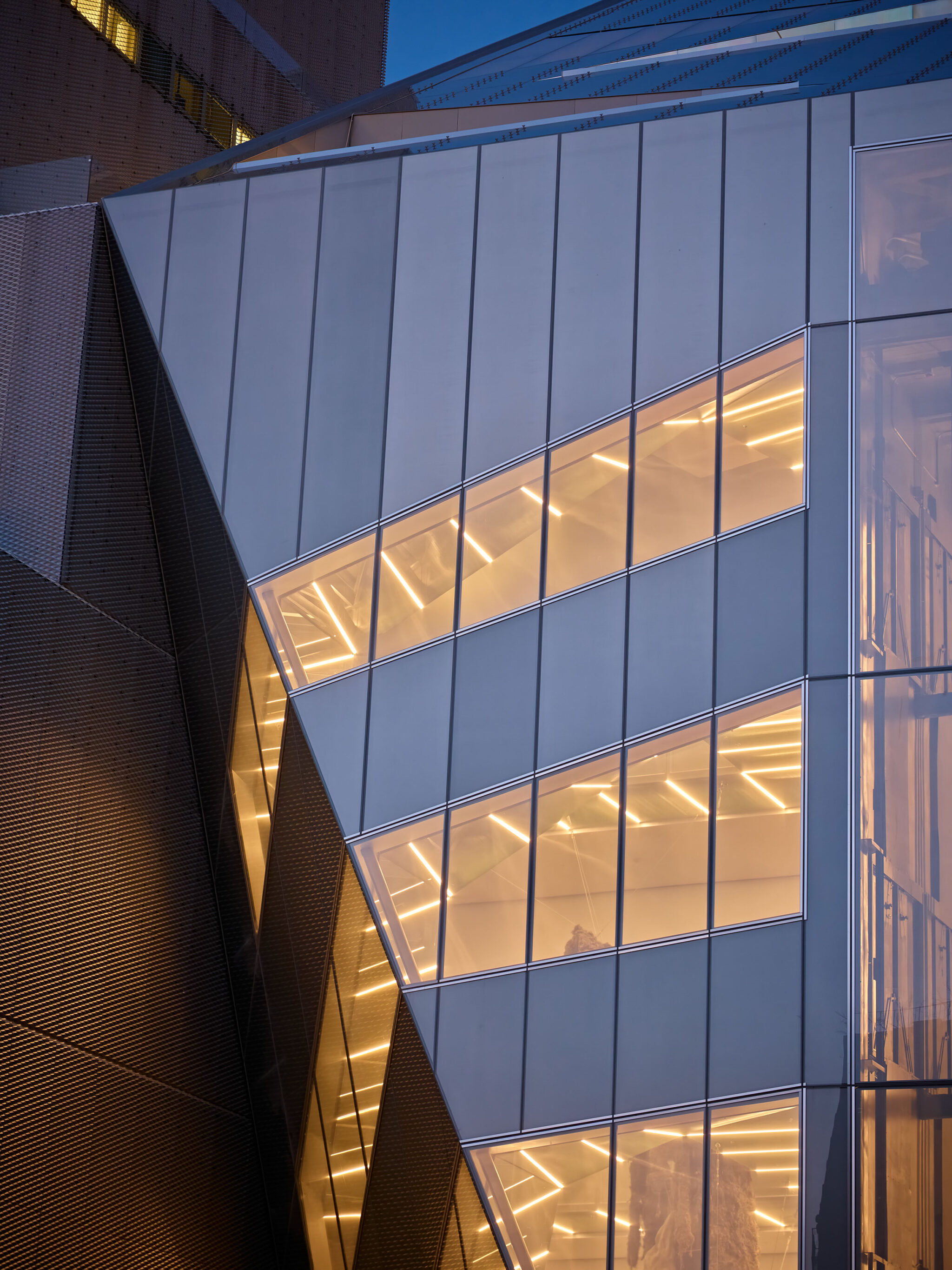
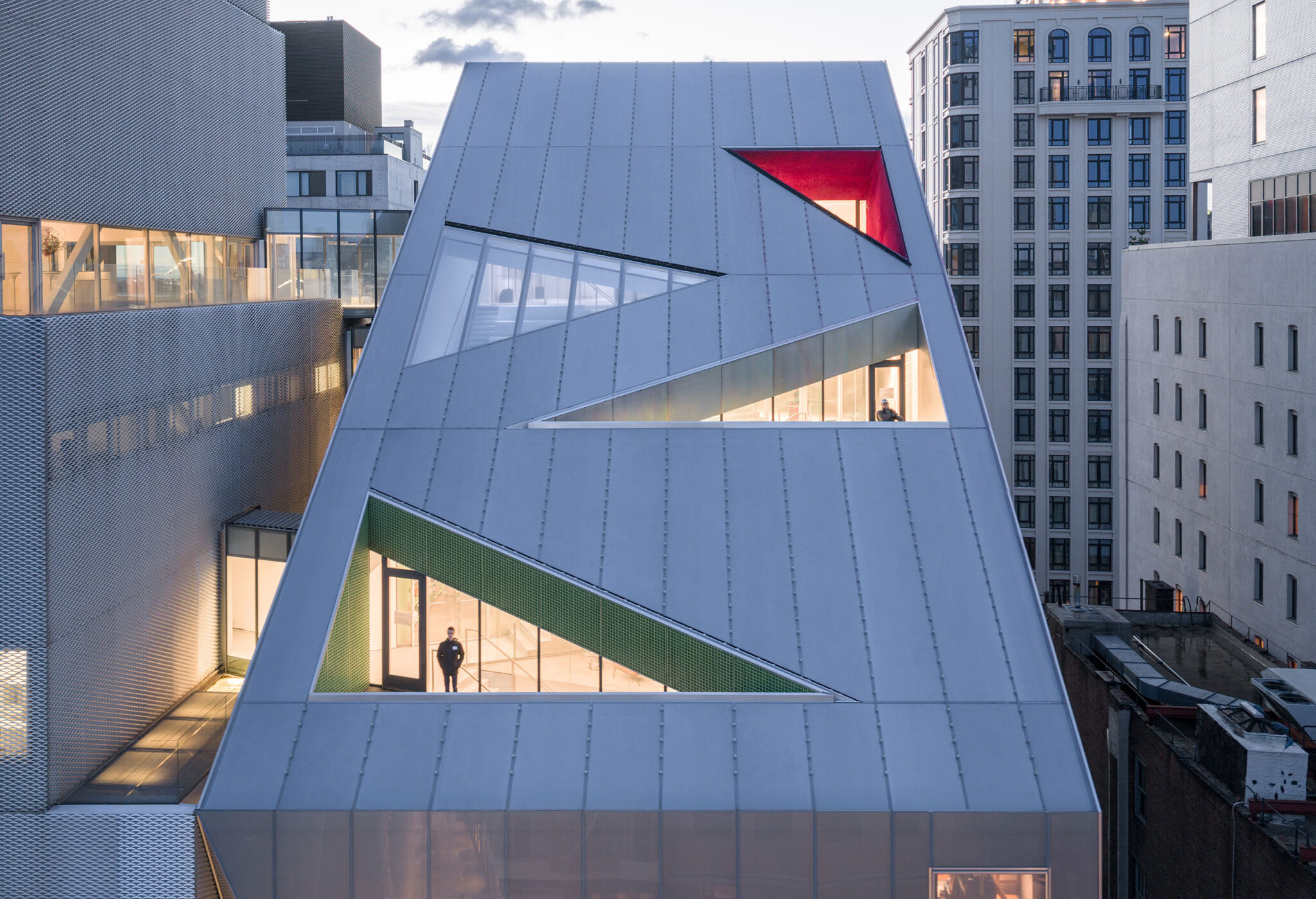
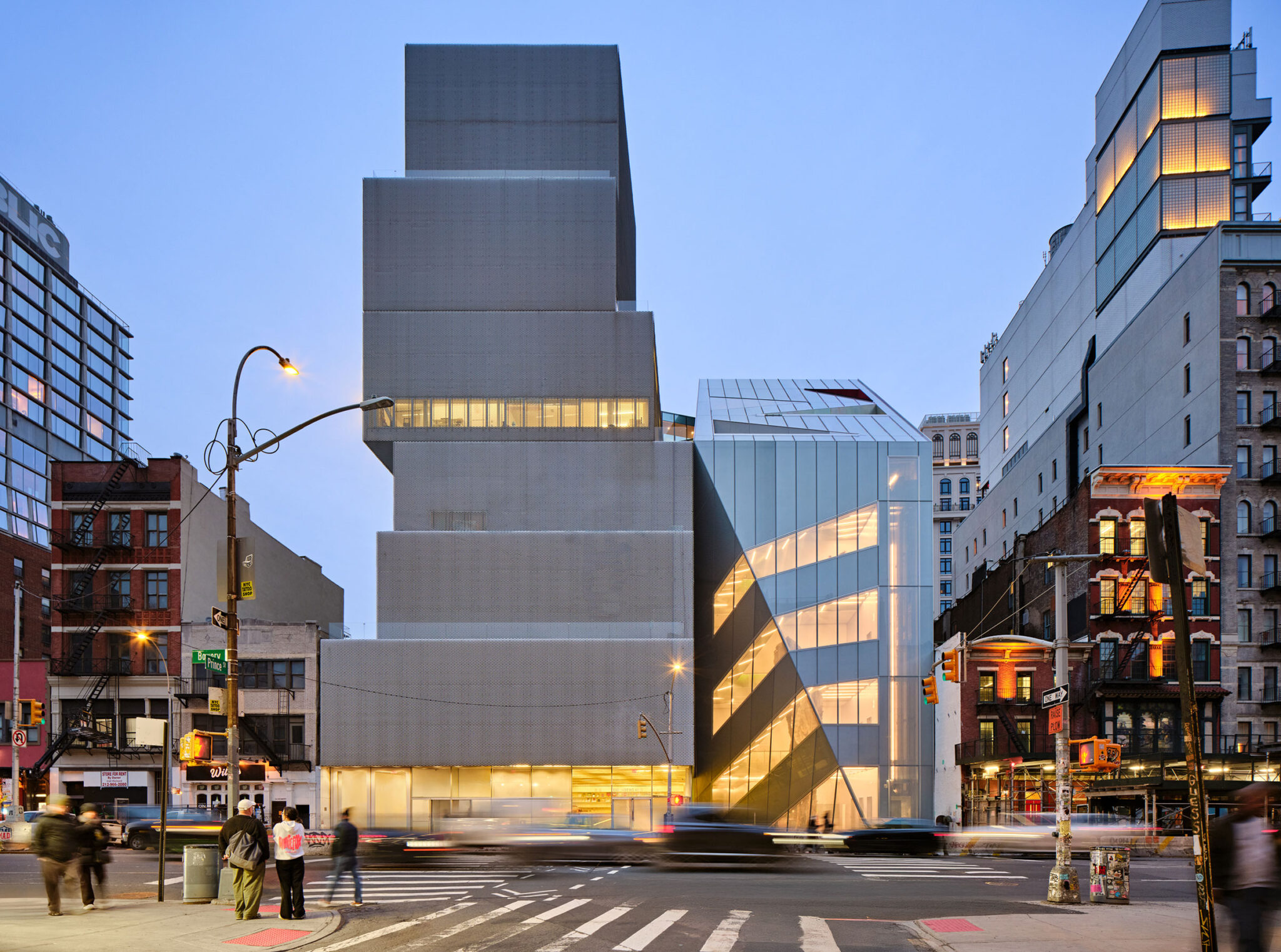
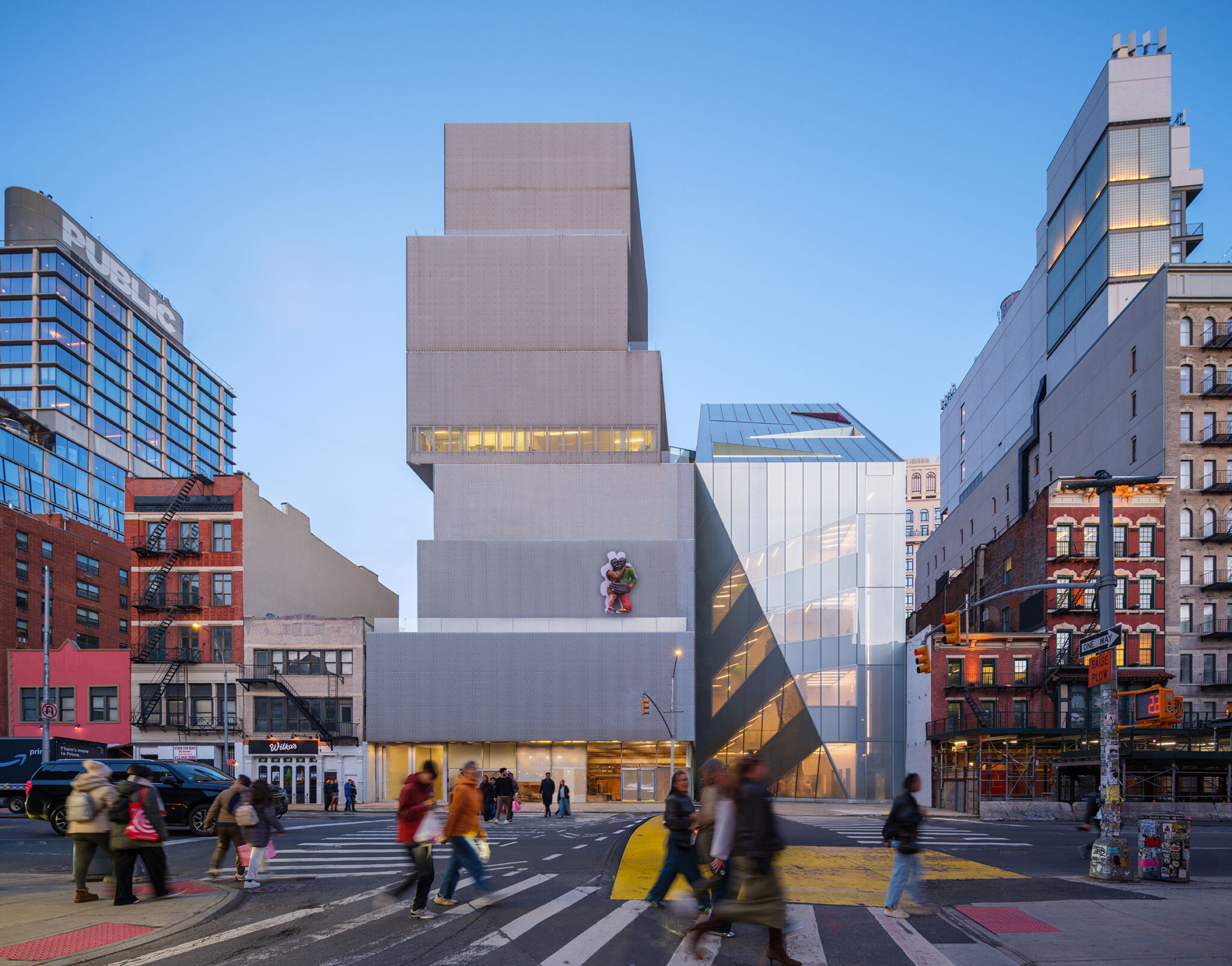
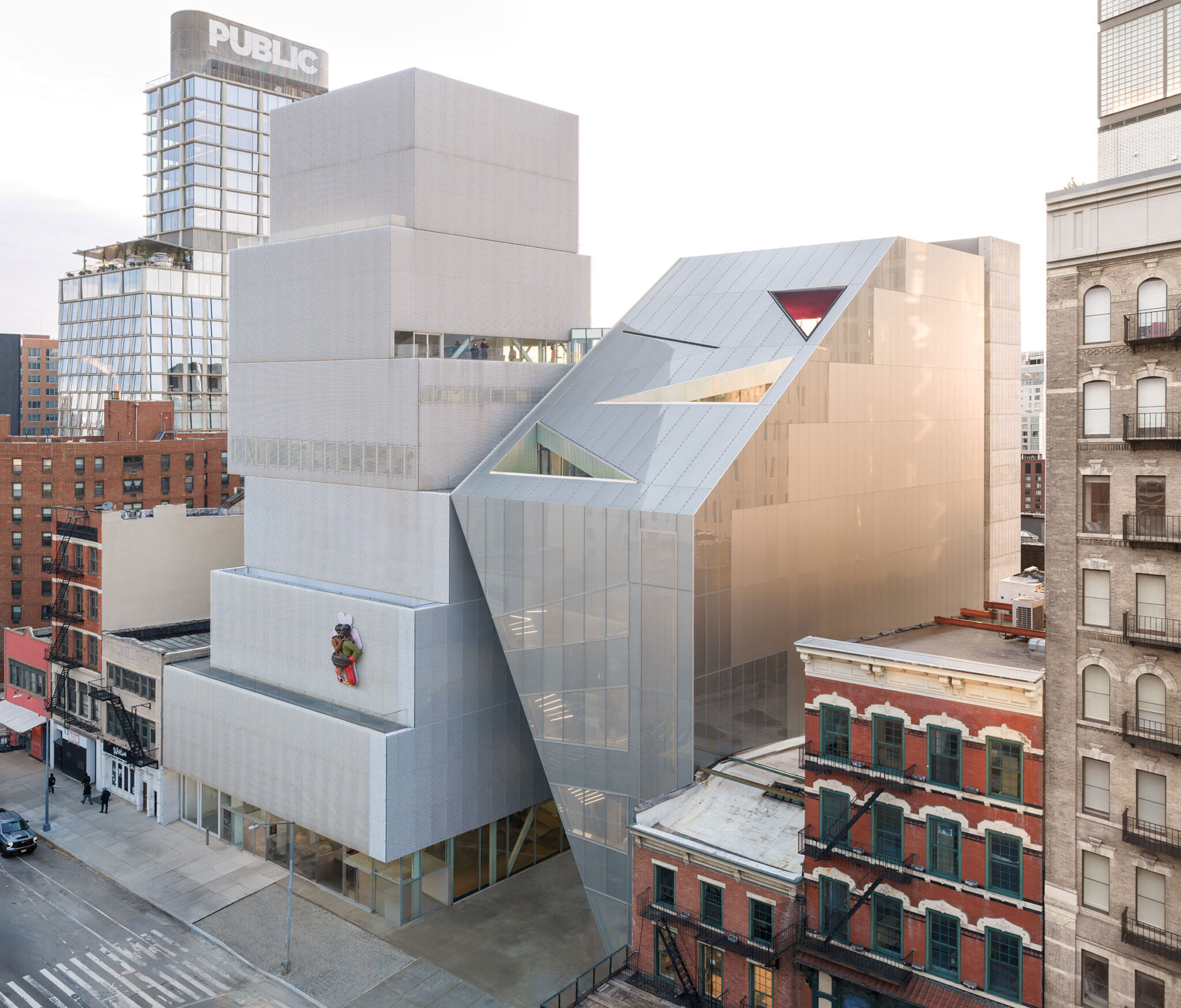
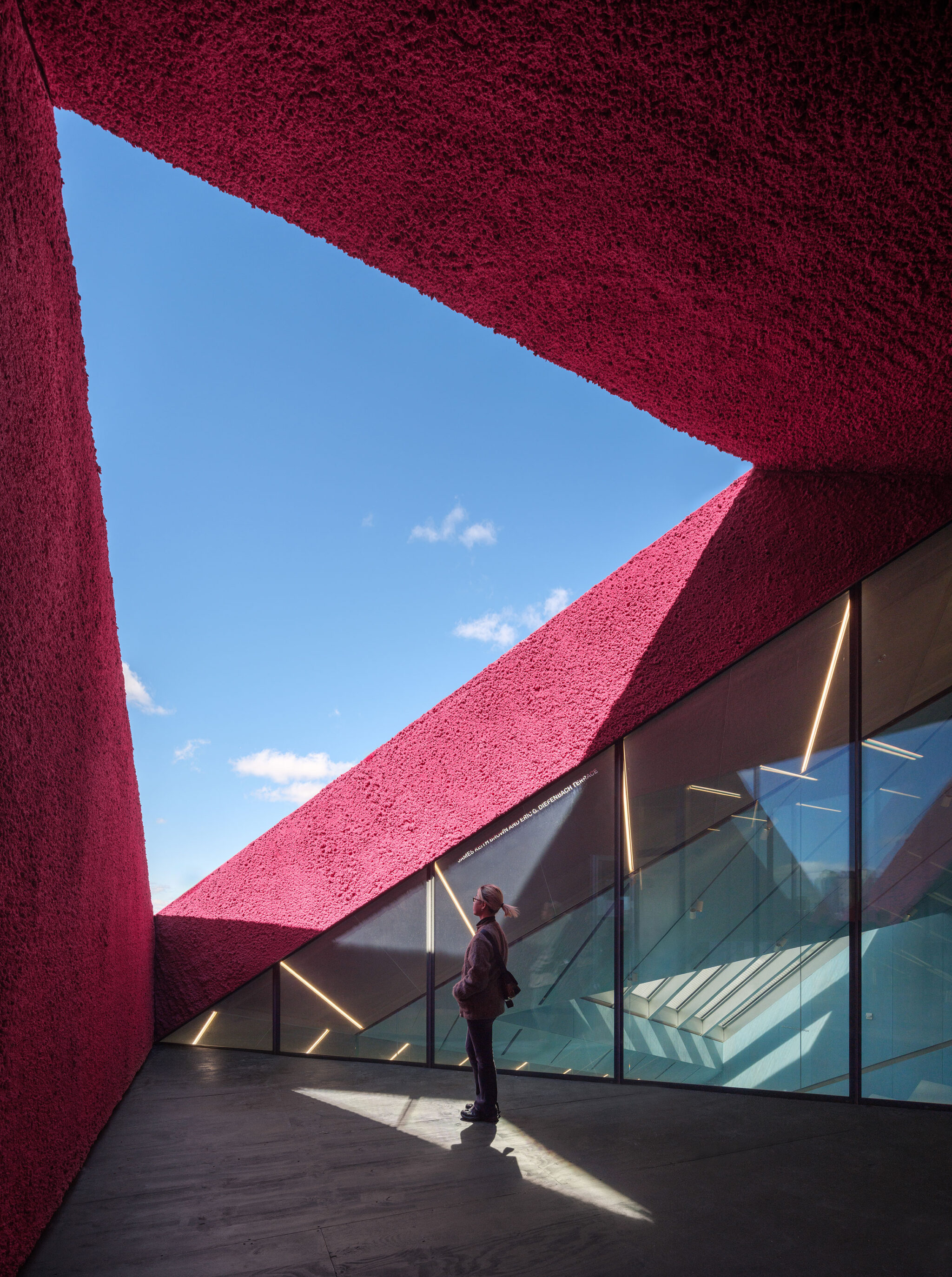
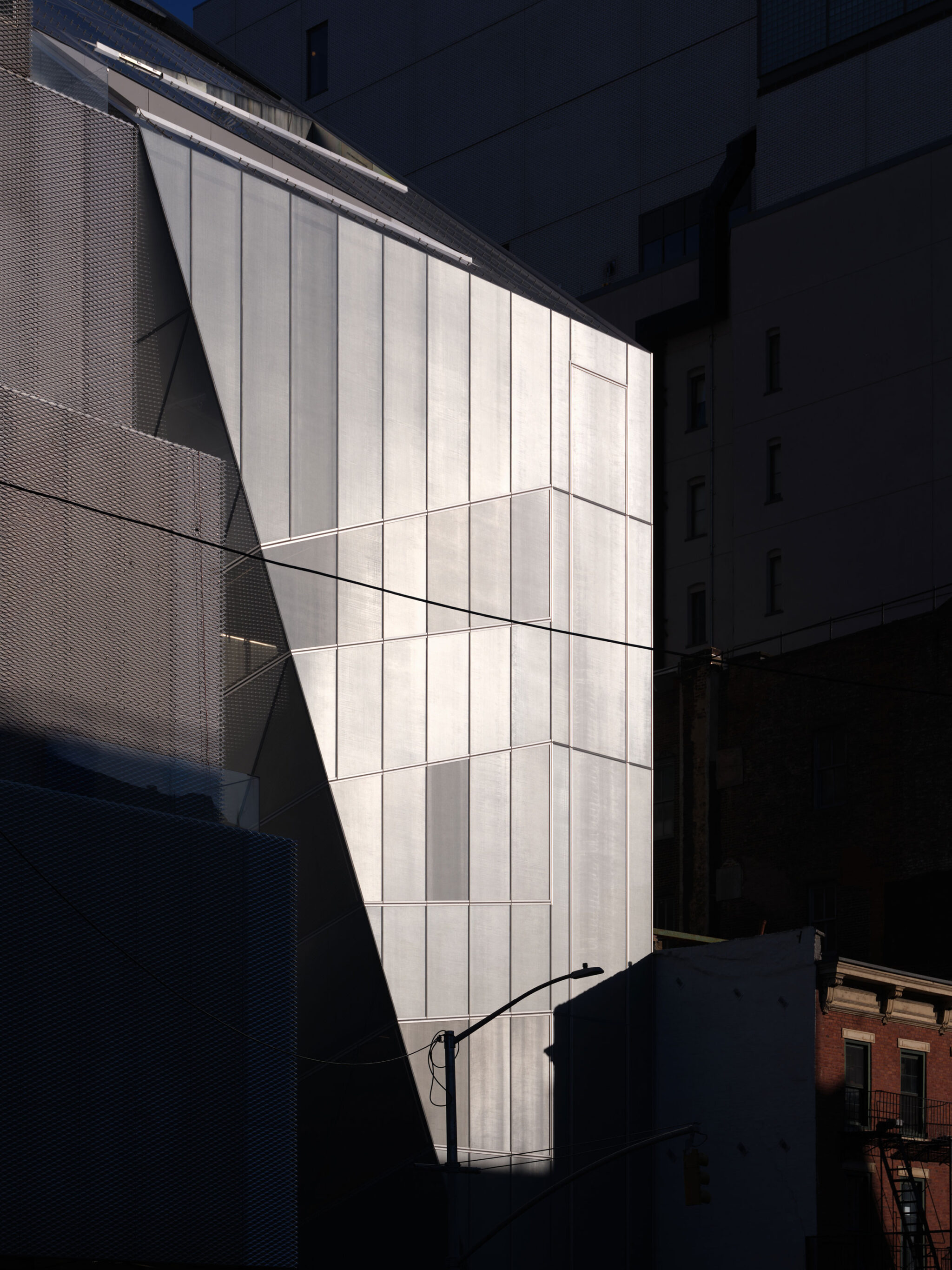
既存のタワーの垂直性は、同一の表現の中で、その内部の異なるプログラムを扱っています。私たちは、ギャラリーを水平方向に拡張し、二つのセットバックを導入することによって、健全な対比を生み出すことを意図しました。ギャラリースタックの最上部から通りへと至る角度のついたセットバックは、プリンスストリートの終点に新たな公共広場を定義し、それは既存と新設の間の焦点となるとともに緩衝帯となります。ギャラリーの上部に設けられた第二のセットバックは、建物の頂部を消失させると同時に、上層階のテラスを空に向かって開放します。金属メッシュの層を伴う合わせガラスで覆われたこの建物は、日中にはモノリシックに見え、既存建物の金属メッシュのファサードと並んで統一された外観を形成します。夕方には、開口部を通して光が浸透するにつれてファサードの透明性が高まり、ミュージアムの構成が露わになります。
新しいニューミュージアムは、高い適合性を持つ二つの異なる個性のパートナーシップであり、独立していながらも絶えず対話しています。その結果として、アート、アーティスト、そして人々の間にさらに動的な相互作用を引き起こす拡張されたプラットフォームとなり、それらは露わにされることで、ミュージアムの市民的な志向を都市に伝えます。
以下の写真はクリックで拡大します
こちらはリリーステキストです
March 20, 2026 – New York – The New Museum, Manhattan’s only museum dedicated exclusively to contemporary art, reopened its doors to members of its local community, supporters, and elected officials for a ribbon-cutting ceremony. The 60,000 sq ft building expansion designed by OMA / Shohei Shigematsu and Rem Koolhaas in collaboration with Executive Architect Cooper Robertson will open to the public on March 21, 2026.
OMA’s first cultural institution in New York, a new addition to the SANAA-designed museum building at 235 Bowery, provides much-needed space for its expanded activities and increasing public ambitions-doubling the program and square footage on a site immediately adjacent to the existing building.
The new building acknowledges a changing role for museums, beyond their function as producers of exhibitions. Today, museums are spaces for public participation, both programmed and unprogrammed, and they can foster new connections and even porousness with the city. The building’s facade reveals the circulation and slices of the activities taking place within its flexible interior and exposes them to the street. The New Museum’s expansion creates an outdoor plaza at the intersection of the Bowery and Prince Street, which invites the public to enter and acts as a gathering point. The result is an extroverted museum, one that is an extension of a continuous city and that participates in its public life.
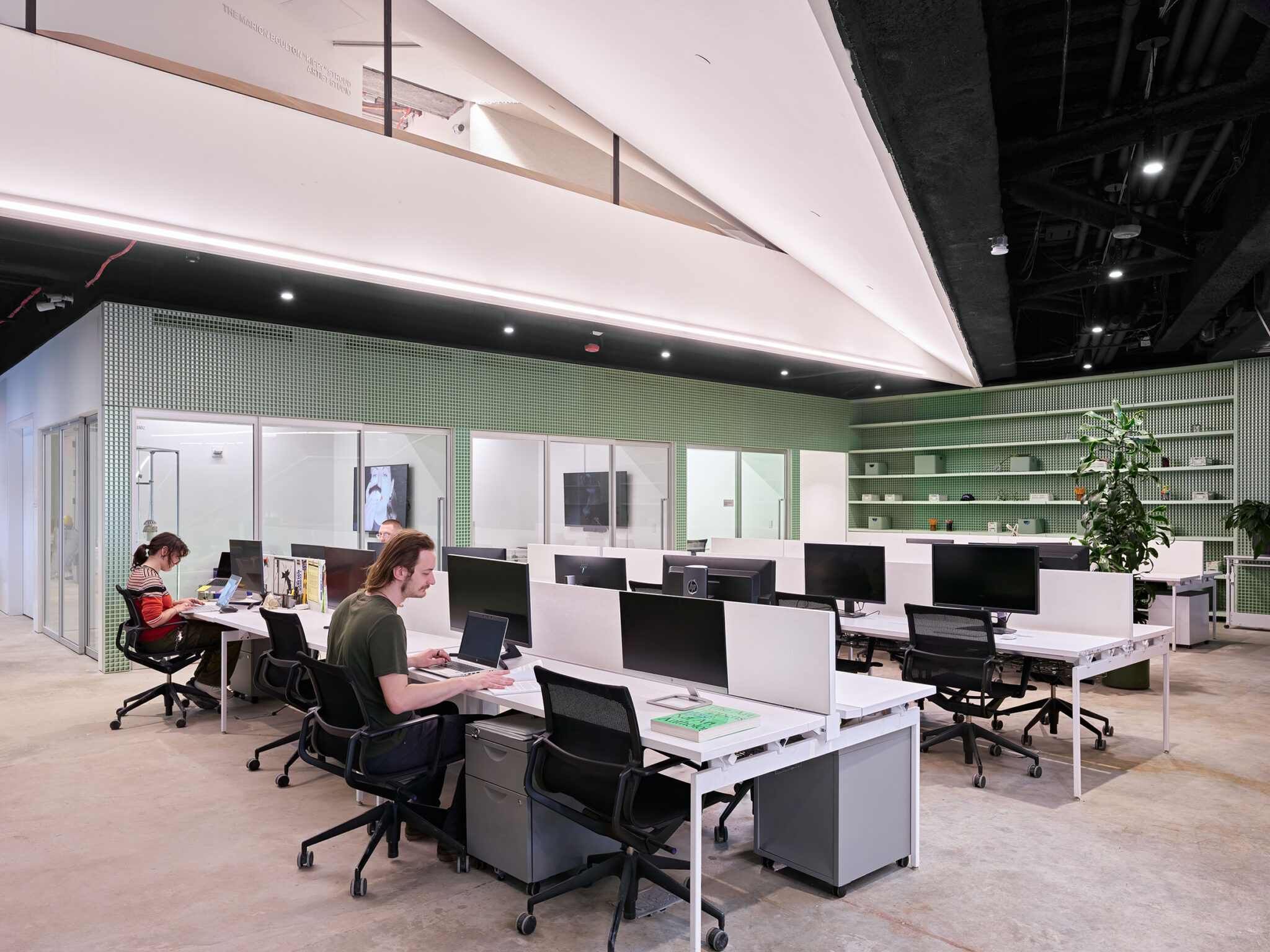
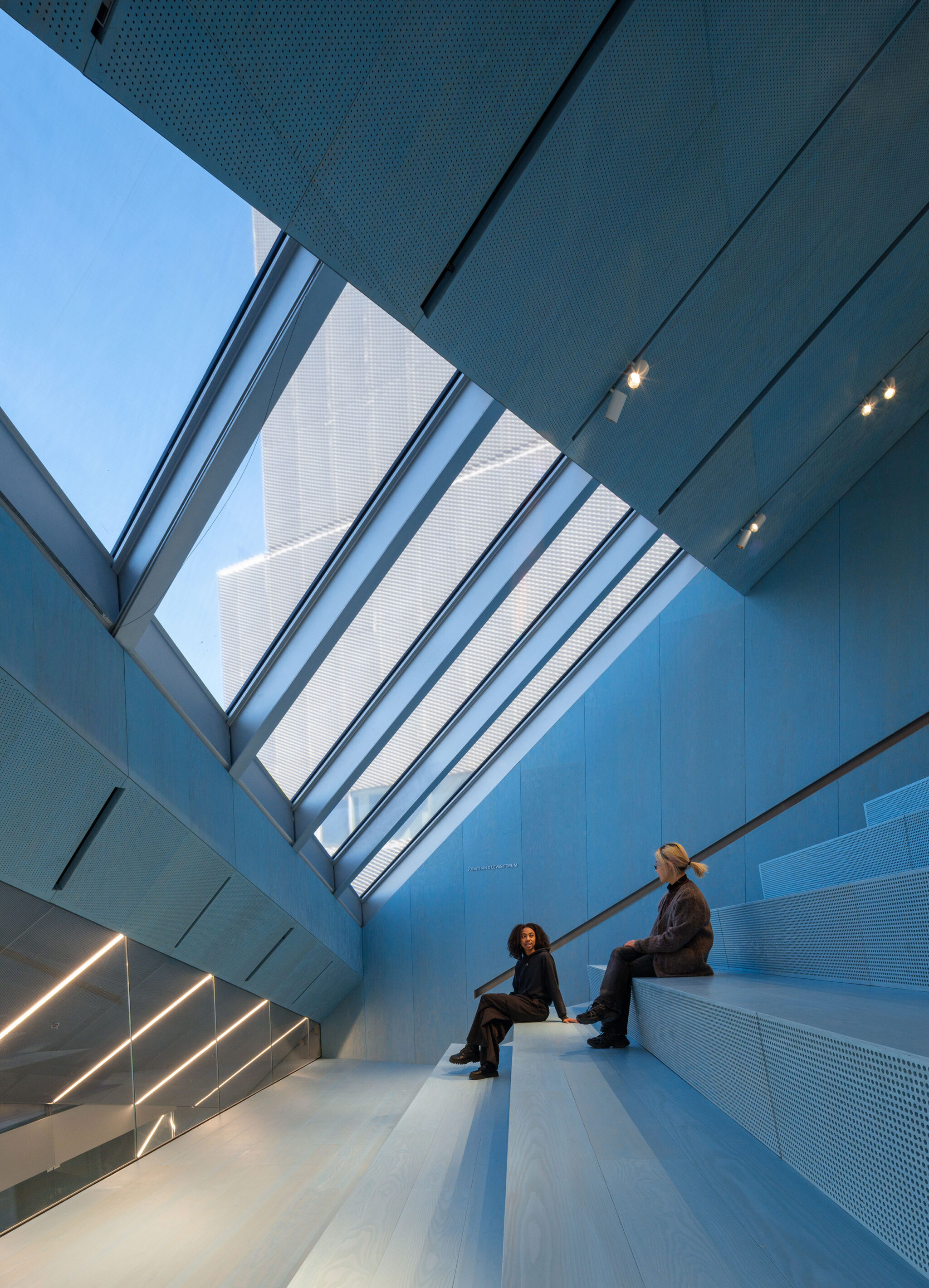
The expanded footprint doubles the museum’s gallery space; provides fluid circulation through the addition of three elevators, an Atrium Stair, and an entrance plaza; and introduces new venues for public programs and special events, including an enlarged seventh floor Sky Room and a new 74-seat Forum. On its upper floors, the expanded building will feature a dedicated studio for artists-in-residence and a home for the museum’s cultural incubator NEW INC. On the ground level, visitors will be welcomed into an enlarged lobby, an expanded bookstore, and a full-service restaurant operated by the Oberon Group.
Lisa Phillips, Toby Devan Lewis Director of the New Museum: “Since our founding nearly 50 years ago, the New Museum has been a home for the most groundbreaking art of today and a haven for the artists who make it. Our new 120,000 sq ft building on the Bowery signals our redoubled commitment to new art and new ideas, and to the museum as an ever-evolving site for risk-taking, collaboration, and experimentation.”
Shohei Shigematsu, Partner-in-Charge, OMA: “The New Museum is an incubator for new cultural perspectives and production, and the expansion aims to embody that attitude of openness. Imagined as a highly connected yet distinct counterpart to the existing museum’s verticality and solidity, the new building will offer horizontally expansive galleries for curatorial variety, open vertical circulation, and a diversity of spaces for gathering, exchange, and creation. The building is further shaped to create an active public face-including an outdoor plaza at the ground, moments of transparency throughout the central atrium, and terraced openings at the top-that will openly engage the surrounding community and beyond.”
Rem Koolhaas, Partner-in-Collaboration, OMA: “Marking our first public building in New York City, the project with the New Museum is especially meaningful-an institution whose forward-thinking ethos we have long admired. Building on past collaborations with Kazuyo Sejima and Ryue Nishizawa, it has been a privilege to engage in dialogue with their original building, one of the most resonant works of architecture in the city. The completed project stands as both a continuation and an expansion of that legacy.”
Jake Forster, Project Architect/Associate, OMA: “The new building aims to support, complement, and diversify the existing museum to establish a campus. We have enjoyed engineering a variety of spaces, structures, and materials to create new opportunities and engagements. It has relied on the passion and expertise of a diverse group of designers, engineers, and makers to get to this milestone. I’m excited to see our collective effort come to life as it welcomes the public in.”
こちらは建築家によるテキストです
NEW MUSEUM
Our first cultural institution in New York is a new addition to the New Museum next door to its iconic SANAA-designed building at 235 Bowery. The New Museum has been growing in visitors, exhibitions, and activities. Its diverse engagements, including its expansive education programs, its cultural incubator NEW INC, and, of course, its globally recognized exhibition program have been transforming the institution into a cultural laboratory. We were asked to add a new building that provides much-needed space for its expanded activities and simultaneously reflects increasingly public ambitions-duplicating the program and square footage on a site immediately adjacent to the existing SANAA-designed building-part and counterpart, side-by-side.
This condition was entrenched in dichotomies. While dichotomies are inherent to museum expansions, they can suppress the full potential of the pair. We looked to less didactic, more unexpected, and maybe even romantically entangled relationships that could exist between two parts of a whole. Can one be highly infrastructural to give support and free agency to the other? Can it be two equal entities in complete harmony? Can the two be distinct and independent but reciprocal as a pair?
Our approach complements and respects the integrity of the adjoining SANAA building, while asserting its own distinct identity. The New Museum will be a synergistic pair working spatially and programmatically in tandem, offering a repertoire of spaces for the institution’s curatorial ambitions and diverse programs. We stacked the required programs exactly at the same level of the existing building-three floors of galleries, a permanent home for NEW INC, offices, and multifunctional education and event spaces-new and old conjoined. Ceiling heights of the newly connected galleries align on each floor, creating expanded space for exhibitions and horizontal flow between the buildings.
Galleries can be used singularly across the floorplate to host larger exhibitions or separately for diversity and curatorial freedom. Due to the horizontality of the site, the galleries in the new building increase in size on the upper levels while the galleries in the existing building decrease in size-the total area per connected floor remains balanced. A distinction between the two buildings is created by taking advantage of our site’s depth to insert an interstitial space, in between art and city, containing an Atrium Stair and dedicated gallery elevators for improved vertical circulation. This highly public face-starting from the exterior plaza and Atrium Stair to terraced multi-purpose rooms at the top-is a conduit of art and activities that provides an openness to engage the Bowery and the city.
The existing tower’s verticality treats the different programs within in the same expression. We wanted to create a healthy contrast by expanding the galleries horizontally and introducing two setbacks. An angled setback starting from the top of gallery stack to the street defines a new public plaza at the terminus of Prince Street that becomes a focal point and a buffer zone between existing and new. A second setback above the galleries makes the top of the building disappear, while opening up the upper-level terraces to the sky. Clad in laminated glass with a layer of metal mesh, the building appears monolithic during the day, establishing a unified exterior alongside the existing building’s metal mesh facade. In the evening, the transparency of the facade is enhanced as light permeates through its openings, exposing the museum’s anatomy.
The new, New Museum is a partnership of two different personalities with high compatibility-independent but in constant dialogue. The result is an expanded platform that provokes even more dynamic interactions between art, artists, and people, which are then exposed to communicate the museum’s civic ambitions to the city.
■建築概要
Design Architects: OMA, Shohei Shigematsu, Partner in Charge; Rem Koolhaas, Partner in Collaboration; Jake Forster, Associate/Project Architect; Jackie Woon Bae, Design Lead; Ninoslav Krgovic, Technical Lead
───
Architect of Record: Cooper Robertson (now Corgan), Erin Flynn, Principal; Andrew Barwick, Senior Associate; Isil Akgul, Project Architect
───
New Museum Building Project Coordinator: New Museum, Dennis Szakacs, Chief Operating Officer
Project and Cost Management: Gardiner and Theobald, Jonathan Andrew, Senior Director, Stephen Becker, Director (PM), Michael J. Day, Associate Director (Cost); PML, Peter Lehrer, President, Scott Weisberg, Executive Vice President & COO
Construction Manager: F.J. Sciame Construction, Co., Inc, Joseph Mizzi, President and Chief Operating Services Officer, Steven Colletta, Senior Vice President, Thomas Sevchuk, Vice President
Structural Engineer: ARUP, Matt Jackson, Principal, and Christopher Adams, Senior Structural Engineer
Mechanical Systems: ARUP, Matt Jackson, Principal, and Neil Muir, Senior Mechanical Engineer
Facade: Front, Marc Simmons, Principal, and Jeff Kim, Senior Associate
Geotechnical: Langan, Arthur Alzamora, Senior VP, and Mark Gallagher, Senior Principal
Civil Engineer: Philip Habib & Associates, Philip Habib, President
Signage: 2×4, Susan Sellers, Executive Creative Director, and Florian Mews, Design Director; T-Squared Design Studio, Inc., Trisia J. Tomanelli, President; Visual Graphic Systems (VGS), Lorraine Conte, Senior Account Executive
Lighting: Dot Dash, Christopher Cheap, President