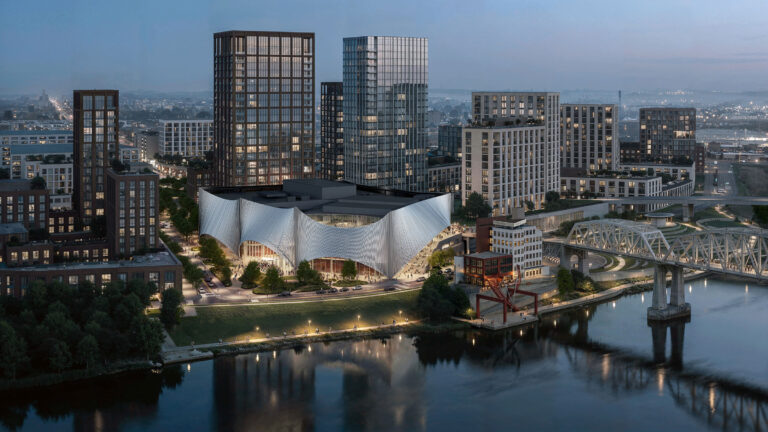
SHARE BIG・WRA・HASTINGS Architectureによる、アメリカ・ナッシュビルの「テネシー舞台芸術センター」。音楽の街の“4つの公演空間”を備えた施設。“波打つ劇場のカーテン”から着想を得て、外部アーチを持ち上げて内部の活動を表出する建築を考案。“あらゆる方向”から人々を迎え入れる構成は都市との繋がりを考慮

BIG・WRA・HASTINGS Architectureが設計している、アメリカ・ナッシュビルの「テネシー舞台芸術センター」です。
音楽の街の“4つの公演空間”を備えた施設の計画です。建築家は、“波打つ劇場のカーテン”から着想を得て、外部アーチを持ち上げて内部の活動を表出する建築を考案しました。また、“あらゆる方向”から人々を迎え入れる構成は都市との繋がりを考慮されました。
2027年に着工して、2030年の開館を予定しています。
こちらはリリーステキストです(翻訳:アーキテクチャーフォト / 原文は末尾に掲載)
ナッシュビルは、新しい世界水準のテネシー舞台芸術センターとともに舞台の中央に立ちます
新しいテネシー舞台芸術センター(TPAC)は、BIG(ビャルケ・インゲルス・グループ)およびウィリアム・ローン・アソシエイツ(WRA)がヘイスティングス・アーキテクチャー(HASTINGS Architecture)とともに設計したもので、ナッシュビル中心部の活気をカンバーランド川を越えて広げ、再活性化された同市のイーストバンクにおける文化的拠点として現れます。
あらゆる方向から地域社会を迎え入れるように設計され、中心部に公演会場を集約した新しいTPACは、多様な芸術プログラムを支えるとともに、ナッシュビルの豊かな芸術の遺産の上に築いていきます。あらゆる方向から地域社会を迎え入れるように設計され、中心部に公演会場を集約した新しいTPACは、ナッシュビルの豊かな芸術の遺産の上に築きつつ、多様な芸術プログラムを支えます。
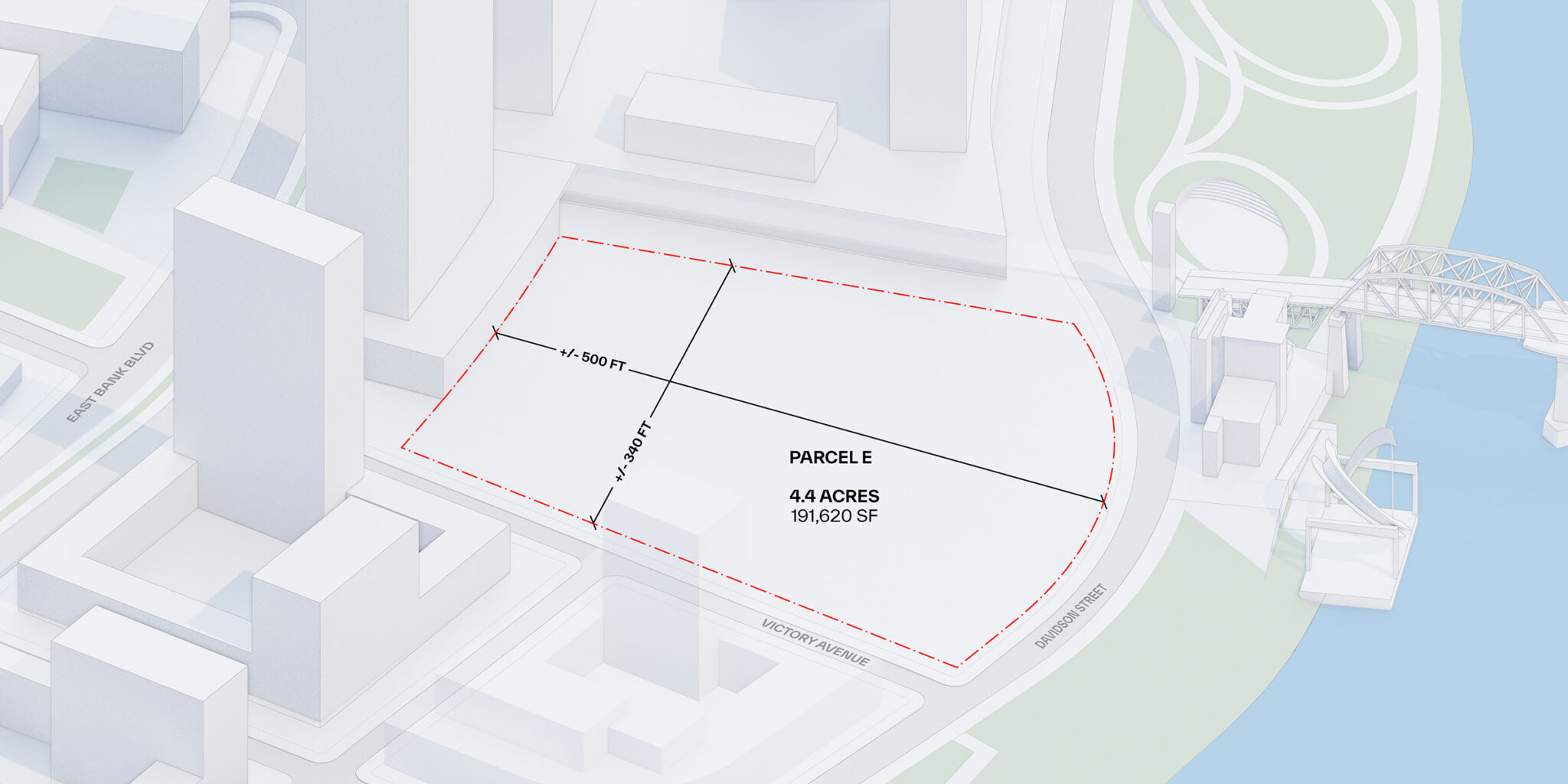
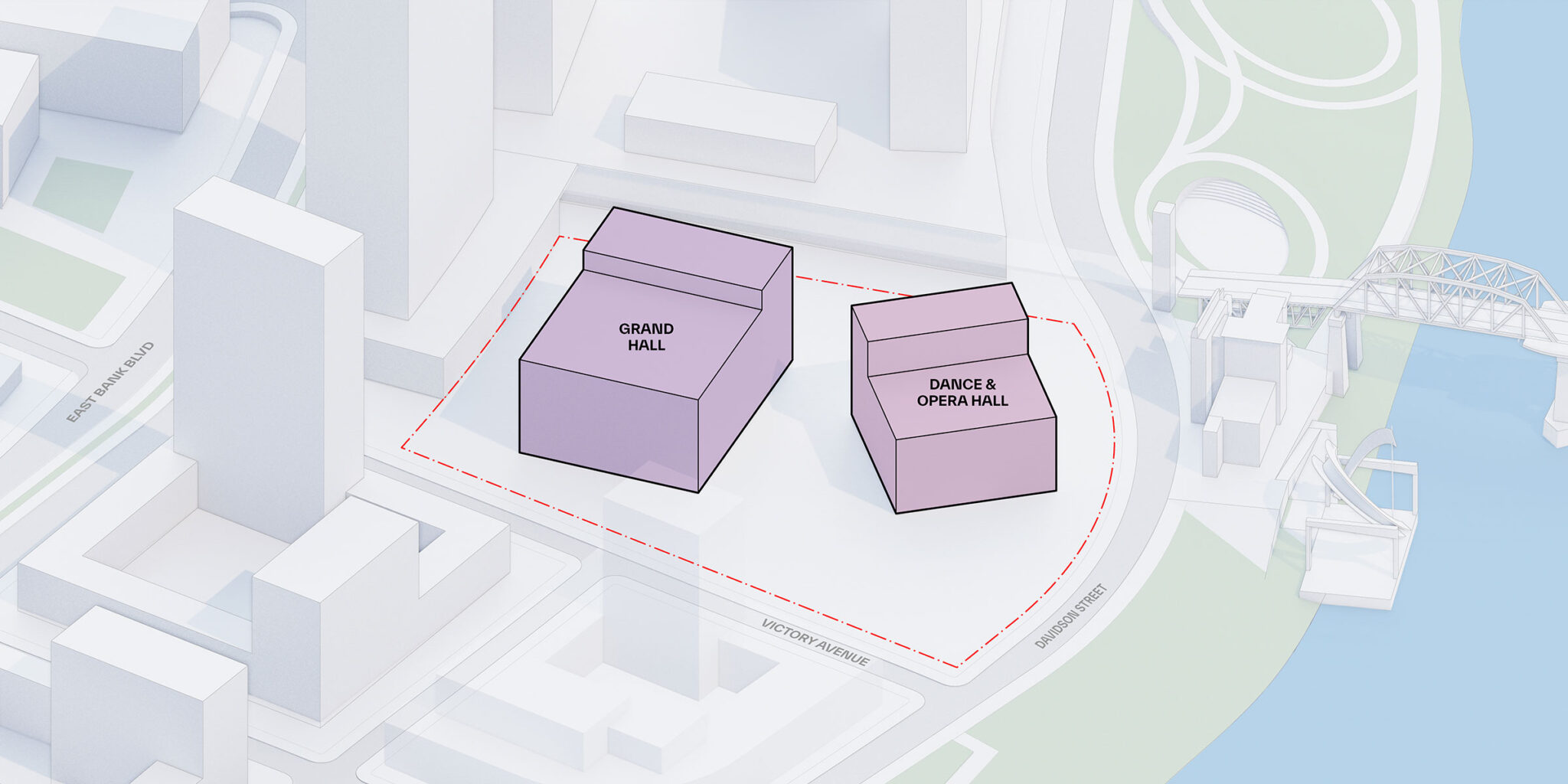
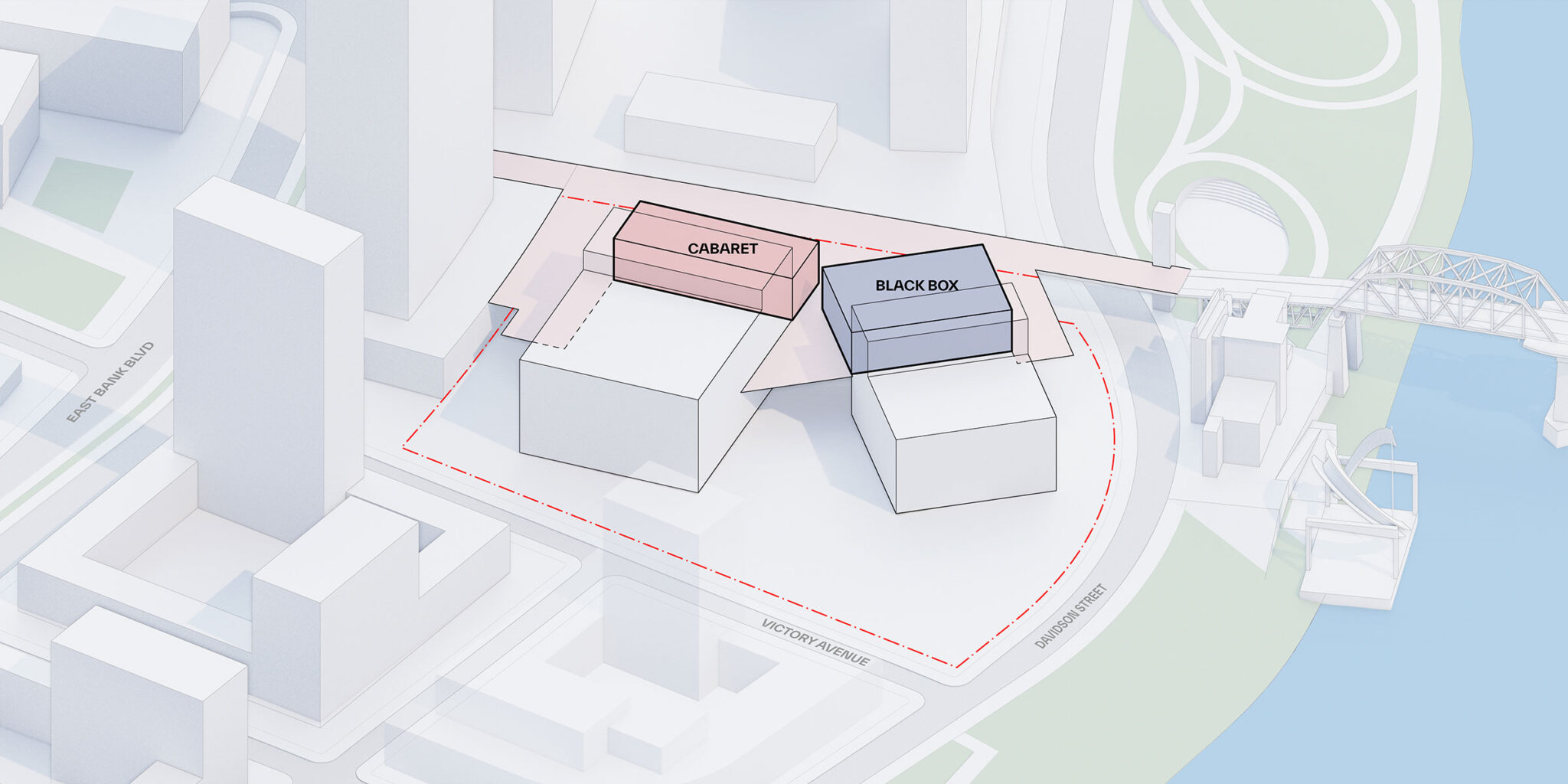
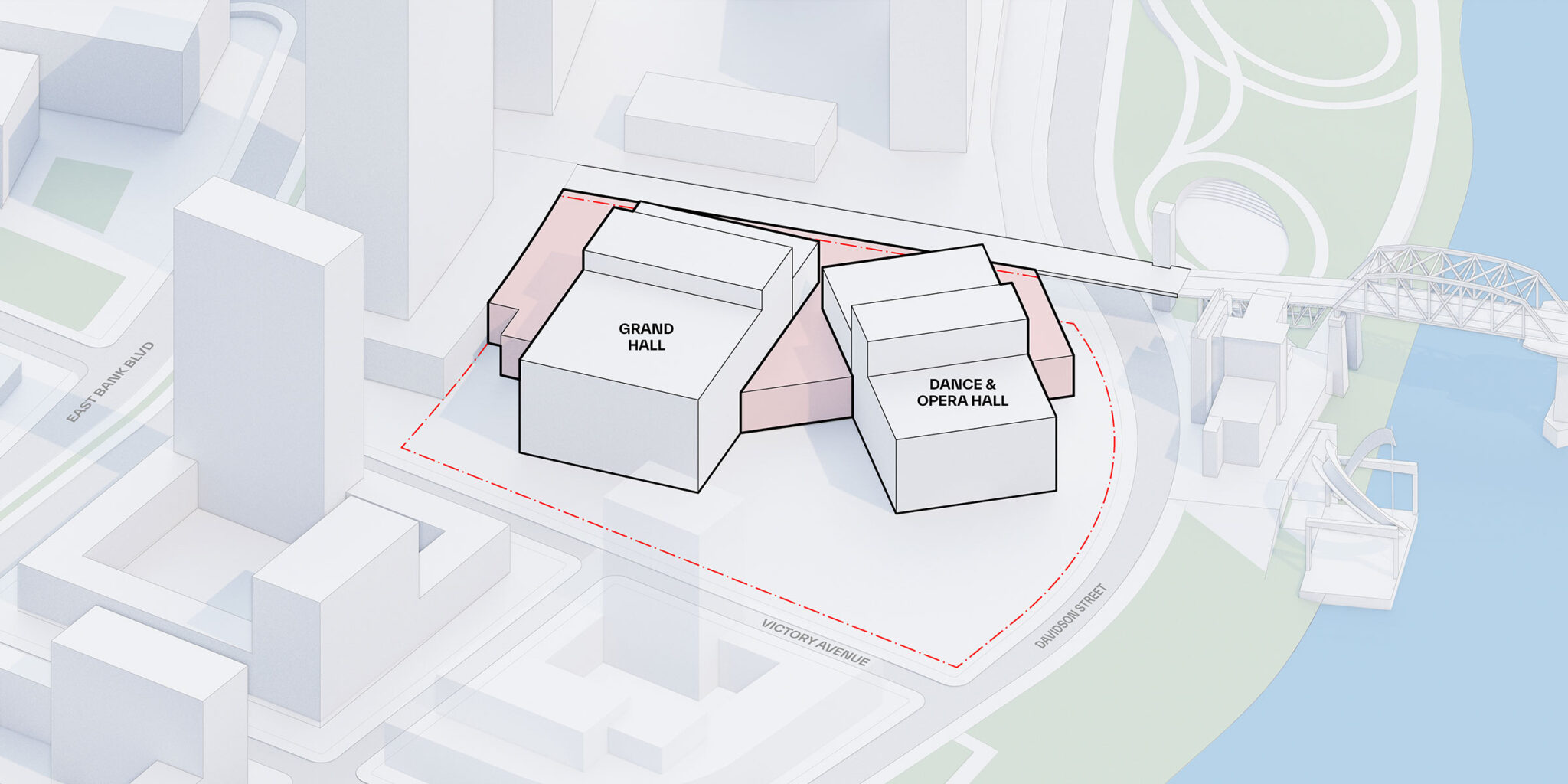
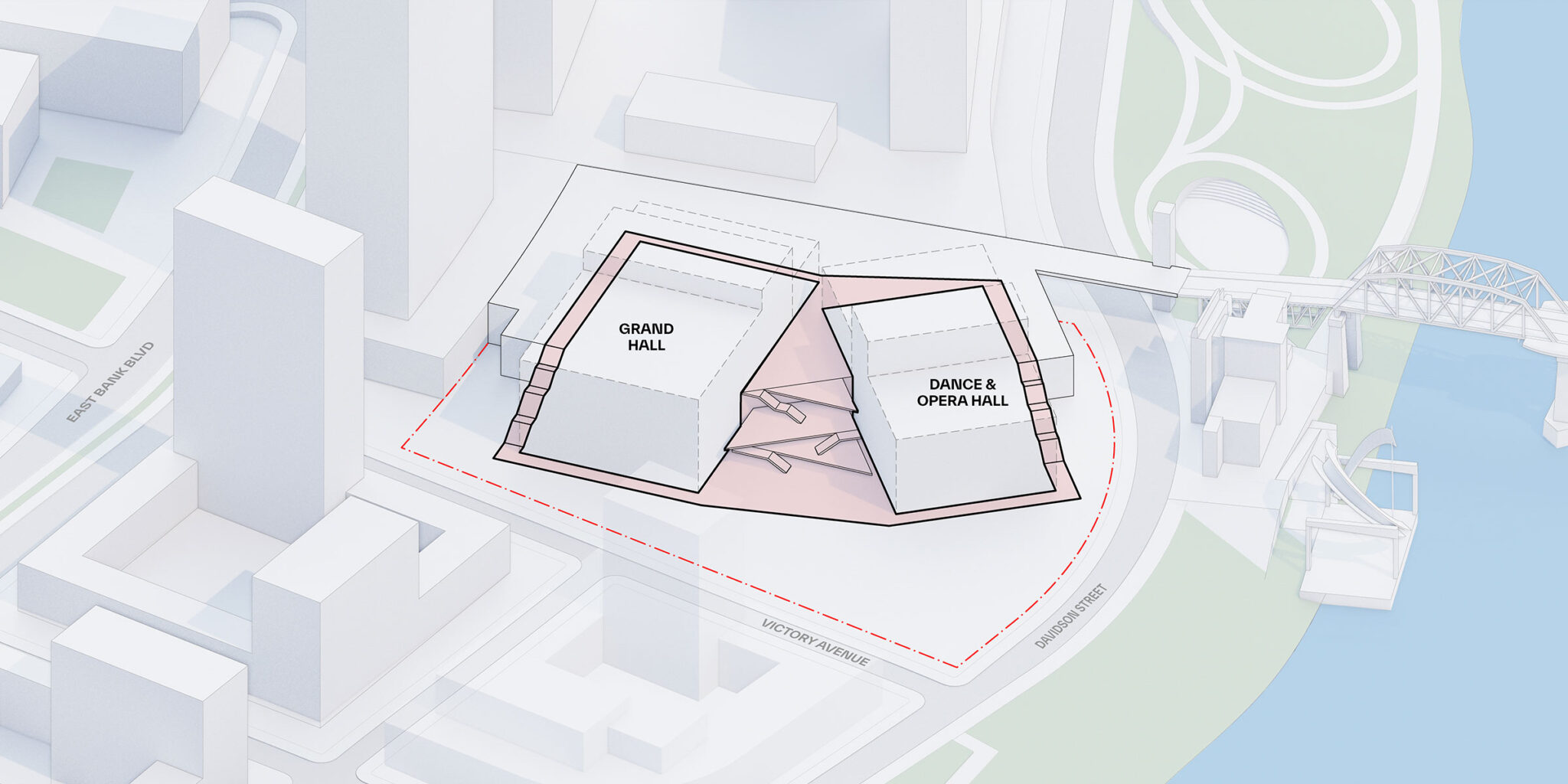
カンバーランド・パークおよびテネシー・タイタンズのニッサン・スタジアムに隣接するウォーターフロントの敷地に位置する新しいTPACは、4つの公演空間――多機能のグランド・ブロードウェイ劇場、ダンスとオペラのホール、柔軟に利用可能なブラックボックス・シアター、そして親密なキャバレー空間――に加え、リハーサルスタジオや教室も備えています。TPACが現在のダウンタウンの所在地から移行するに伴い、この307,000平方フィート(約28,500平方メートル)の施設は、ナッシュビル・バレエ、ナッシュビル・オペラ、ナッシュビル・レパートリー・シアターの新たな本拠地となるとともに、巡回ブロードウェイ公演やダンス公演、地域イベントのための会場を創出します。
「この新しいセンターは、ナッシュビルおよび州全体における舞台芸術の未来を表しています。40年以上にわたり、TPACはテネシー州の人々に世界水準の公演と変革的な芸術教育プログラムをもたらしてきました。私たちの新しい拠点は、より多くの観客を迎え入れ、より多くのアーティストを支援し、テネシー州各地の地域社会における舞台芸術の影響を拡大することを可能にします」- ジェニファー・ターナー(Jennifer Turner)、TPAC社長兼CEO
「テネシー舞台芸術センターの新たな拠点は、都市的かつ文化的なつながりのように設計されており――カンバーランド川の東岸と西岸の間、新旧のナッシュビルの間、そしてあらゆる舞台芸術の間を結びます。視覚的には、それは川の対岸からの灯台のような存在としてブロードウェイの両端を締めくくり、ダウンタウンの文化的な営みをイーストバンクへと引き寄せます。あらゆる側面から迎え入れるように設計されたこのセンターは、橋の上方と下方の両方からアクセス可能であり、ロビーを近隣の日常生活のための段状に連なる公共空間としています。ファサードは、オルガンのパイプやスチールチャイムのように束ねられたアルミニウムの管で構成されており、垂直から水平へとうねりながら、通り抜ける観客や出演者のための開口部やキャノピーを生み出しています。その結果は、公園内にある流れるような公共パヴィリオンのようであり、TPACの新たな拠点として、そのプログラムや公演にふさわしい包摂的で人を引きつける性格を備えています」- ビャルケ・インゲルス(Bjarke Ingels)、BIG創業者兼クリエイティブディレクター
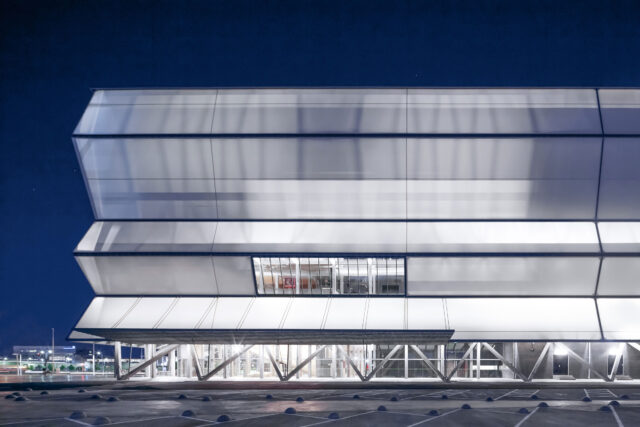
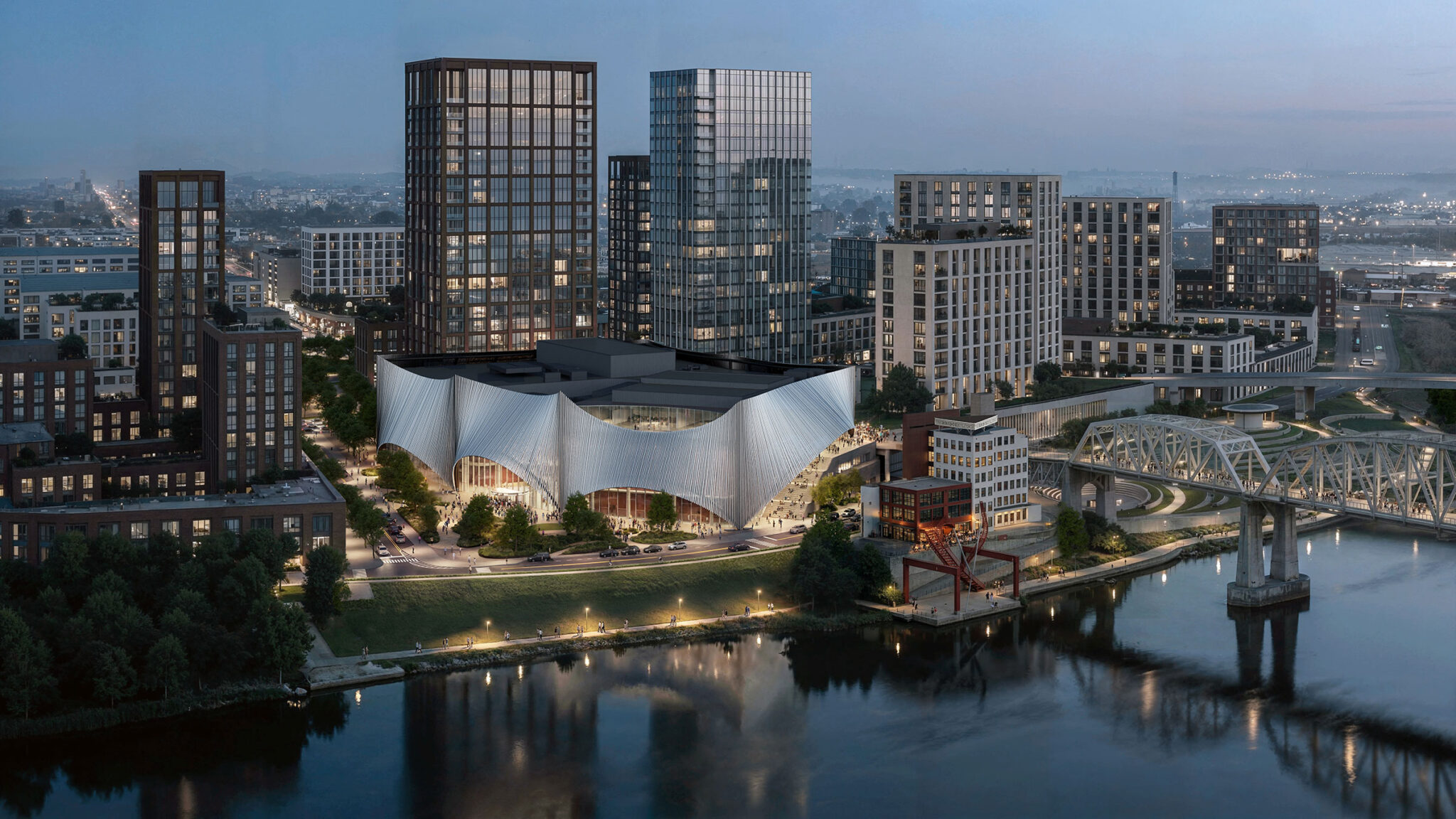
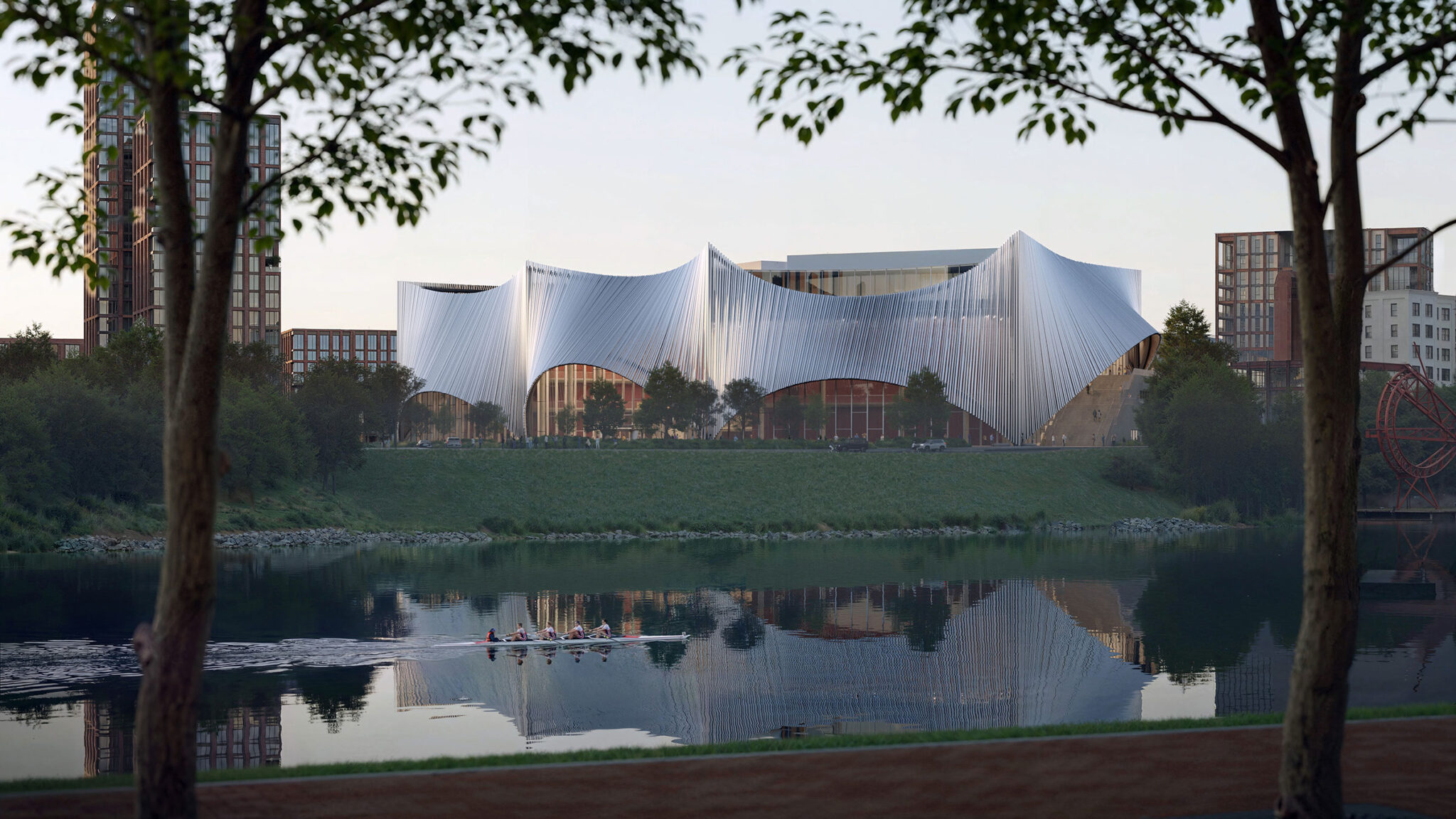
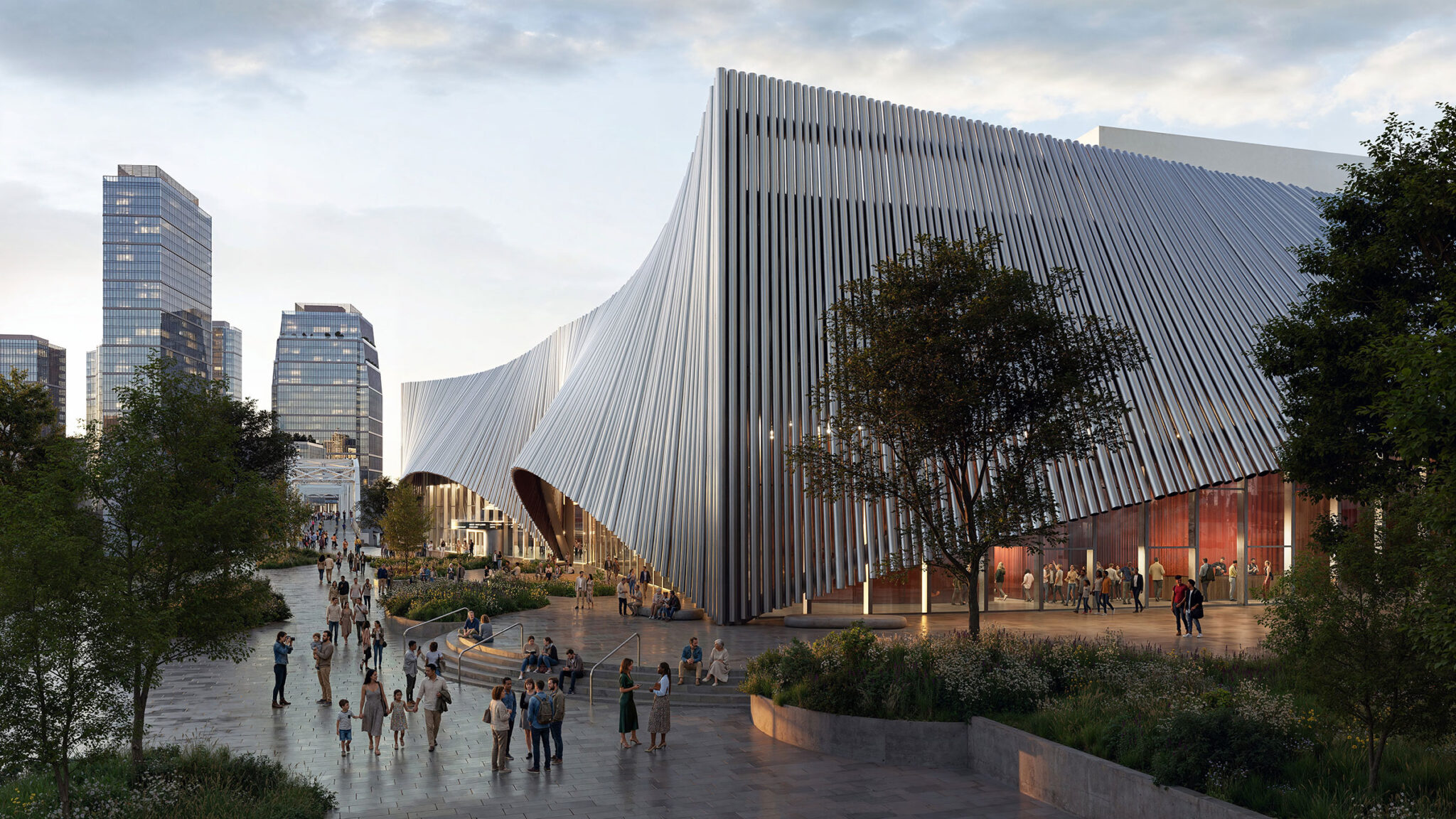
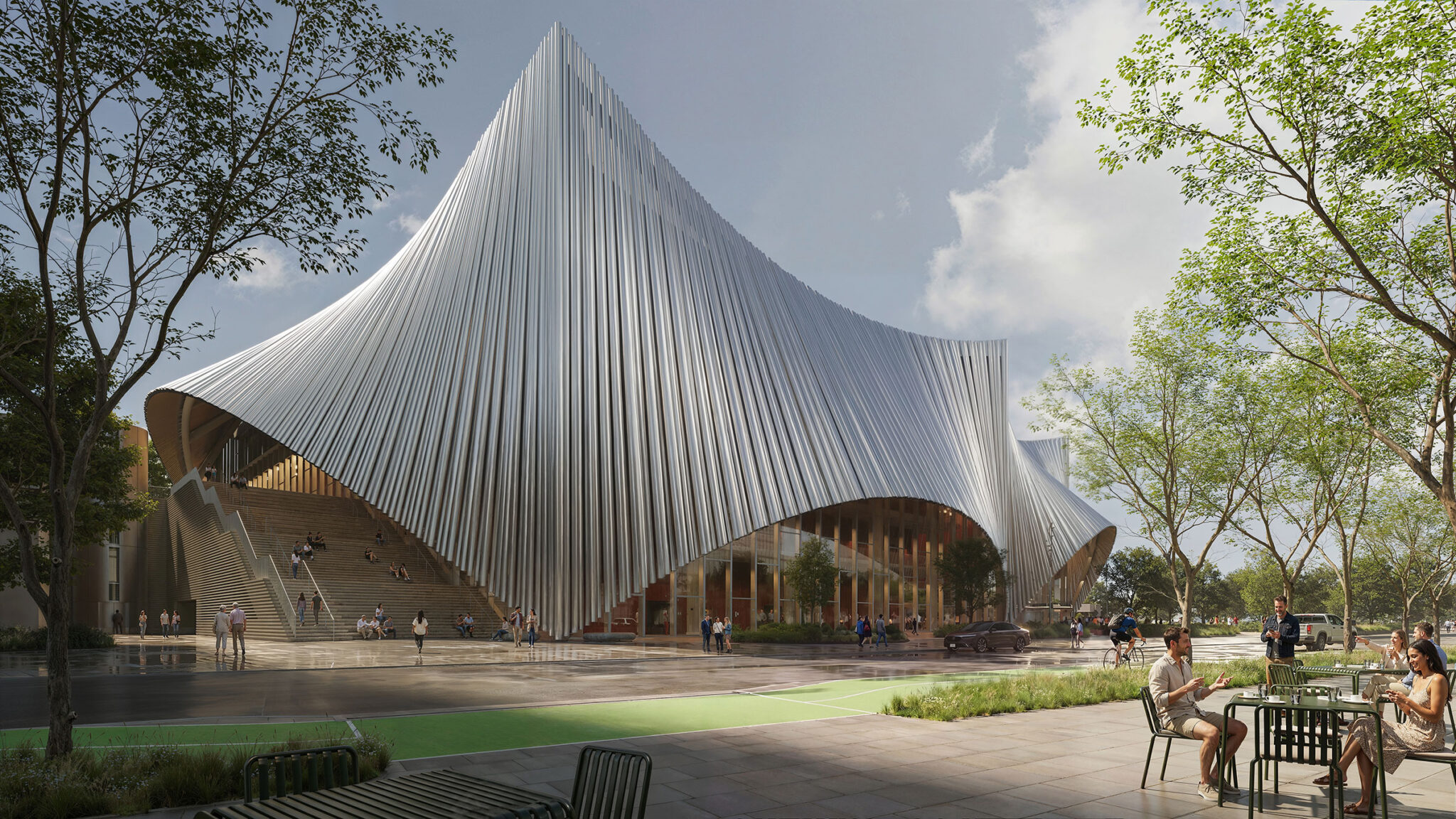
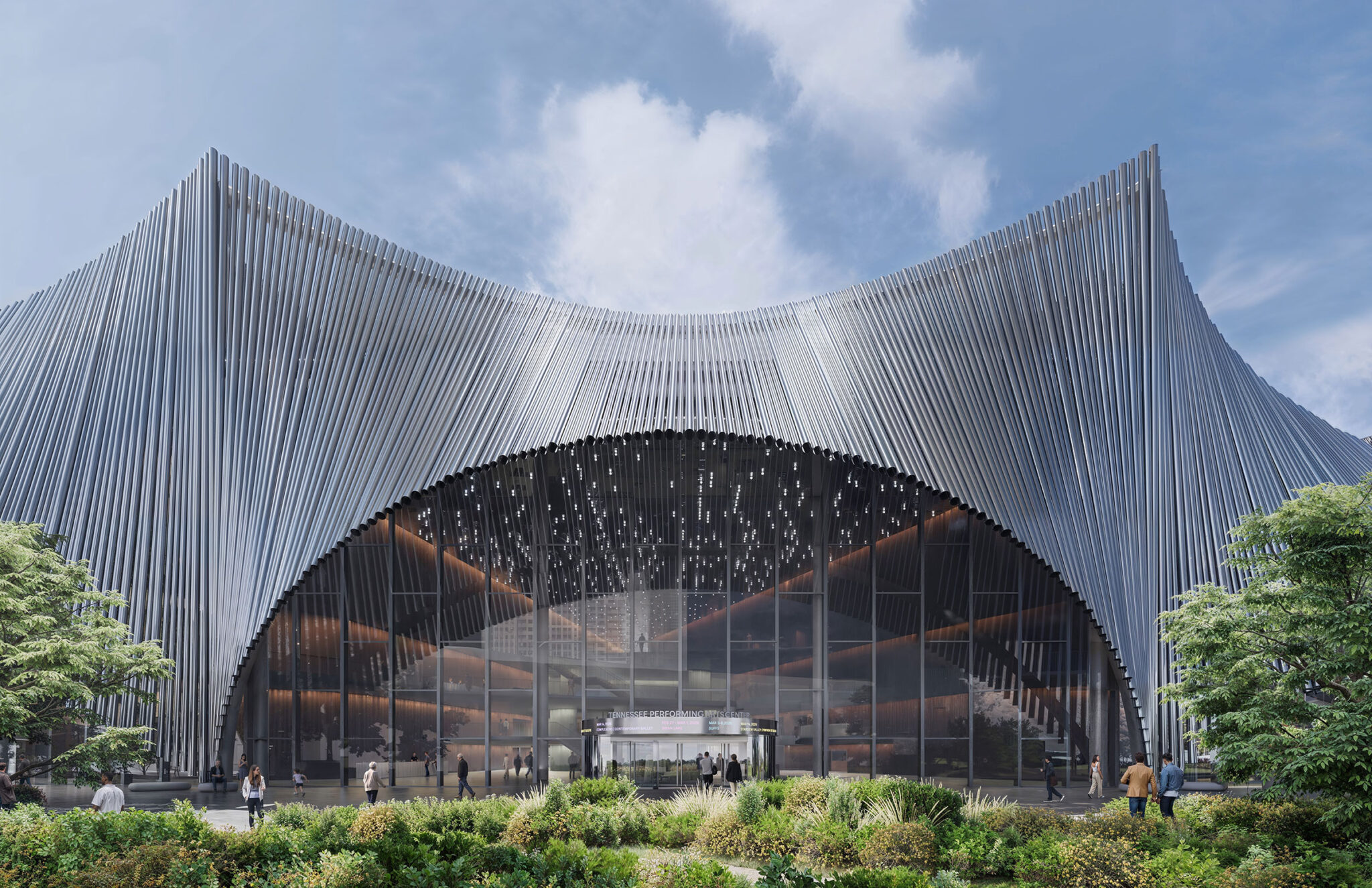
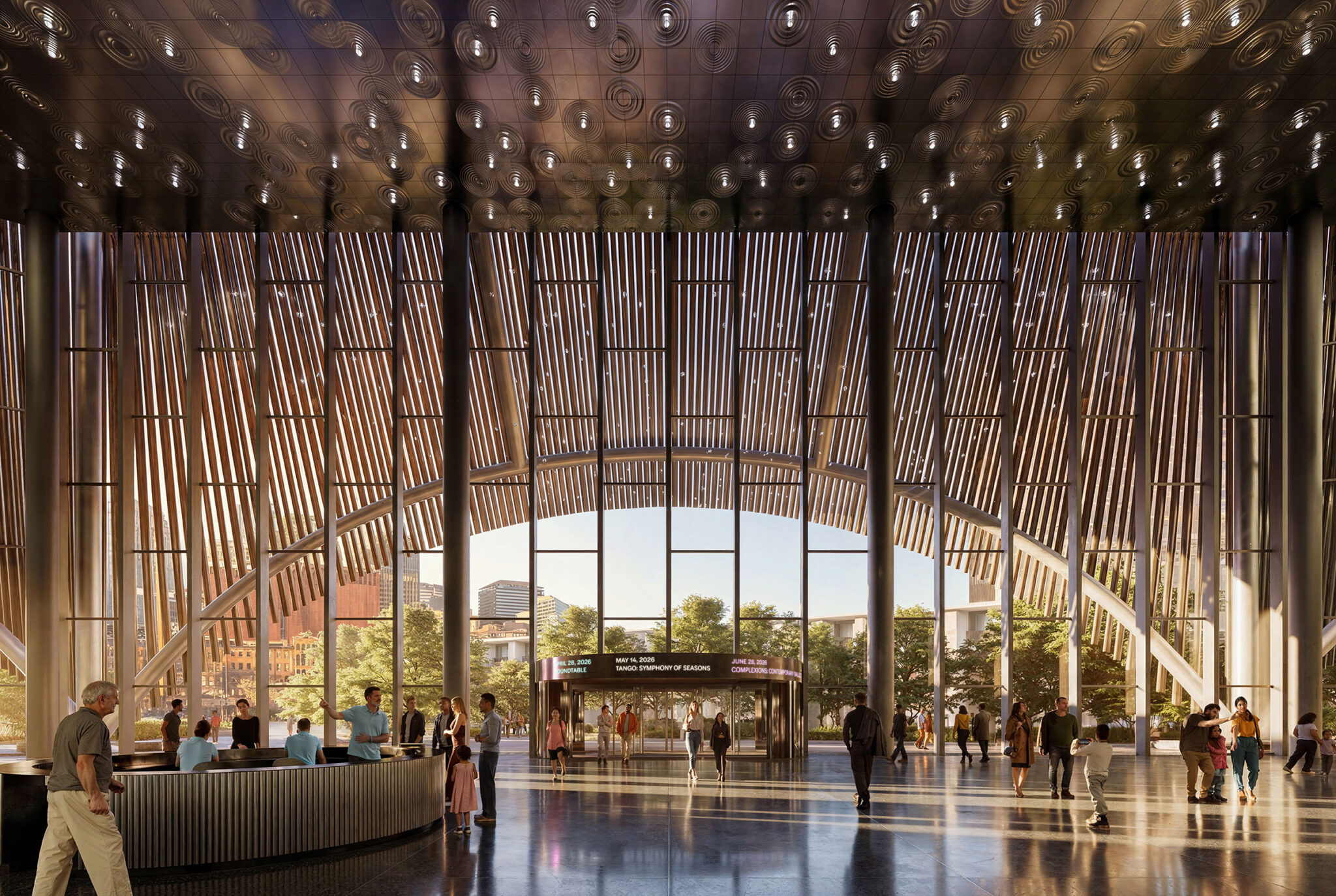
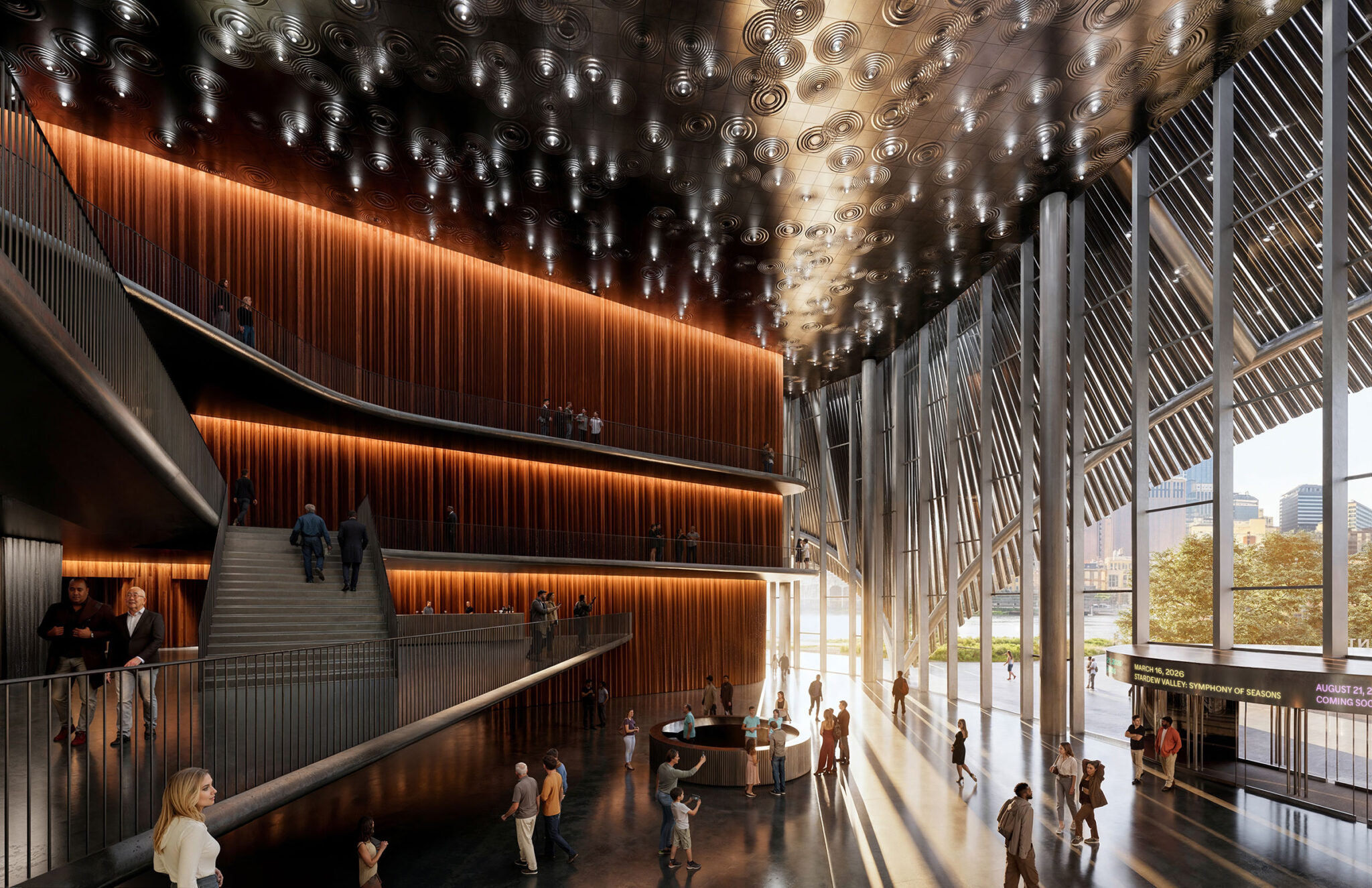
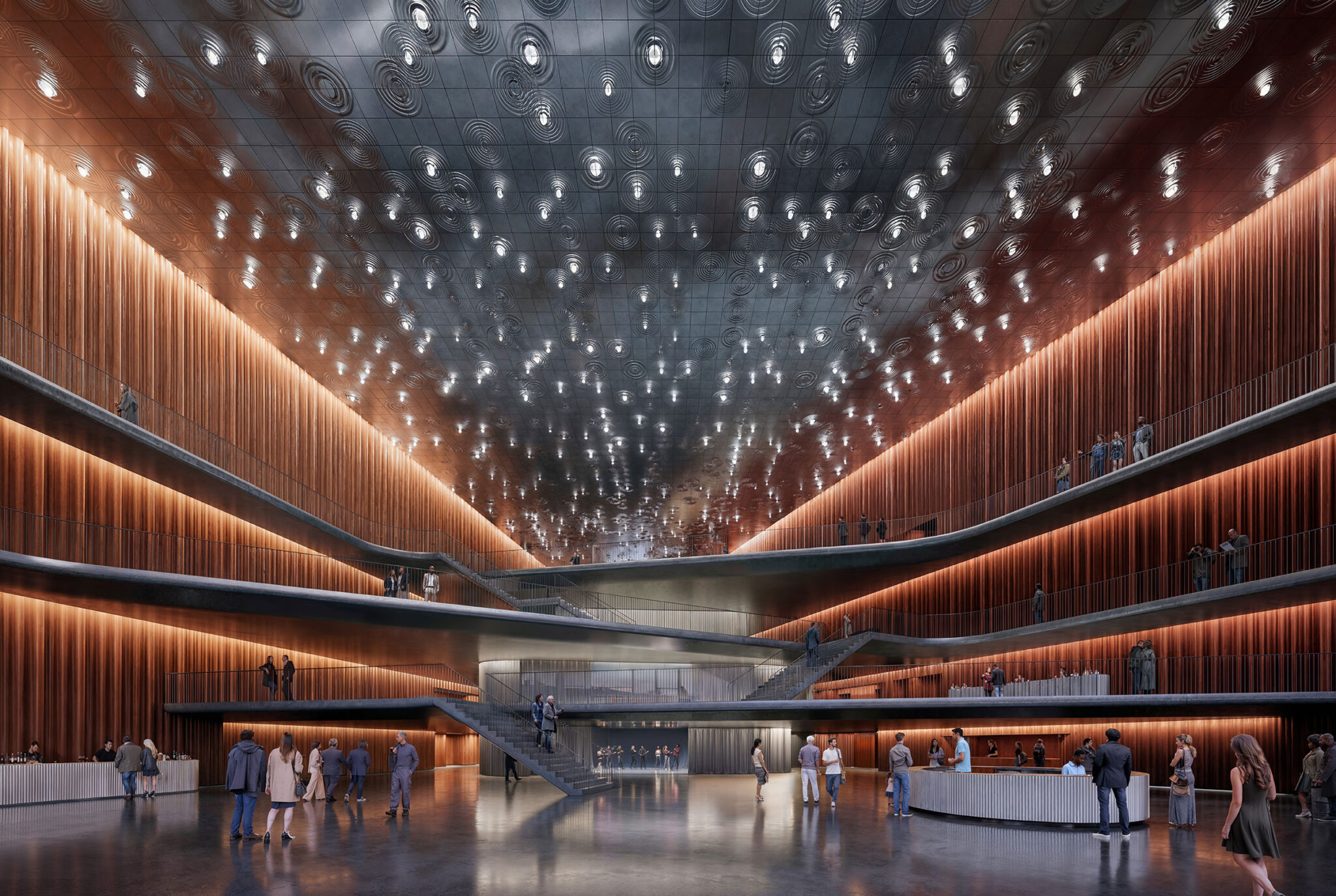
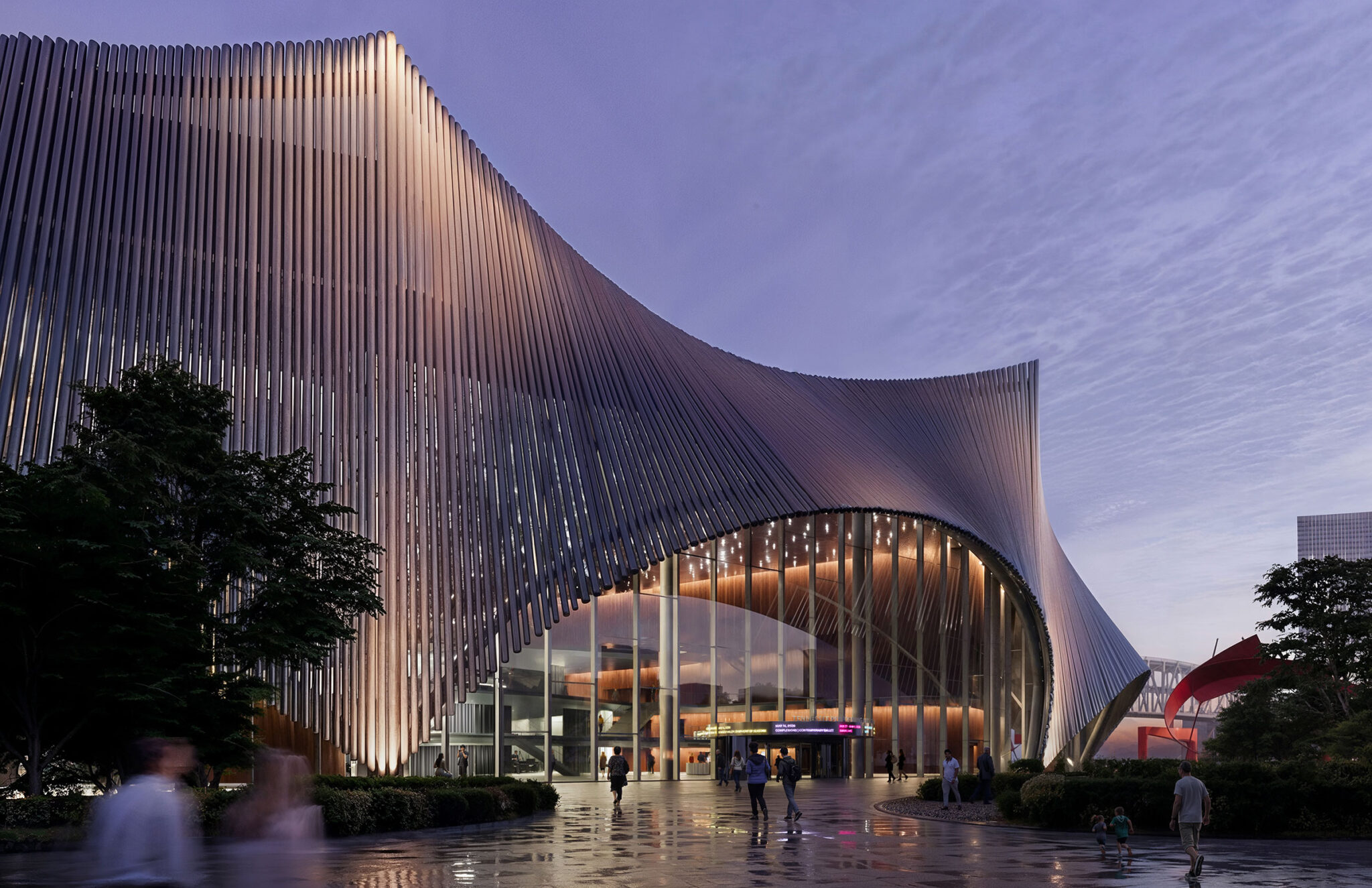
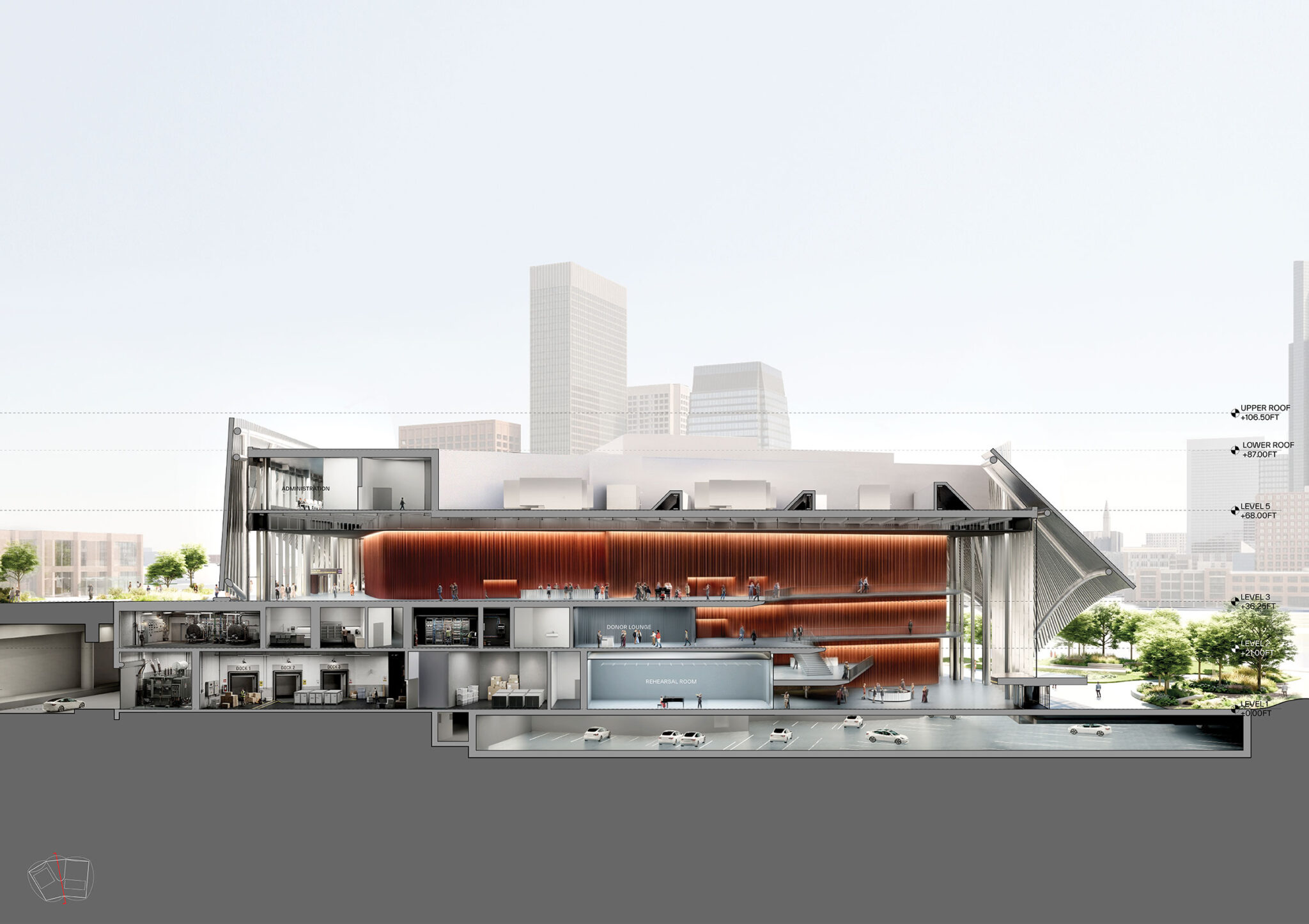
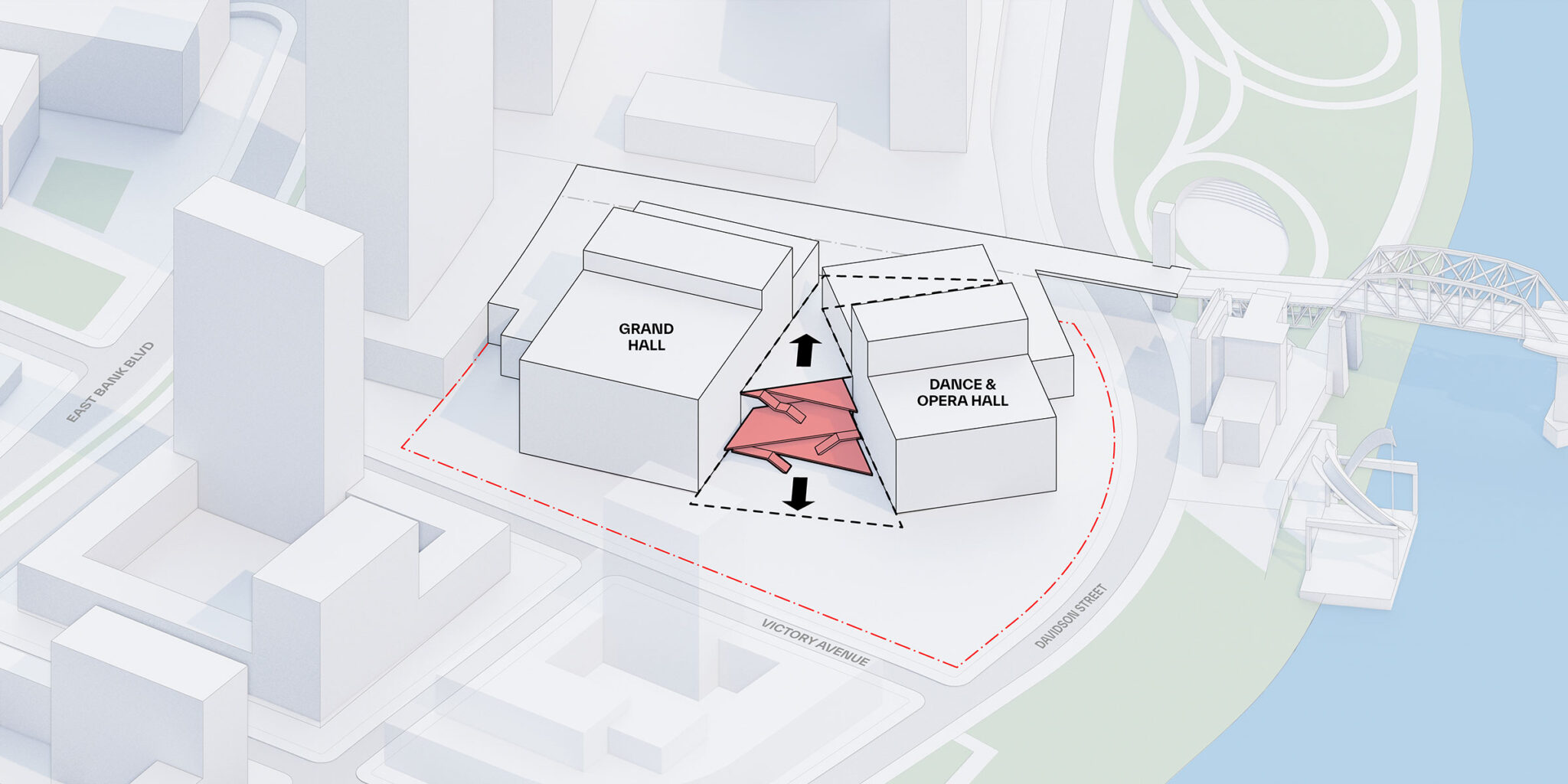
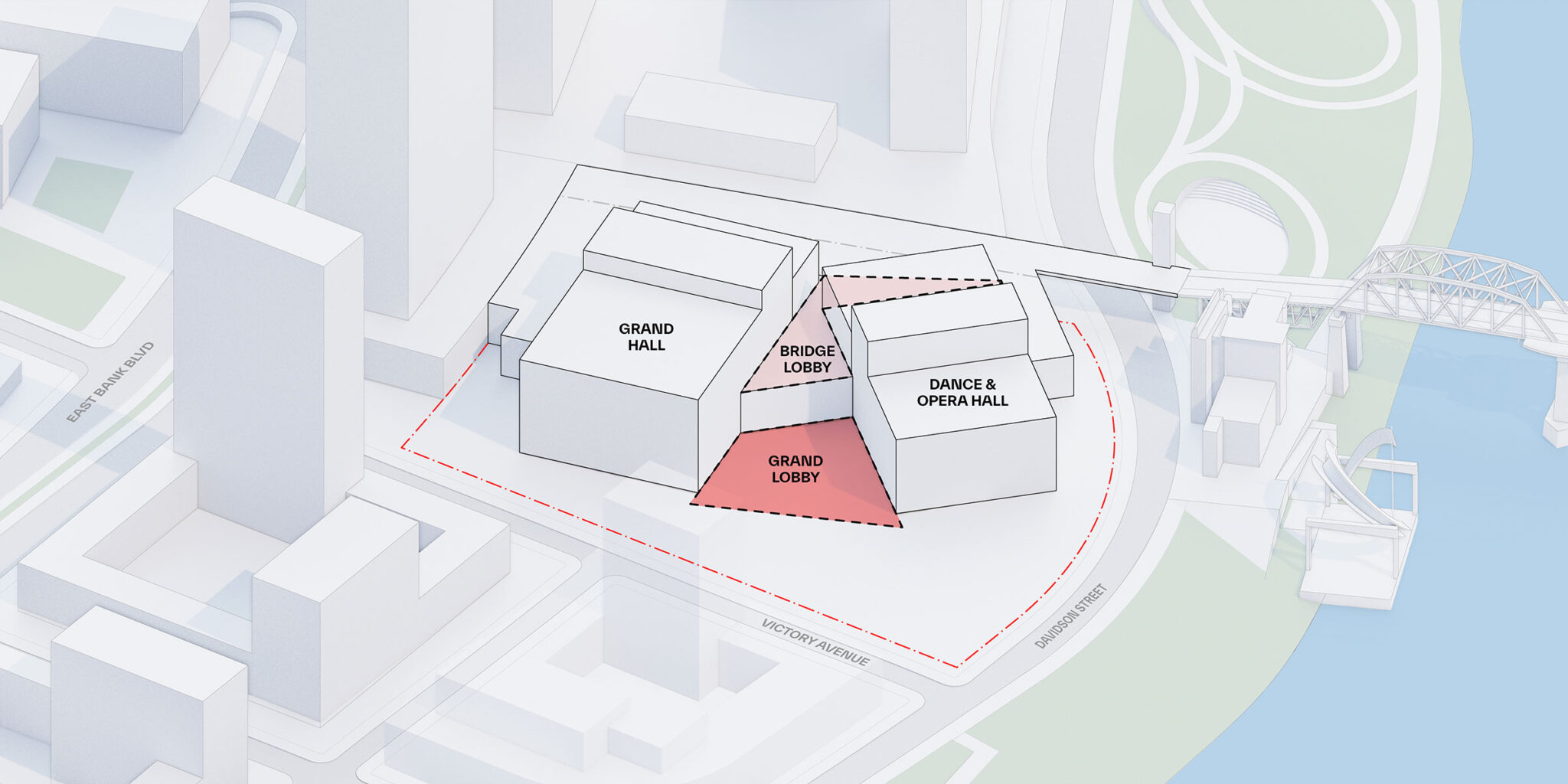
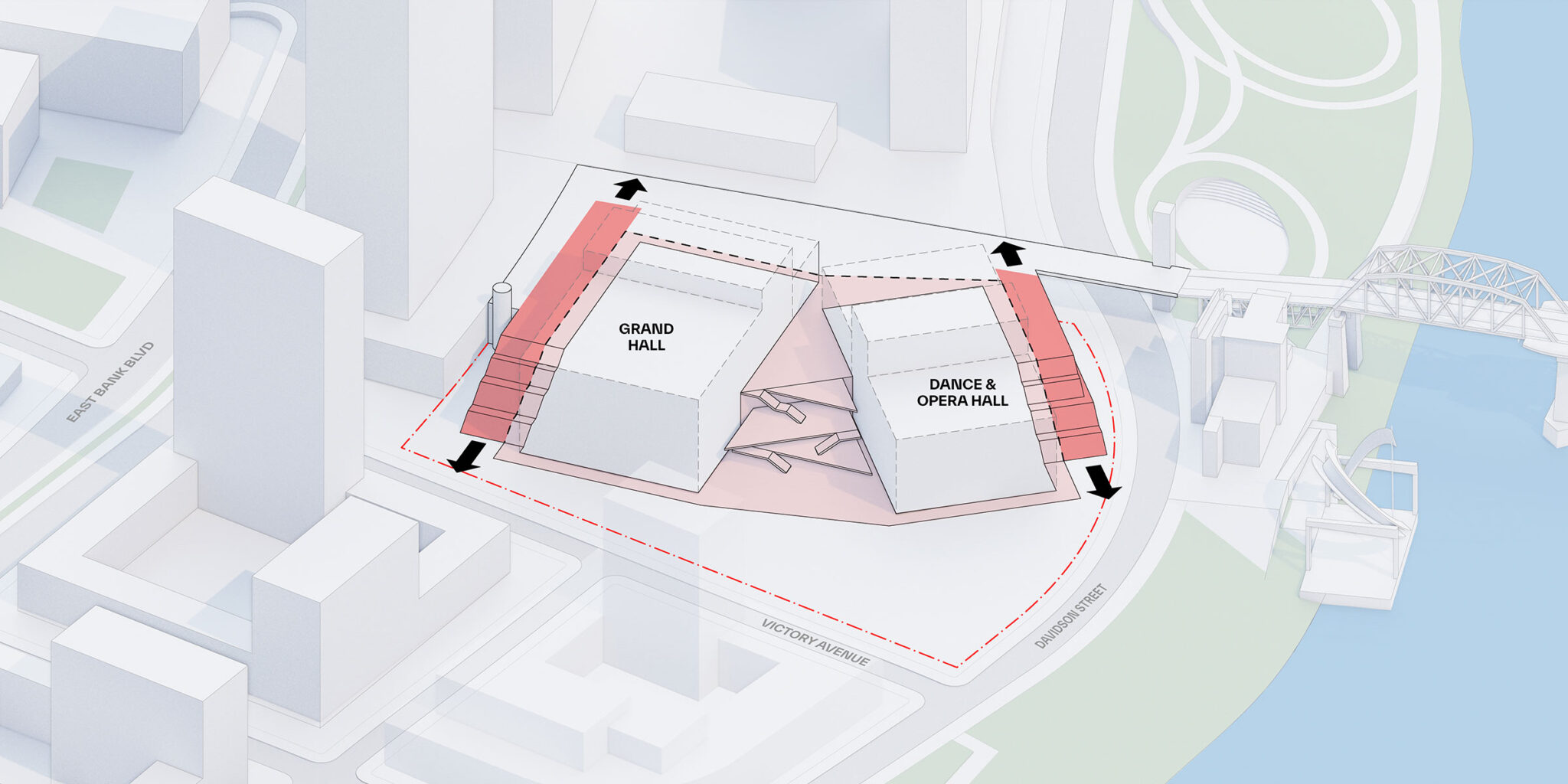
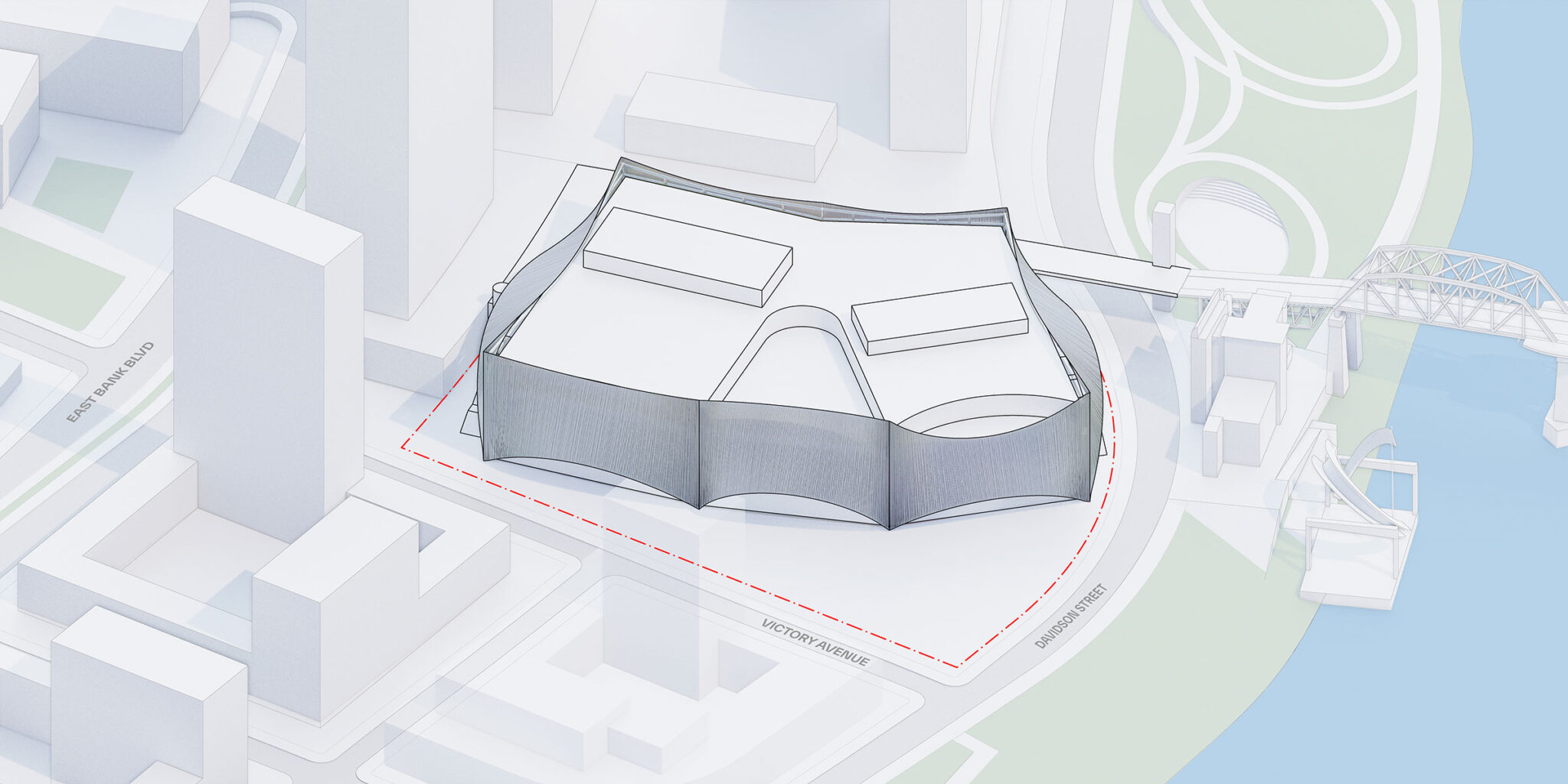
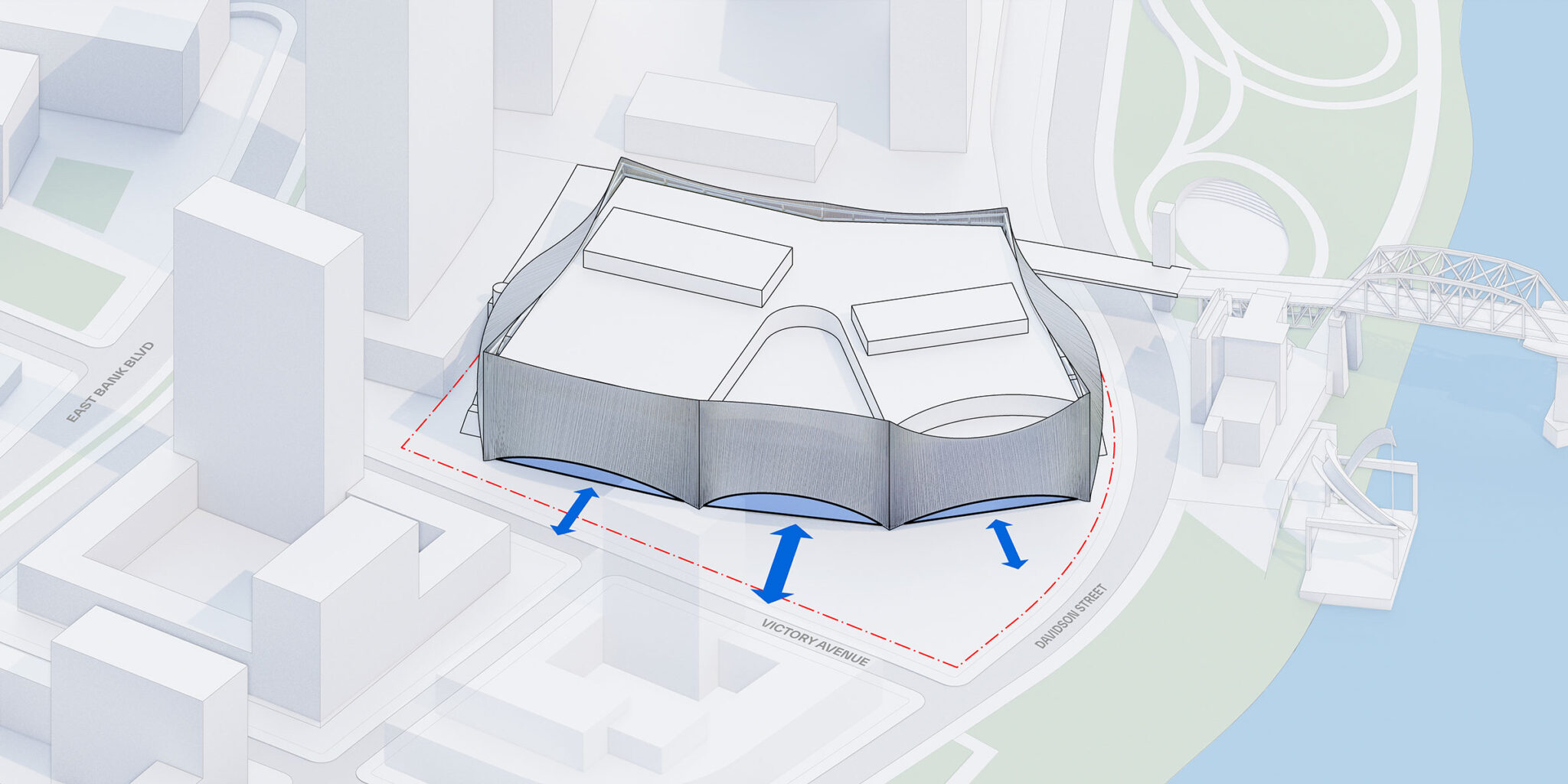
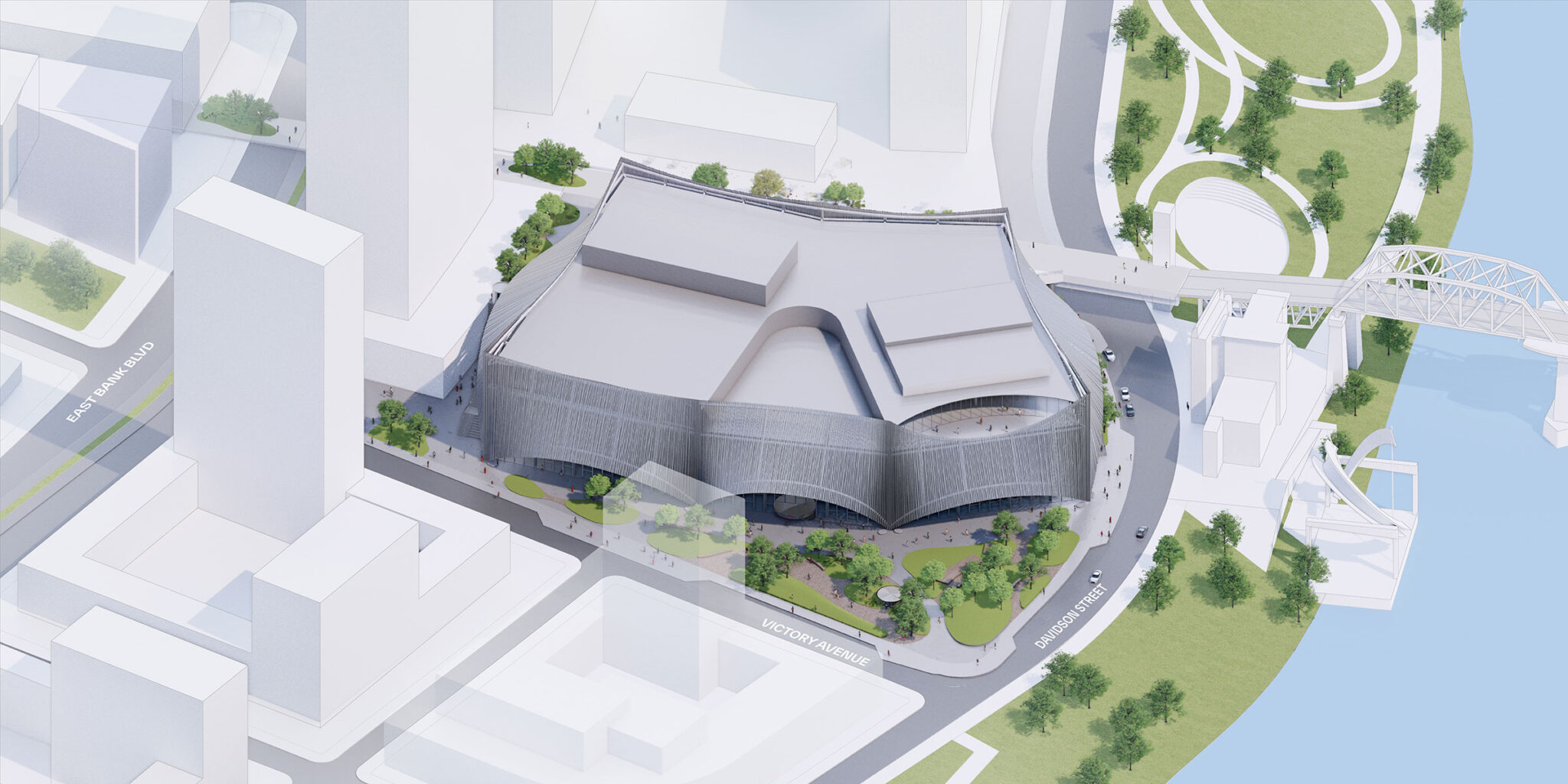
アルミニウムの管の配列から構成されたTPACの反射性のある金属ファサードは、都市のあらゆる視点から異なって見える、動的で彫刻的なヴォリュームを生み出しています。波打つ劇場のカーテンから着想を得て、外部のアーチは持ち上がるようにして内部の活動を明らかにします。到着すると、来訪者は都市の活気を内部へと引き込む光に満ちたアトリウムに迎えられます。2つのロビーが公演空間をつないでおり、ひとつは川と計画中のウォーターフロント公園を望む地上レベルのメインロビー、もうひとつはランドマークであるジョン・サイゲンソーラー歩行者橋に面した高架のロビーです。大階段、中央ラウンジ、そして段状に連なるコンクリートスラブが、来場者に公演の前後および合間に集うことを促し――ナッシュビルにおけるTPACの社交的な集いの場としての役割を強化しています。
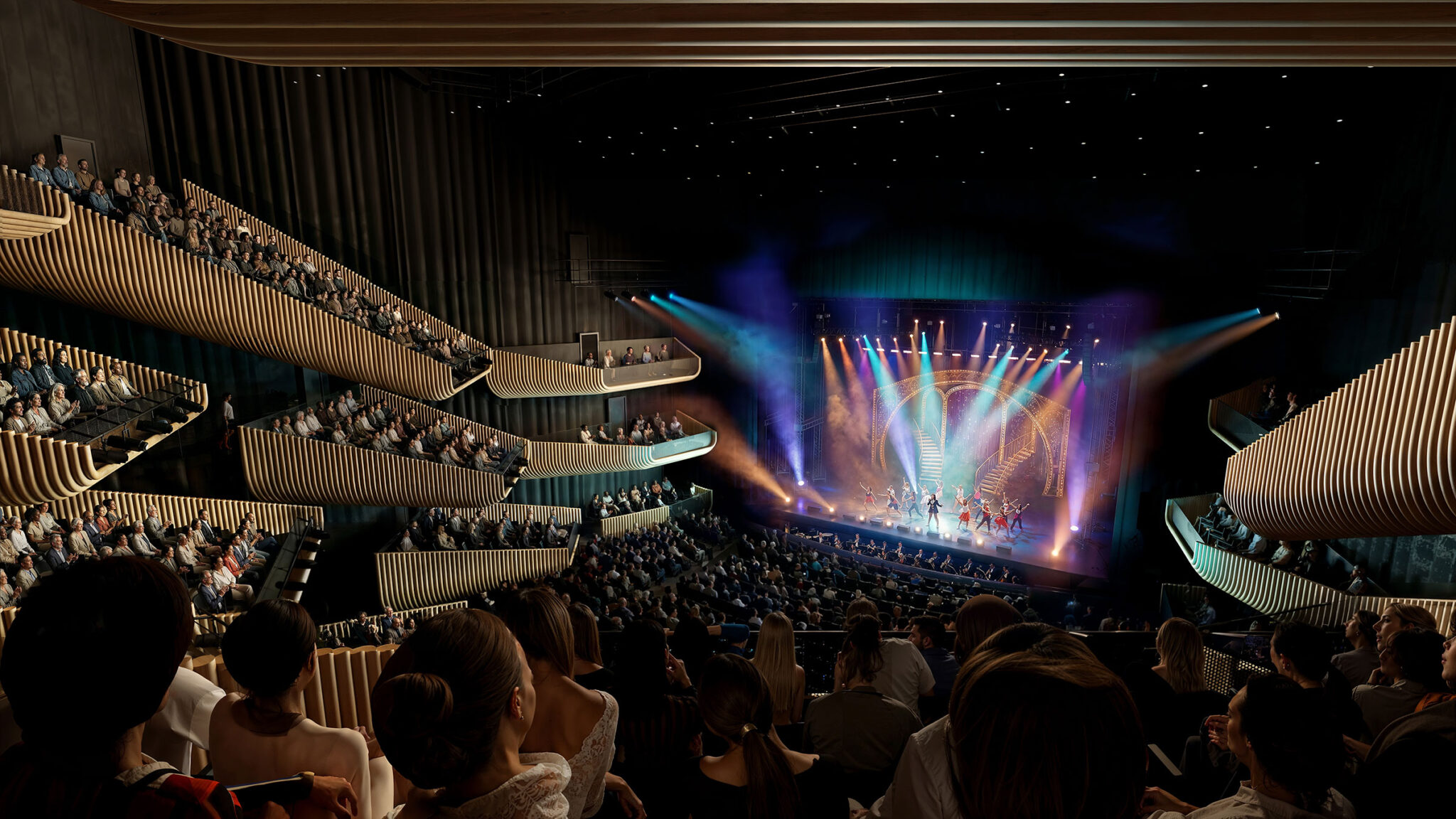
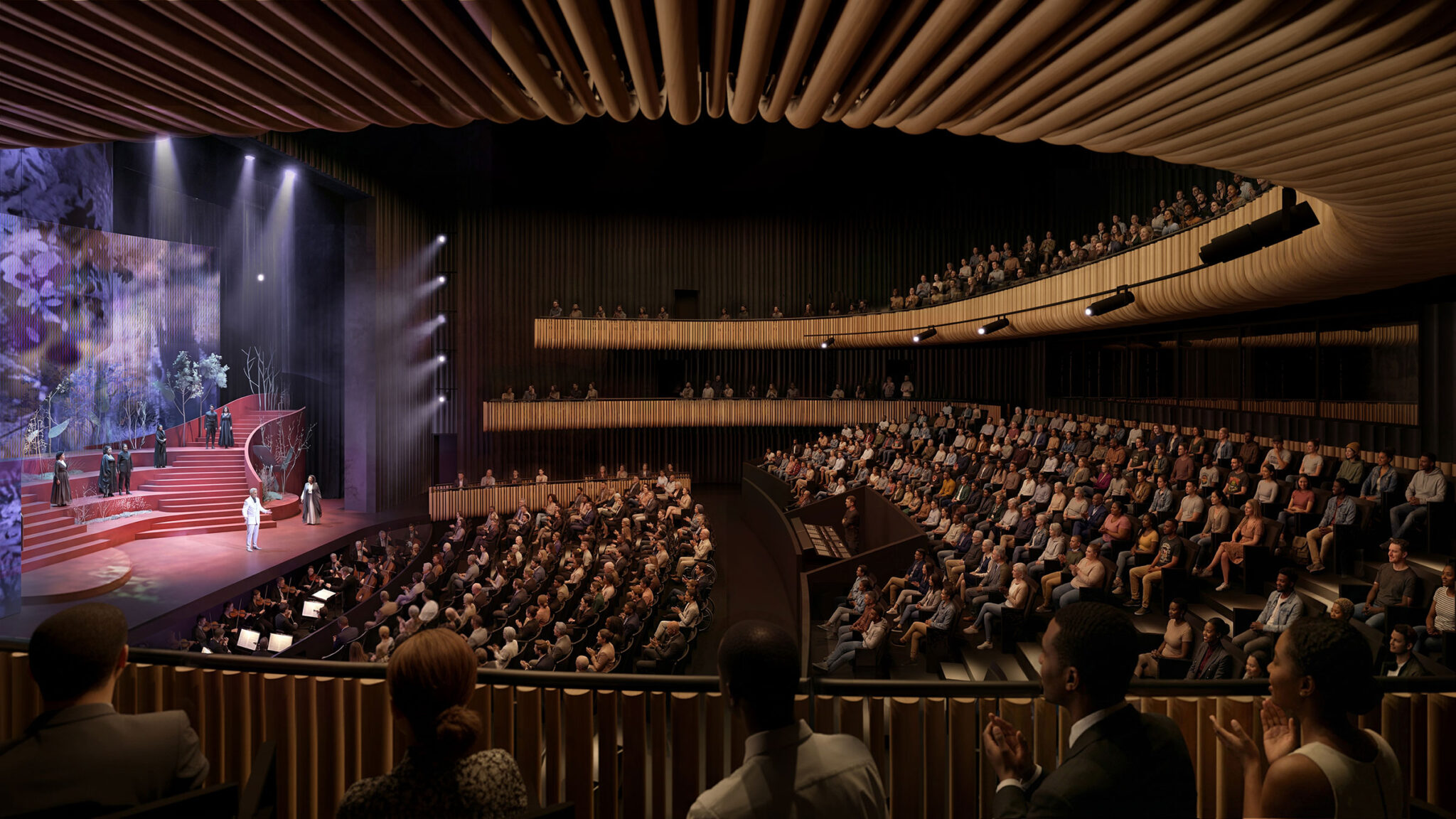
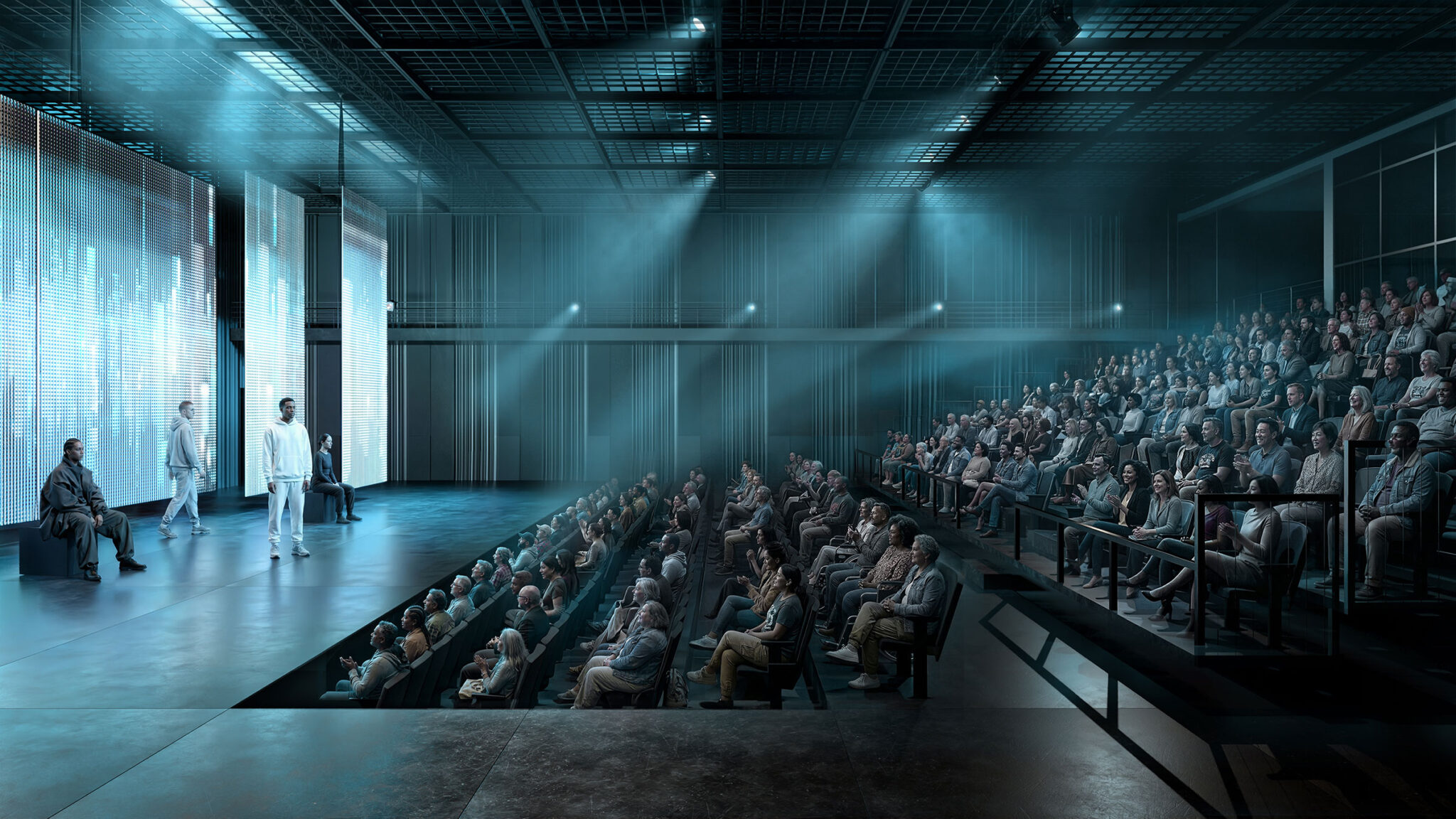
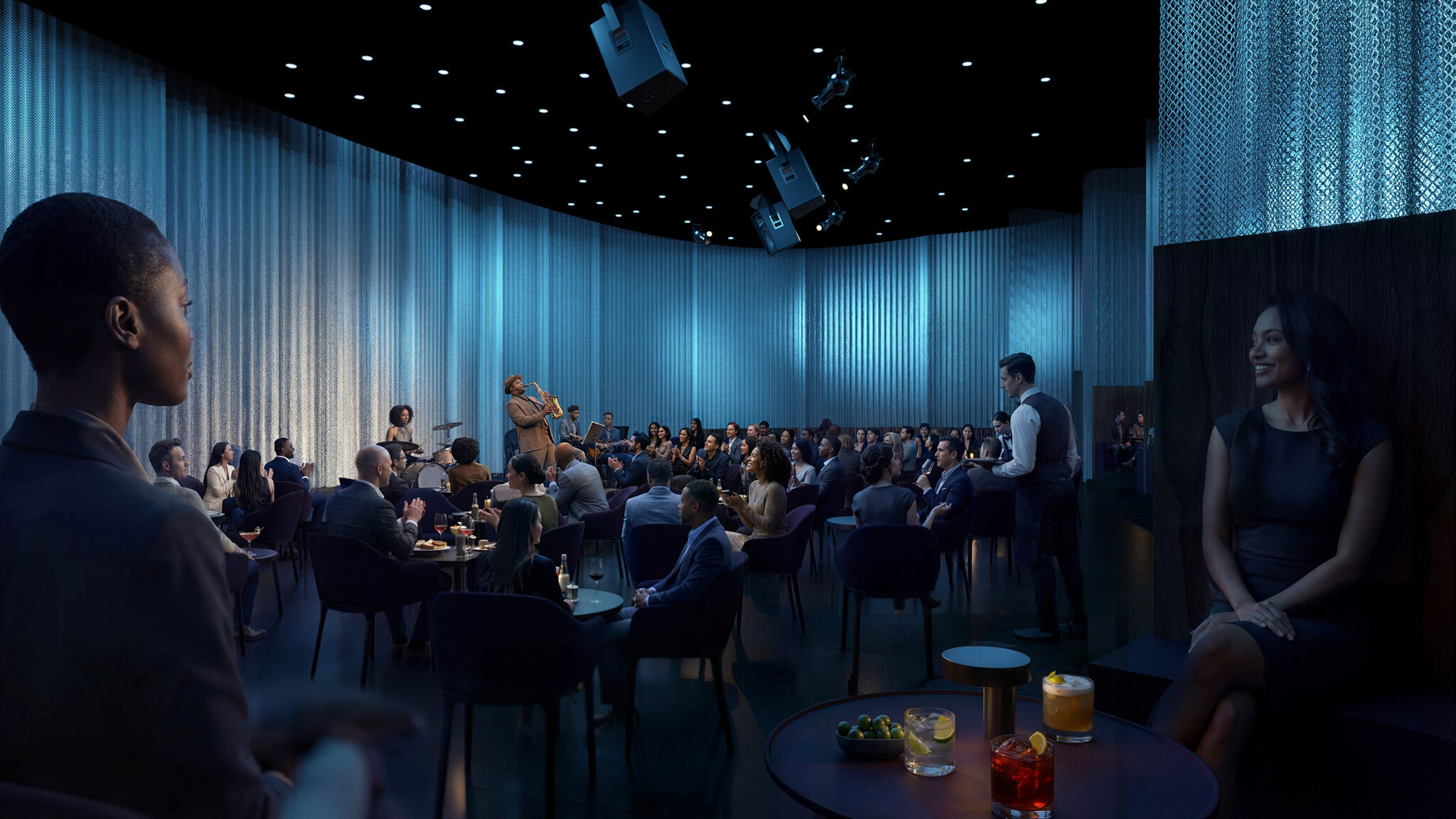
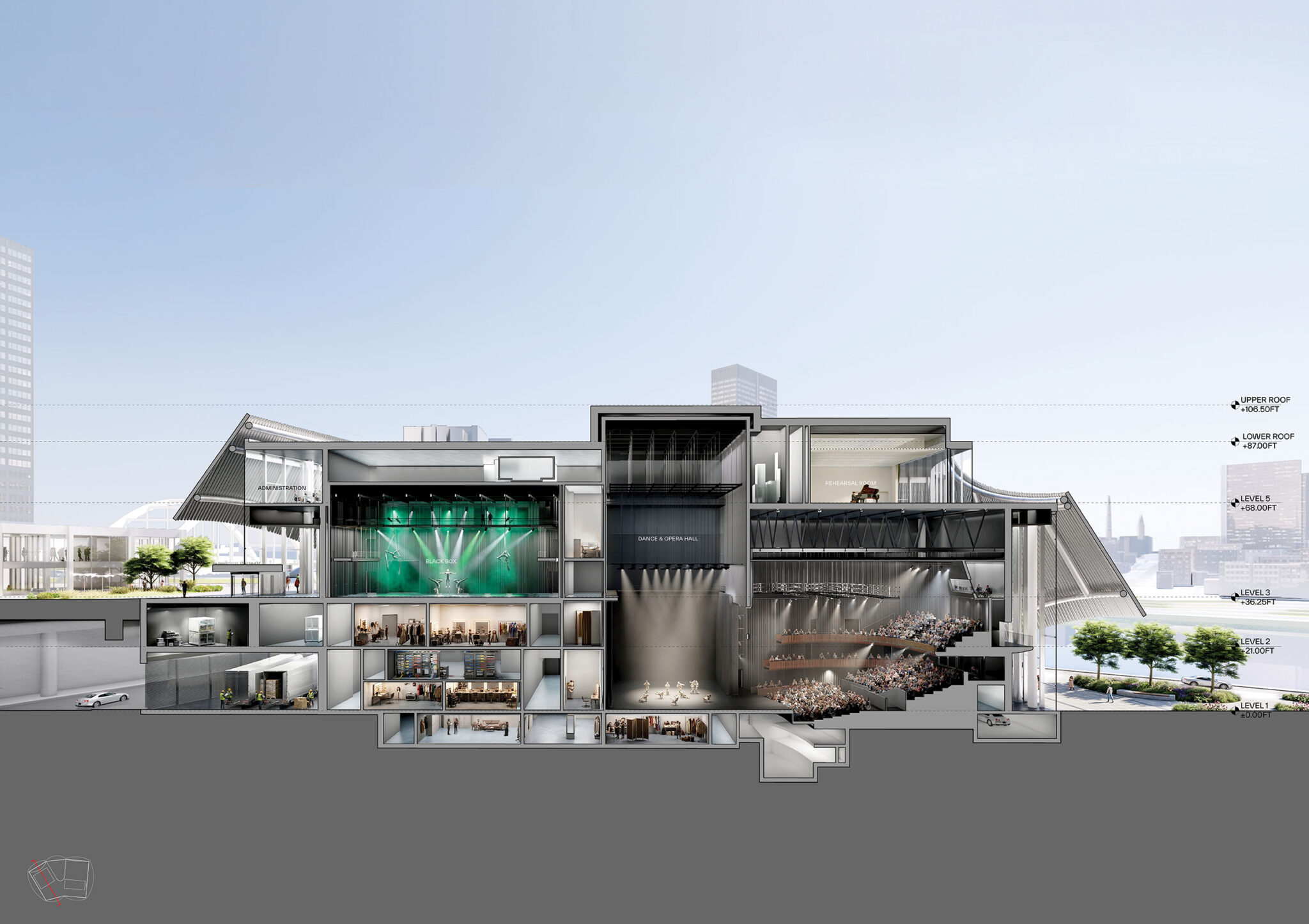
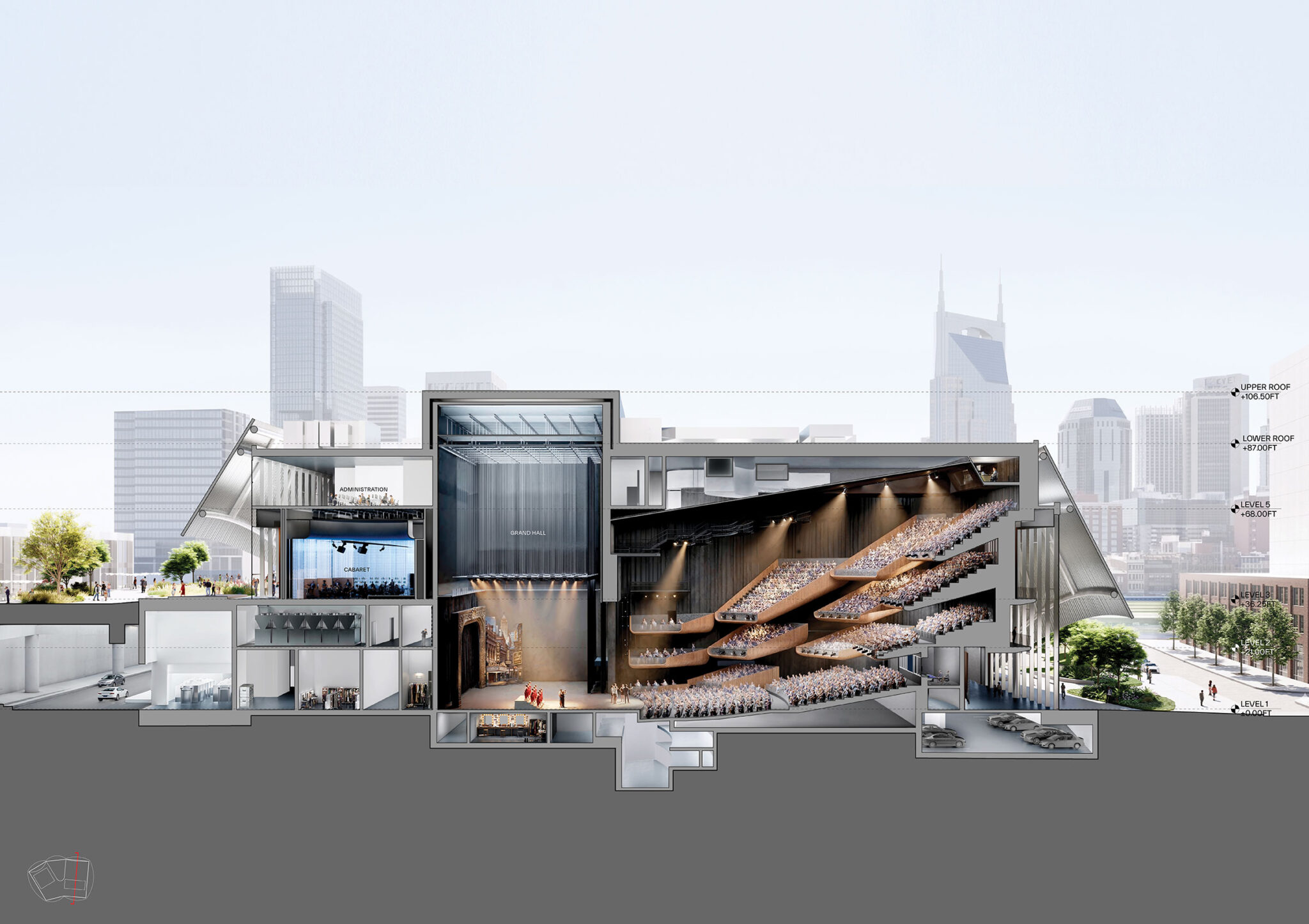
ブロードウェイ・シアター内部では、木材で仕上げられた浮遊するような「トレイ」が座席を親密なまとまりに構成しており、それぞれが視界を最適化するために高さをずらして配置されています。オペラおよびダンスホールは、ダンサーの足元の見え方を高めるように設計されており、一方でバルコニーは舞台との視覚的な連続性を強化しています。ブラックボックス・シアターは観客を公演の中に直接置くようにし、従来舞台を縁取っていたプロセニアムの「額縁」を取り除くことで、それぞれの作品に合わせた異なる座席配置を可能にします。キャバレーは観客席に張り出す舞台を備えており、宴会形式の座席によって補完された親密な雰囲気を生み出しています。
「TPACの新たな拠点の中心において、4つの会場はそれぞれに記憶に残る独自の演劇体験を生み出し、『ミュージック・シティにおける演劇の活気』を称えます。各会場はそれぞれ独自の個性を表現しつつ、観客の体験とつながり――演者と観客の間の親密さ、そしてあらゆる年齢層の観客同士のコミュニティ感覚――を高めます」- クリフ・ゲイリー(Cliff Gayley)、WRAデザイン・プリンシパル
透明なリハーサル空間は来訪者に舞台裏を垣間見る機会を提供し、一方でセンサリールーム(*感覚に配慮した部屋)は公演中に穏やかな環境を提供します。建物の頂部に位置する屋上テラスは、ブロードウェイ、カンバーランド川、そしてナッシュビルのスカイラインを一望できる広がりのある眺望を備えています。
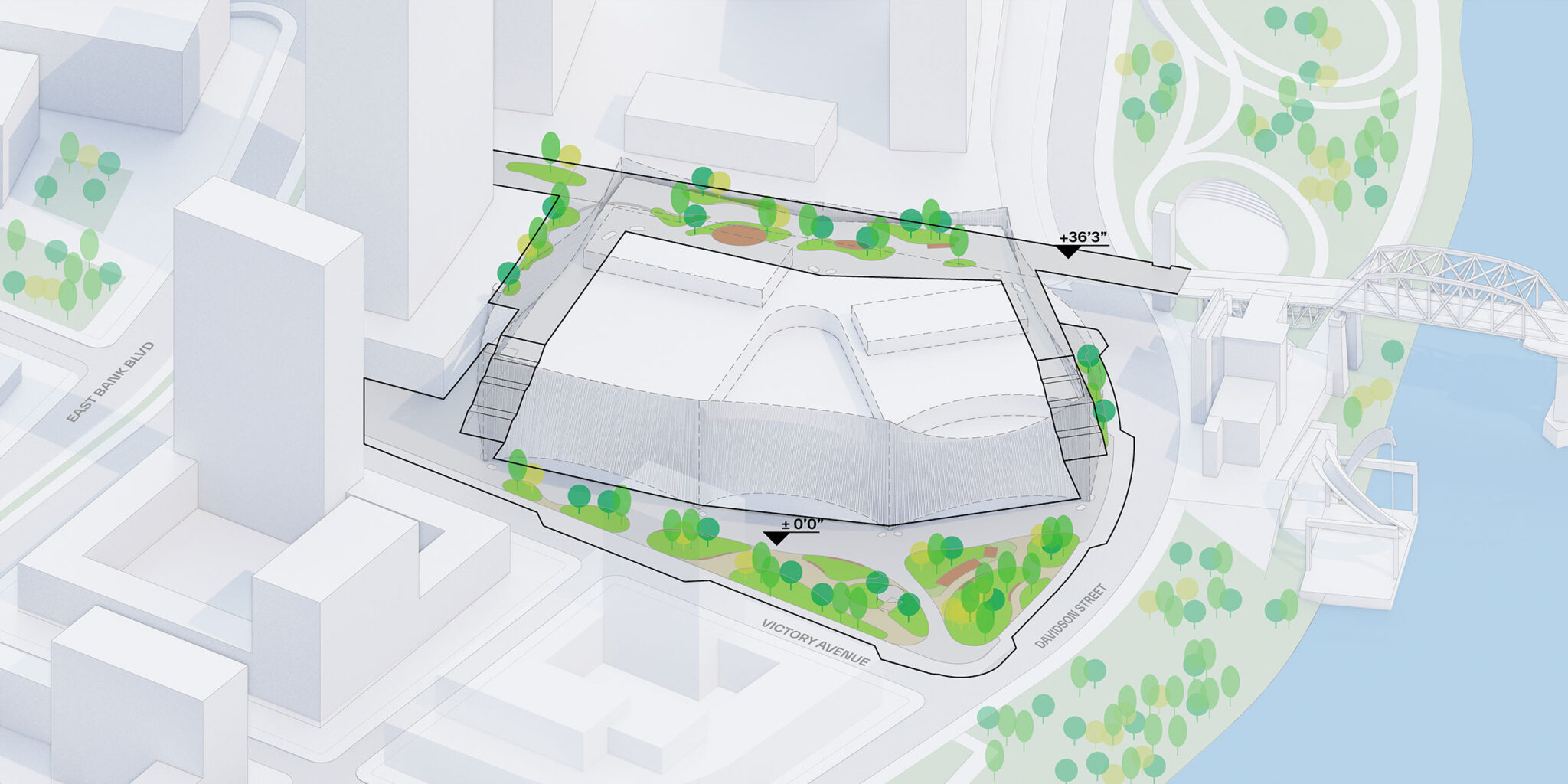
屋外階段がTPACを川へとつなぎ、このセンターをナッシュビルの新しいイーストバンク地区に統合するとともに、その先の都市との接続性を高めています。OLINによるランドスケープデザインは、多様な植栽とともに、屋外の公共パフォーマンスのための小規模なスペースや、集いの場、遊びのための木立で建物の周囲を取り囲んでいます。
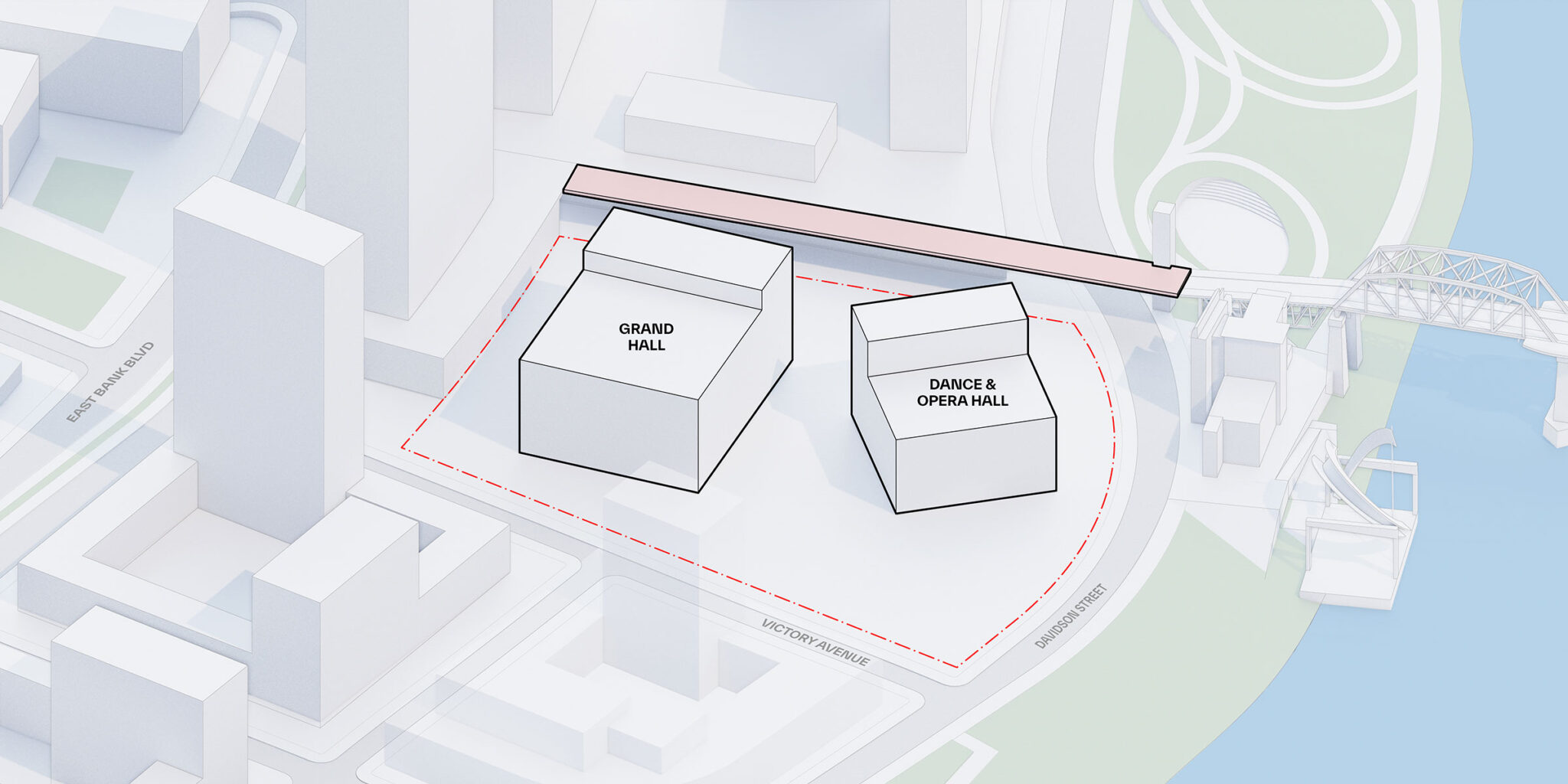
「一般的な舞台芸術センターには明確に定義された表と裏がありますが、TPACの敷地条件は、バックヤード機能を橋の下に隠す独自の機会を提供し、その結果、公共空間が建物をあらゆる側面から取り囲むことを可能にしています。2つのエントランスと建物の周囲に巡るロビーが、地上レベルから橋のレベルに至るまで全周縁部を活性化し、観客を会場の周囲環境へとつなぎます。
これらのホールはさまざまな公演に対応できるよう設計されており、段状に連なる中二階がオーケストラレベルと上部のバルコニーレベルをつないでいます。中央ロビーは絶えず活気に満ちて脈打ち、各公演の前後に異なる公演の来場者をひとつに結びつけます」- トーマス・クリストファーセン(Thomas Christoffersen)、BIGパートナー
TPACは、ハンブルク州立歌劇場、中国の蘇州現代美術館、プラハのヴルタヴァ・フィルハーモニーを含む、BIGの拡大する文化プロジェクトのポートフォリオに加わります。建設は2027年に開始され、2030年の開館が見込まれています。
以下の写真はクリックで拡大します

以下、リリーステキストです。
NASHVILLE TAKES CENTER STAGE WITH NEW WORLD-CLASS TENNESSEE PERFORMING ARTS CENTER
The new Tennessee Performing Arts Center (TPAC) – designed by BIG-Bjarke Ingels Group and William Rawn Associates (WRA) with HASTINGS Architecture – extends the vibrancy of downtown Nashville across the Cumberland River, emerging as a cultural anchor for the city’s reenergized East Bank. Designed to welcome the community from all sides, with the performance venues clustered at its core, the new TPAC supports a range of artistic programming while building upon Nashville’s rich legacy in the arts.
Situated on a waterfront site neighboring Cumberland Park and the Tennessee Titans’ Nissan Stadium, the new TPAC includes four performance spaces – the multi-function Grand Broadway theater; a dance and opera hall; a flexible black box theater; and an intimate cabaret space – as well as rehearsal studios and classrooms. As TPAC transitions from its current location downtown, the 307,000-sq-ft center will serve as the new home of the Nashville Ballet, Nashville Opera, and Nashville Repertory Theatre while creating venues for traveling Broadway shows, dance performances, and community events.
“This new center represents the future of the performing arts in Nashville and across our state. For more than four decades, TPAC has brought world-class performances and transformative arts education programs to Tennesseans. Our new home will allow us to welcome more audiences, support more artists, and expand the impact of the performing arts in communities across Tennessee.” – Jennifer Turner, President & CEO, TPAC
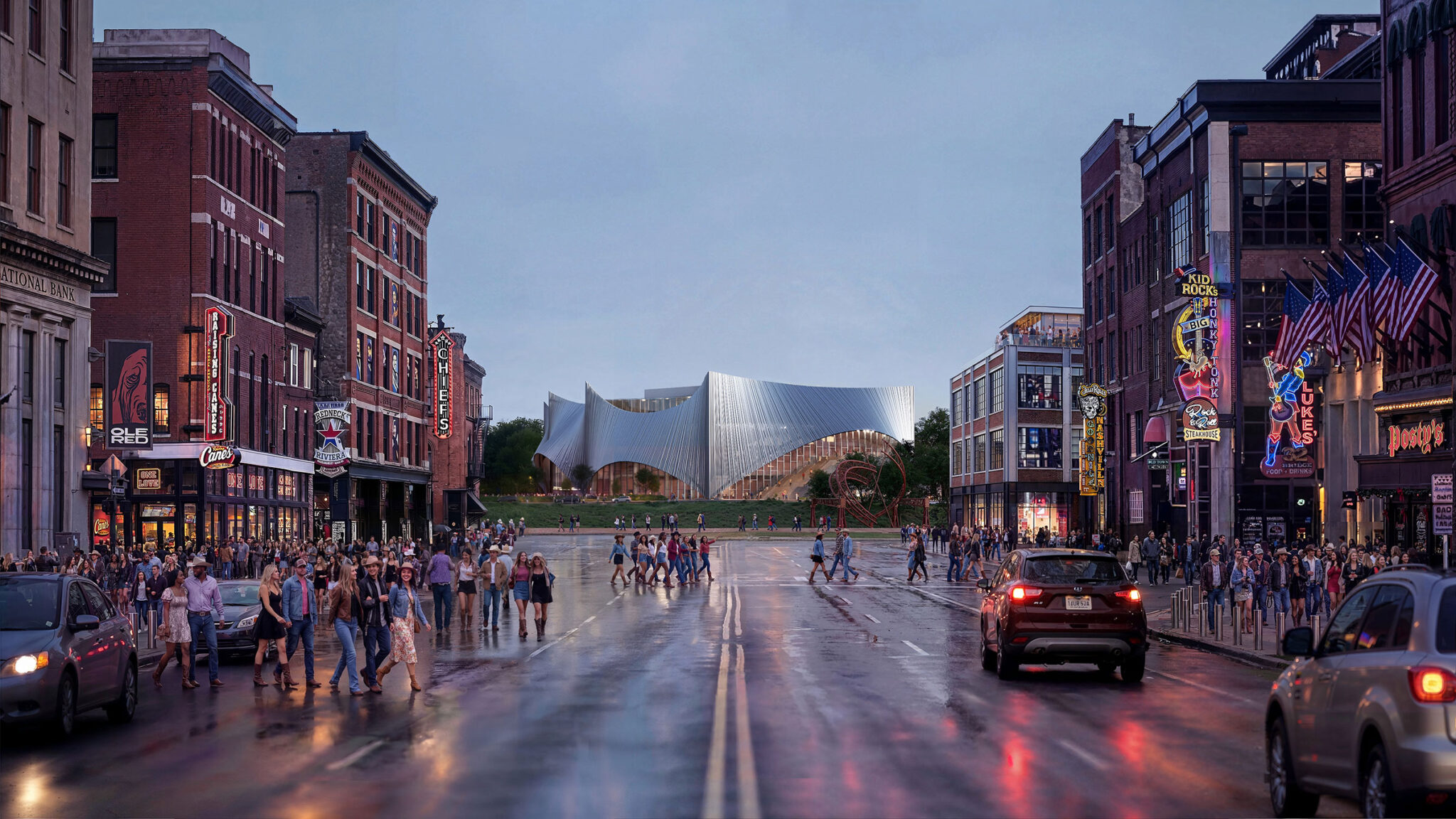
“The new home for the Tennessee Performing Arts Center is designed like an urban and cultural connection – between the east and west bank of the Cumberland River, between the old and the new Nashville, and between all of the performing arts. Visually, it bookends Broadway as a beacon from across the river, drawing the cultural life of downtown across to the East Bank. Designed to be welcoming on all sides, the center is accessible from above and below the bridge, making the lobby a cascading public space for the daily life of the neighborhood. The facade is composed of aluminum tubes bundled like organ pipes or steel chimes, undulating from vertical to horizontal to provide openings and canopies for the audience and performers passing through. The result is like a flowing public pavilion in the park that, as the new home for TPAC, provides the inclusive and inviting character that its program and performances deserve.” – Bjarke Ingels, Founder & Creative Director, BIG
TPAC’s reflective metal facade, composed of an array of aluminum tubes, creates a dynamic, sculptural volume that looks different from every vantage point in the city. Taking cues from an undulating theater curtain, the arches on the exterior lift to reveal the activity within.
Upon arrival, guests are welcomed by a light-filled atrium that draws the energy of the city inside. Two lobbies connect the performance spaces: the main lobby at street-level with views of the river and proposed waterfront park, and an elevated lobby fronting the landmark John Seigenthaler Pedestrian Bridge. A grand staircase, central lounge, and cascading concrete slabs invite patrons to congregate before, after, and in between performances – reinforcing TPAC’s role as a social gathering place within Nashville.
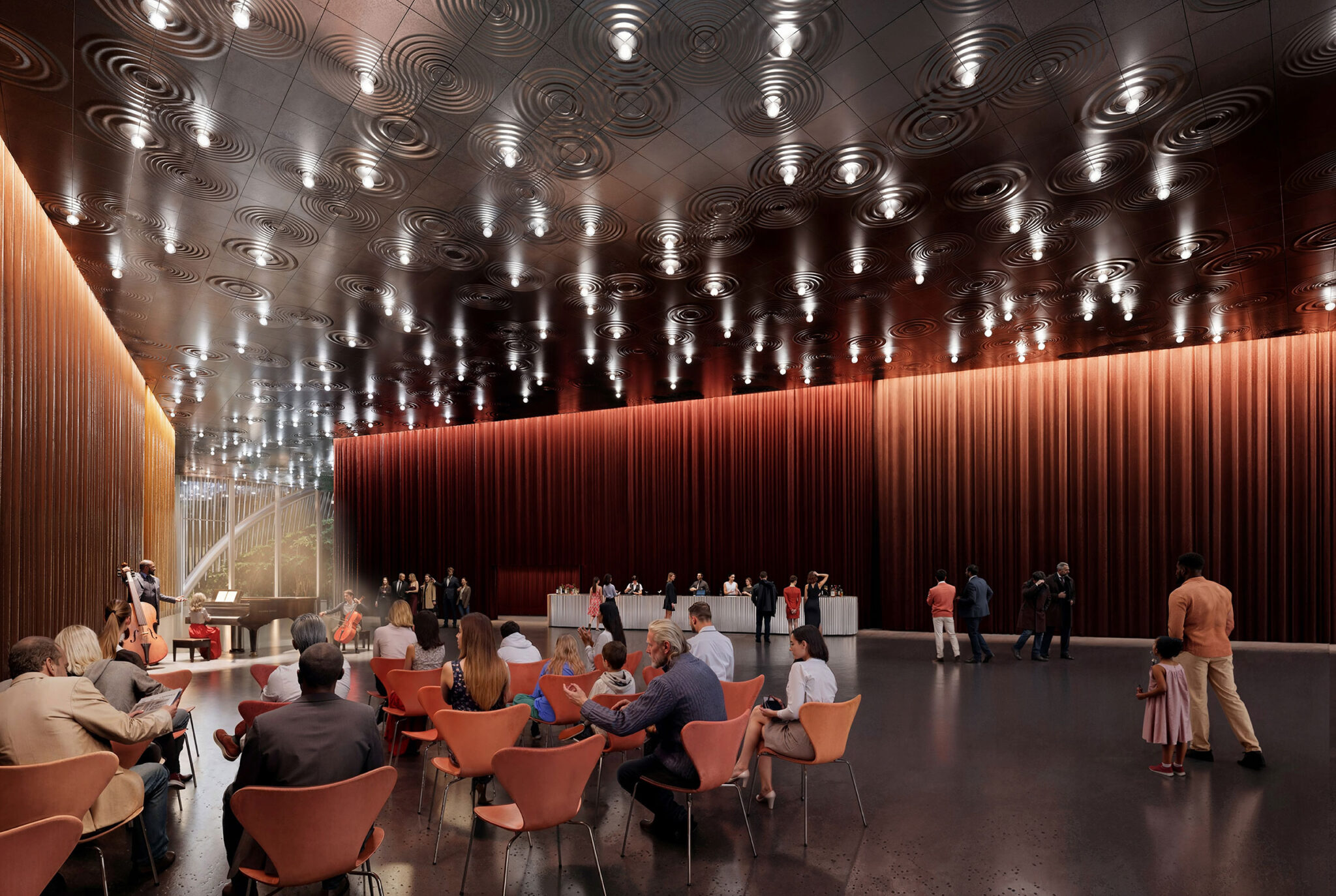
Within the Broadway Theater, floating wood-clad ‘trays’ organize the seating into intimate clusters, each staggered in height for optimized sightlines. The opera and dance hall is designed to enhance the views of the dancers’ feet, while the balconies reinforce a visual continuity with the stage. The Black Box Theater places the audience directly in the performance, eliminating the proscenium ‘picture frame’ that traditionally outlines the stage and allowing for different seating configurations tailored to each production. The Cabaret features a stage that extends into the audience, creating an intimate atmosphere complemented by banquet-style seating.
“At the heart of TPAC’s new home, four venues will create uniquely memorable theatrical experiences, celebrating the ‘vibrancy of theater in Music City.’ Each venue expresses its own personality while heightening audience experience and connection – an intimacy between performer and audience and a sense community among audiences of all ages.” – Cliff Gayley, Design Principal, WRA
A transparent rehearsal space offers visitors a glimpse behind the scenes, while a sensory room offers a calming environment during performances. Crowning the building, a roof terrace features sweeping views of Broadway, the Cumberland River, and the Nashville skyline.
Outdoor staircases connect TPAC to the river, integrating the center into Nashville’s new East Bank district and enhancing connectivity with the city beyond. Landscape design by OLIN surrounds the building with diverse plant life and pockets for public outdoor performances, gathering spaces, and play groves.
“While typical performing arts centers have a clearly defined front and back, the site conditions of TPAC offer a unique opportunity to hide the back-of-house under the bridge, allowing the public space to surround the building on all sides. The dual entrances and wrap-around lobbies activate the entire perimeter – from ground level to bridge level – connecting audiences to the venue’s surroundings.
The halls are designed to accommodate a range of performances, with cascading mezzanines that connect the orchestra level to the balcony levels above. The central lobby will continuously pulse with energy, uniting patrons from different performances before and after each show.” – Thomas Christoffersen, Partner, BIG
TPAC will join BIG’s growing portfolio of cultural projects, including the Hamburg State Opera, the Suzhou Museum of Contemporary Art in China, and the VLTAVA Philharmonic in Prague. Construction is expected to begin in 2027, with a projected opening in 2030.
■建築概要
PROJECT FACTS
Size: 307,000 sq ft
Location: Nashville, Tennessee, United States
Client: Tennessee Performing Arts Center
Collaborators: William Rawn Associates, HASTINGS Architecture, Apeiro Design, TYLin, Altieri, Jaffe Holden, Kimley-Horn, Front, Thornton Tomasetti, VDA, Code Consultants, Inc., Tillotson Design Associates, Inman Foodservices Group, OLIN, L’Observatoire International, Atelier Ten, Venue Consulting
───
BIG TEAM
Partners-in-Charge: Bjarke Ingels, Thomas Christoffersen, Beat Schenk
Project Manager: Linus Saavedra
Project Designer: Kristian Hindsberg
Technical Lead: Julie Kaufman
Team: Ana Loayza, Cheng Zhong, Chia-Yu Liu, Dylan Hames, Hector Romero, Jan Leenknegt, Jialin Yuan, Marc Hargreaves, Margaret Tyrpa, Pooja Annamaneni, Sung-hwan Um, Tara Abedinitafreshi, Vi Madrazo, Ben Caldwell, San Yoon, Jihoon Kim, Joanne Zheng, Jeff Tao, Jaeho Park, Siqi Zhang, Ruijing Sun, Alvaro Velosa, Douglass Alligood, Ryan Henriksen, Ahmad Tabbakh, Hudson Parris, Quentin Wiesmath, Paul Heberle, Atousa Esmaeili, Mana Ikebe, Abdallah Kamel, Xiaoqi Zhan, Gavin Laughland
───
WRA TEAM
Partners-in-Charge: Cliff Gayley, Kevin Bergeron
Project Manager: Lauren Perry
Team: Amir Zarei, Juno Zhu, Molly Bennett, Dan Bielenin, Evan Warder, Henry Chung, Brian Putnam, Andy Jonic, Josue Perez Campos, Liz Bondaryk, Ali Truwit, Colleen DeMatta, Julia Solecki