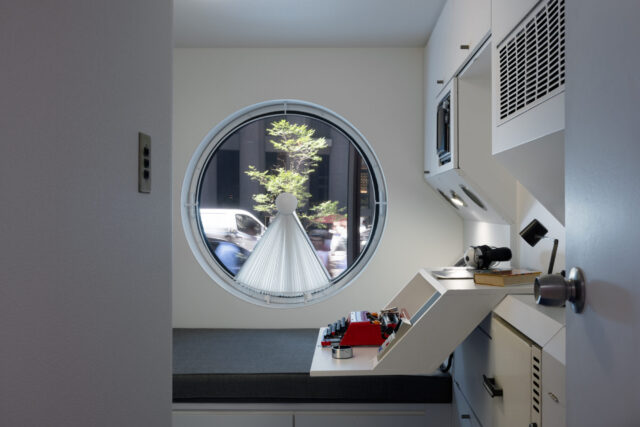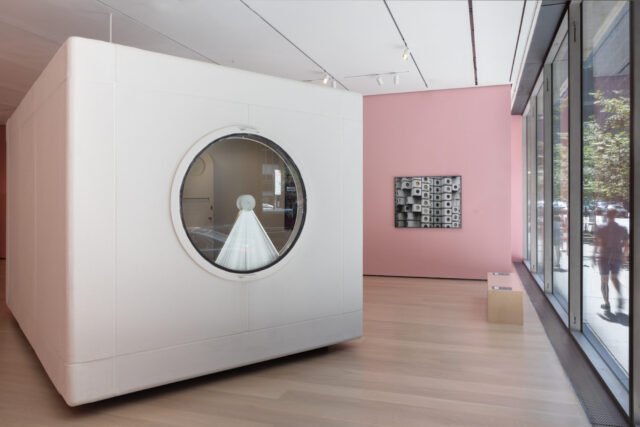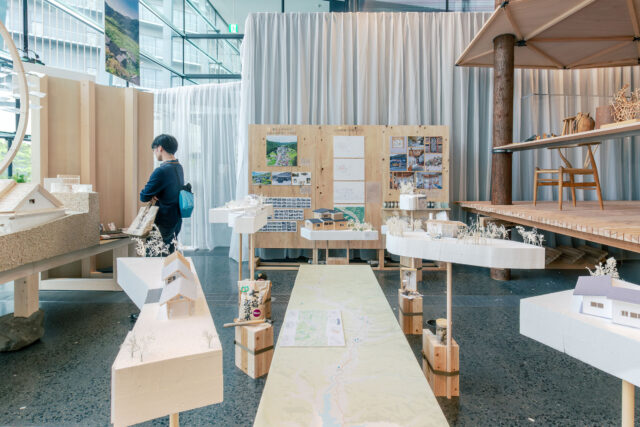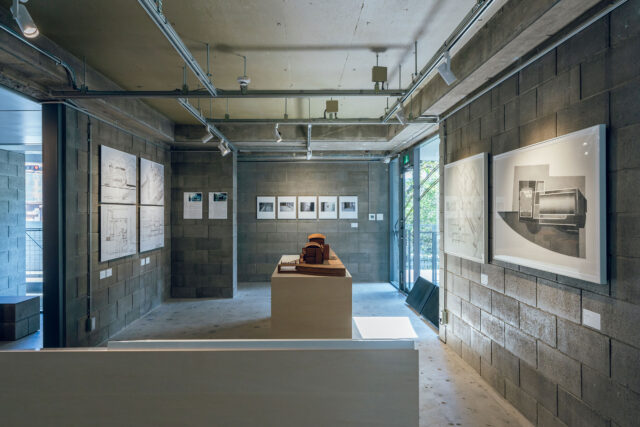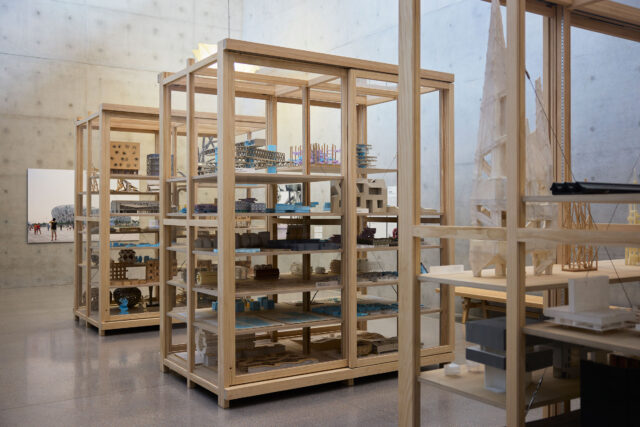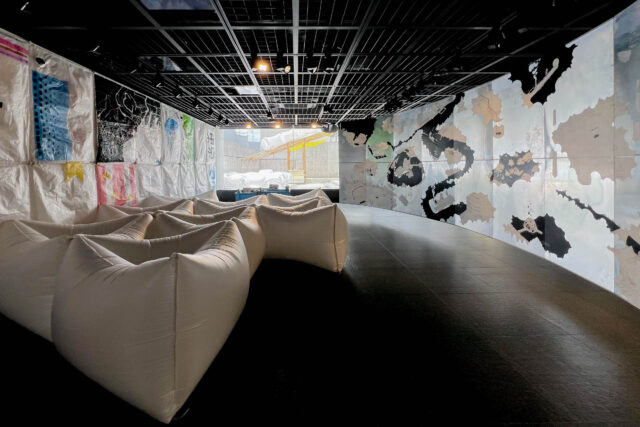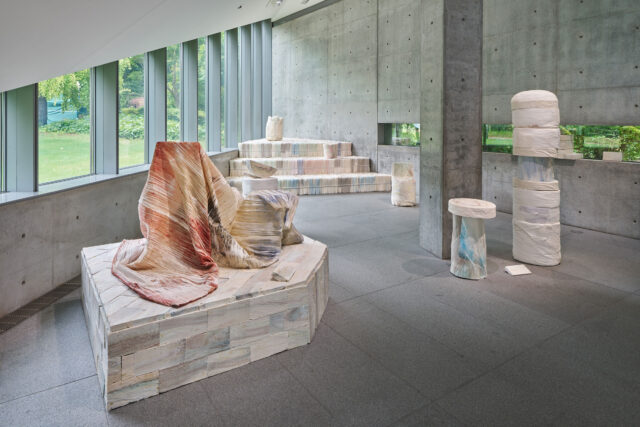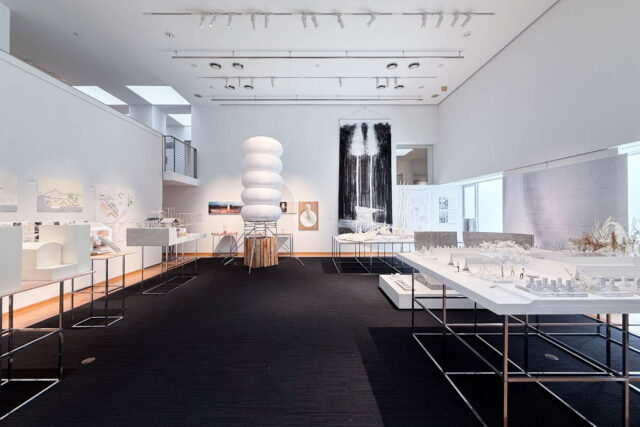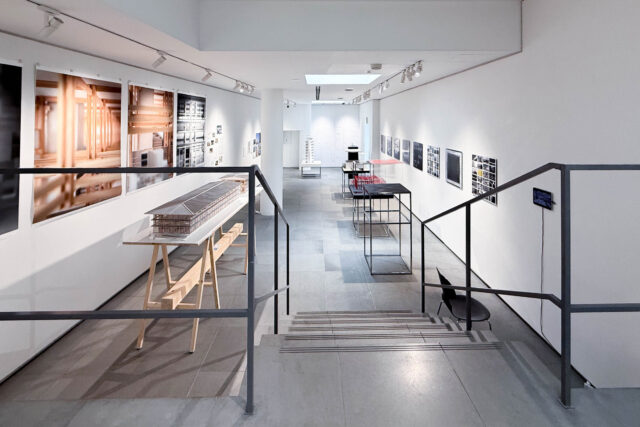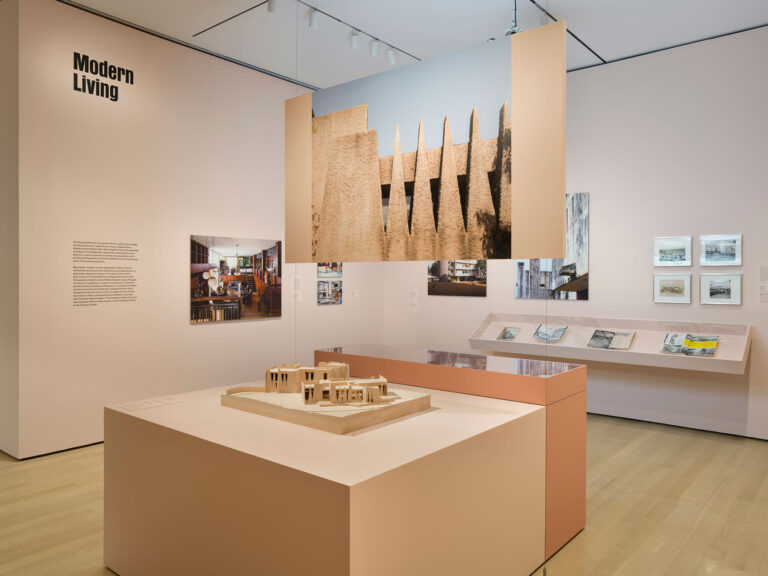
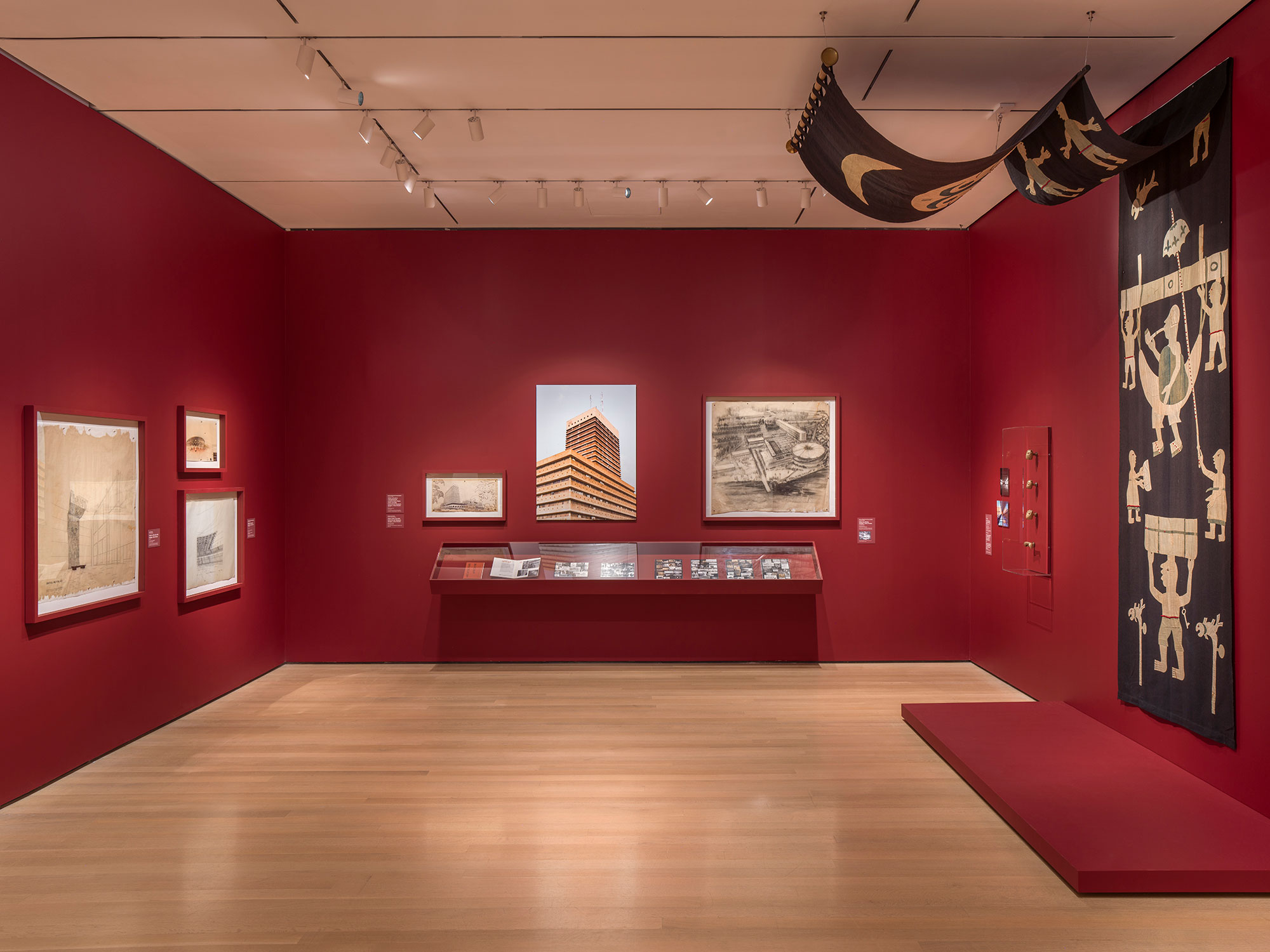
SHARE MoMAでの展覧会「解放の建築家たち:西アフリカのモダニズム」の会場写真。大陸西側7か国の独立期の近代建築を検証する展示。文化・経済・気候などの条件に対して、“モダニズムの表現様式”を適応・導入・再創造を試みた“建築言語”を明確に示す。当時の政治的理念との関係にも注目する

MoMA(ニューヨーク近代美術館)での展覧会「解放の建築家たち:西アフリカのモダニズム(Architects of Liberation: Modernism in Western Africa)」の会場写真です。
大陸西側7か国の独立期の近代建築を検証する展示です。建築家たちが、文化・経済・気候などの条件に対して、“モダニズムの表現様式”を適応・導入・再創造を試みた“建築言語”を明確に示す内容です。また、当時の政治的理念との関係にも注目しています。
会期は、2027年1月2日まで。展覧会の公式ページはこちら。
こちらはリリーステキストの一部です(翻訳:アーキテクチャーフォト / 原文は末尾に掲載)
解放の建築家たち:西アフリカのモダニズムが開幕
本展は、ベナン、カメルーン、コートジボワール、ガーナ、ナイジェリア、セネガル、トーゴの独立期における近代建築と民族自決の理念との関係を検証する初のものとなります。
ニューヨーク近代美術館は、同地域の政治的独立という文脈の中で、1950年代後半から1980年代初頭までの近代建築を検証する初の大規模展覧会「解放の建築家たち:西アフリカのモダニズム」を開催します。2026年7月5日から2027年1月2日まで、美術館3階のロバート・B・メンシェル・ギャラリーで公開される本展は、独立期を建築が盛んに生み出された時代として取り上げます。この時期、新たに成立したアフリカ諸国の指導者たちは、植民地支配との対比の中で、自らと自国を再定義しようとしました。この新たな建築的アイデンティティは、新たな指導者や政府によって推進された、パン・アフリカ主義やアフリカ化という、より広範な政治的理念と深く関わっていました。ベナン、カメルーン、コートジボワール、ガーナ、ナイジェリア、セネガル、トーゴの7カ国にまたがる本展は、都市景観、教育、住宅といったカテゴリーへの入り口となる主要なプロジェクトを軸に構成されます。本展では、専門的な教育を受けたアフリカ人建築家の第一世代による重要な貢献に、特に注目します。「解放の建築家たち」は、フィリップ・ジョンソン建築・デザイン部門主任キュレーターのマルティノ・スティエルリ(Martino Stierli)と、ゲスト・キュレーターでデラウェア大学准教授のイケム・スタンリー・オコエ(Ikem Stanley Okoye)が企画し、建築・デザイン部門キュラトリアル・アソシエイトのマロリー・コーエン(Mallory Cohen)が加わります。
「解放の建築家たち」では、17カ国の50を超える貸出元のコレクションから、建築図面、模型、アーカイブ写真など、約450点の作品・資料を取り上げます。本展は、この地域における4年間にわたる広範な調査の成果です。展示される品々の大半は、これまで公に紹介されたことがなく、また、本展に含まれる建築家のほとんども、これまでいかなる展覧会や学術出版物でも取り上げられたことがありません。本展には、オリジナルの建築模型や委託制作された建築模型に加え、一連の新作映像と委託制作された写真も含まれます。
「数年にわたる集中的な調査期間を経て、『解放の建築家たち』を皆様にご紹介できることを大変うれしく思います」と、フィリップ・ジョンソン建築・デザイン部門主任キュレーターのマルティノ・スティエルリは述べています。「我々の展覧会は、20世紀半ばのアフリカ史における、重要でありながら十分に検証されてこなかった時期に光を当て、アフリカ大陸に新たな視点をもたらします。独立期に制作された見事な建築作品は、デザインの革新と楽観主義の類まれな時期を物語る証しです」
アフリカ大陸の17カ国が植民地支配者から政治的独立を果たした1960年の「アフリカの年」に最高潮に達したアフリカ独立運動を受け、新たに成立した国民国家は、芸術、音楽、舞踊、文学における新たな文化的覚醒と密接に結びついた重要な問題に直面しました。本展では、「西アフリカ」という用語を広義に用い、セネガルからギニア湾東端まで広がる広大な沿岸地域を指します。これらの各国が共有する問題や関心事に光を当てることで、「解放の建築家たち」は、特定の文化的、政治的、経済的目的や特有の気候条件に合わせて、モダニズムの表現様式を適応させ、取り入れ、あるいは再創造しようとした、自己決定の建築言語を明確に示します。
会場風景
以下の写真はクリックで拡大します
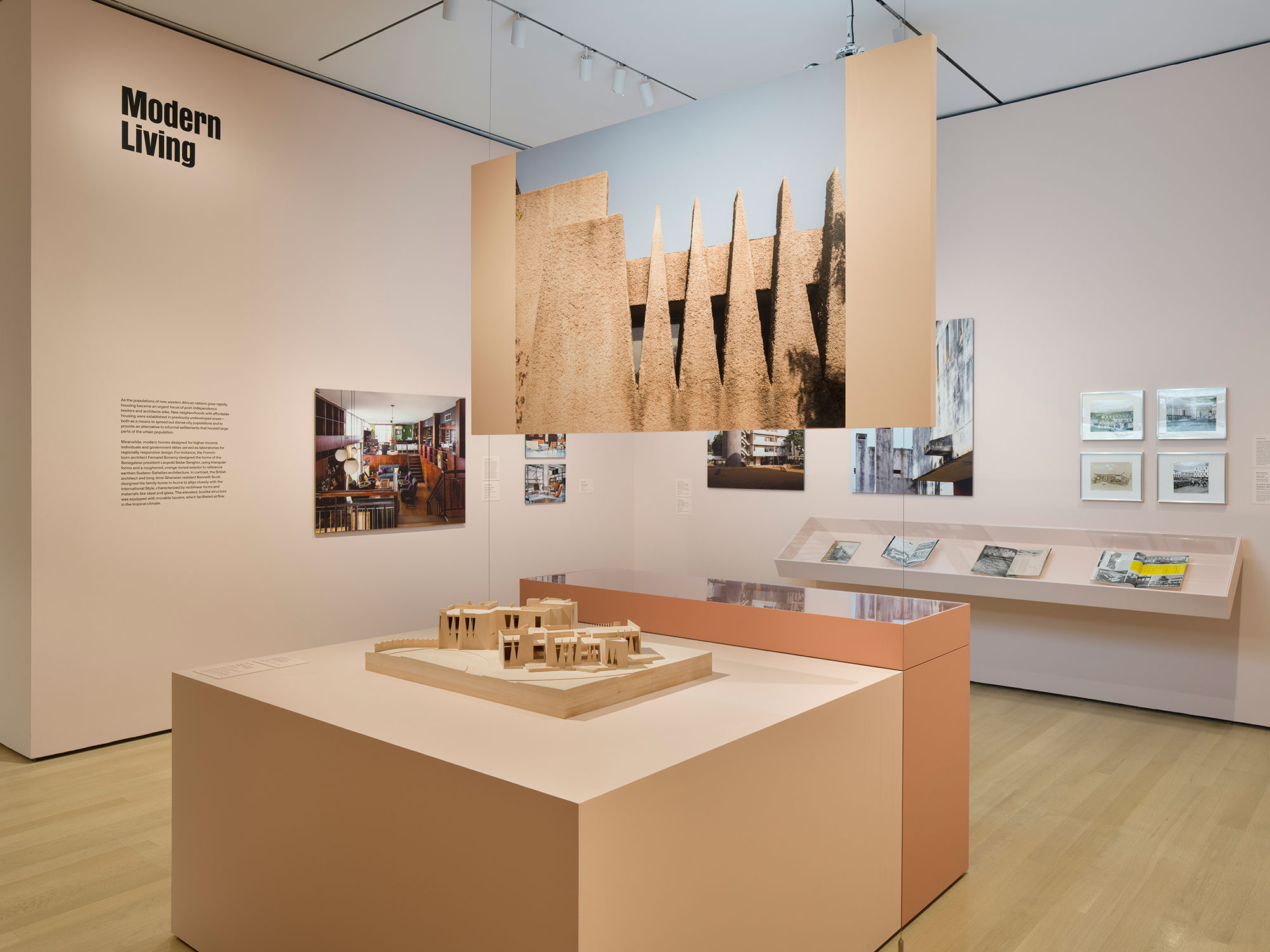
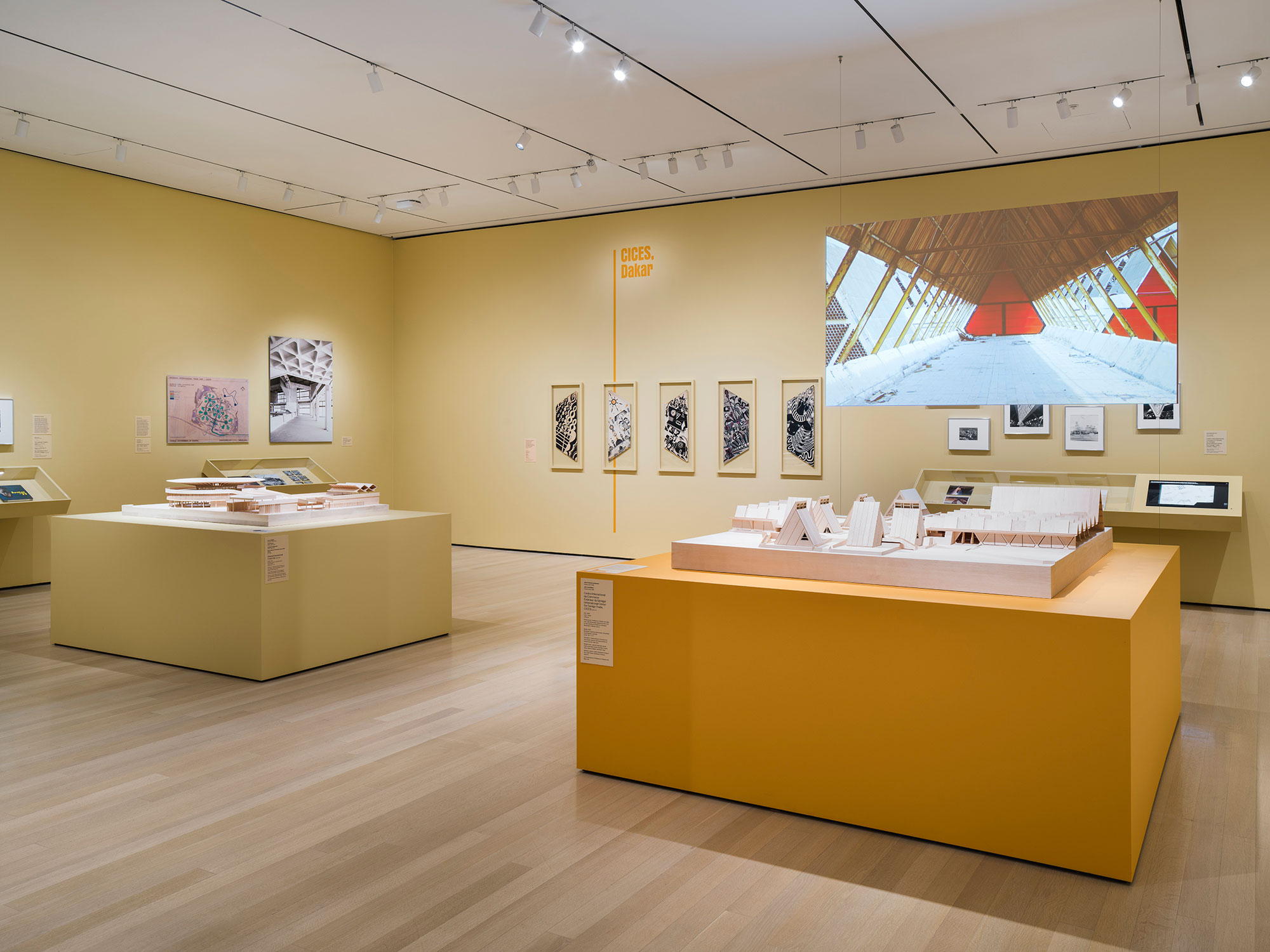
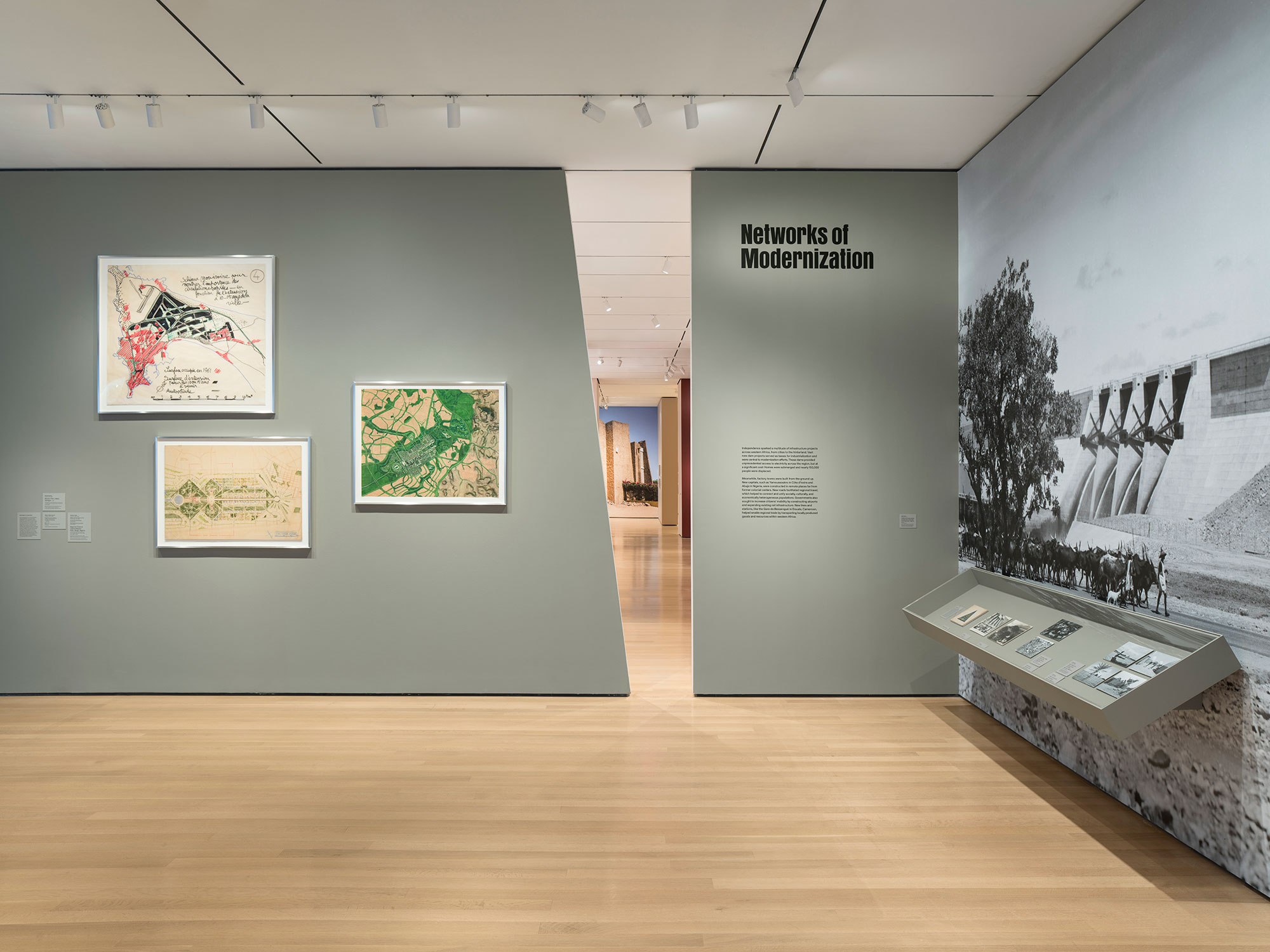
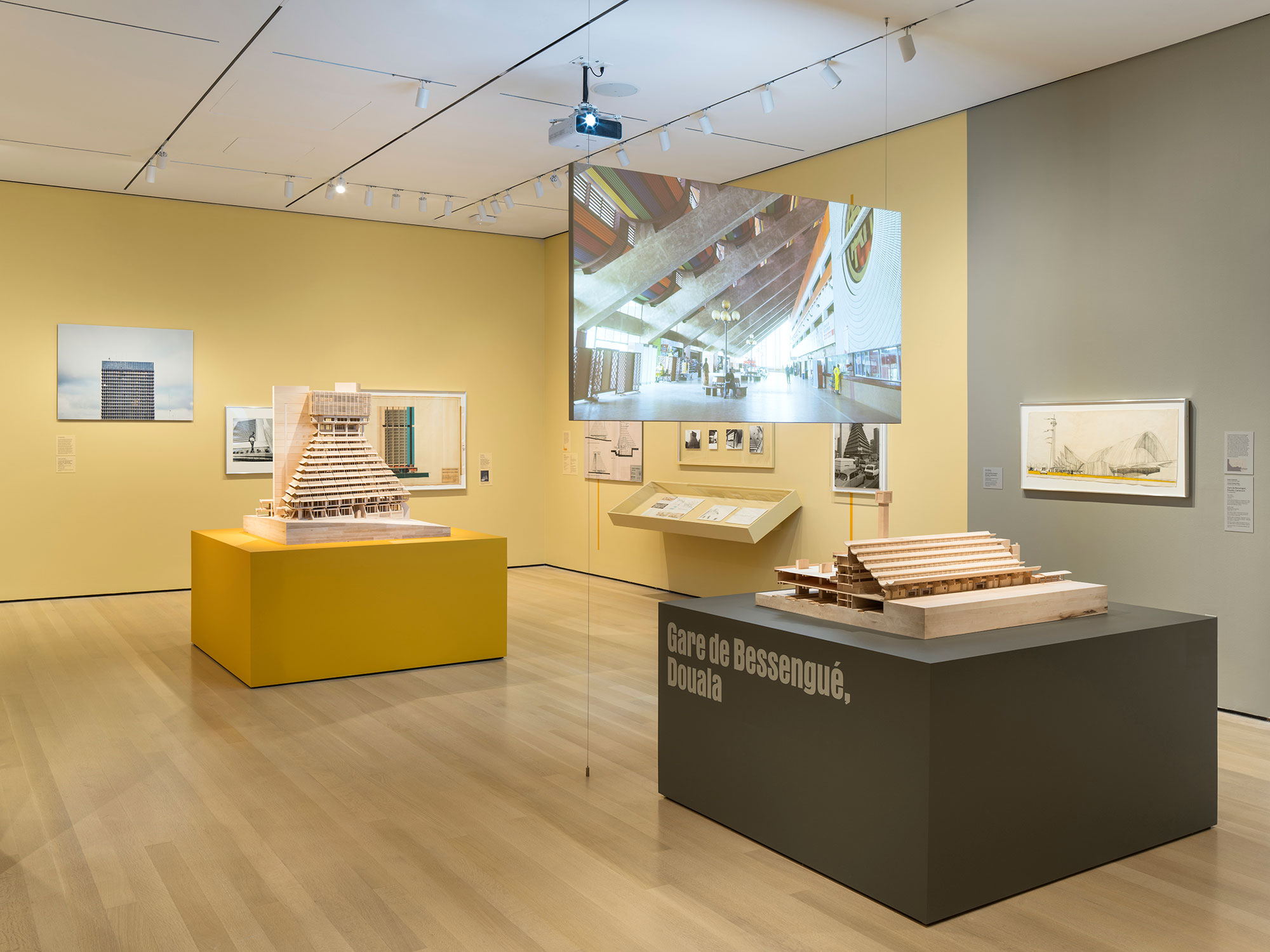
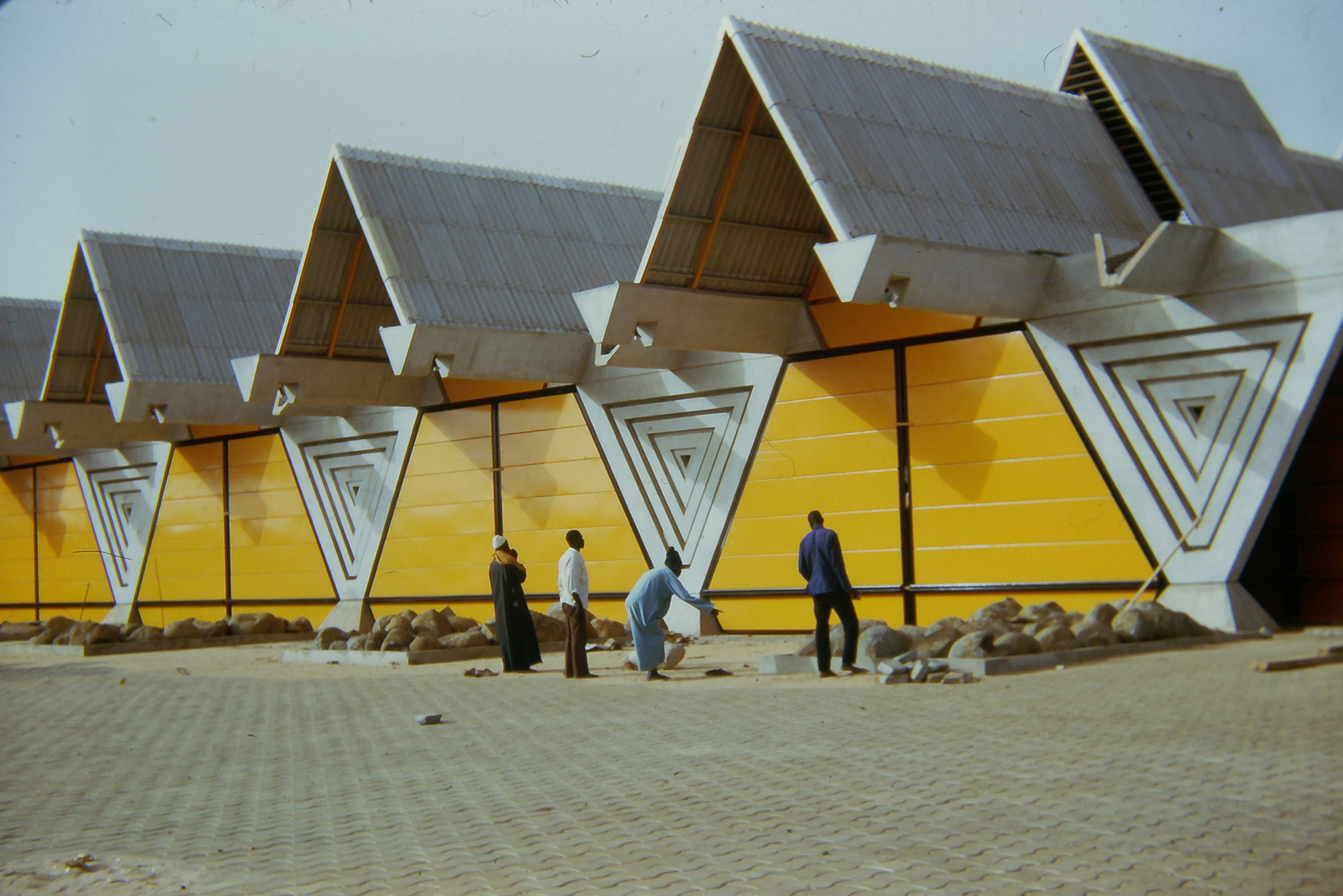
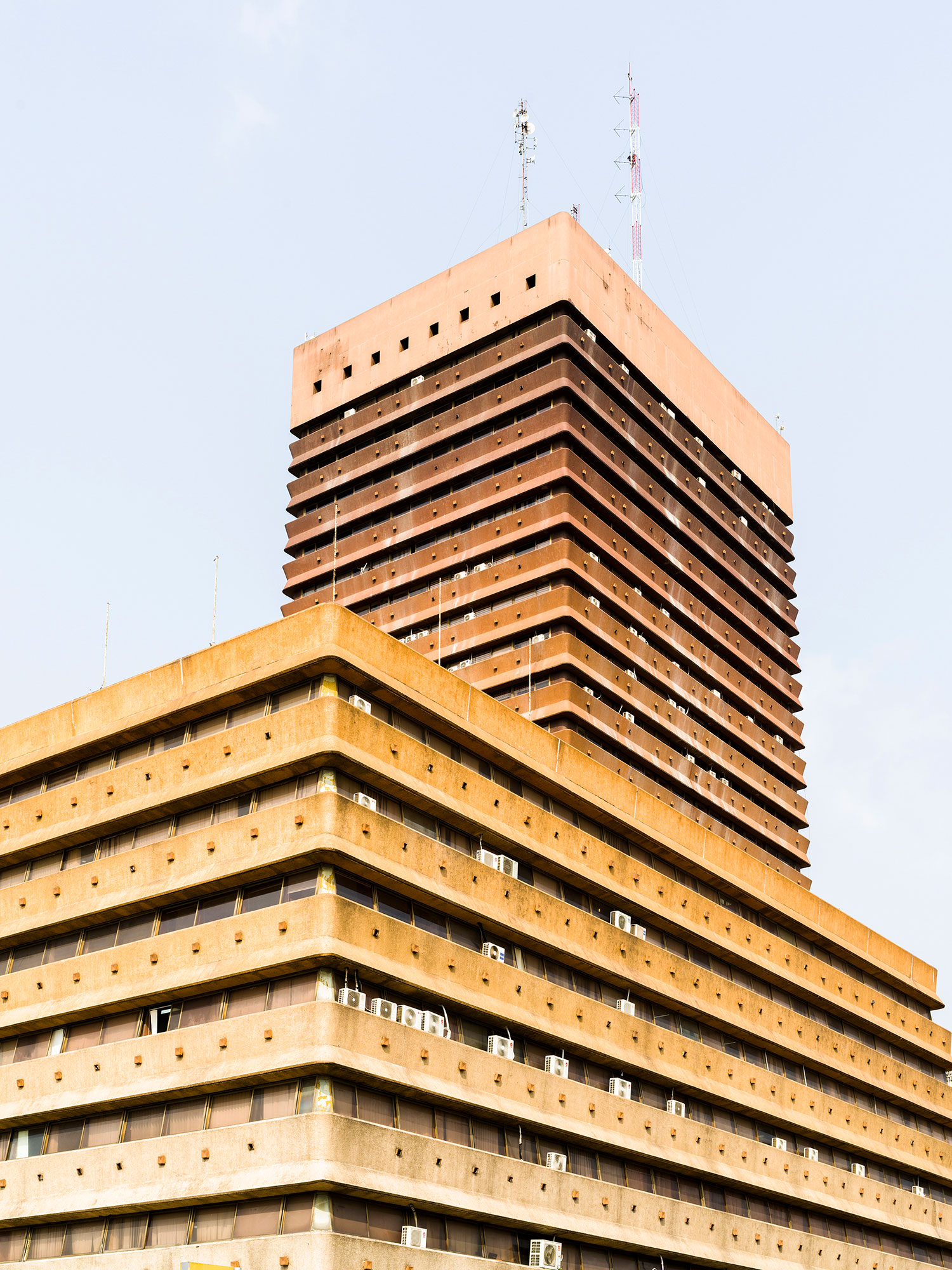
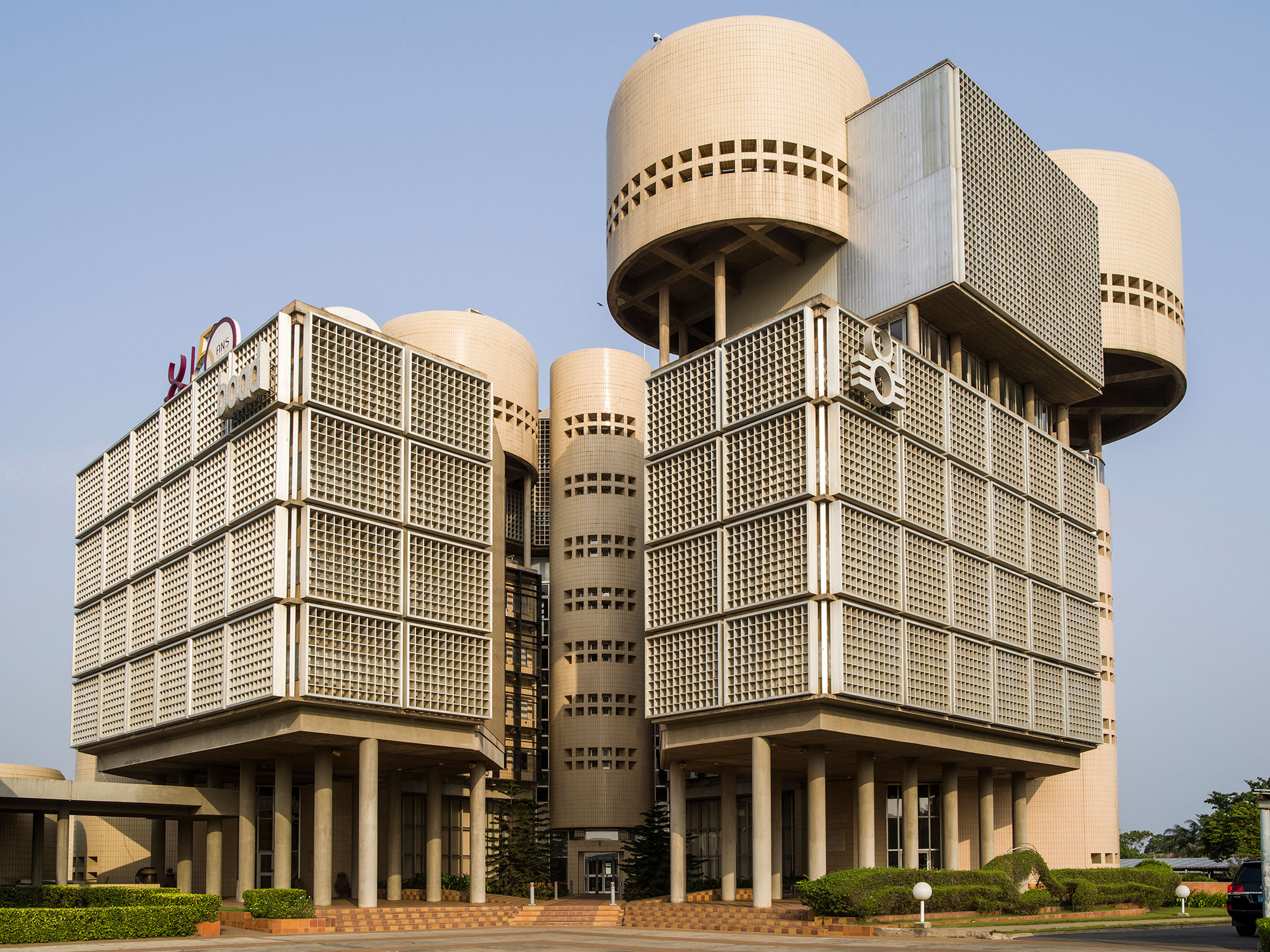
展覧会で紹介されている建築の一部
以下の写真はクリックで拡大します
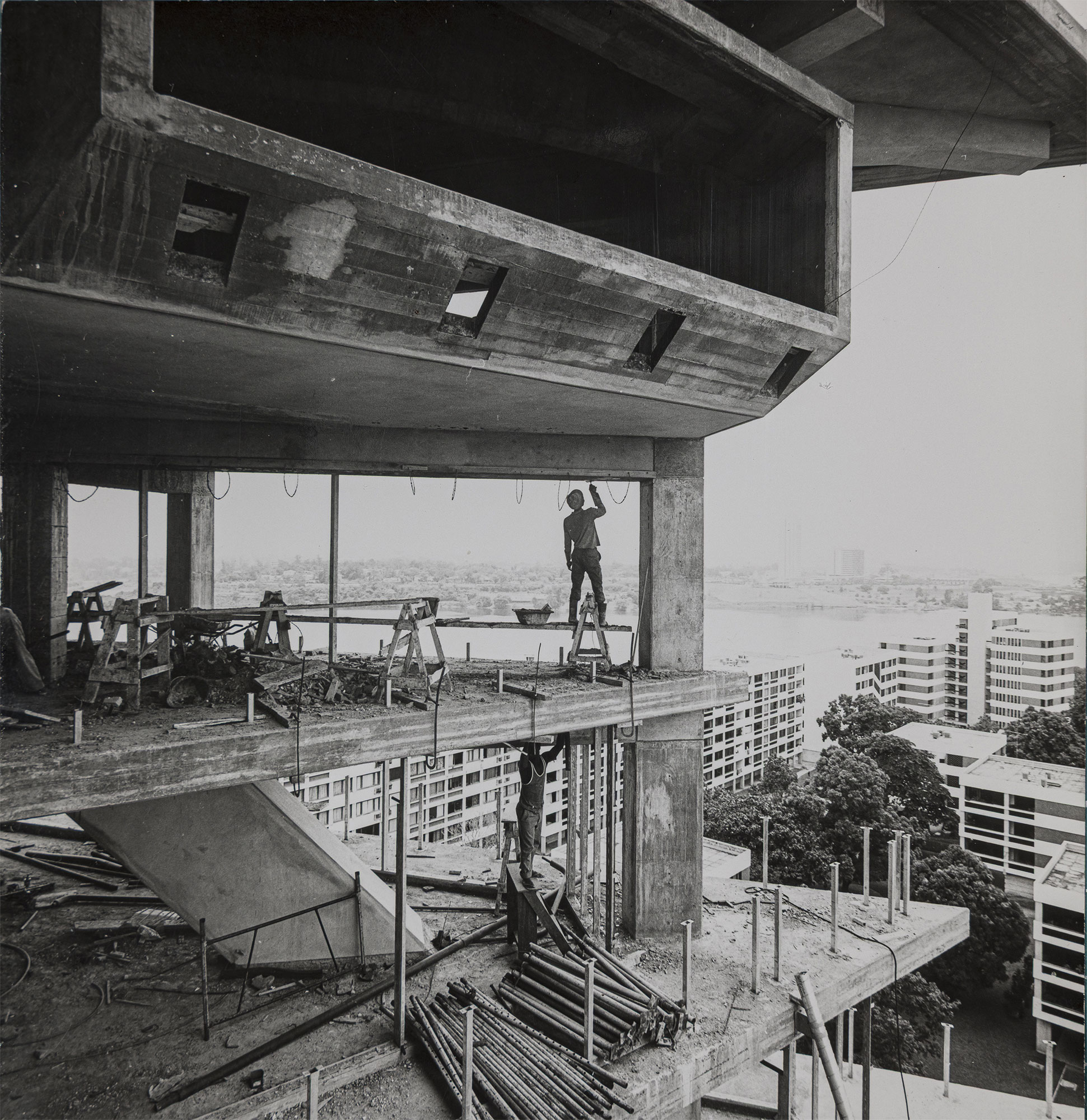
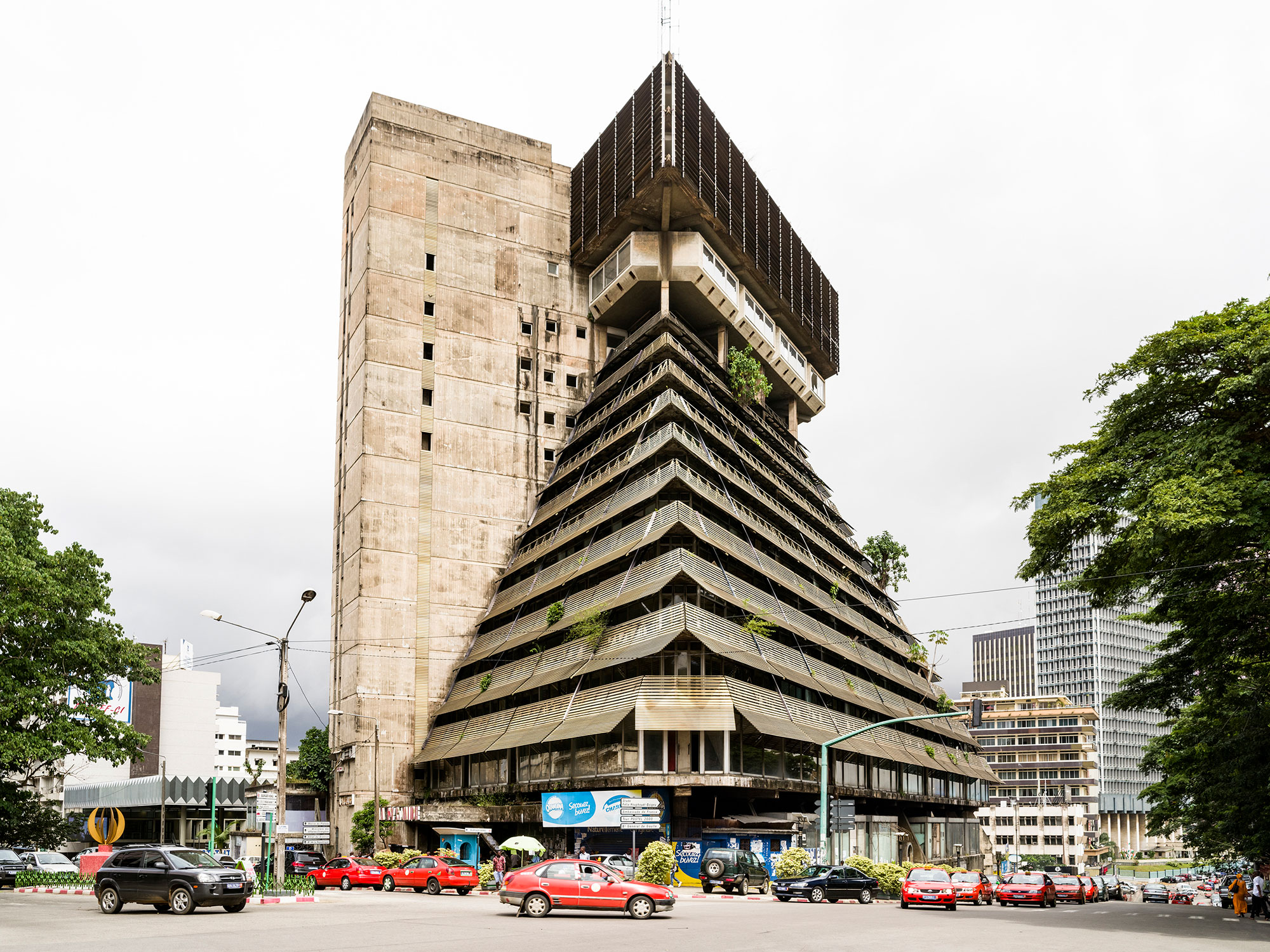
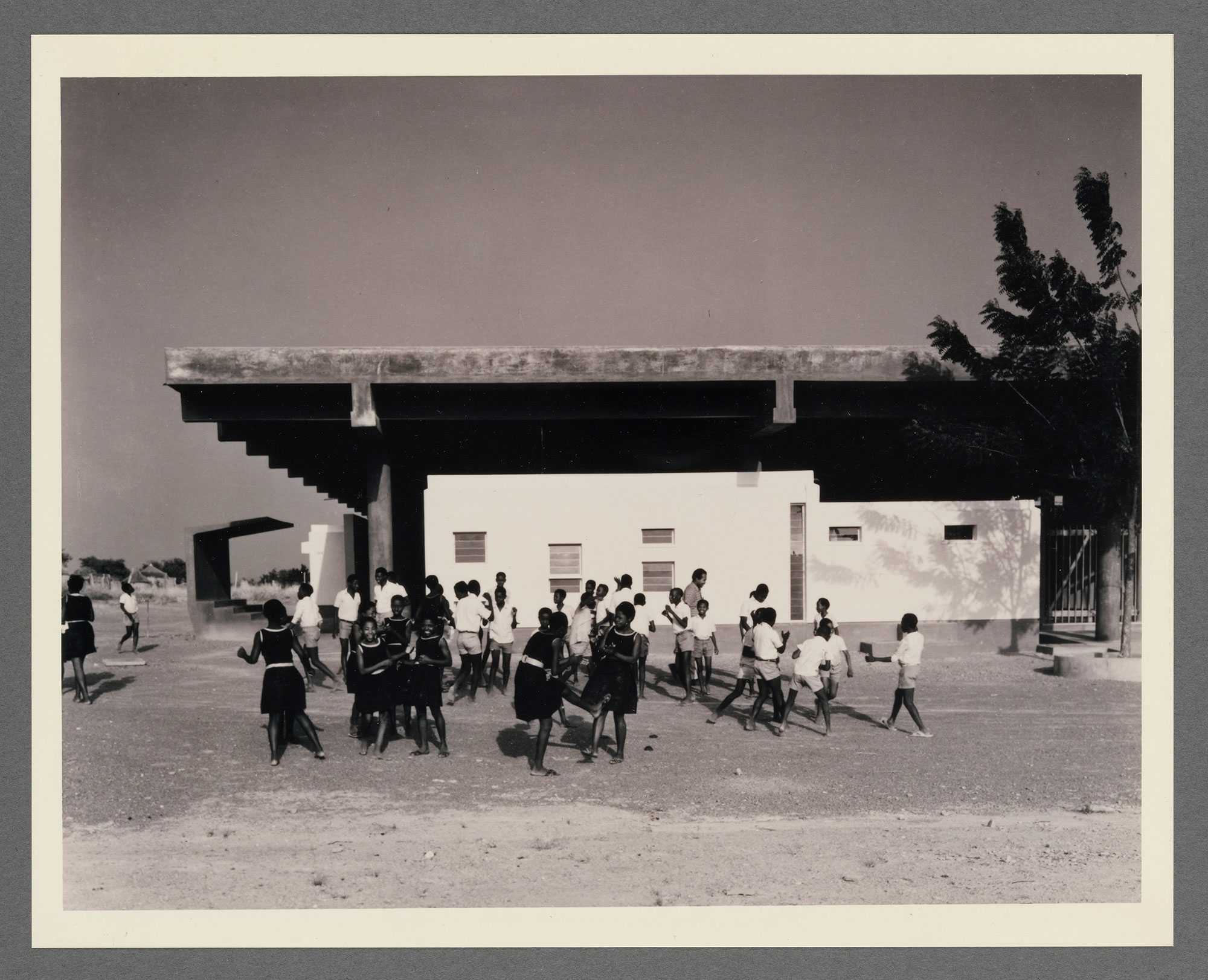
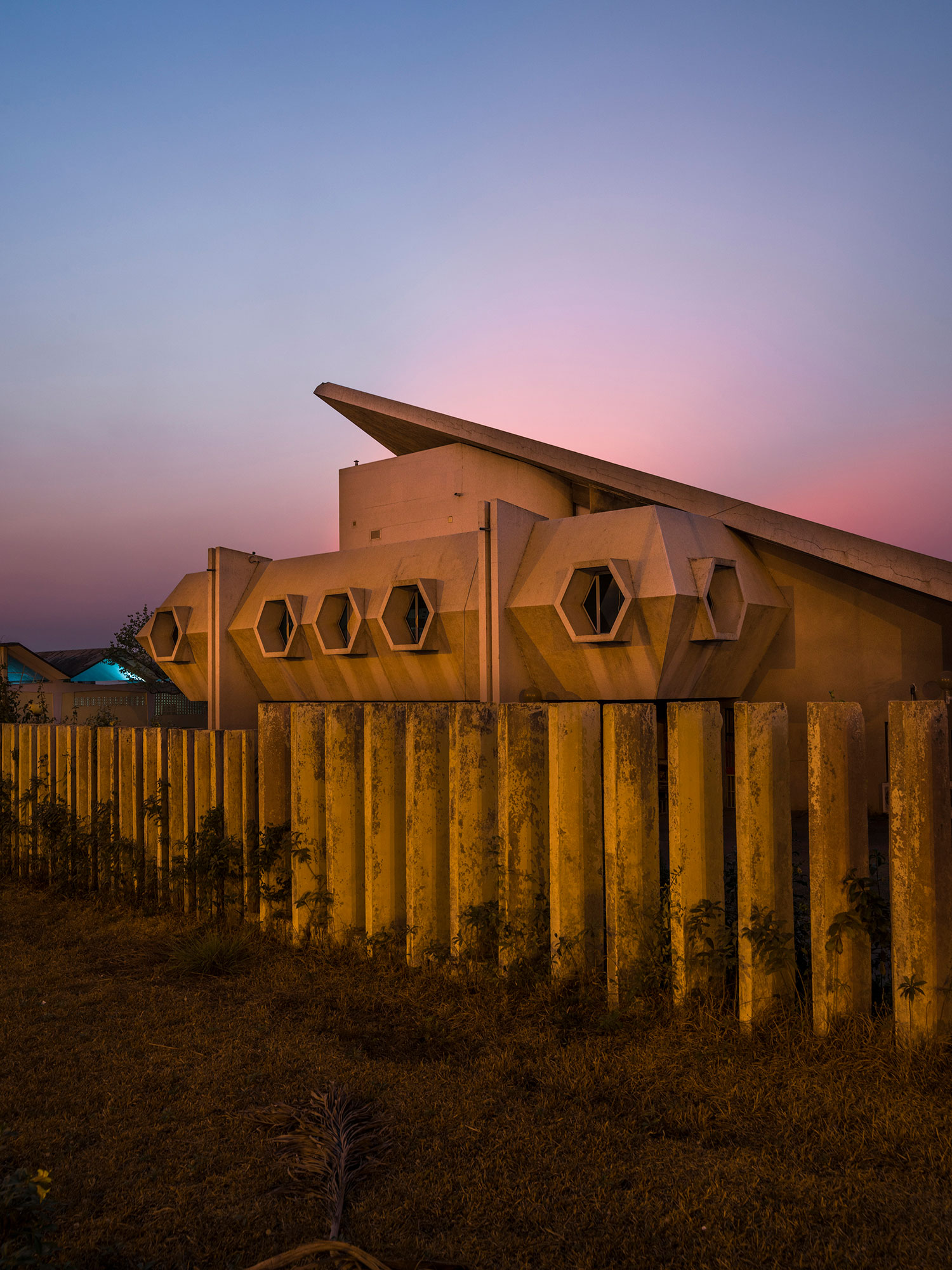
展覧会で取り上げている建築を紹介する公式動画
以下、リリーステキストです。
ARCHITECTS OF LIBERATION: MODERNISM IN WESTERN AFRICA TO OPEN AT
MoMA ON JULY 5, 2026
The Exhibition Will Be the First to Examine the Relationship Between Modern Architecture and Agendas of Self-Determination During the Independence Era in Benin, Cameroon, Cote d’Ivoire, Ghana, Nigeria, Senegal, and Togo
NEW YORK, February 5, 2026— The Museum of Modern Art will present Architects of Liberation: Modernism in Western Africa, the first major exhibition to examine modern architecture from the late 1950s through the early 1980s in the context of political independence in the region. On view from July 5, 2026, through January 2, 2027, in the The Robert B. Menschel Galleries on the Museum’s third floor, the exhibition will highlight the independence period as a prolific time of architectural production, during which leaders of newly founded African nations sought to redefine themselves and their countries in contrast to colonial rule. This new architectural identity engaged deeply with broader political ideas of Pan-Africanism and Africanization, which were promoted by new leaders and governments. Spanning seven countries—Benin, Cameroon, Cote d’Ivoire, Ghana, Nigeria, Senegal, and Togo—the show will be organized around anchor projects that serve as entry points into categories such as cityscapes, education, and housing. The exhibition will pay particular attention to the critical contributions of the first generation of trained African architects. Architects of Liberation is organized by Martino Stierli, The Philip Johnson Chief Curator of Architecture and Design, and Ikem Stanley Okoye, guest curator and associate professor at the University of Delaware; with Mallory Cohen, curatorial associate in the Department of Architecture and Design.
Architects of Liberation will feature approximately 450 objects, including architectural drawings, models, and archival photographs, from the collections of over 50 lenders from 17 countries. The exhibition is the result of four years of extensive research in the region. The vast majority of the objects that will be on display have never been presented publicly, and most of the architects included have never previously been featured in any exhibition or scholarly publication. The exhibition will also include original and commissioned architectural models, as well as a suite of new films and commissioned photographs.
“I am thrilled to present Architects of Liberation to our audiences after an intense multi-year research period,” said Martino Stierli, The Philip Johnson Chief Curator of Architecture and Design. “Our exhibition will shed light on a crucial, under-examined period of African history at mid-century, providing a new perspective on the continent. The stunning works of architecture produced during the independence period are testaments to an extraordinary moment of design innovation and optimism.”
Following the African independence movements that culminated in the “Year of Africa” in 1960—when 17 countries across the continent gained political independence from their colonial rulers—newly established nation-states faced key questions that went hand-in-hand with a new cultural awakening in art, music, dance, and literature. The exhibition applies the term “western Africa” loosely to designate the broad coastal region spanning from Senegal to the eastern reaches of the Gulf of Guinea. By shedding light on the shared issues and concerns in each of these countries, Architects of Liberation articulates an architectural language of self-determination that sought to adapt, adopt, or reinvent the idiom of modernism for specific cultural, political, and economic purposes and to particular climatic conditions.
Key works that will be featured include:
・Africa Pavilion, Accra Trade Fair (Ghana)
A circular pavilion symbolizing Ghanaian unity designed by Victor (Vic Adegbite, Jacek Chyrosz, and Stanislaw Rymaszewski), with the project led by the Ghana National Construction Corporation (GNCC) between 1962 and 1967
・The Pyramide (Cote d’Ivoire)
An iconic high-rise designed by Rinaldo Olivieri, completed in 1973, that reimagined the skyline of Abidjan, Cote d’Ivoire’s largest city
・CICES (Senegal)
A trade-fair campus designed by French architects Jean-Francois Lamoureux and Jean Louis Marin. CICES is emblematic of Senegalese President Leopold Senghor’s “asymmetrical parallelism,” which introduced diverse, non-repeating elements to create dynamic harmonies.
・Gare de Bessengue (Cameroon)
A train station designed by Jacques Nsangue Akwa and Emilien Douala Bell
・University of Ife (Nigeria)
An ambitious educational project with a master plan by Arieh Sharon
The exhibition will highlight a diverse group of practitioners, including Jean Leon (Cote d’Ivoire), Cheikh Ngom (Senegal), Demas Nwoko (Nigeria), John Owusu Addo (Ghana), and Vic Adegbite (Ghana). Architects included from outside the African continent include Zoran Bojovic (Yugoslavia), Rinaldo Olivieri (Italy), and Henri Chomette (France).
Full list of architects and artists featured in Architects of Liberation
John Owusu Addo, Victor (Vic) Adegbite, Raymond Aka Adjo, Jacques Nsangue Akwa, John Andrews, David Aradeon, Kader Attia, Babacar Ba, James Barnor, Seydou Barry, Willis E. Bell, Zoran Bojovic, Fernand Bonamy, J. Max Bond Jr., Robert Boy, Olivier-Clement Cacoub, Daniel Chenut, Henri Chomette, Jacek Chyrosz, Niksa Ciko, James Cubitt, Alpha Walid Diallo, Constantinos A. Doxiadis, Emilien Douala Bell, Jane Drew, Michel Ducharme, Guy Durand, Michel Ecochard, Augustine Akhuemokhan Egbor, Ousmane Faye, Yona Friedman, Edwin Maxwell Fry, R. Buckminster Fuller, Francois-Xavier Gbre, John Godwin, Heinz Fenchel, Messan Raphael Ekoue-Hagbonon, Konrad Helbig, Nick Hollo, Gillian Hopwood, Aylette Jenness, Paul Kodjo, Stefan Kolchev, JeanFrancois Lamoureux, Christian Larras, Jean Leon, Ousseynou Ly, John Seyton Kole MacGregor, Miro Marasovic, Jean Louis Marin, Philippe Menard, Jean-Pierre Minost, Mordechai Moneh, Riccardo Morandi, Pier Luigi Nervi, Marilyn Nance, Cheikh Ngom, Bernard Nivet, Demas Nwoko, Marcello D’Olivo, Elpidio Olympio, Rinaldo Olivieri, Claude Parent, Charles Polonyi, Henry Pottier, Stanislaw Rymaszewski, Armand Salomon, Kenneth Scott, Arieh Sharon, Hannah Shreckenbach, Thomas A. Todd, Alan Vaughan-Richards, Pedro Ramirez Vazquez, Gerhard Vetter, Carrie Mae Weems, Harry Weese