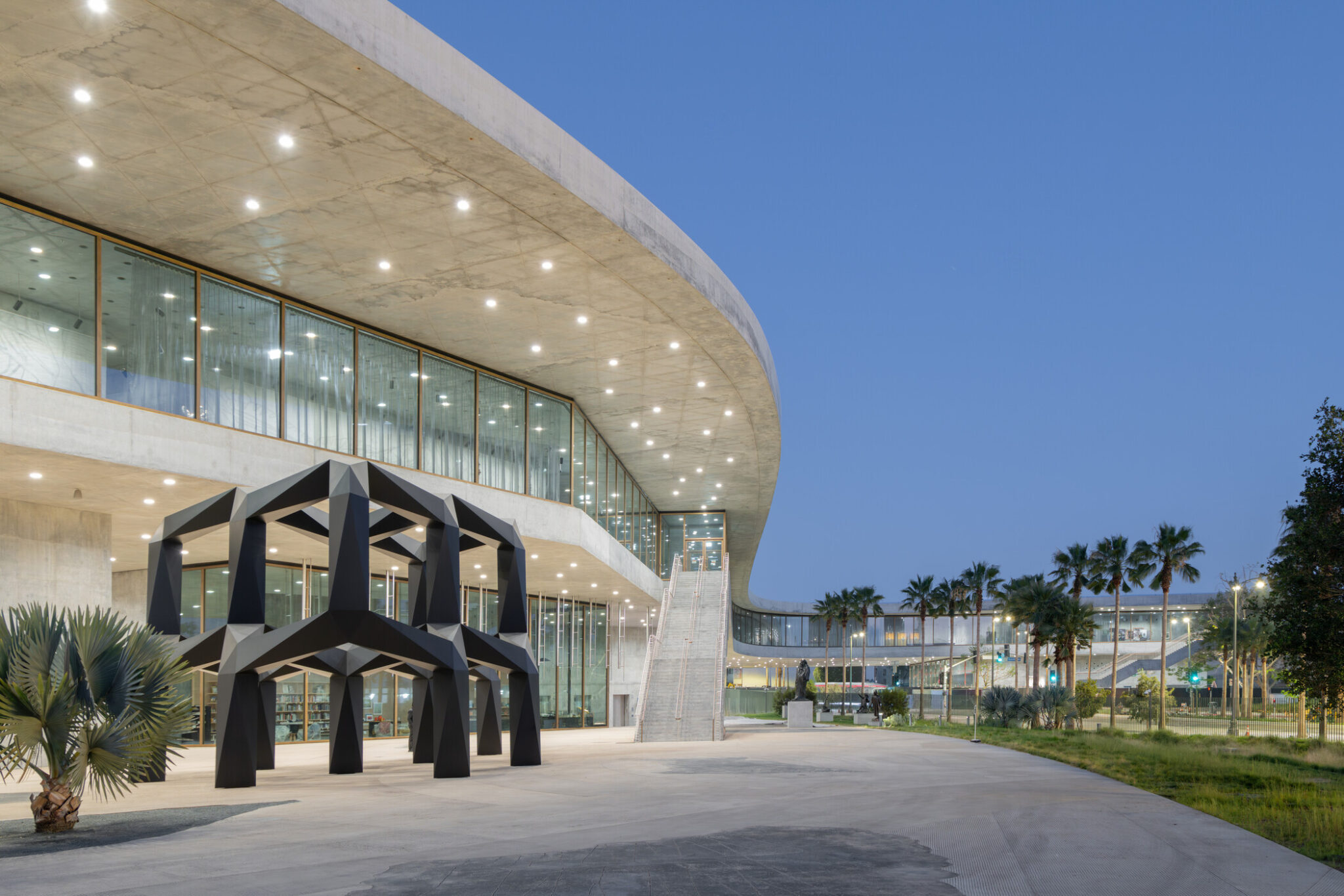
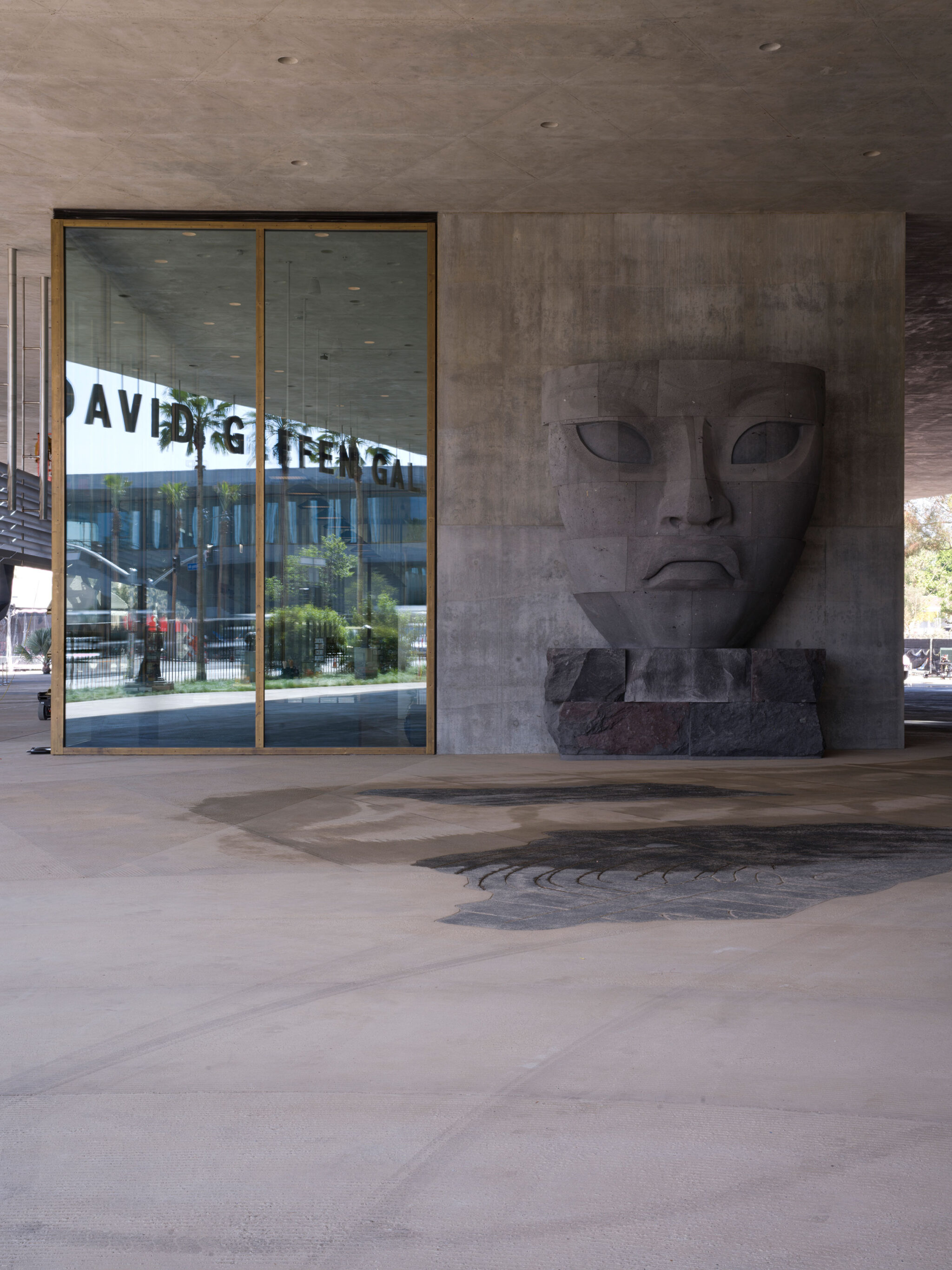
プラザに設置された追加の委嘱作品には、博物館のファサードを背景に据えられた高さ18フィート(約5.5メートル)のペドロ・レイエス(Pedro Reyes)作の石彫「Tlali」(2026年)や、ウィルシャー・ブールバードを横断する建物部分の下に現れるダイアナ・セイター(Diana Thater)による光のインスタレーション「Five Days in Claude Monet’s Garden」(2026年)が含まれています。プラザのために委嘱されたシオ・クサカ(Shio Kusaka)による彫刻「Beam」(2026年)が、この夏に設置される予定です。
LACMA’s New David Geffen Galleries, Designed by Peter Zumthor, Open April 19
Sculptural building spanning Wilshire Boulevard offers new vision for a global art collection
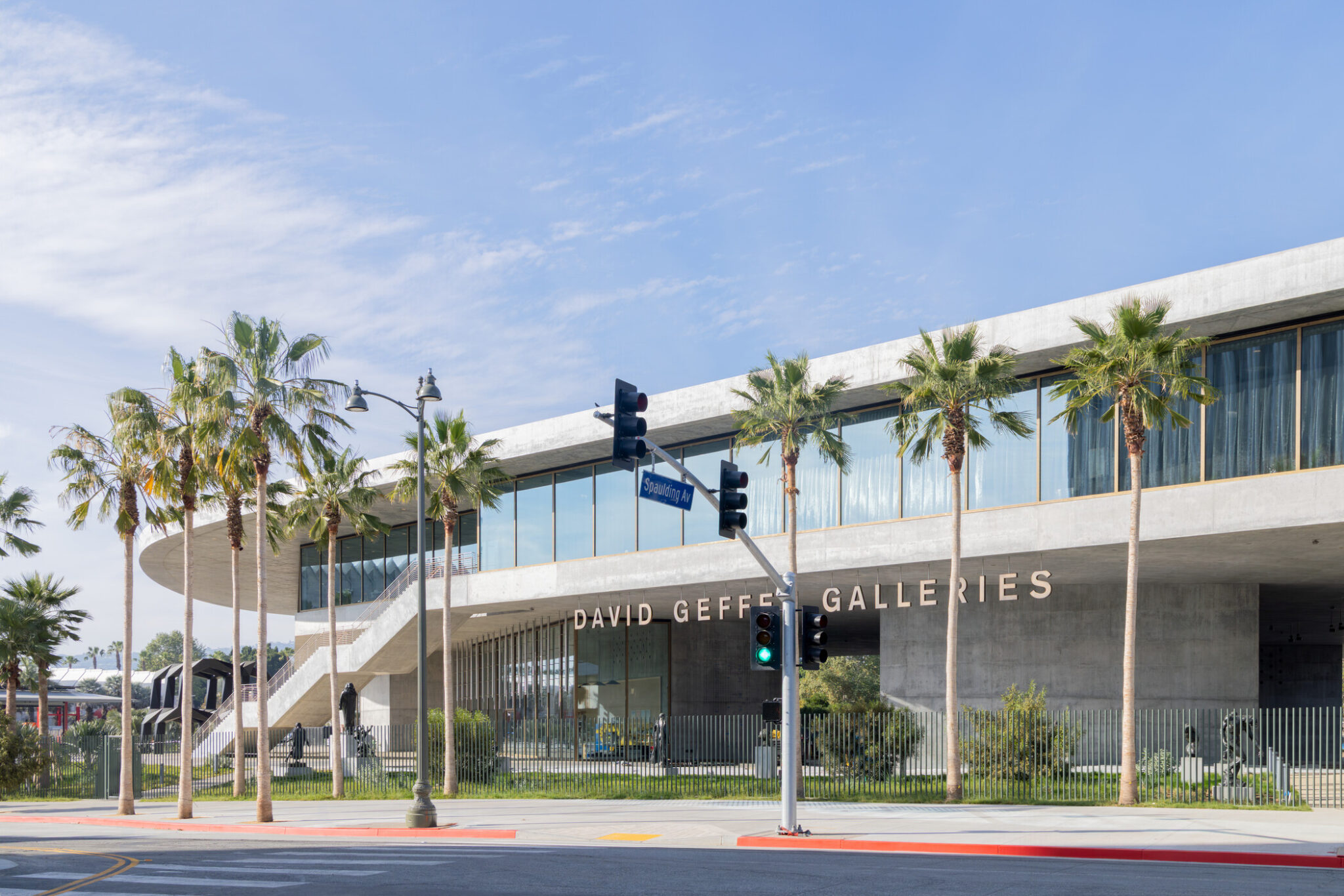
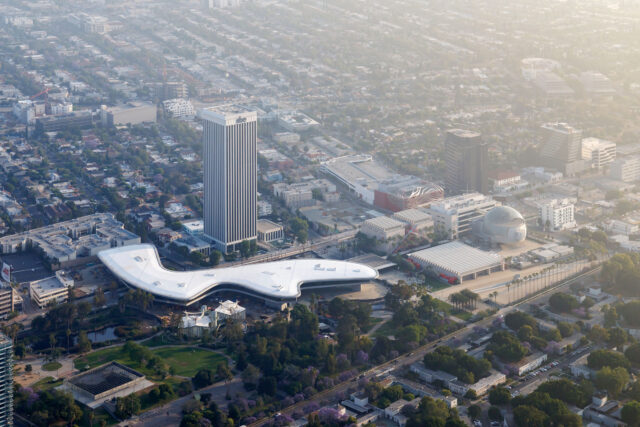
(Los Angeles, CA—April 15, 2026) Following two decades of physical and programmatic transformation as the largest and most comprehensive art museum in the western United States, the Los Angeles County Museum of Art (LACMA) will celebrate the ribbon-cutting for its new David Geffen Galleries on Sunday, April 19. Designed by renowned architect Peter Zumthor, the building was created as the home for LACMA’s permanent collection and a vision of what a global art museum might be in today’s world.
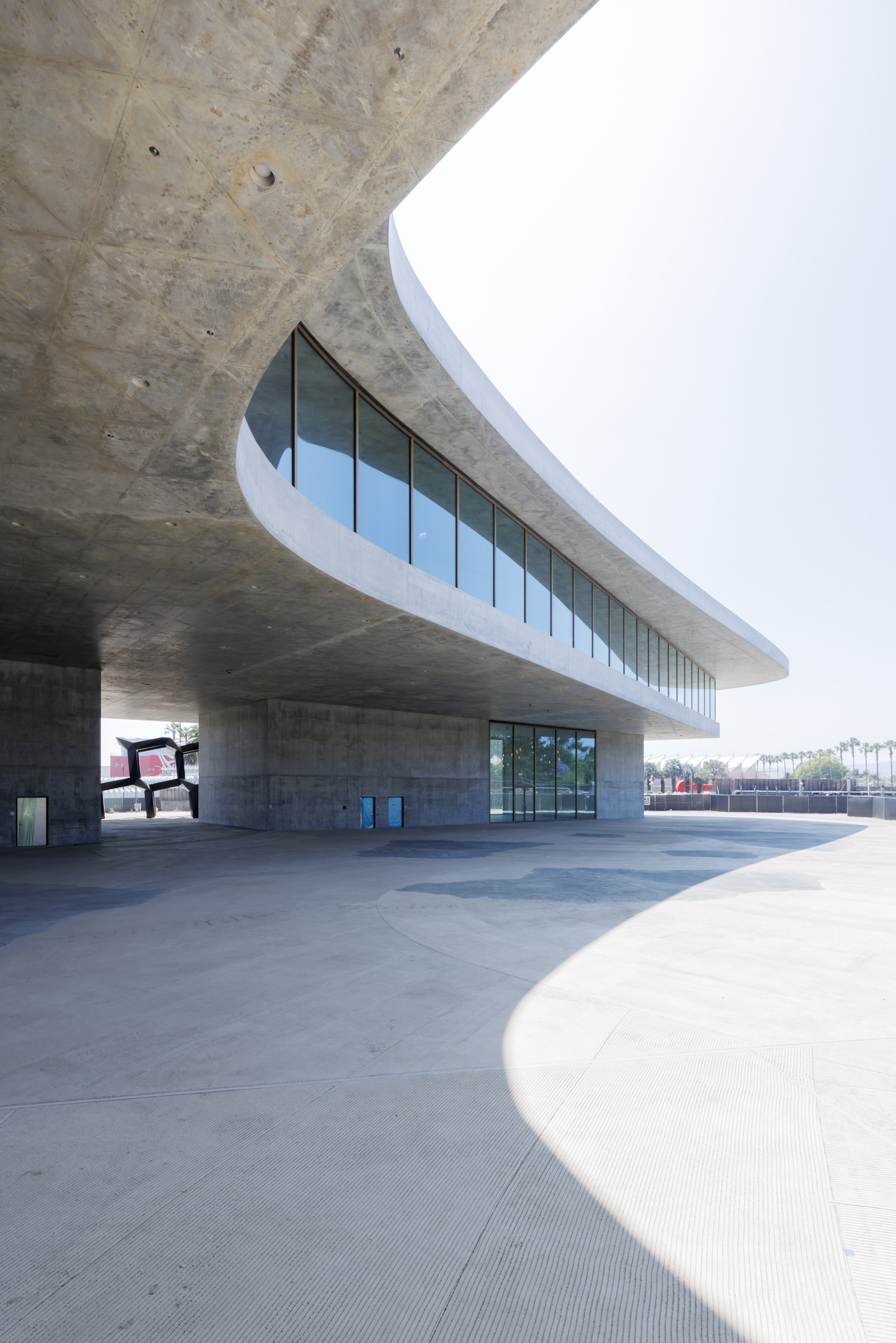
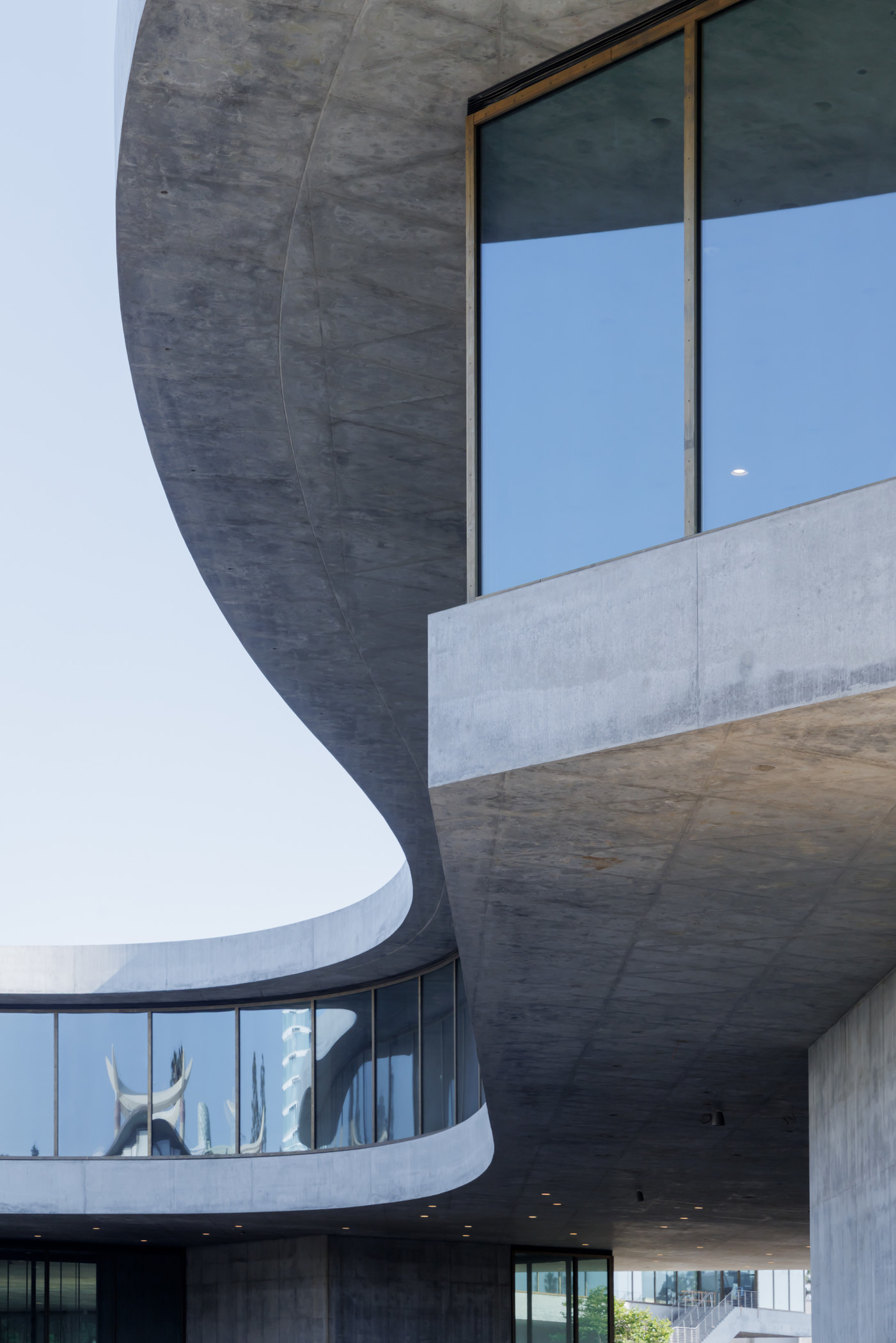
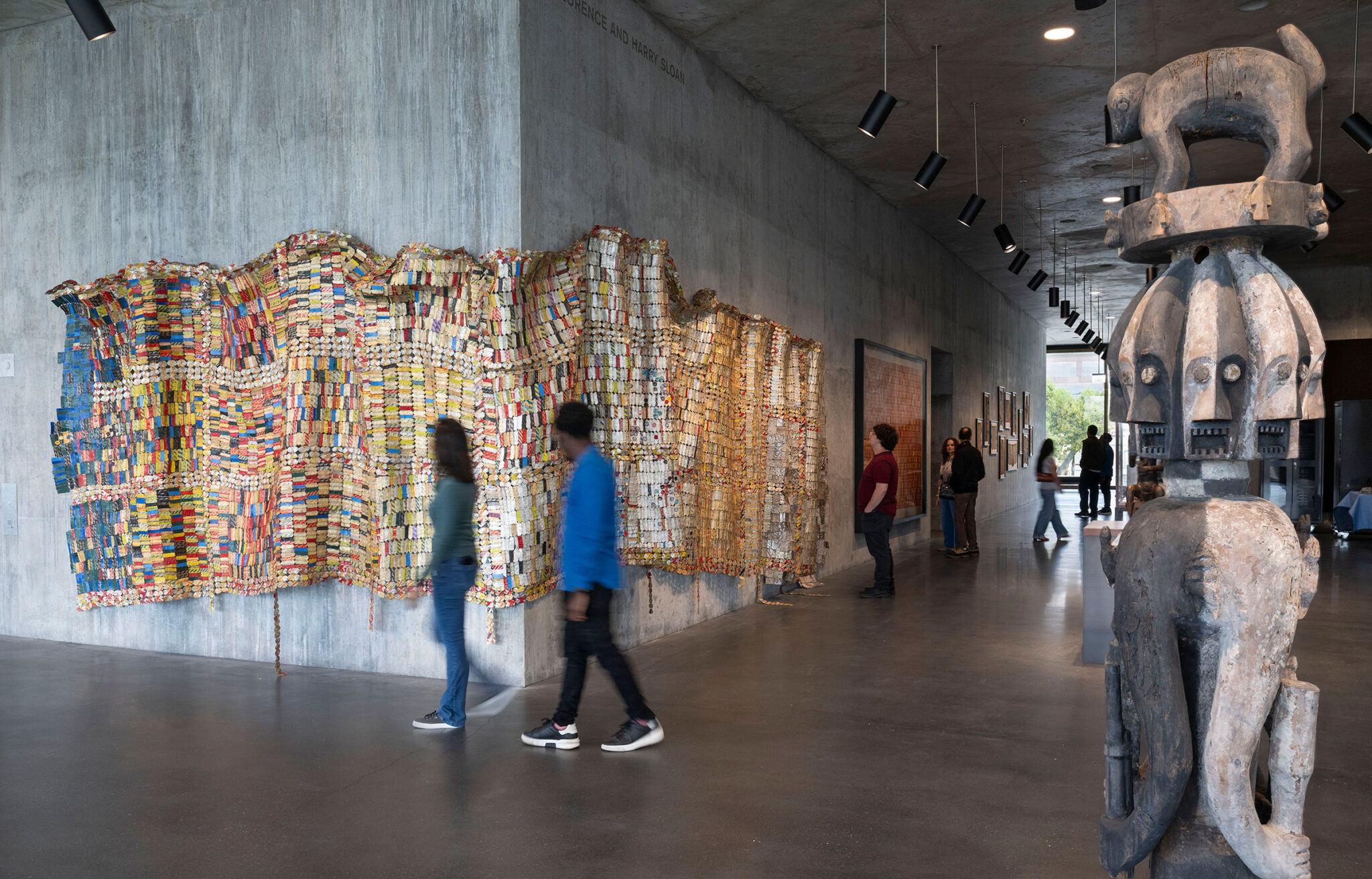
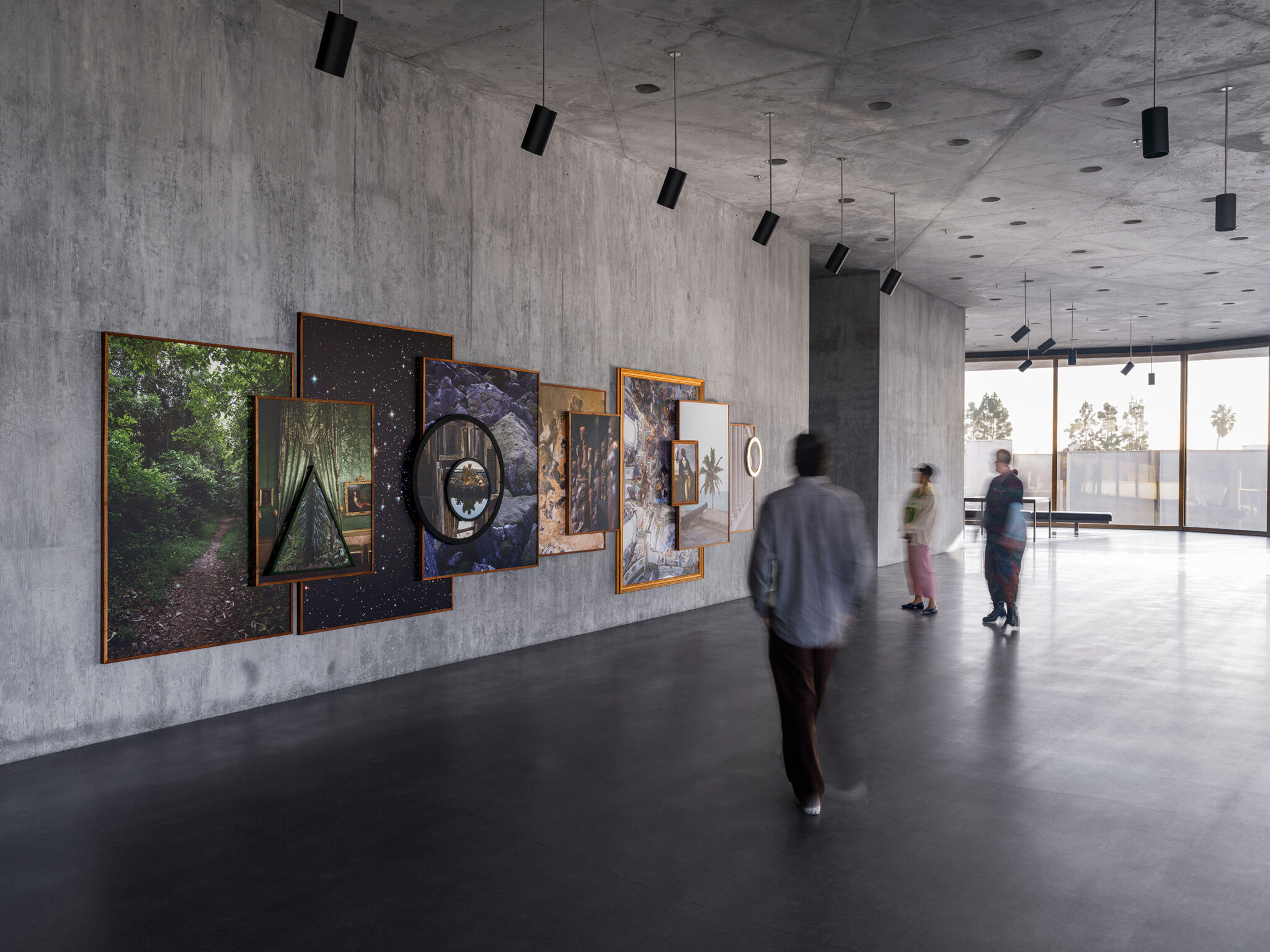
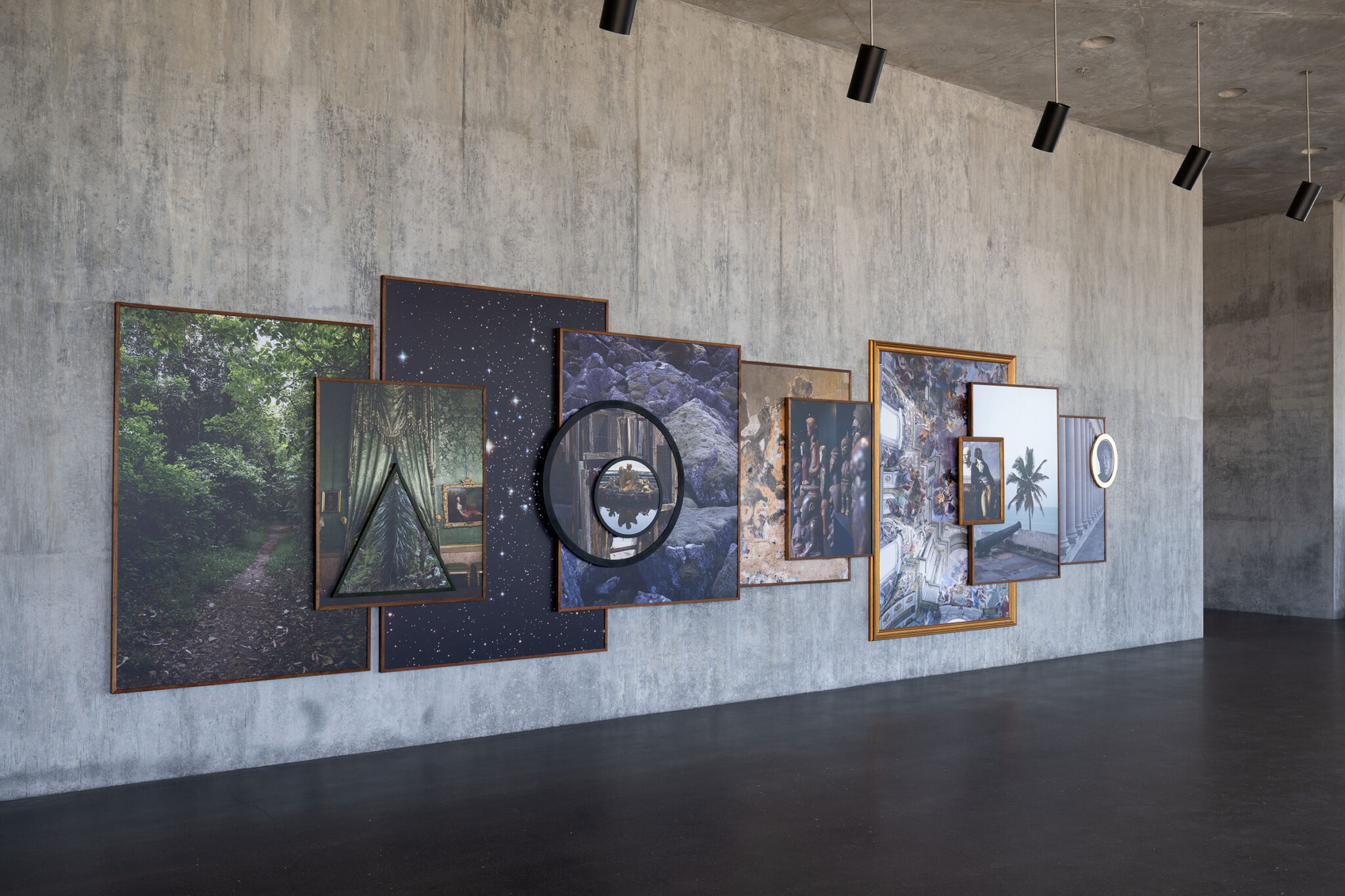
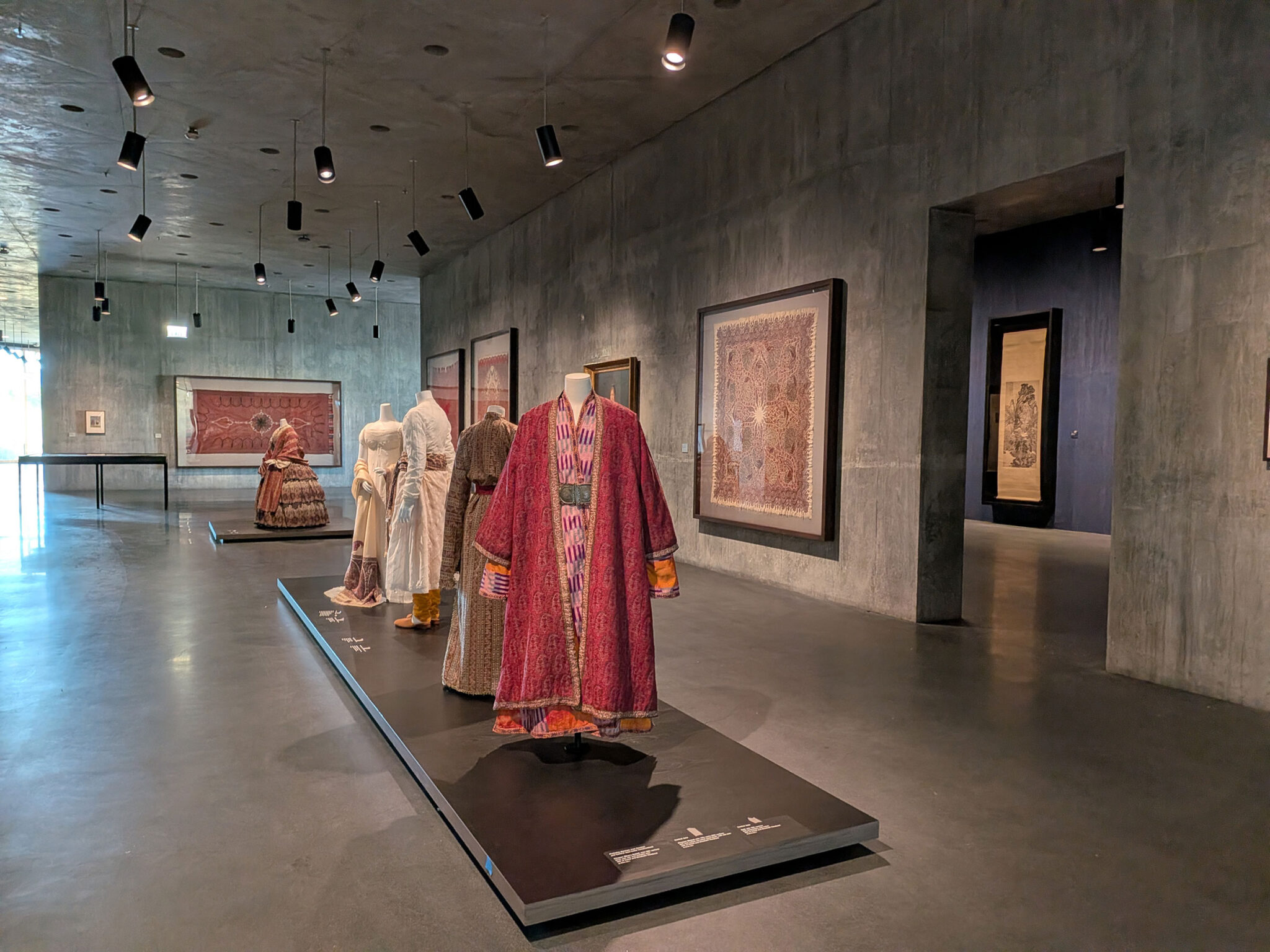
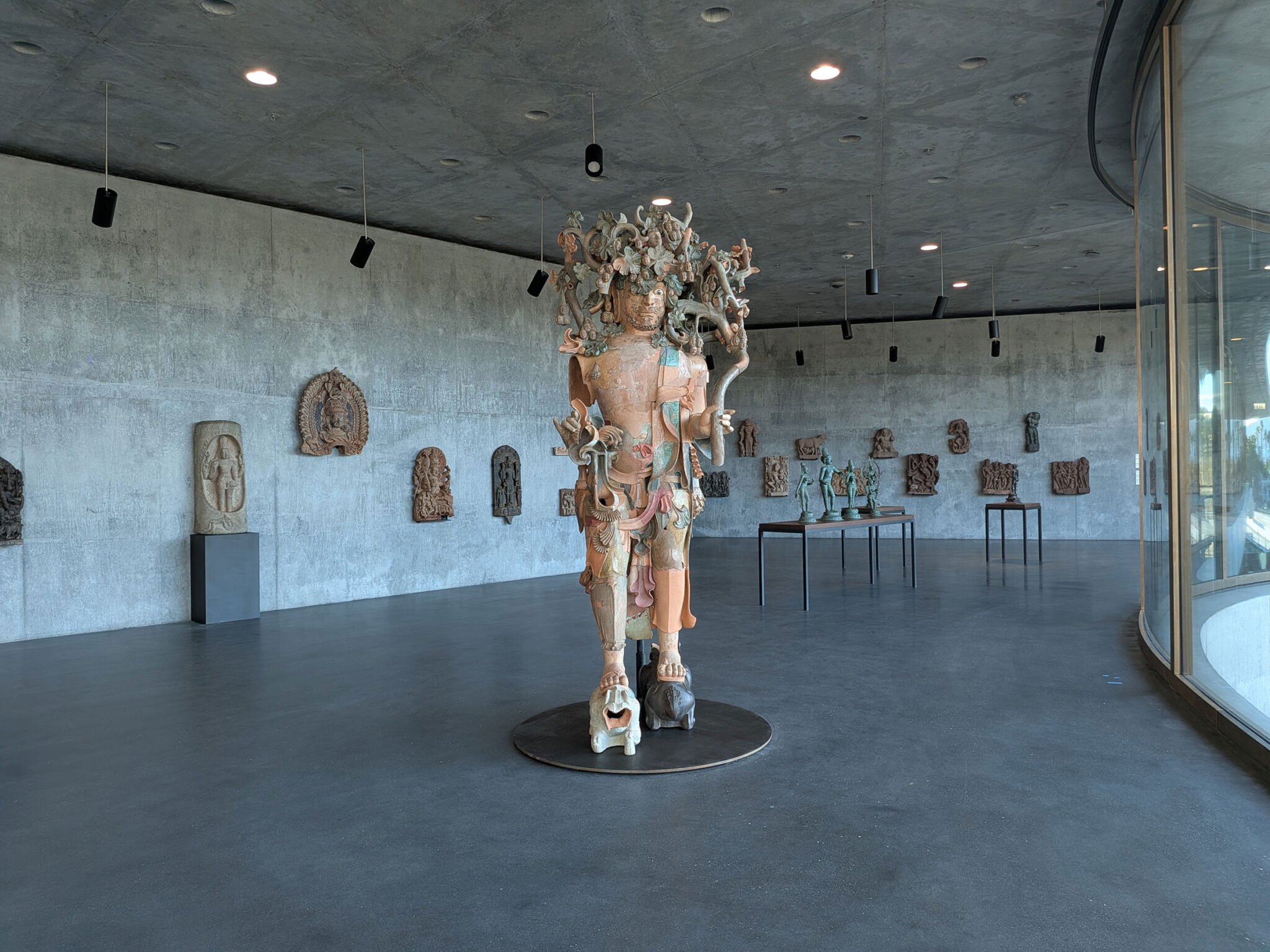
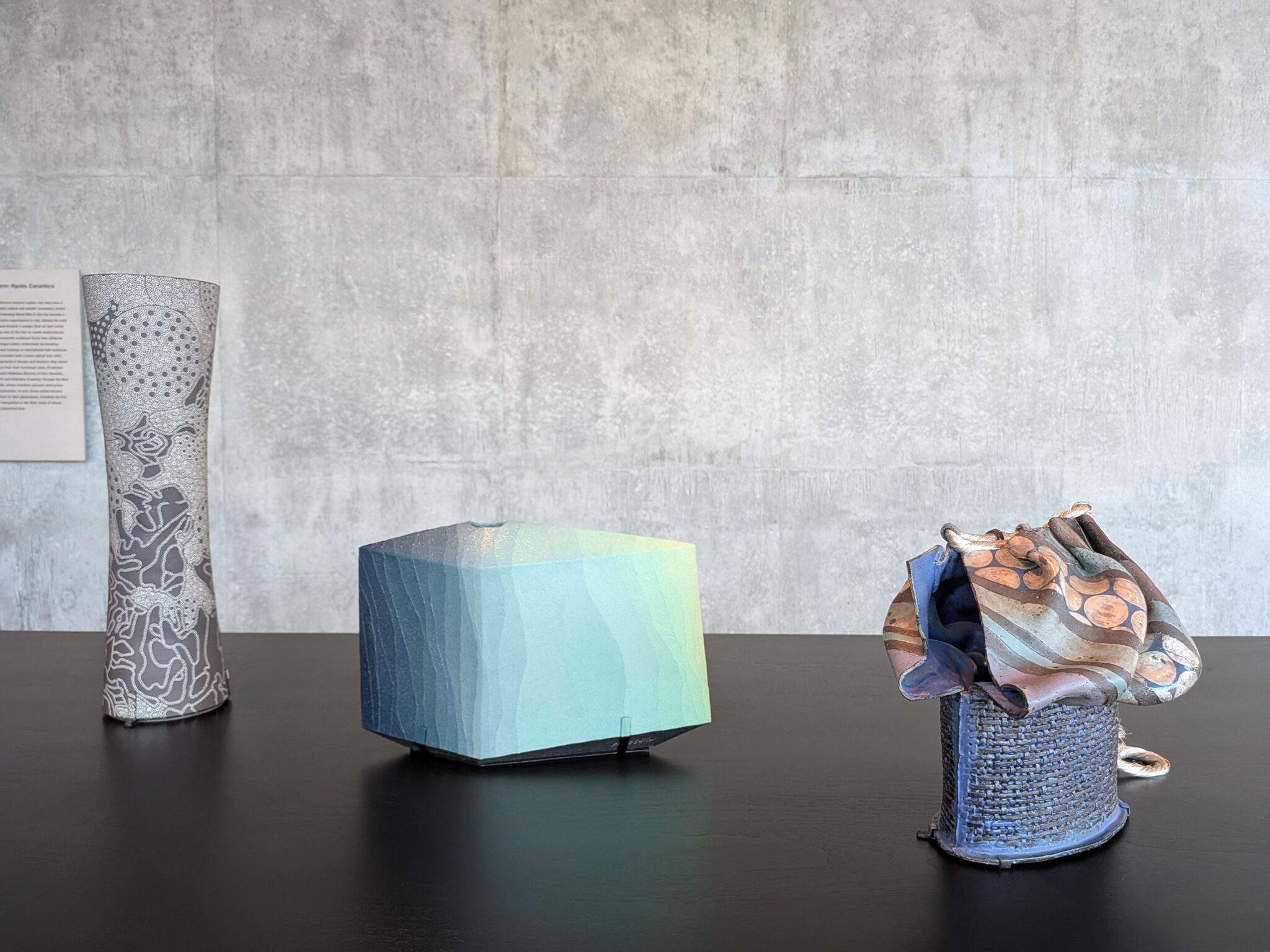
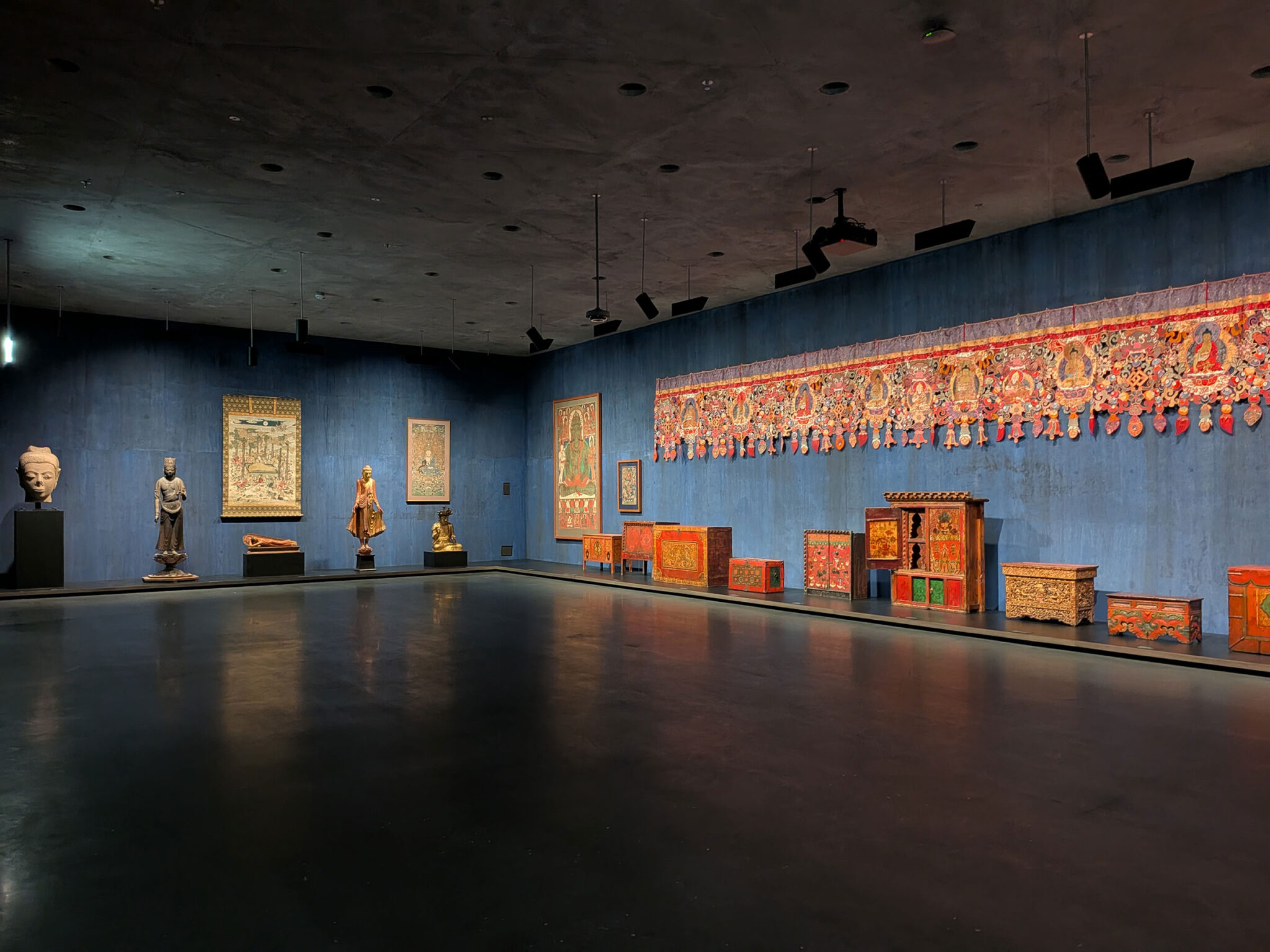
The building’s elevated exhibition level offers sweeping views of Los Angeles while creating open plazas and new outdoor public space below. The horizontal design enables LACMA to present all artworks on a single level without giving precedence to any culture, tradition, or era. The installation enables curators to make original, revelatory connections unbounded by traditional classifications, and visitors are freed from prescribed paths to follow their own curiosity, as they encounter a wealth of new artworks and see old favorites in a fresh light. New works from LACMA’s collection of 155,000 objects spanning 6,000 years of world history will continue to be added over time, so visitors can always expect to see something new in the galleries.
Michael Govan, LACMA CEO and Wallis Annenberg Director, said, “On April 19, we will be welcoming the first visitors to the long-awaited David Geffen Galleries. Designed by the incomparable Peter Zumthor, this new home for our permanent collection holds millennia of global artistic exchanges, illuminating traditions and innovations from the many cultures that are present in Los Angeles today. We welcome our neighbors and visitors from both near and far with immense gratitude to the civic and philanthropic leaders who championed the public-private partnership that has built the David Geffen Galleries, to the architect who has created this beautiful building, and to the curators and artists whose astonishing work has brought these spaces to life.”
Architectural Design
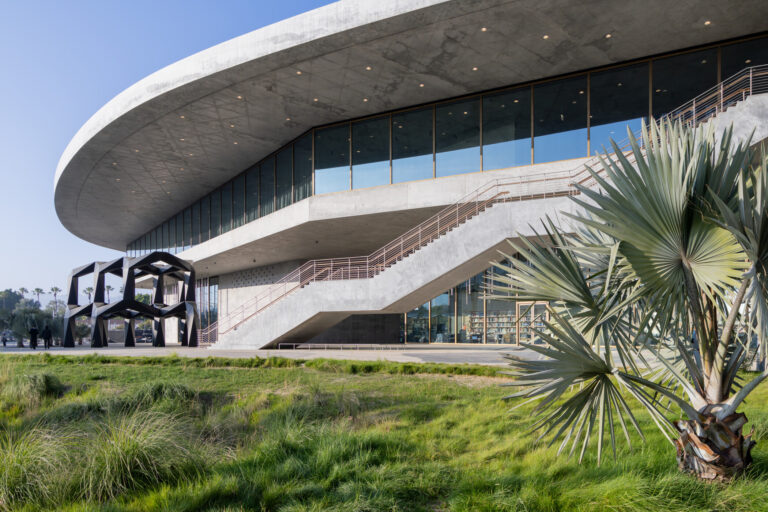
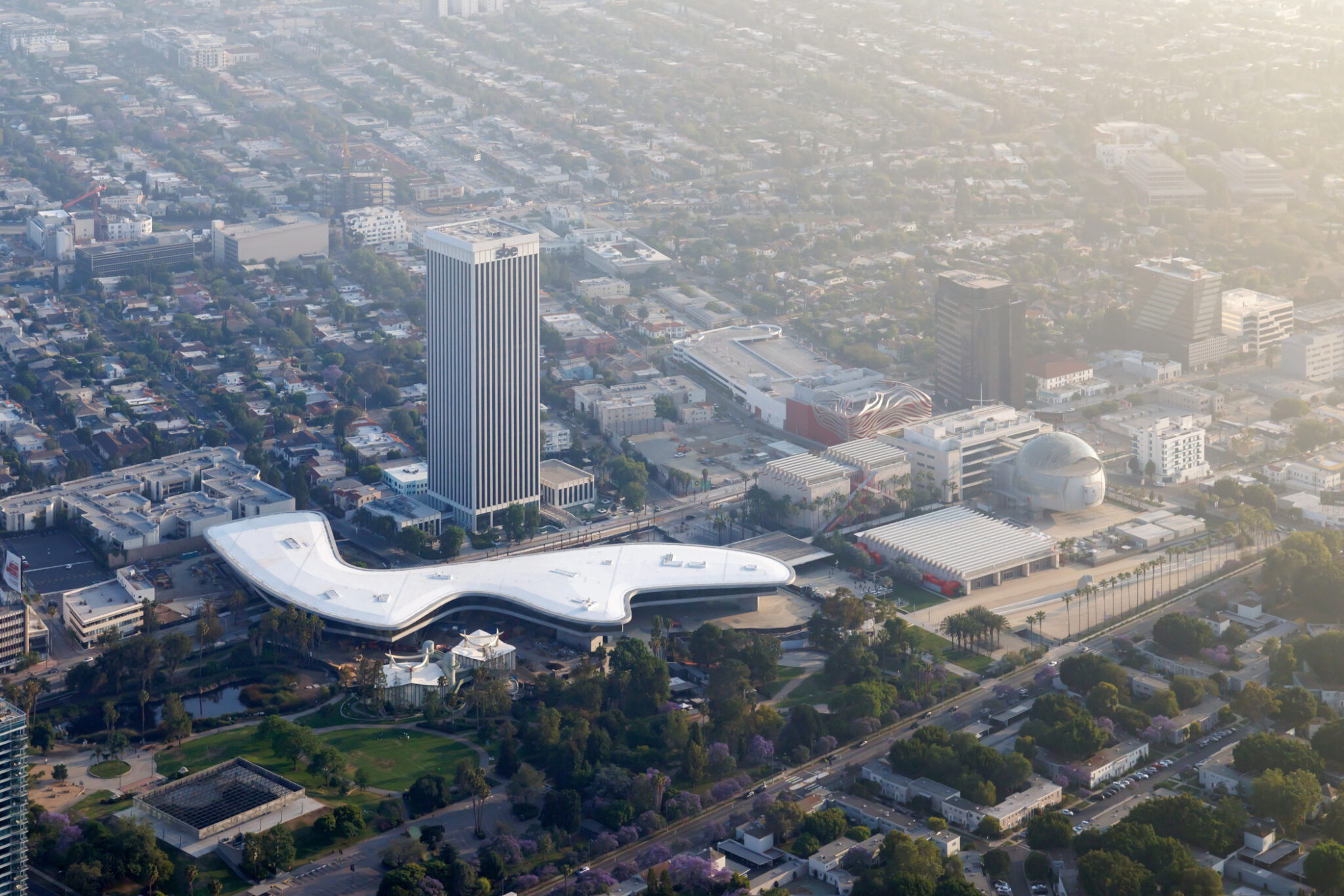
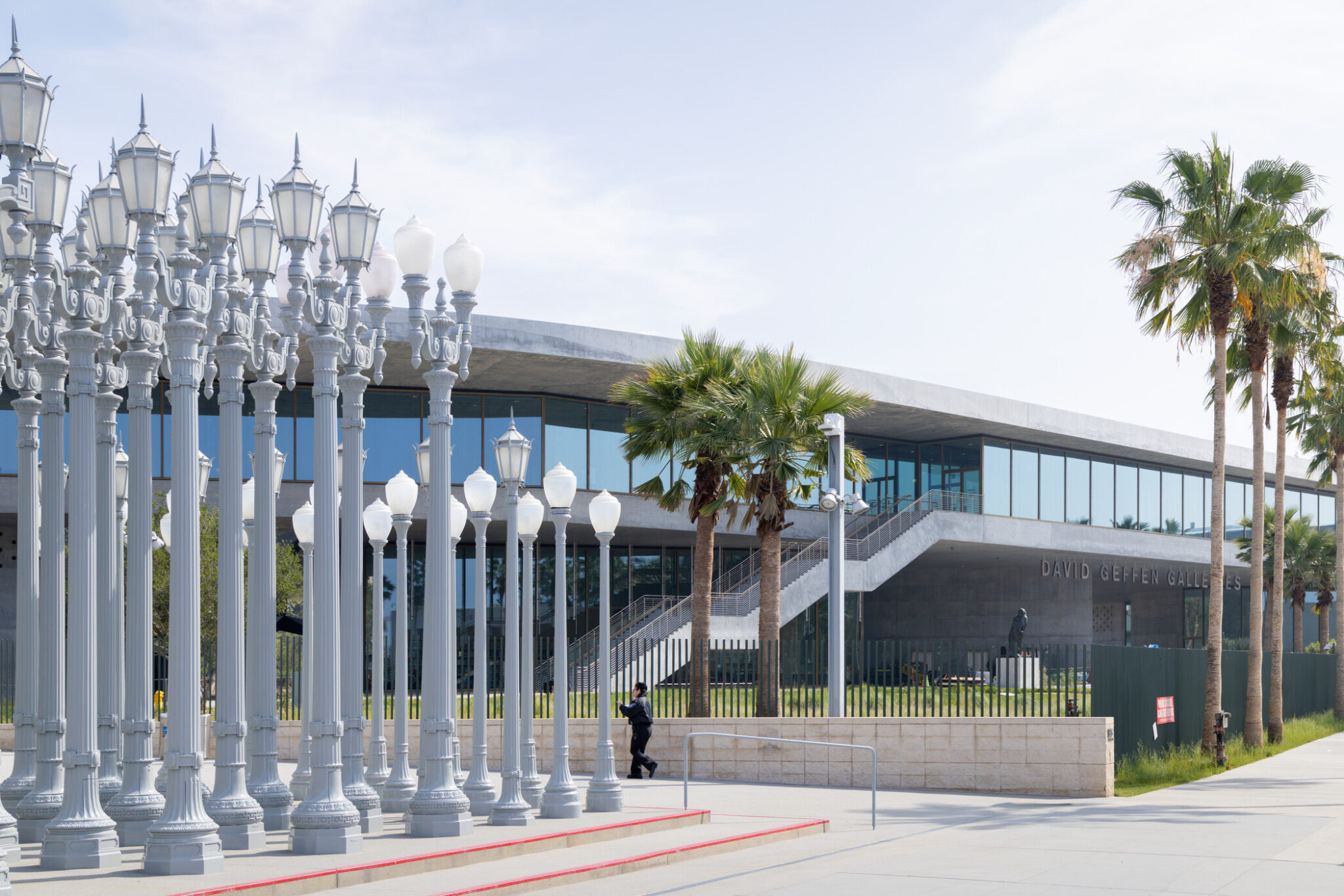
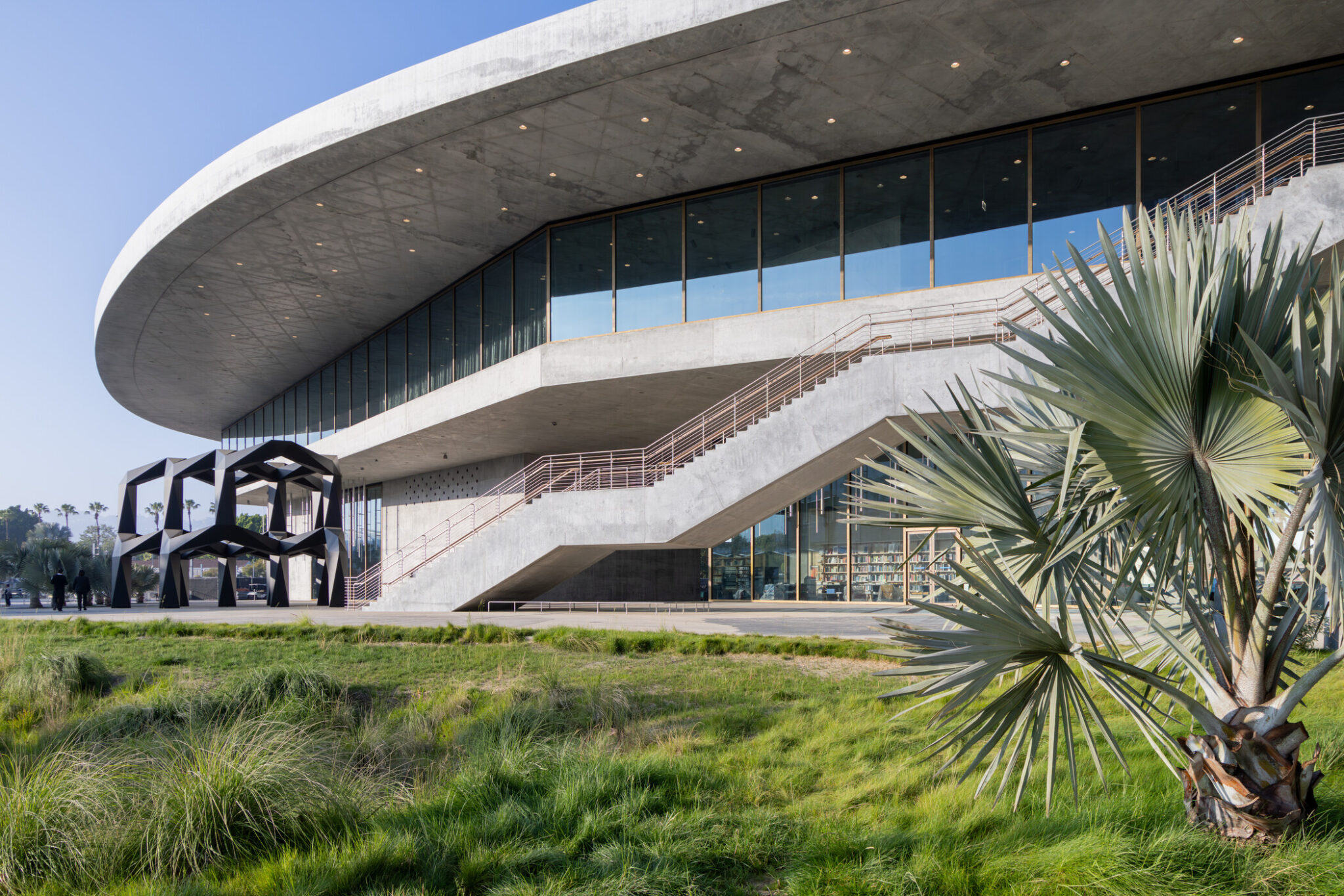
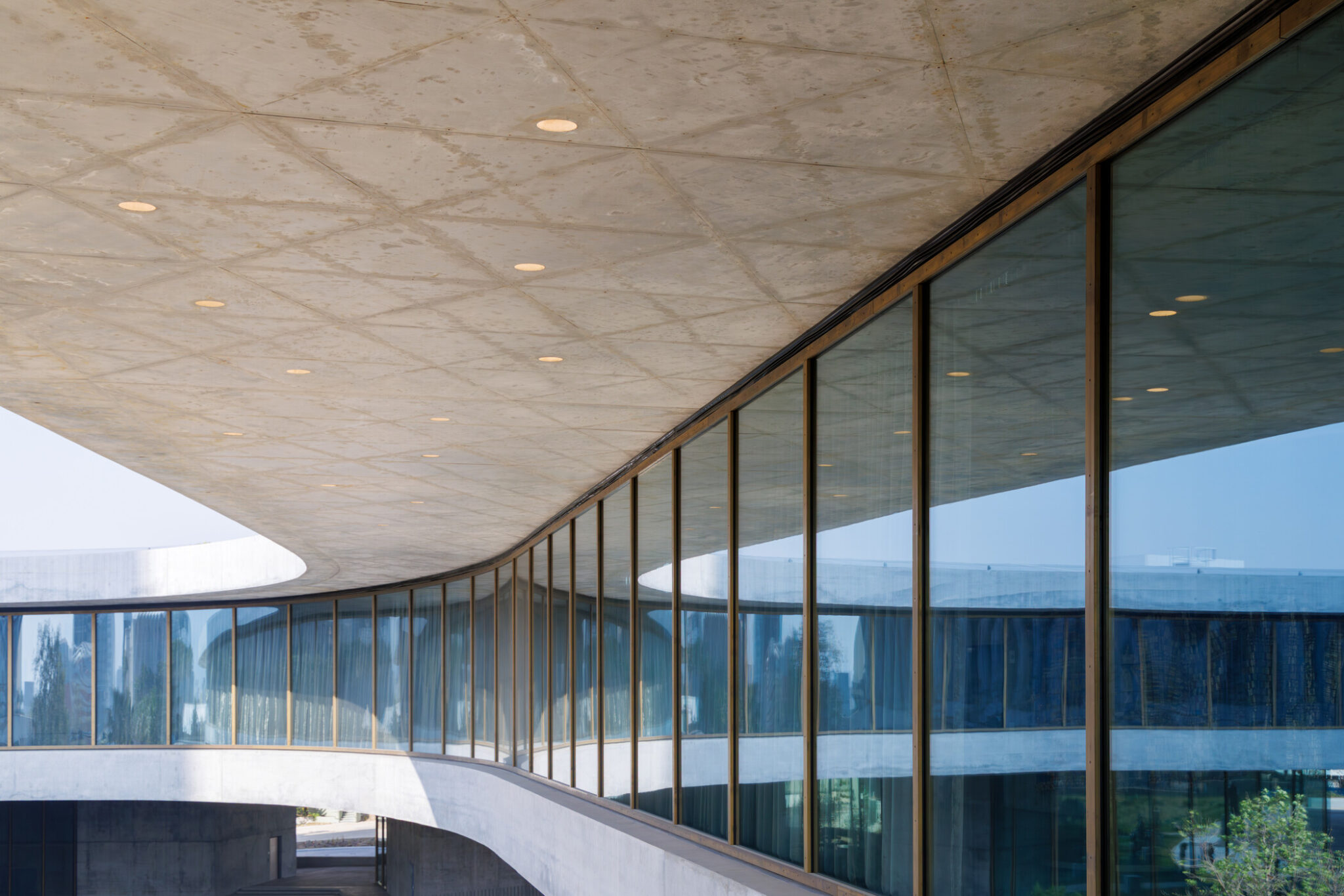
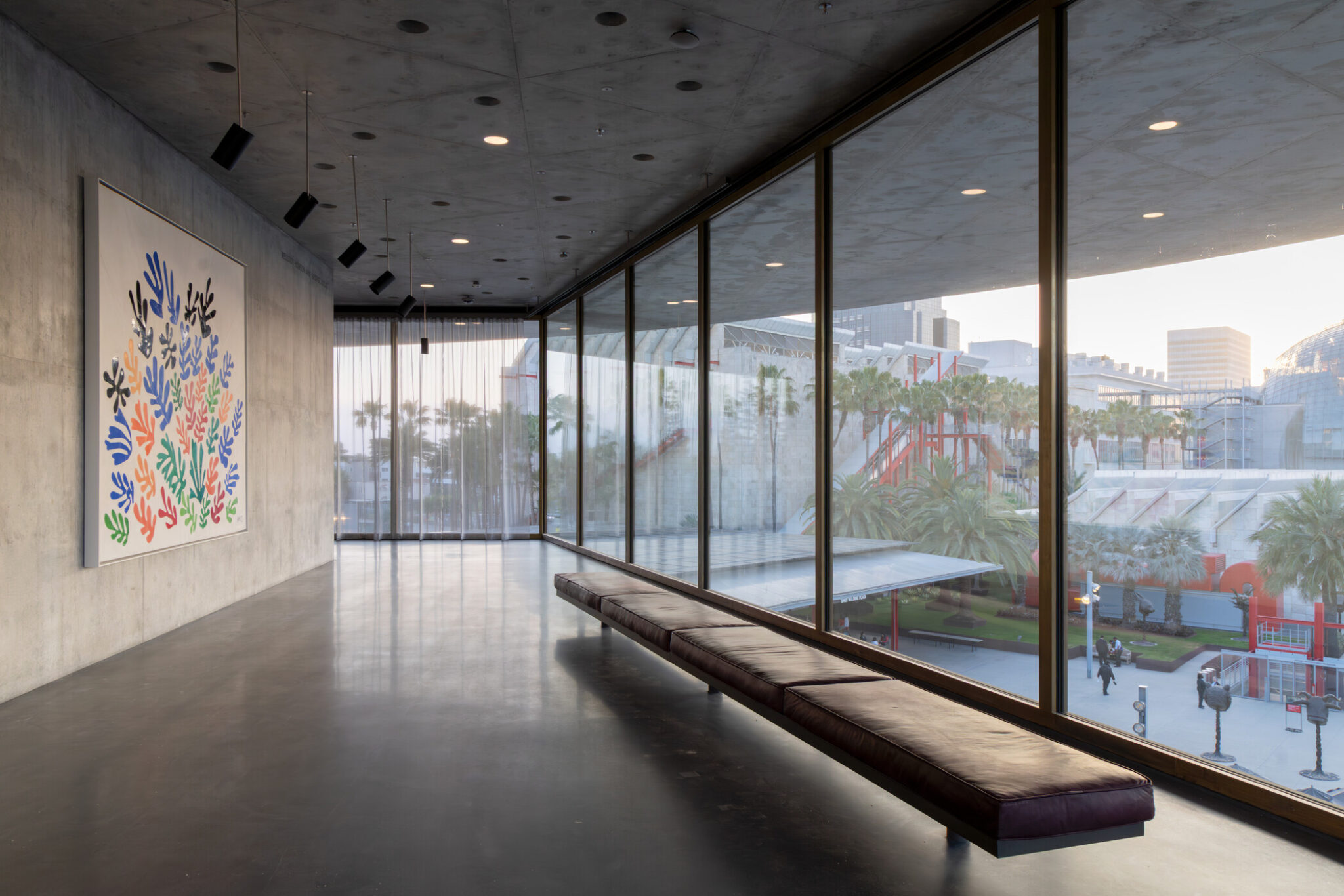
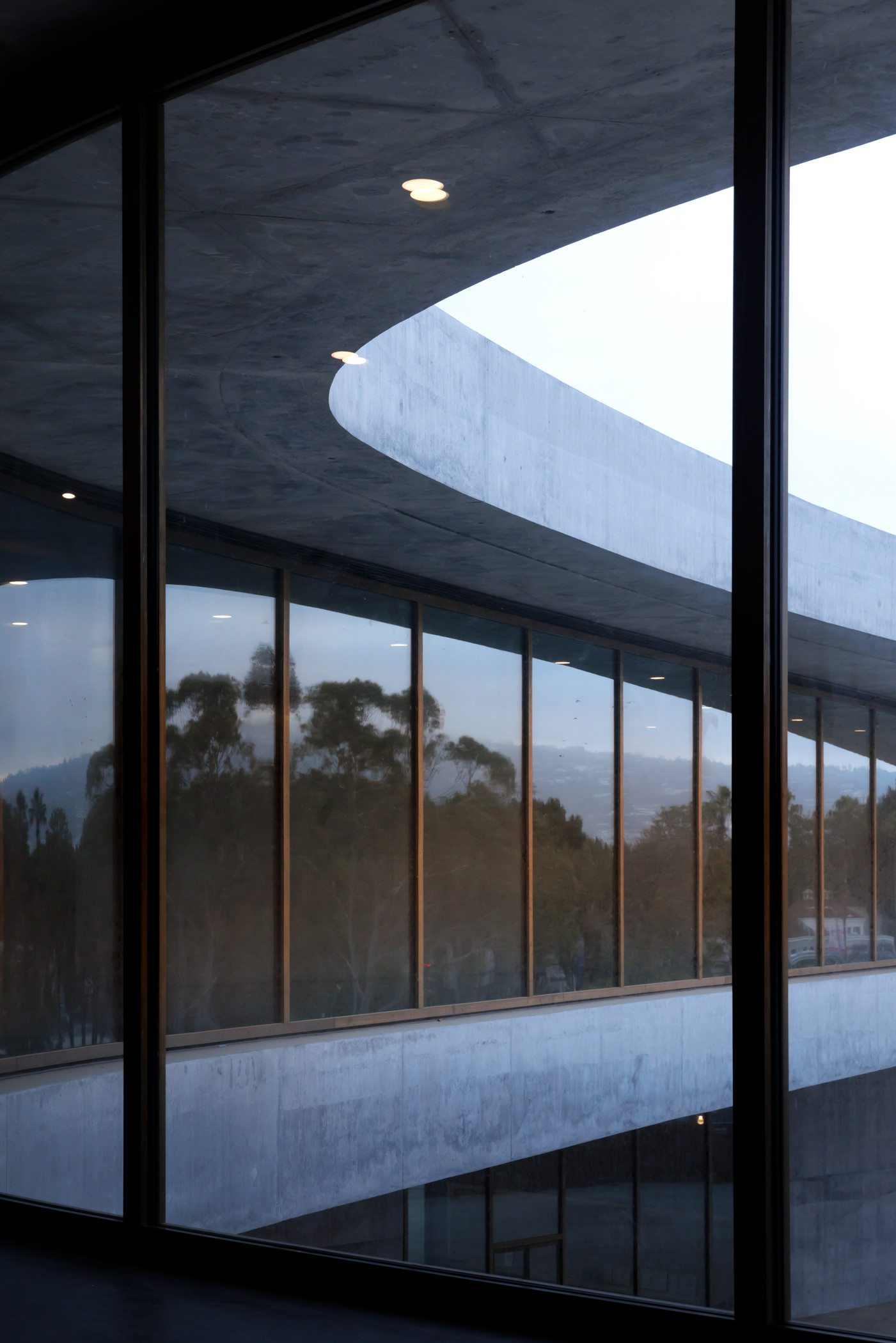
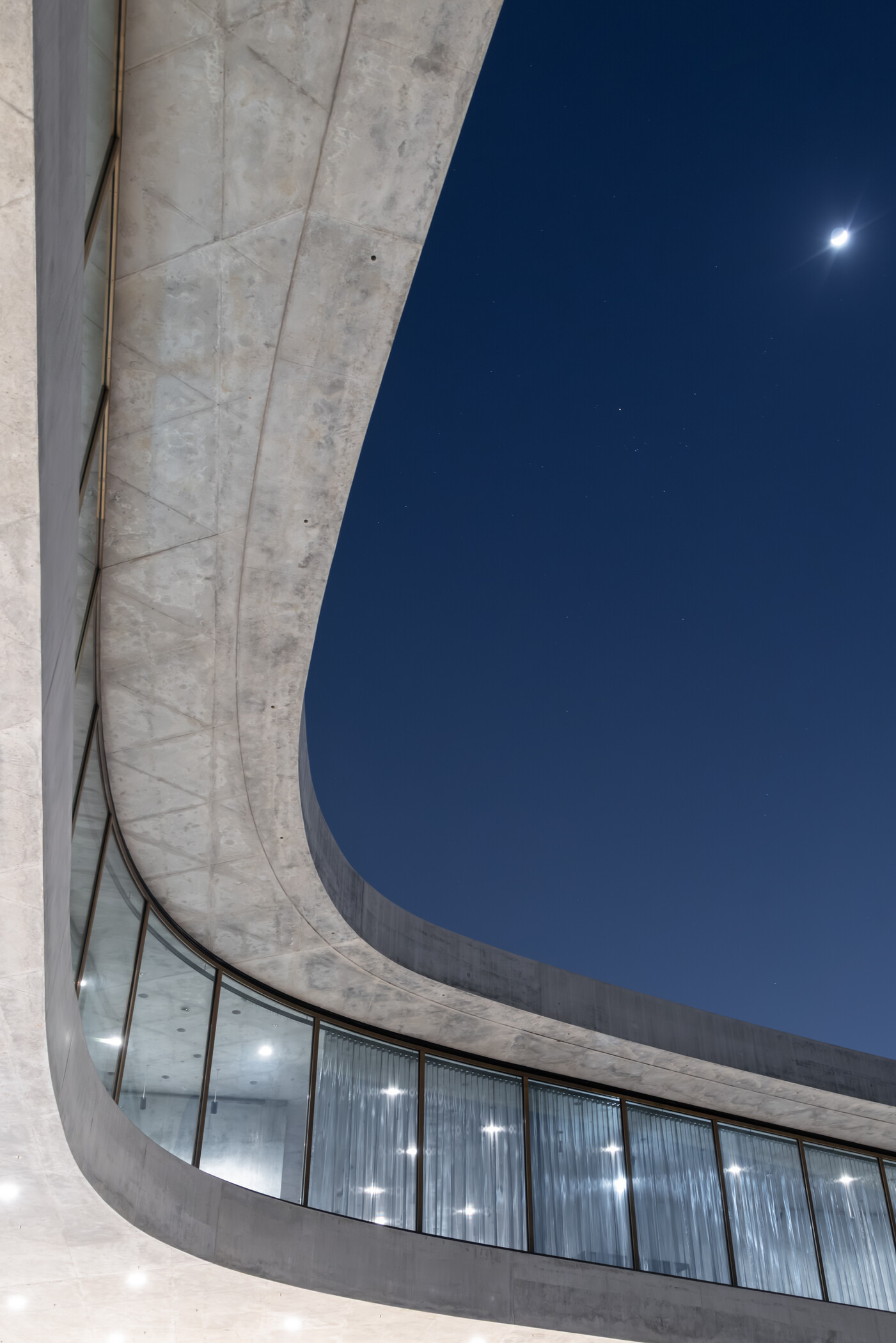
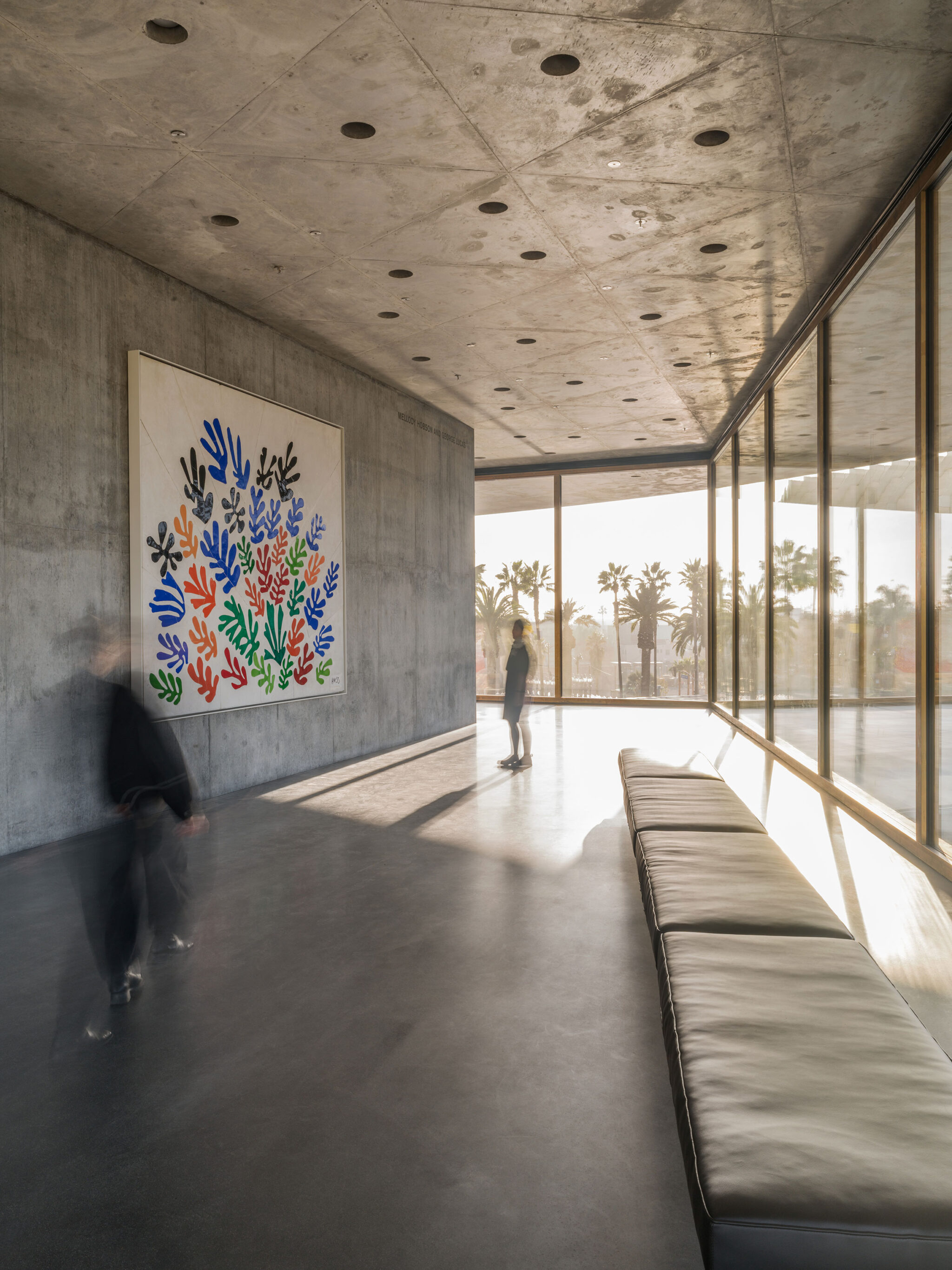
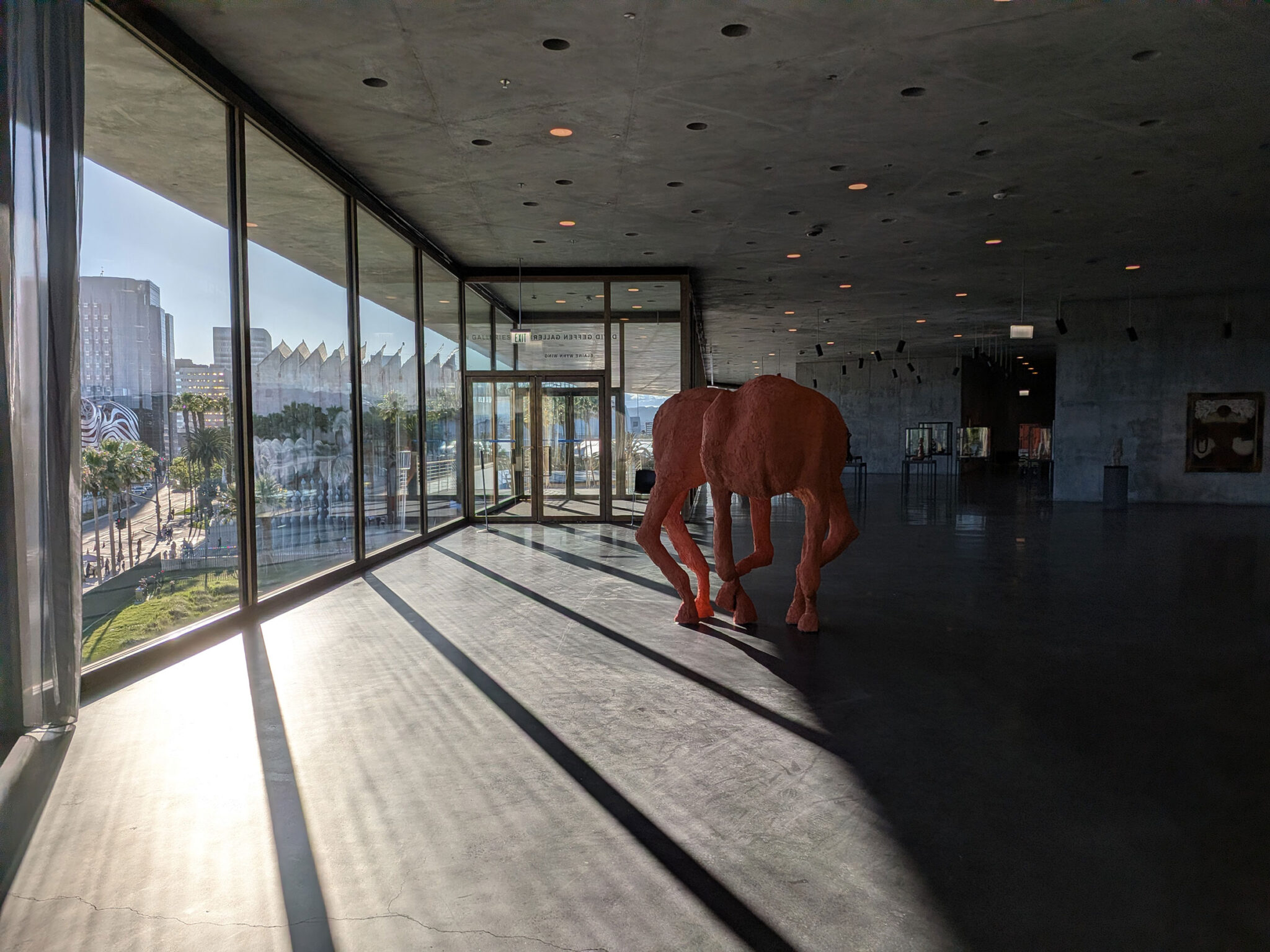
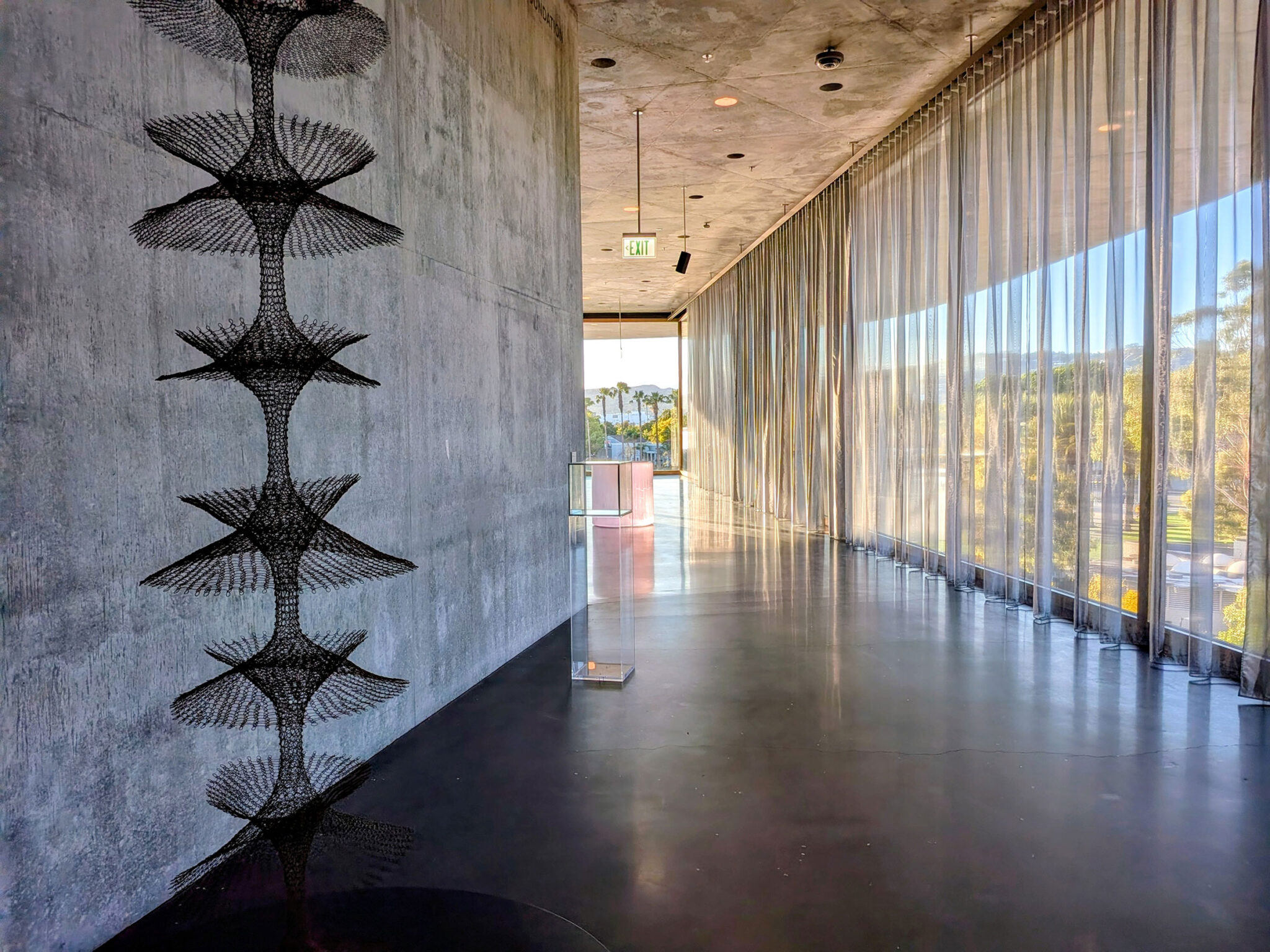
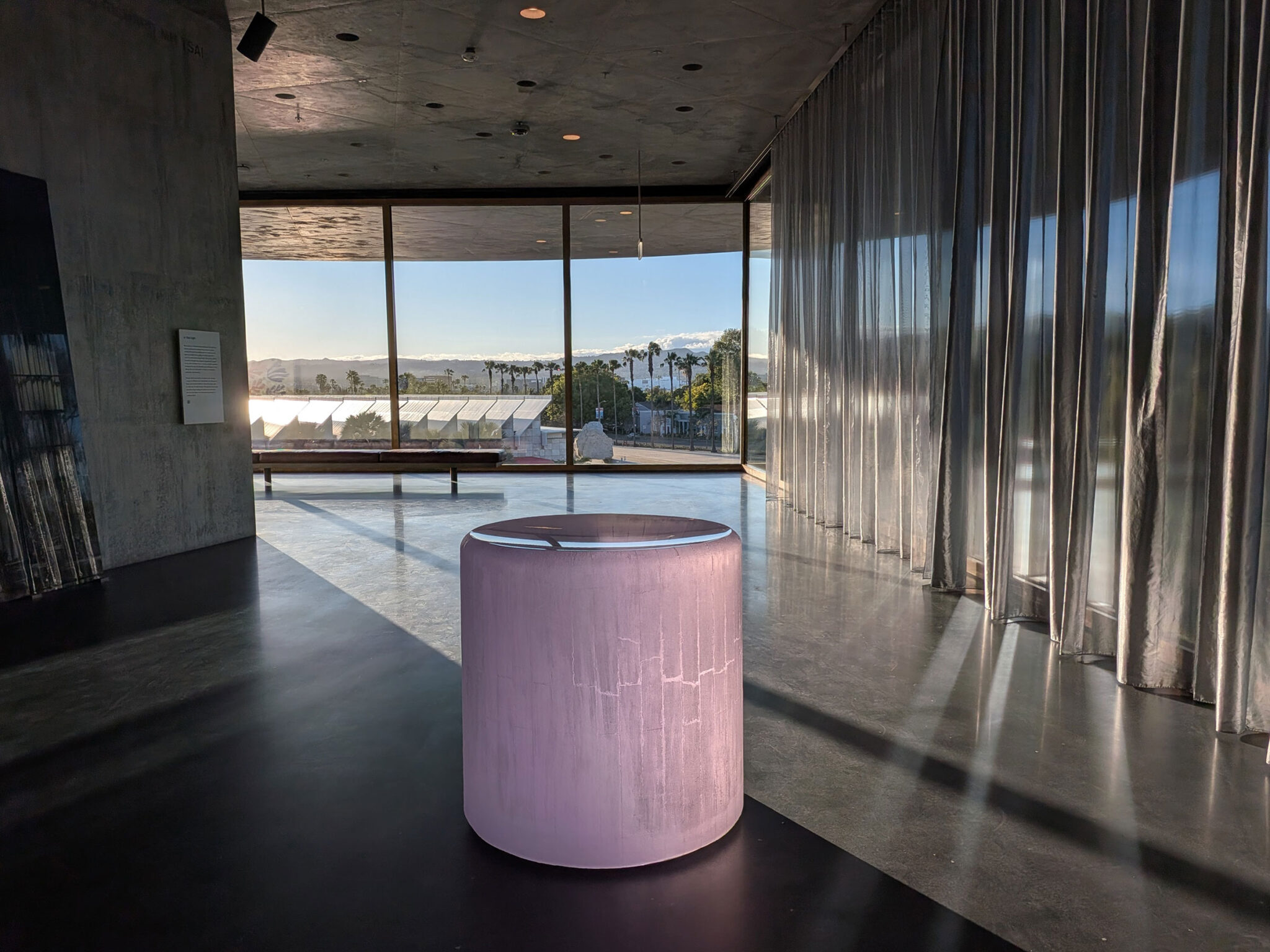
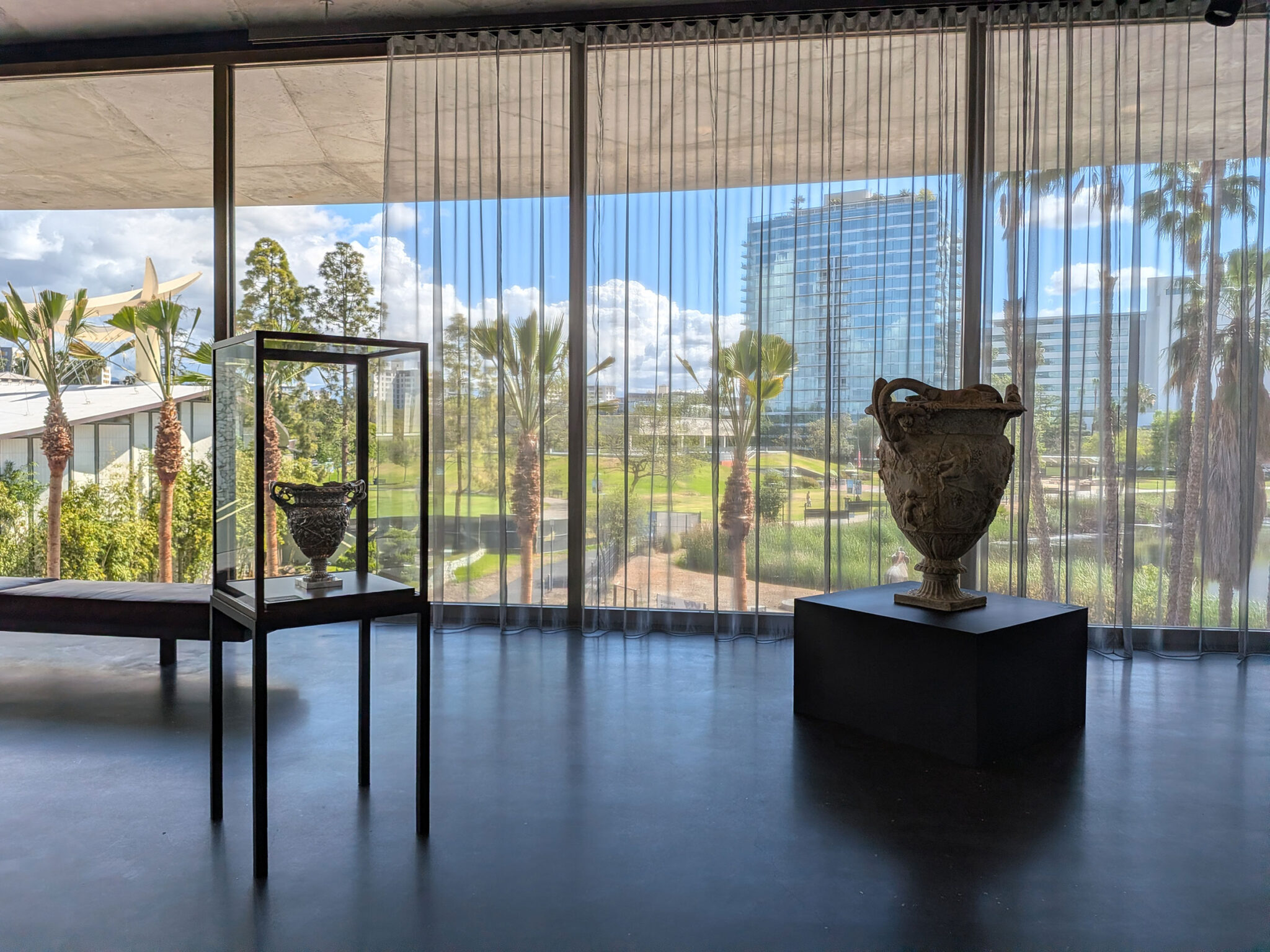
Peter Zumthor’s organic, sculptural design for the David Geffen Galleries is a 900-foot-long, horizontal, glass-and-concrete structure that curves freely as it stretches along Hancock Park and across Wilshire Boulevard.
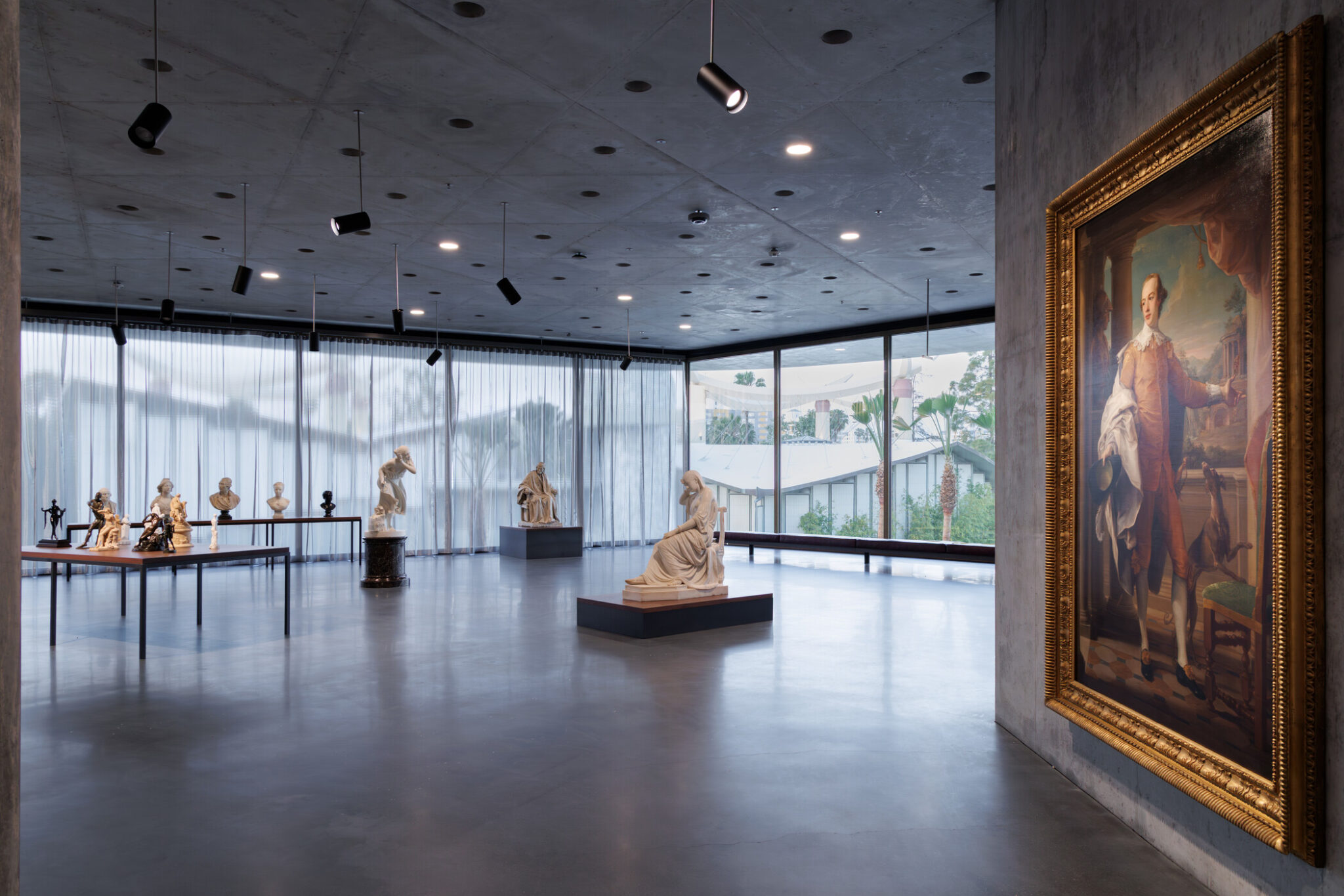
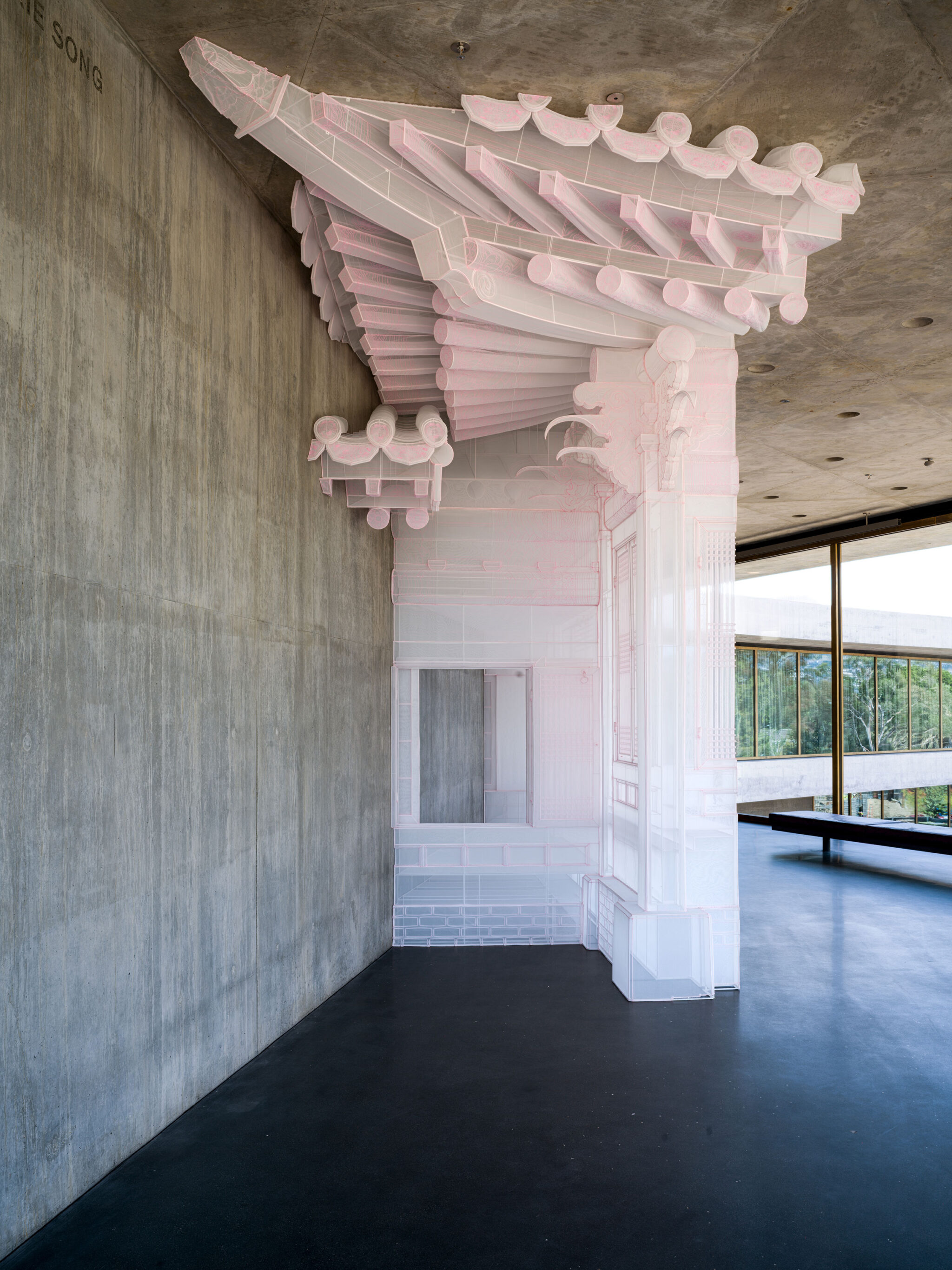
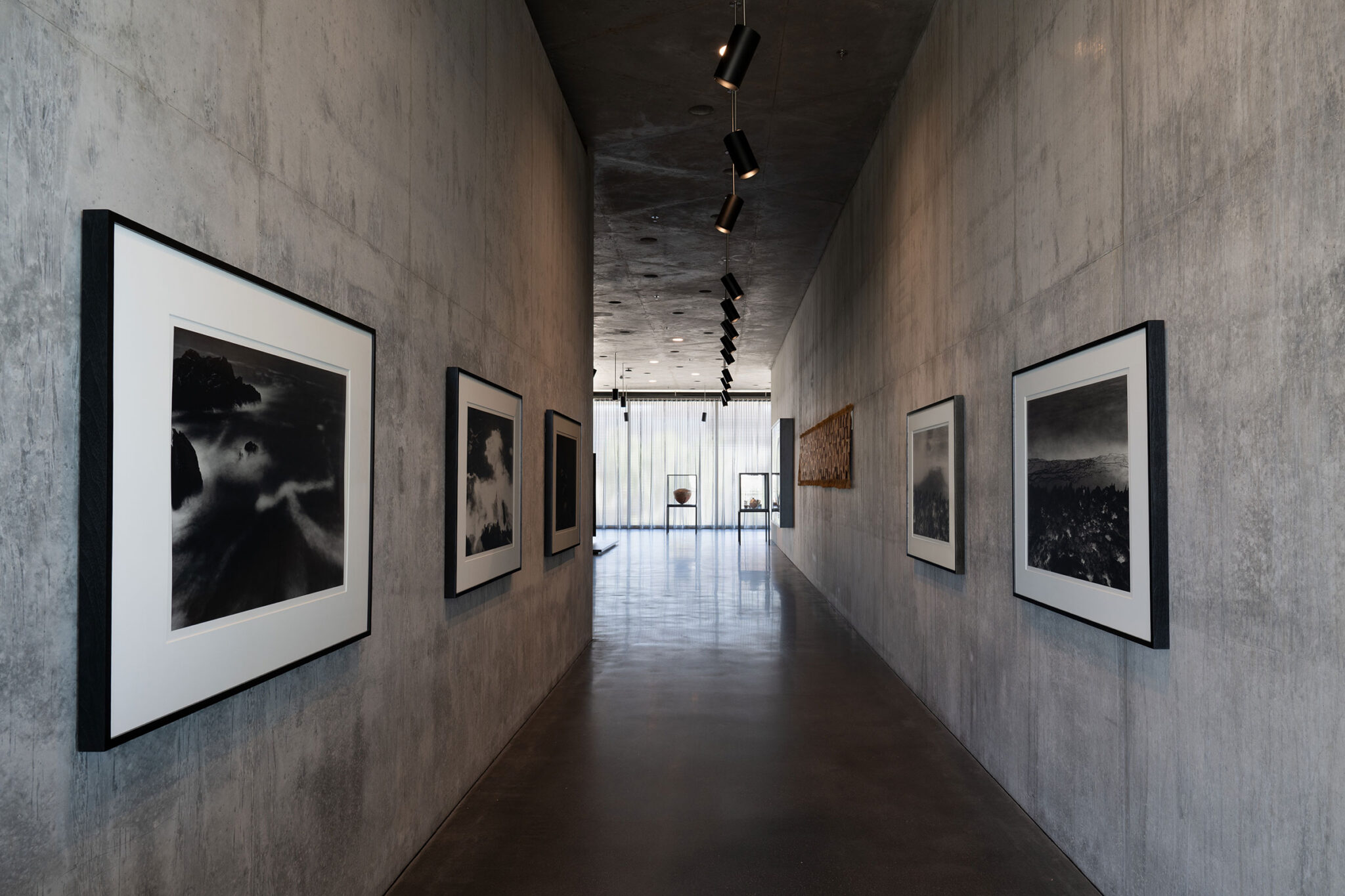
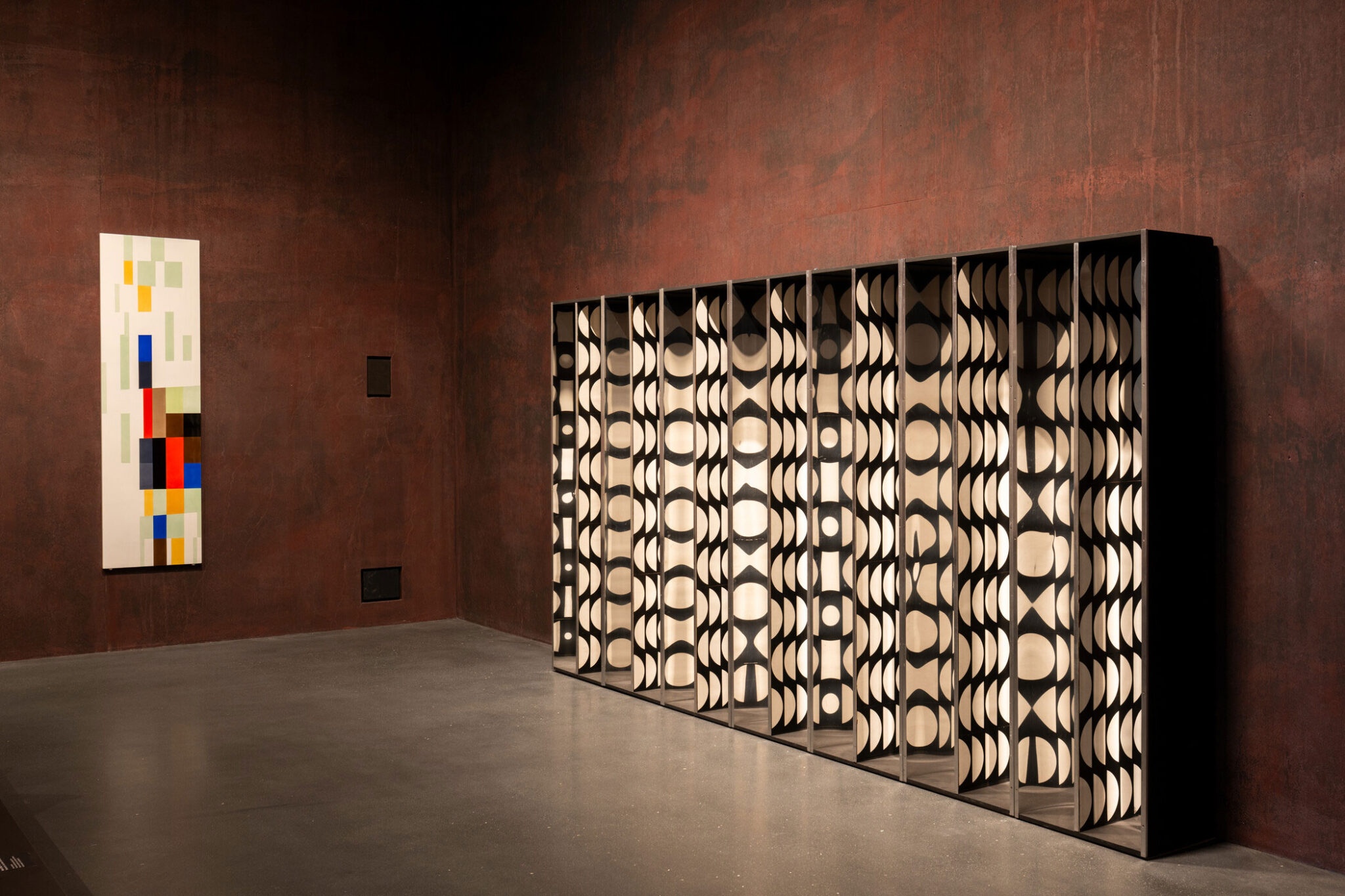
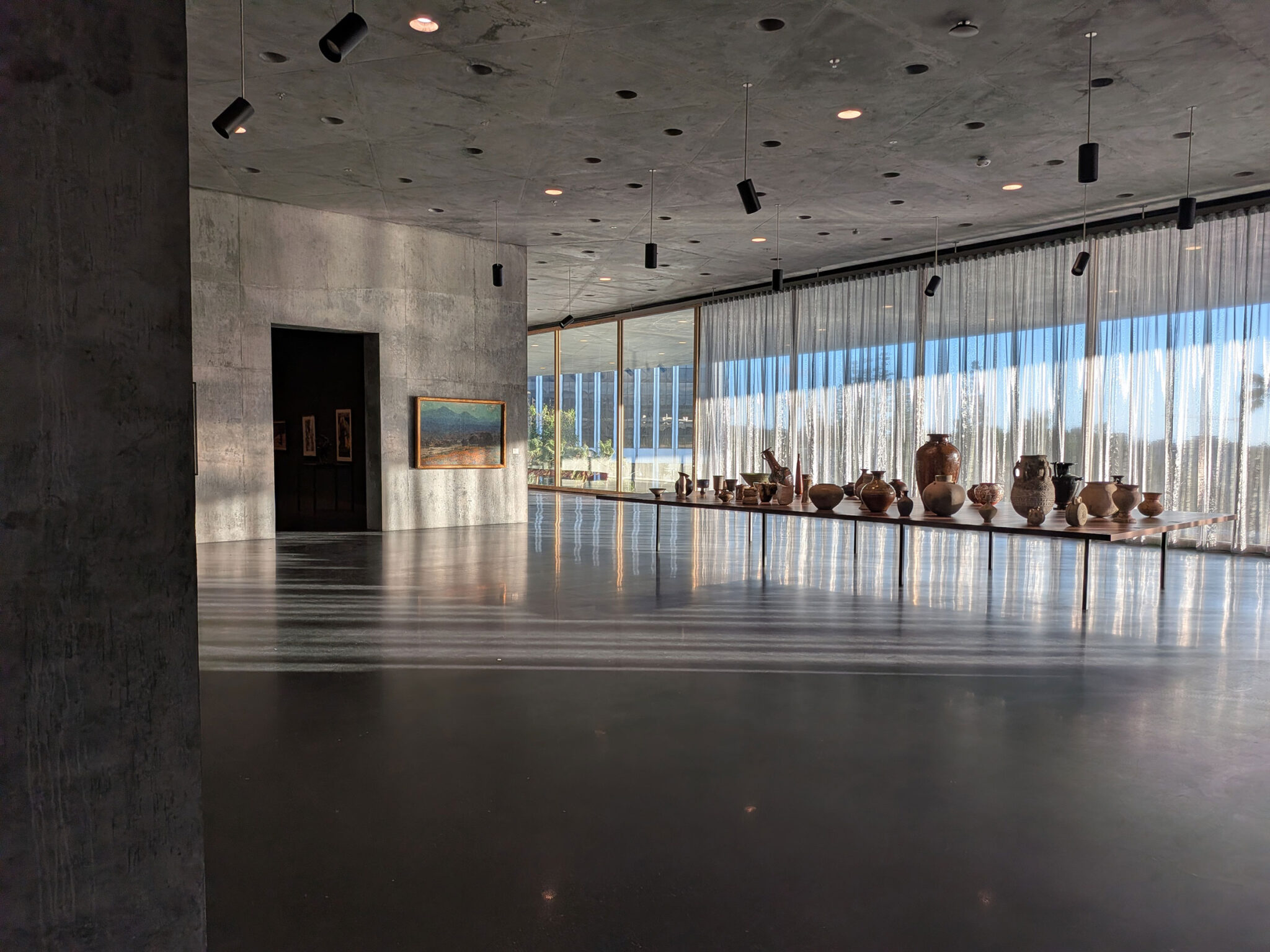
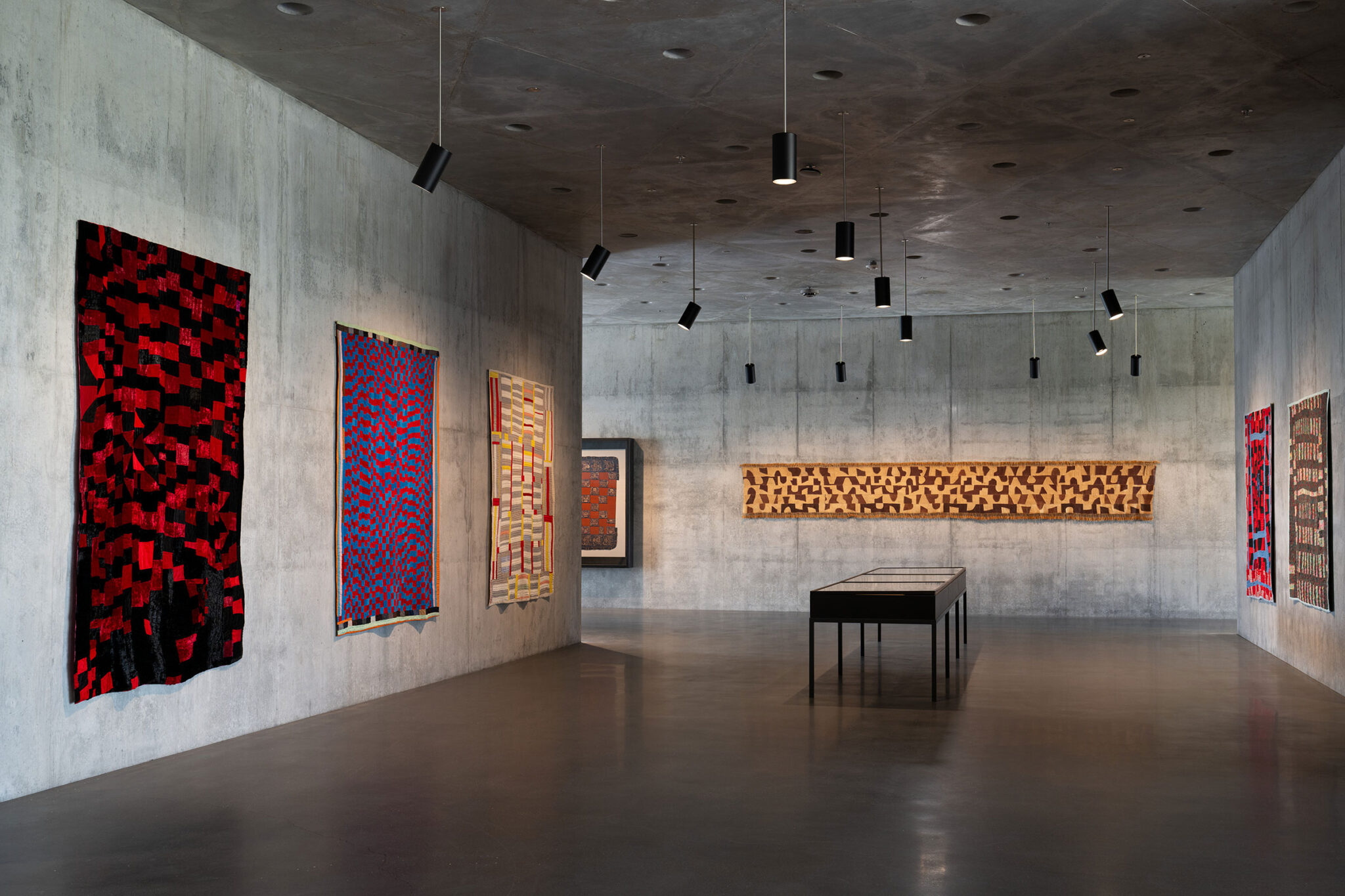
The main floor, elevated almost 30 feet above street level, is the dedicated exhibition space for LACMA’s permanent collection, comprising galleries with varied scales, configurations, and lighting conditions. No single path through the galleries is prescribed by the architecture.
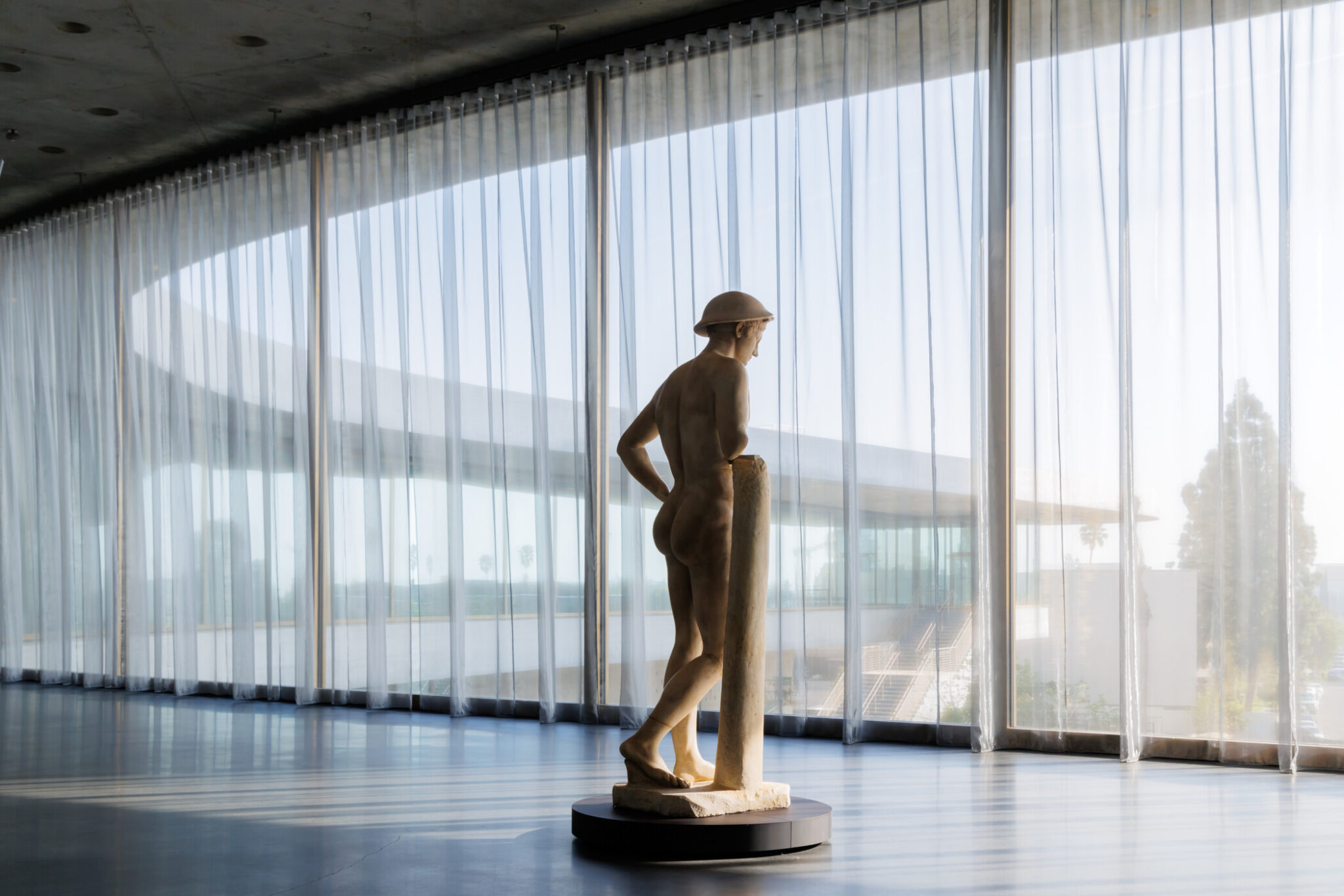
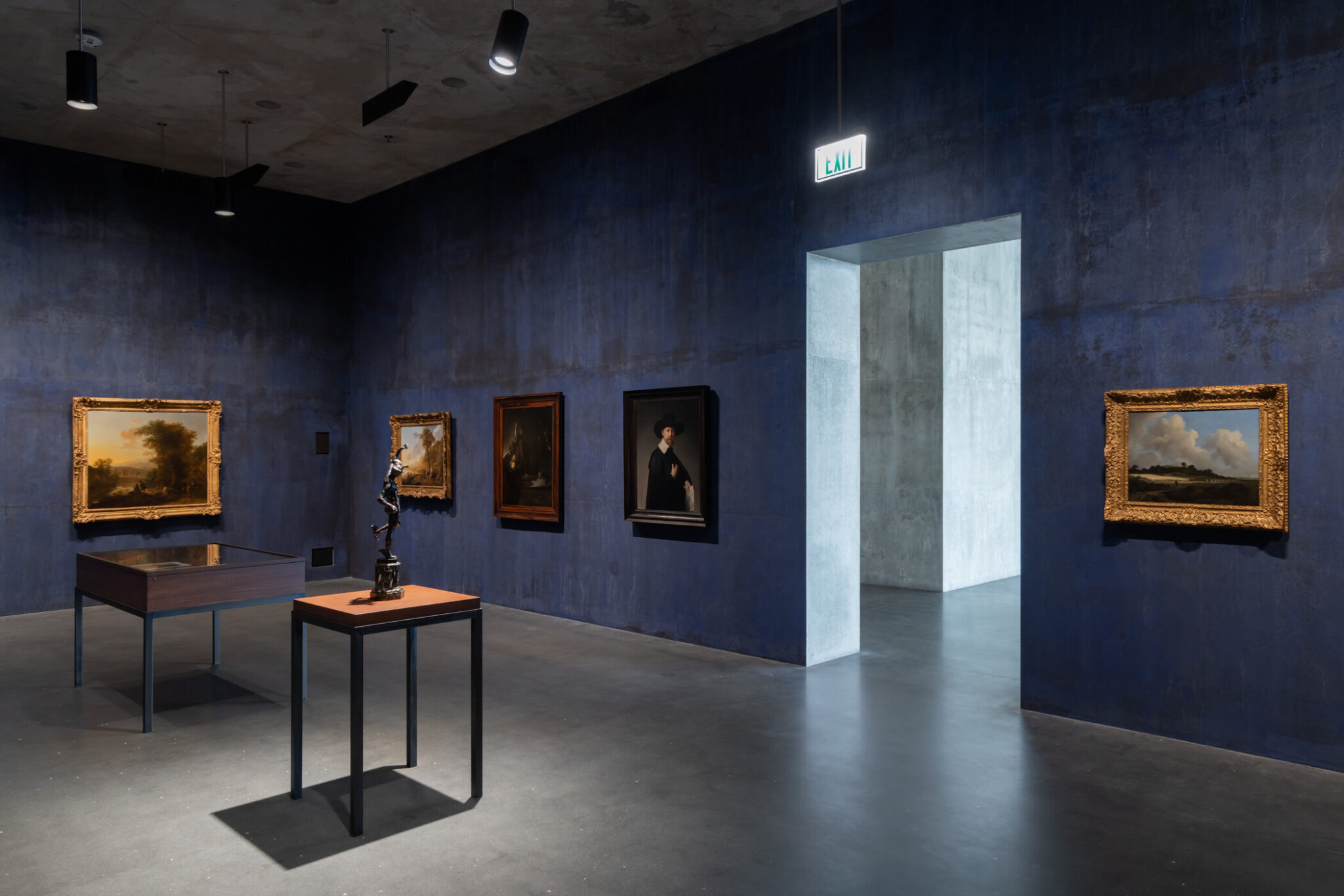
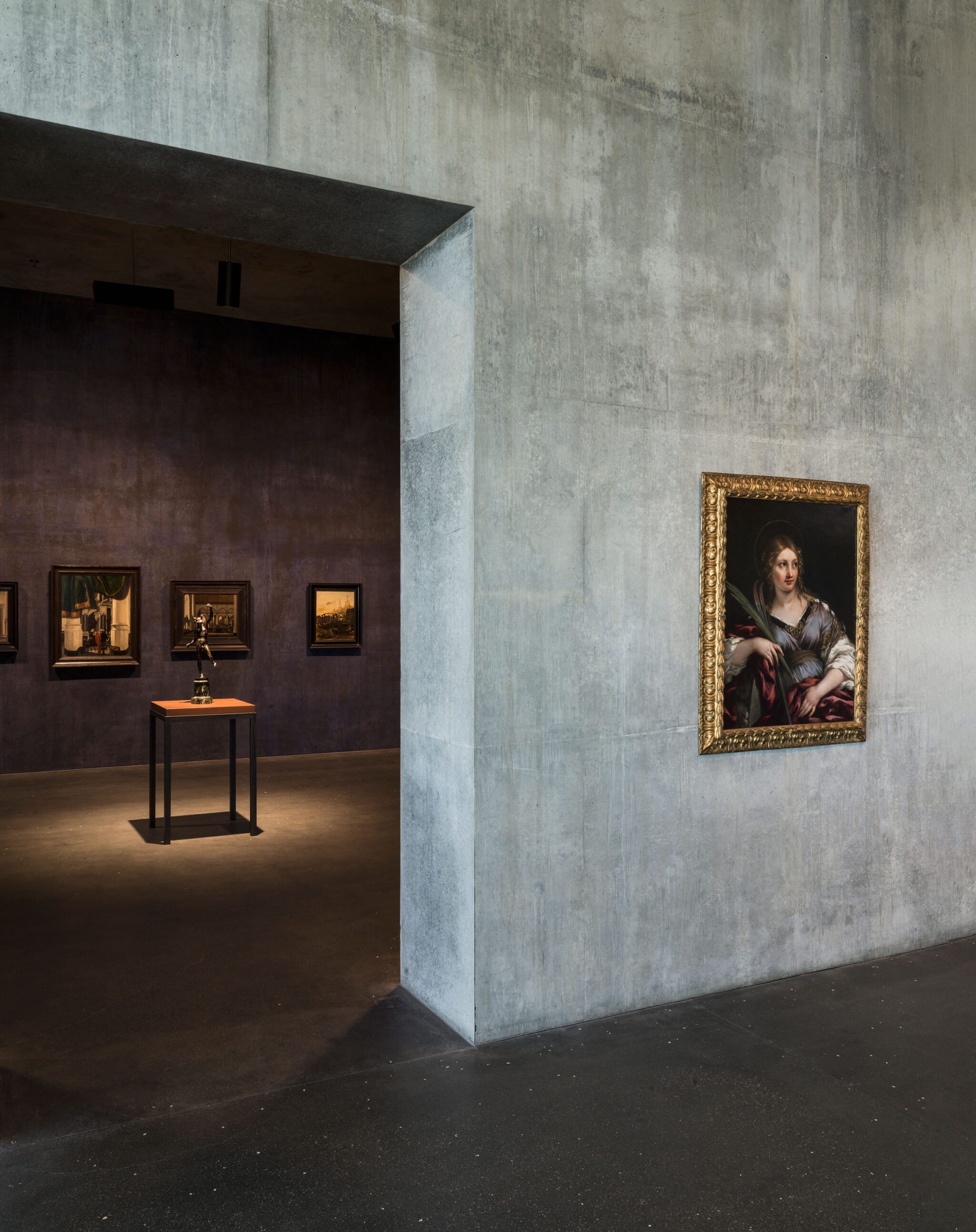
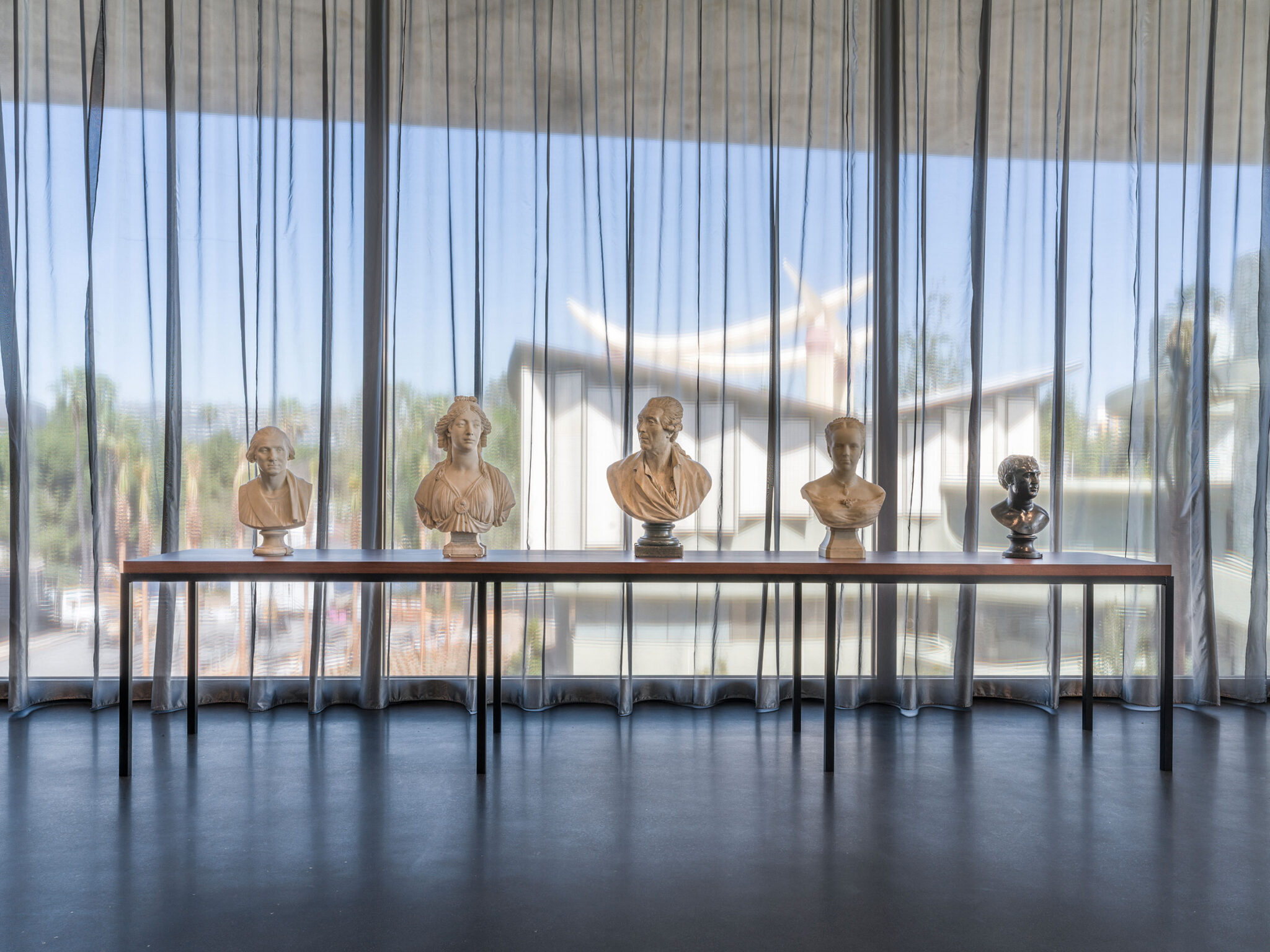
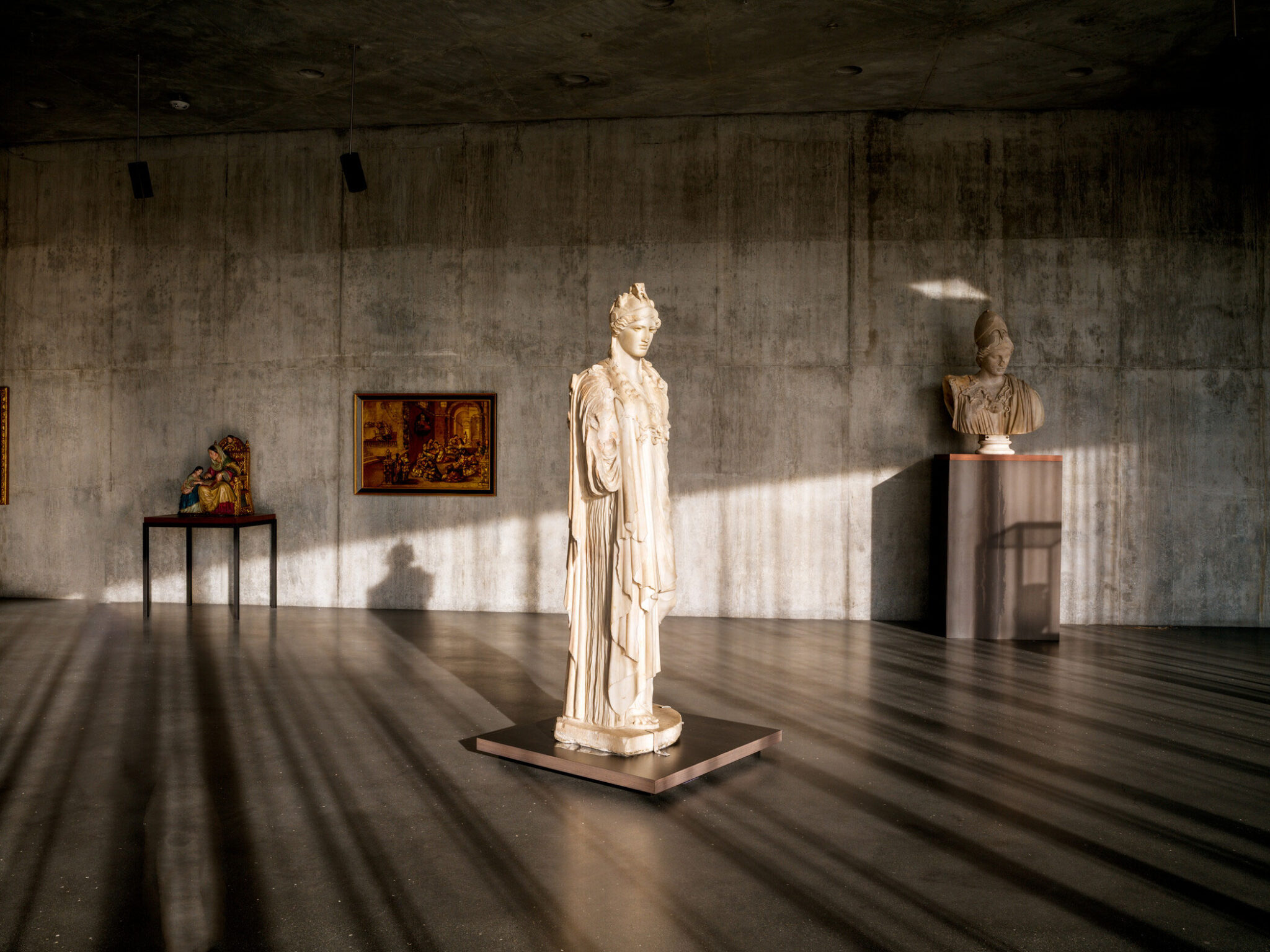
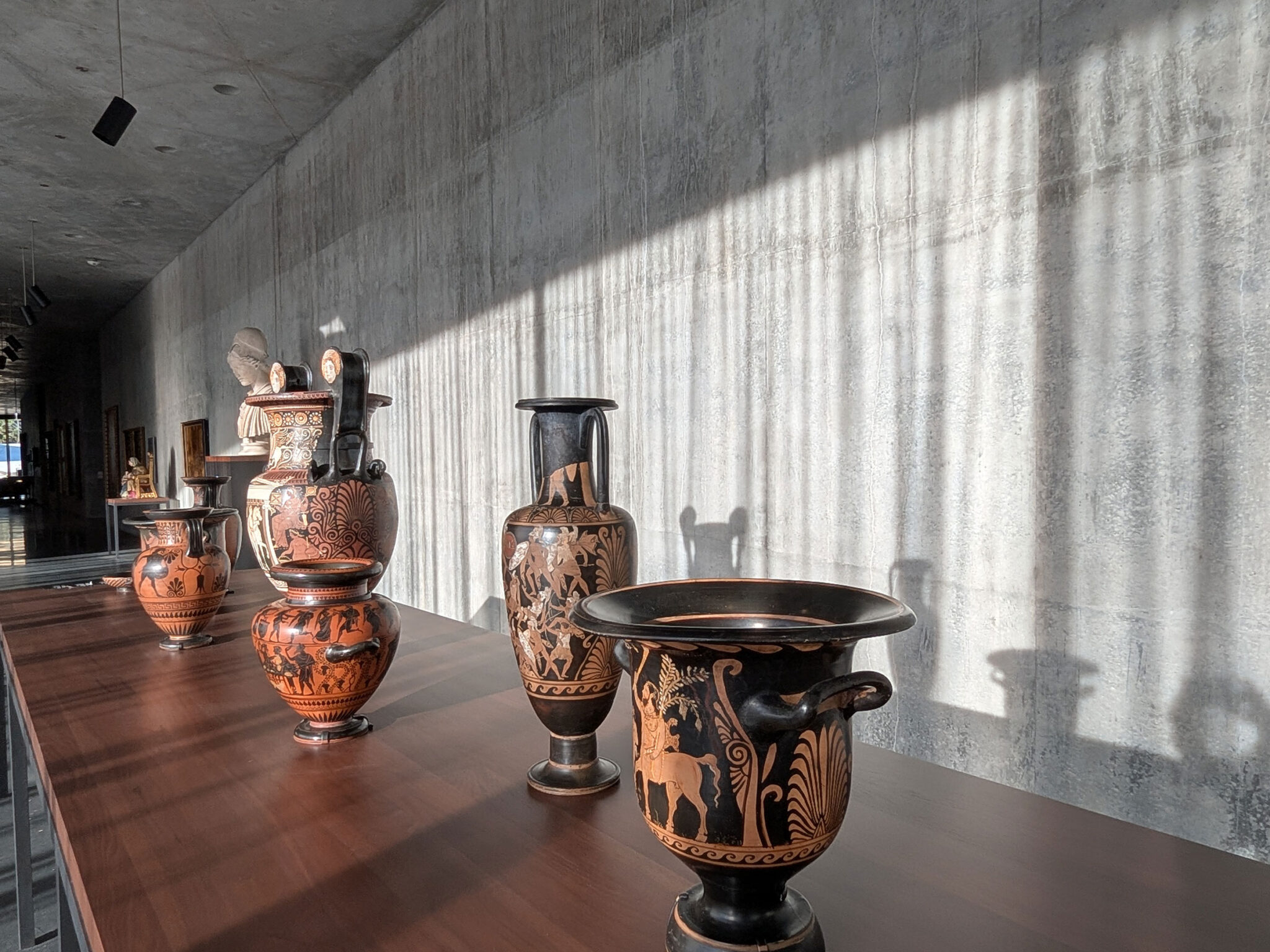
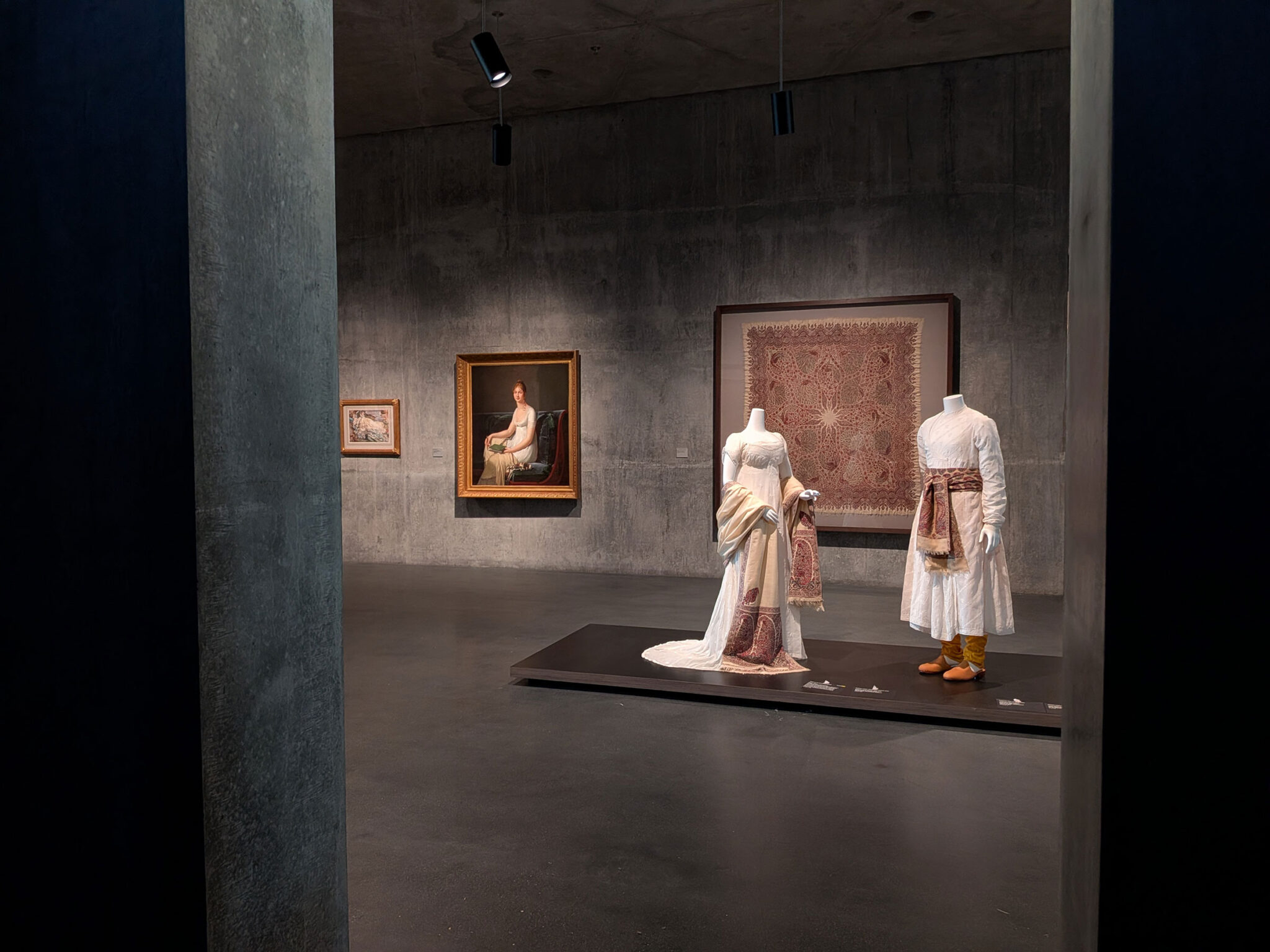
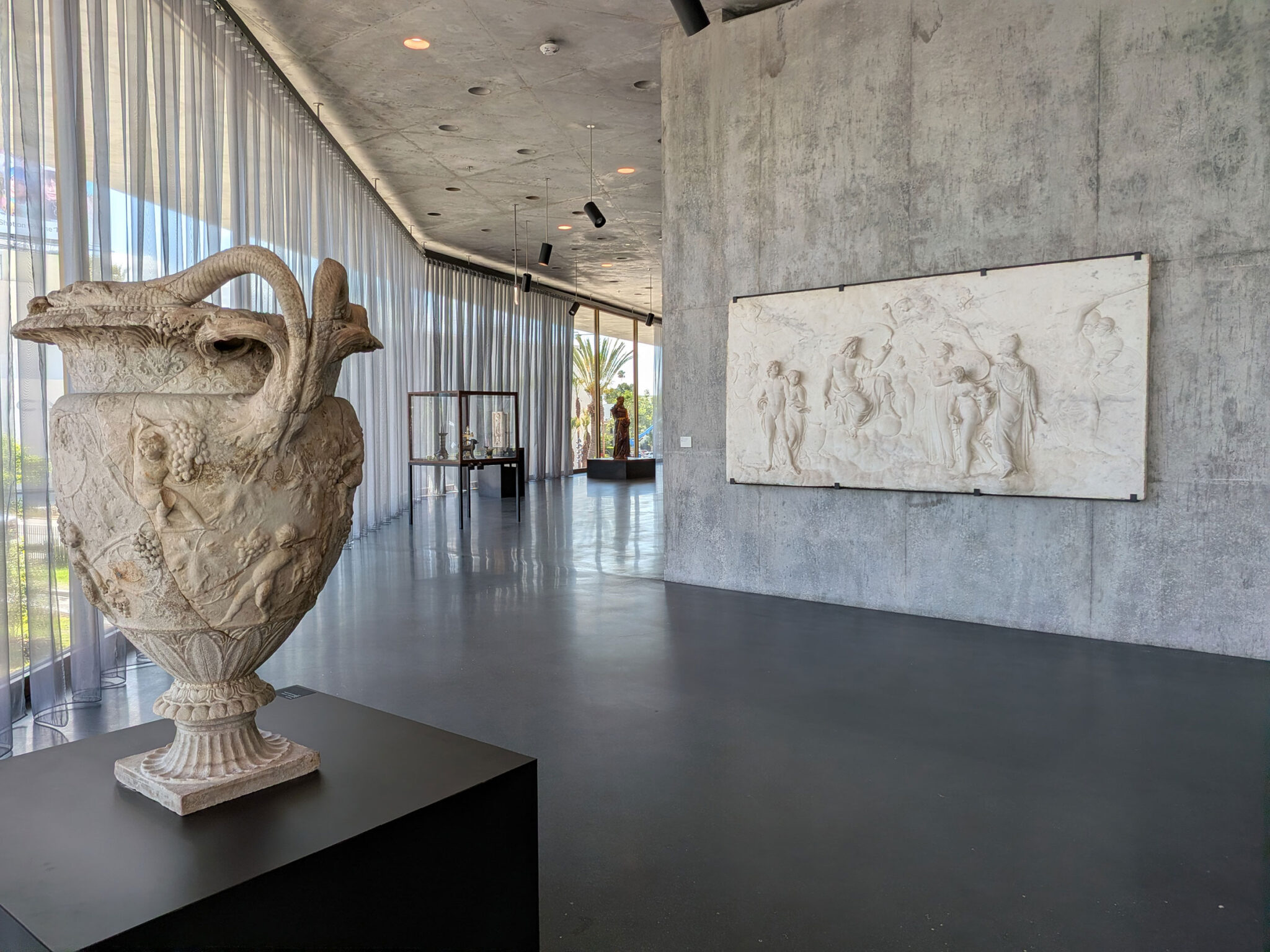
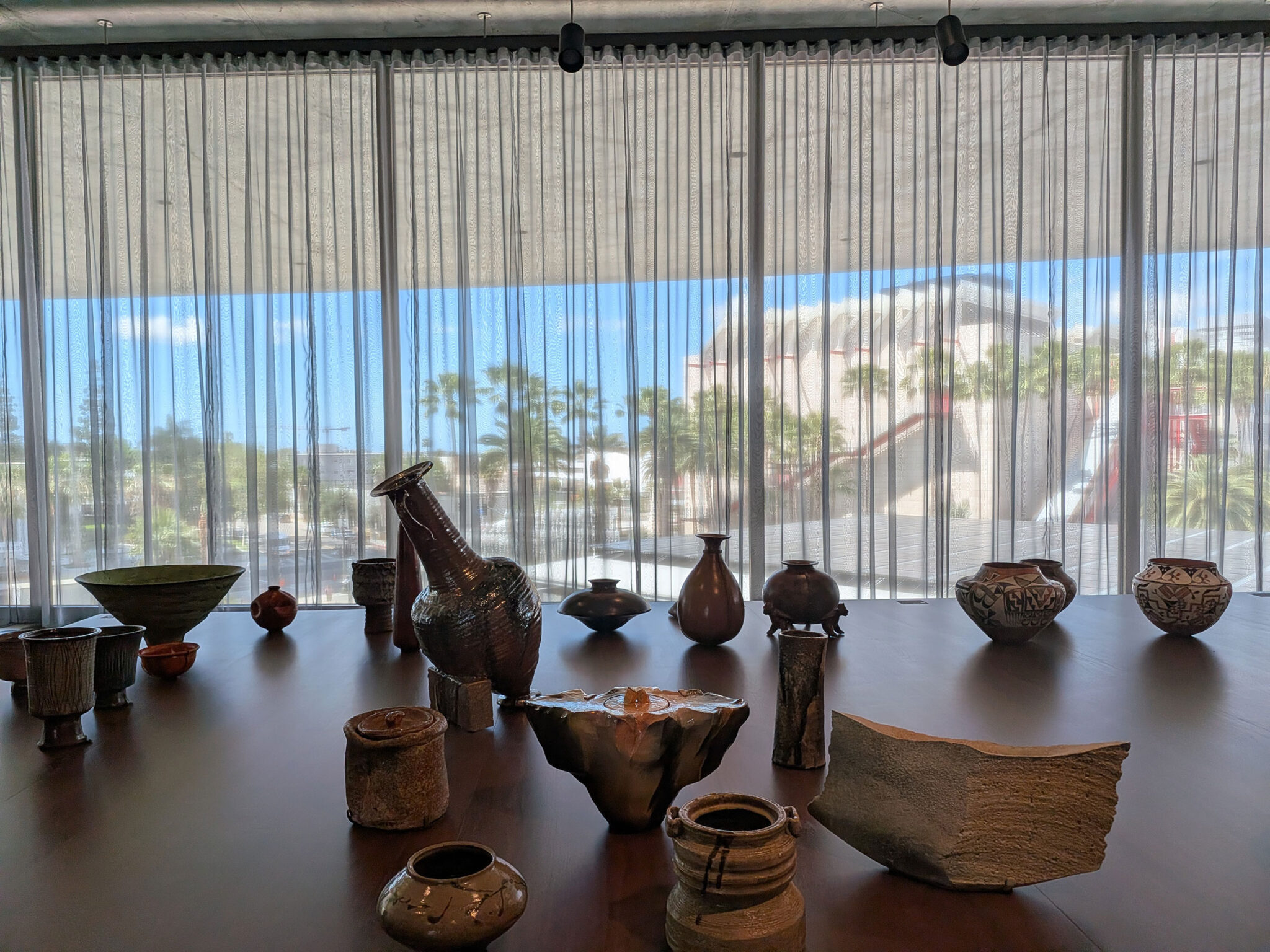
Rather than providing uniform illumination, Zumthor’s design allows light and shadow to work in dialogue. The exhibition spaces vary from terrace galleries around the perimeter, where light streams into the building through floor-to-ceiling glass panels, to sheltered interior galleries. Custom curtains made of sputter-plated chrome textiles by Tokyo-based textile designer Reiko Sudo have a metallic sheen but are transparent, and add further dimension to the building’s architecture while providing protection for light-sensitive works. Subtle changes in the natural light will make every visit feel new, depending on the time of day, season, and weather.
Inaugural Installation
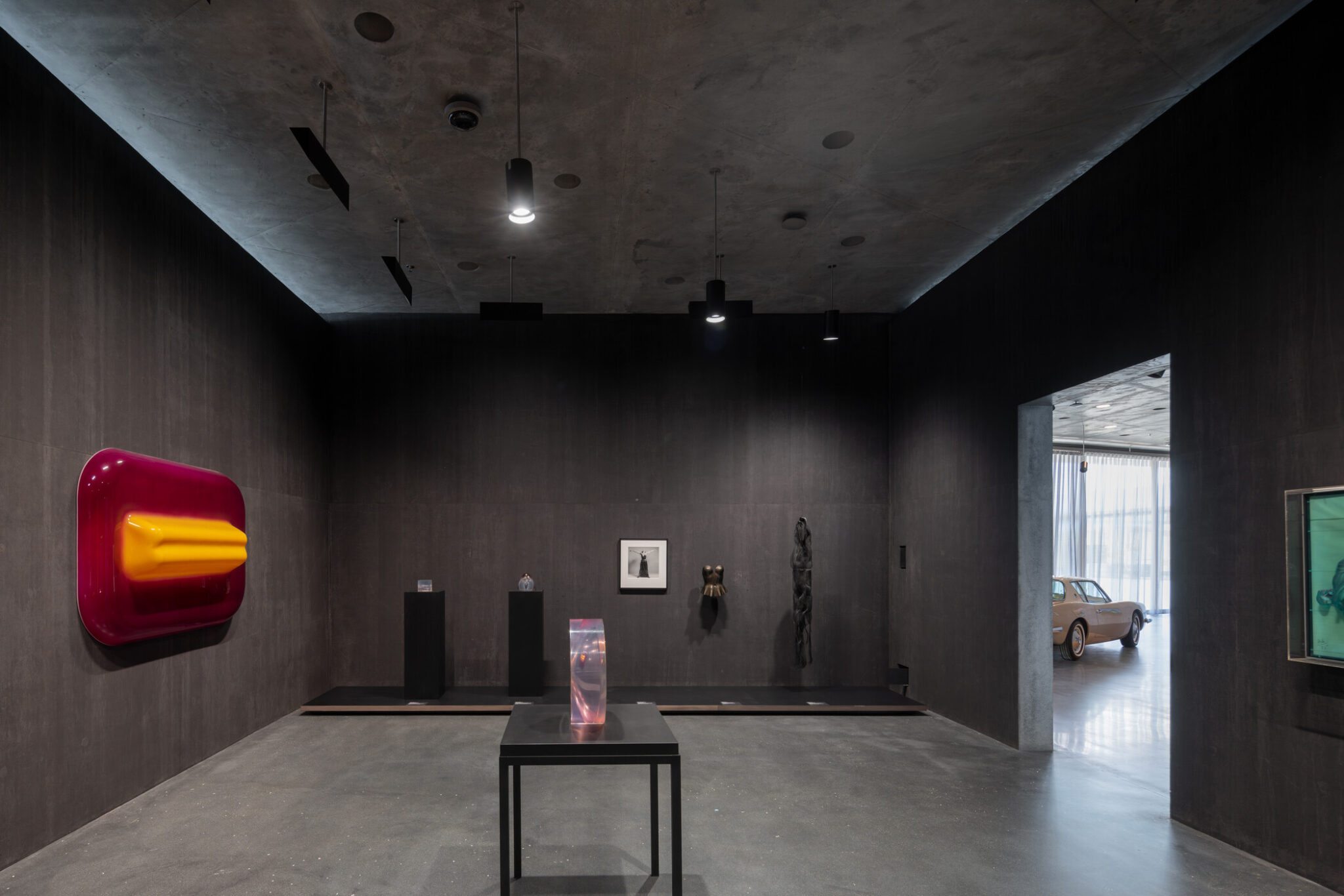
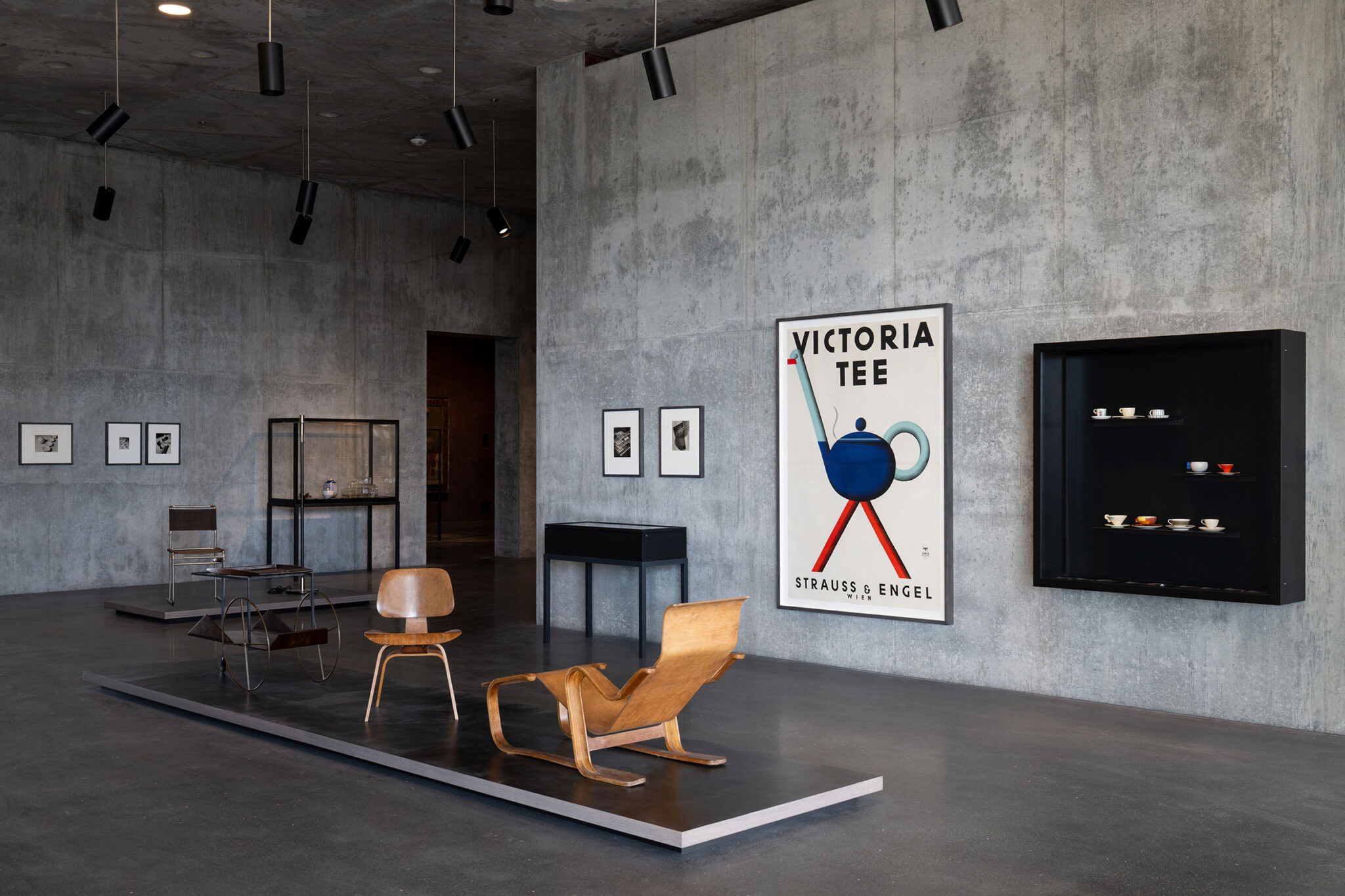
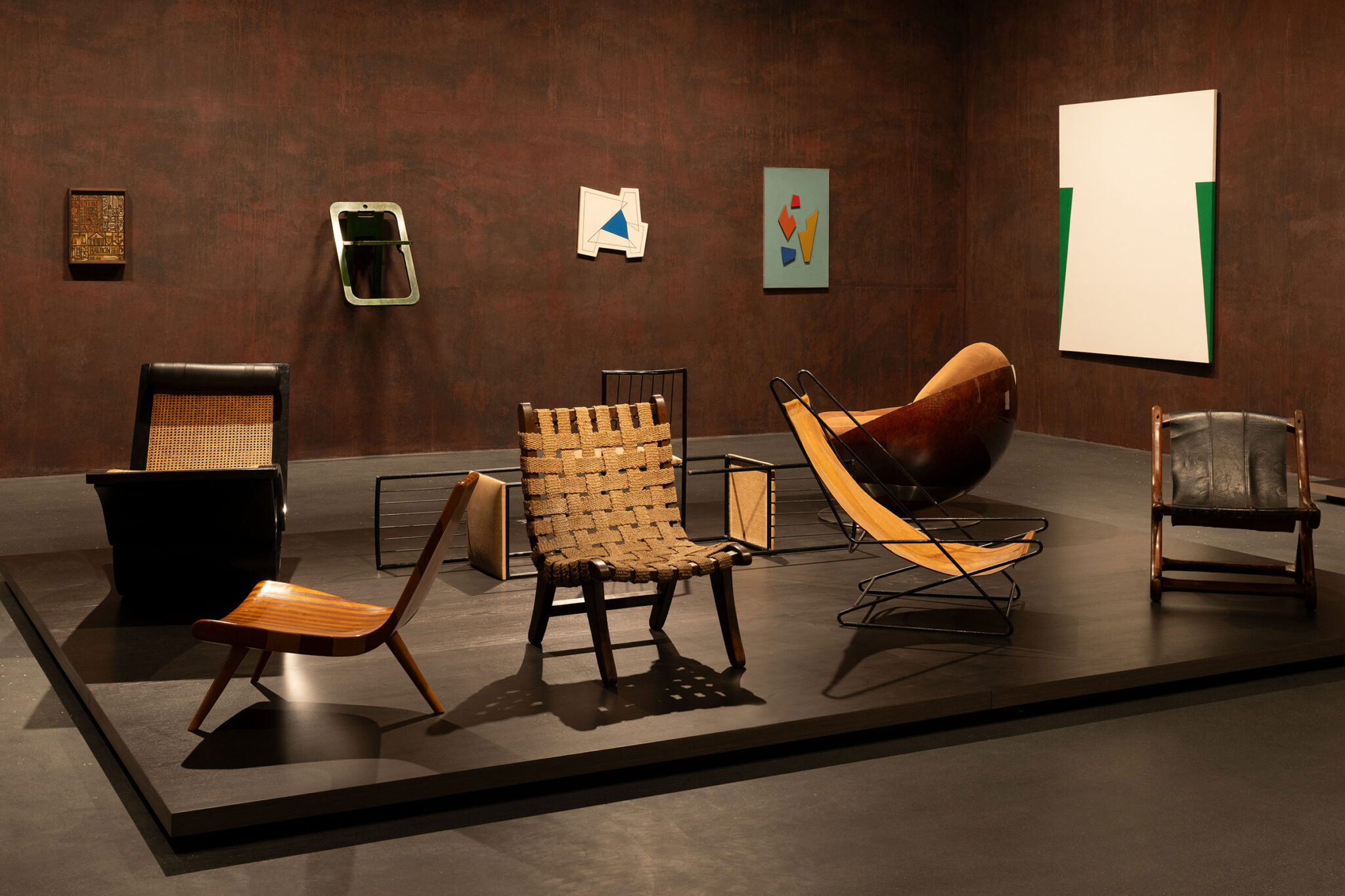
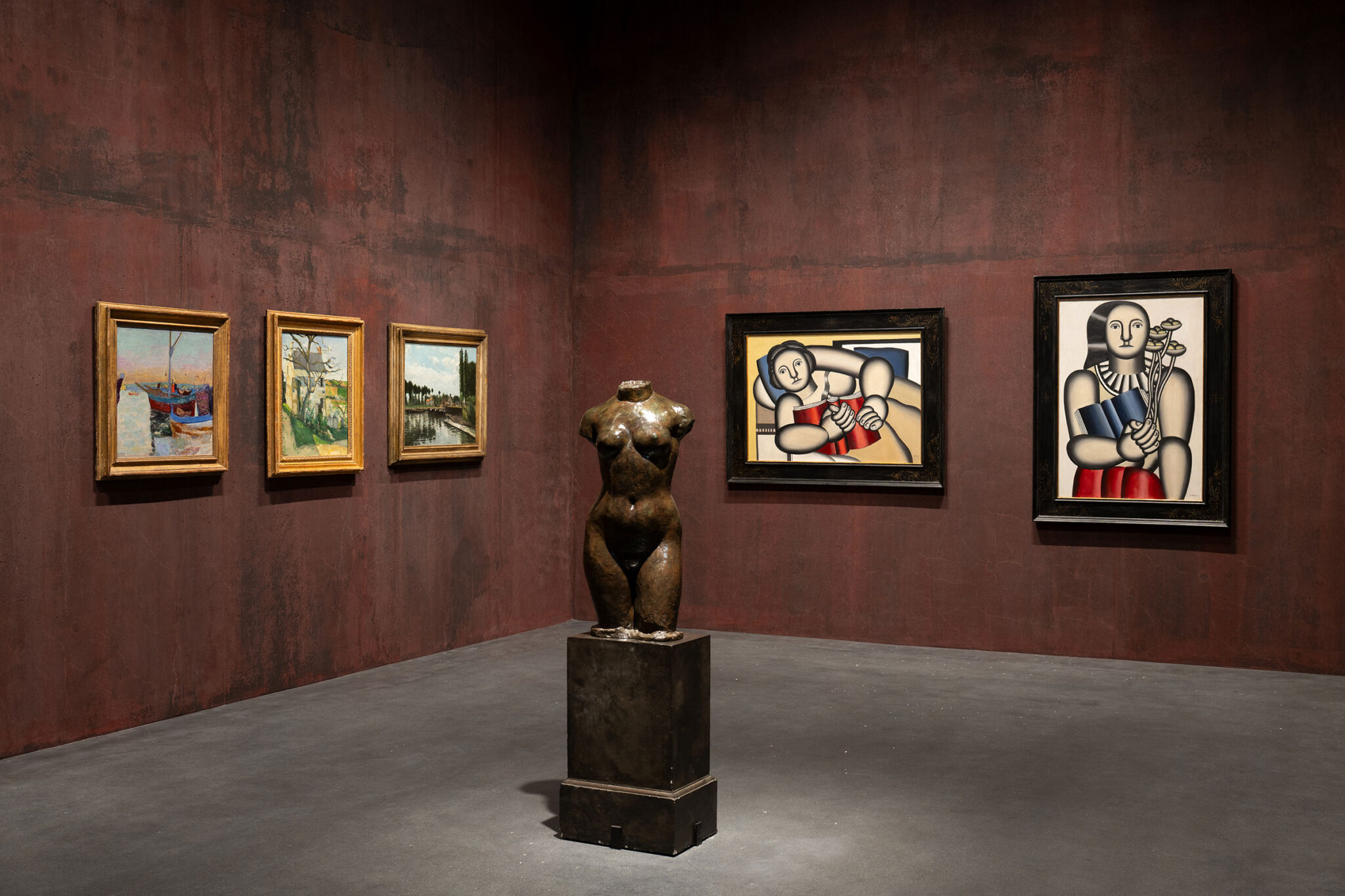
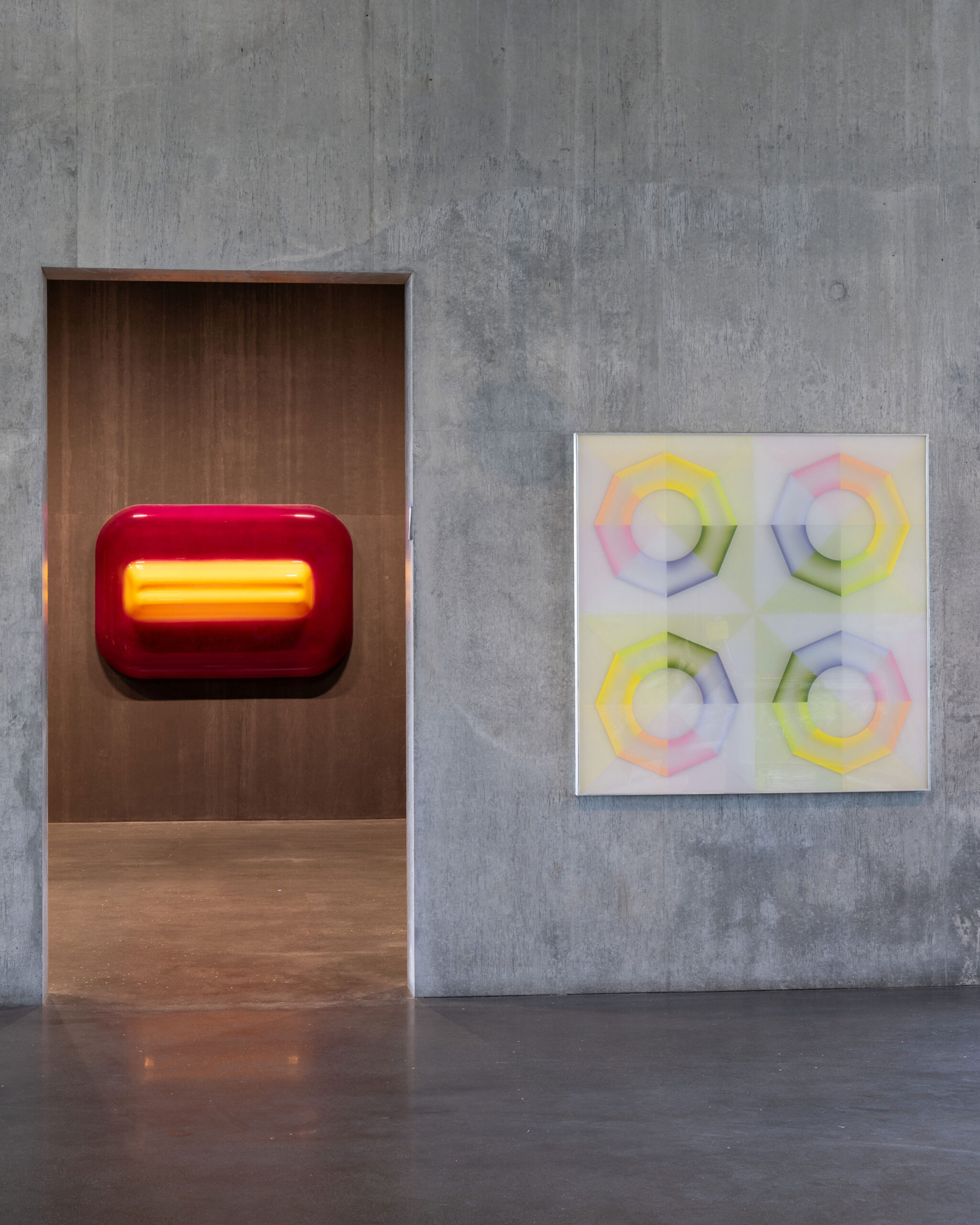
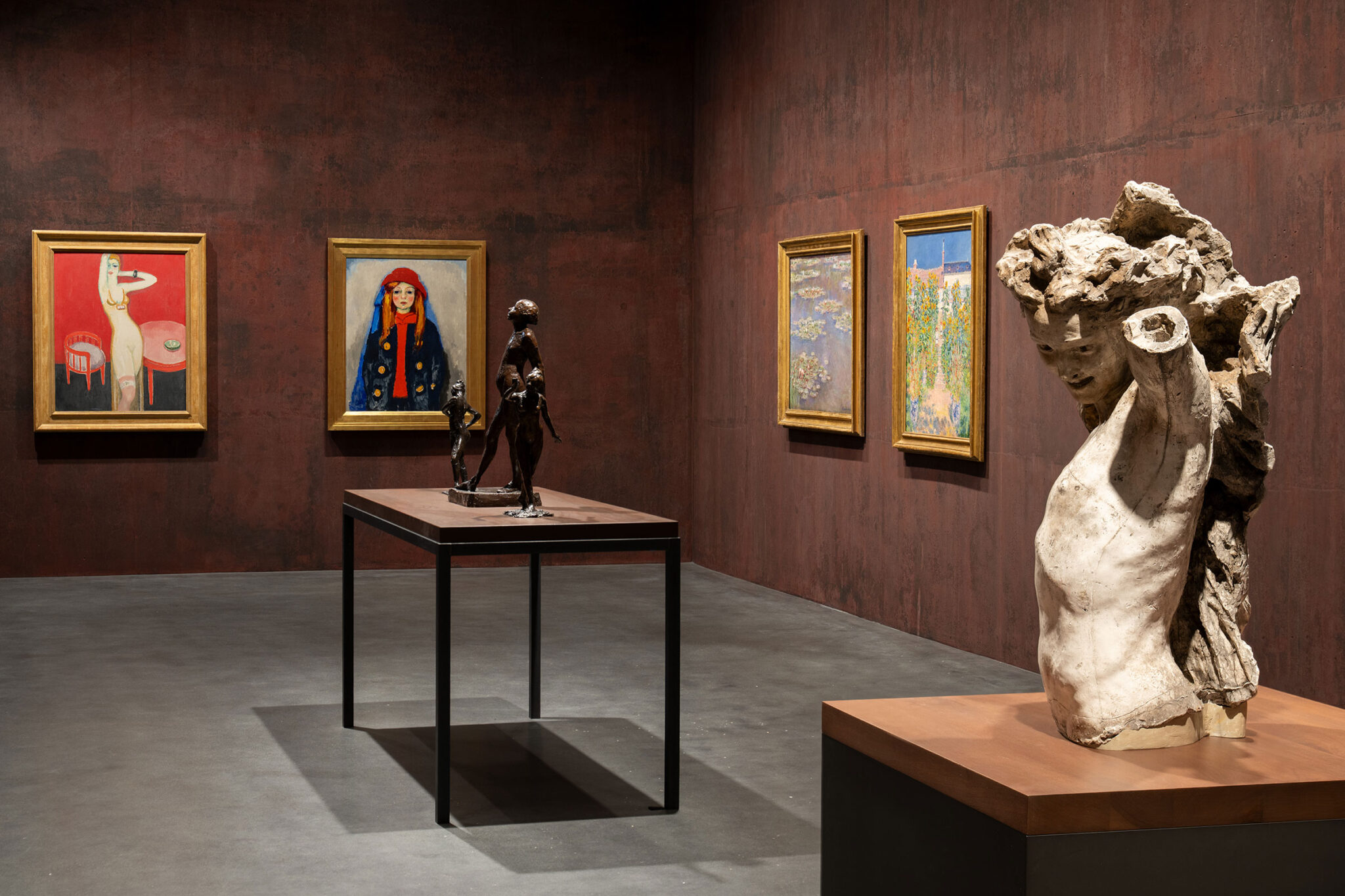
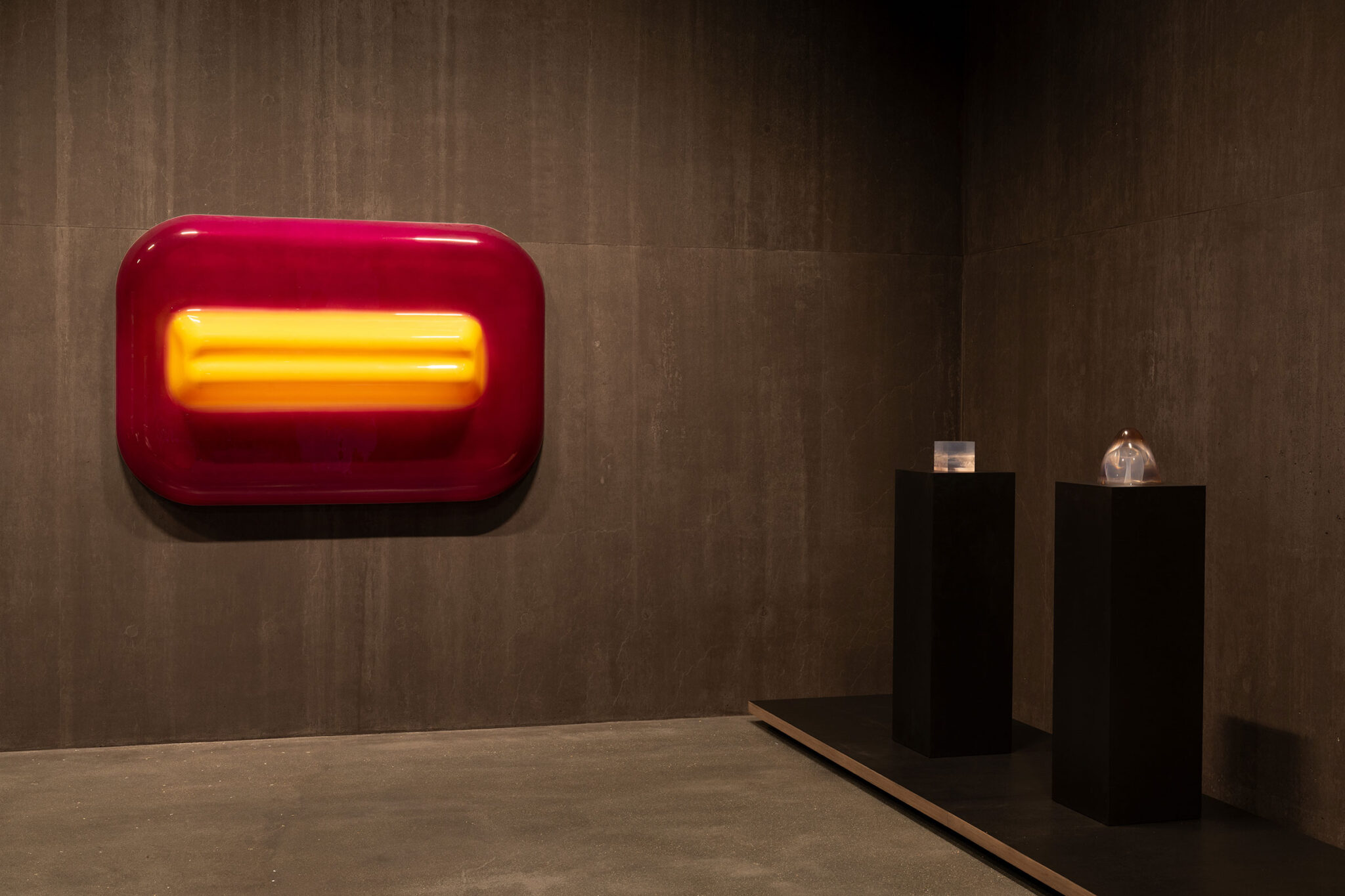
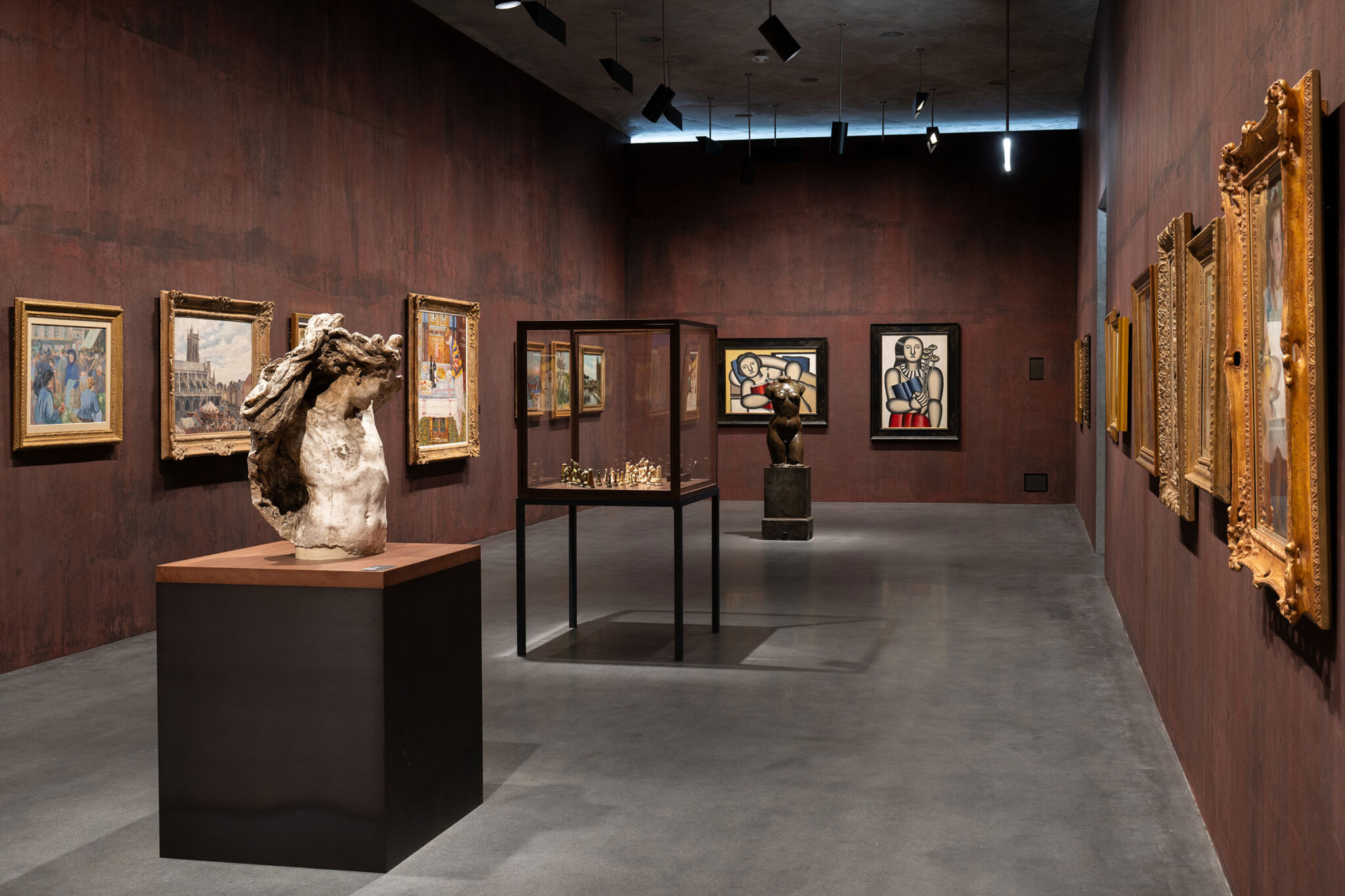
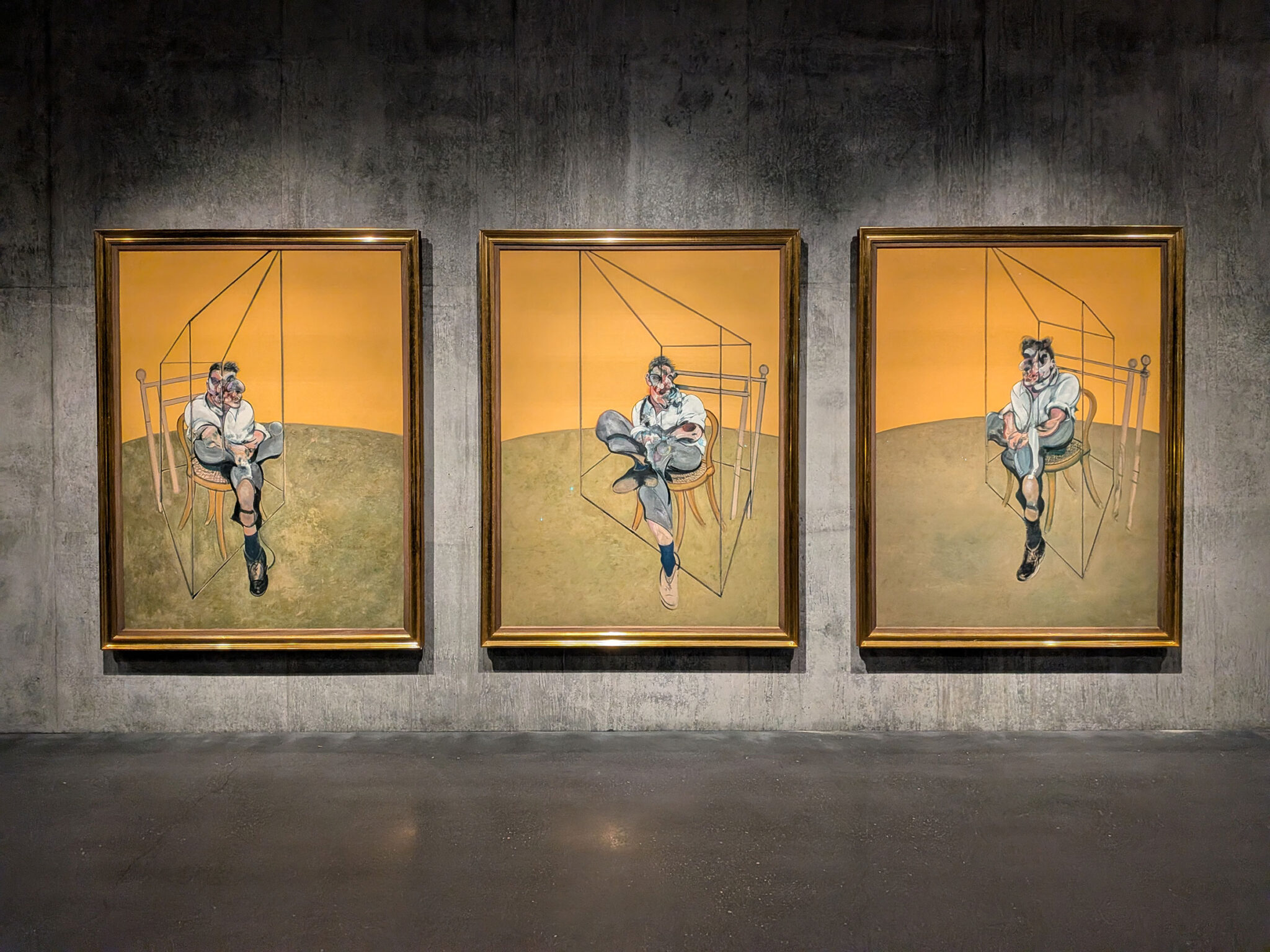
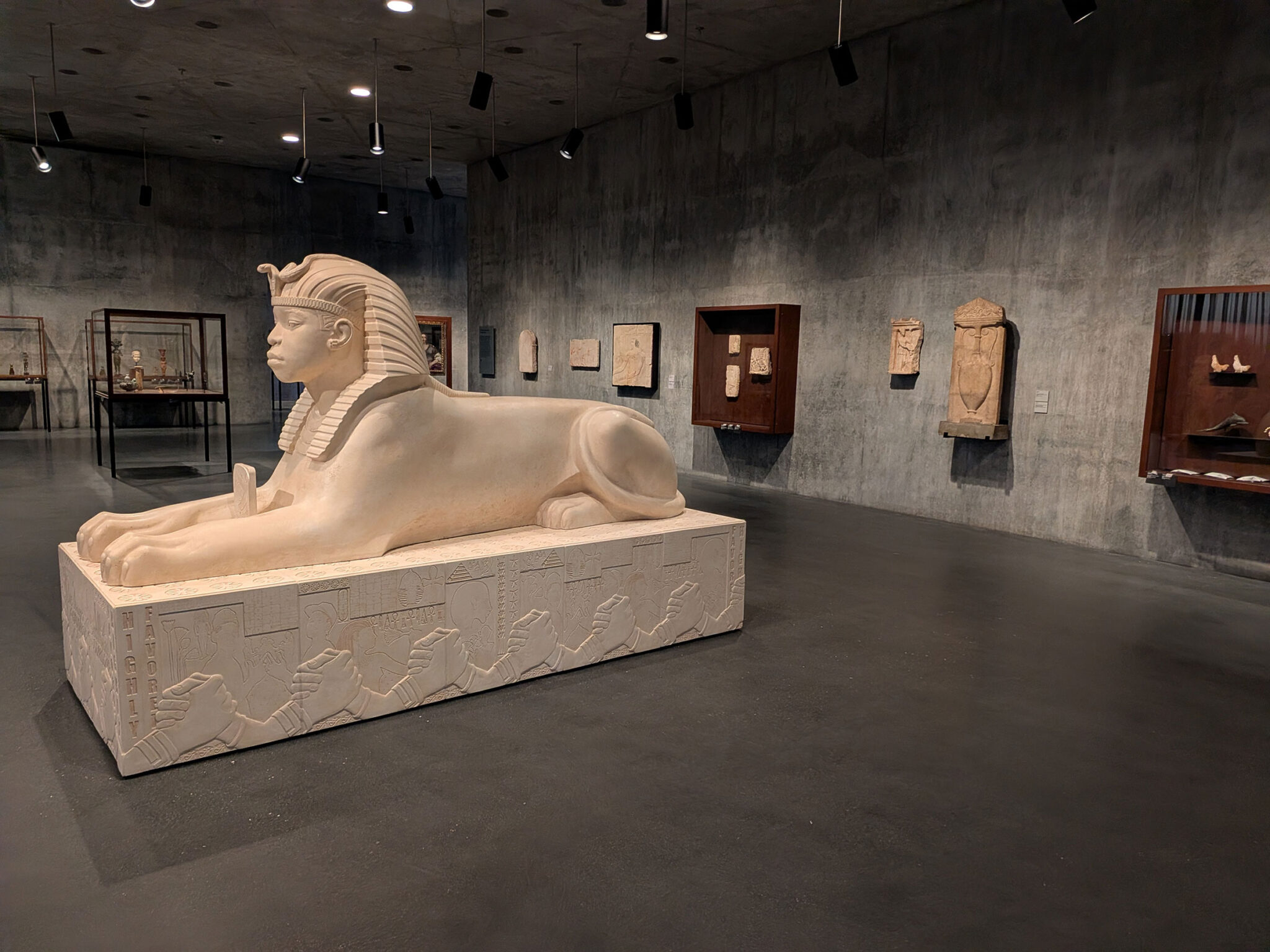
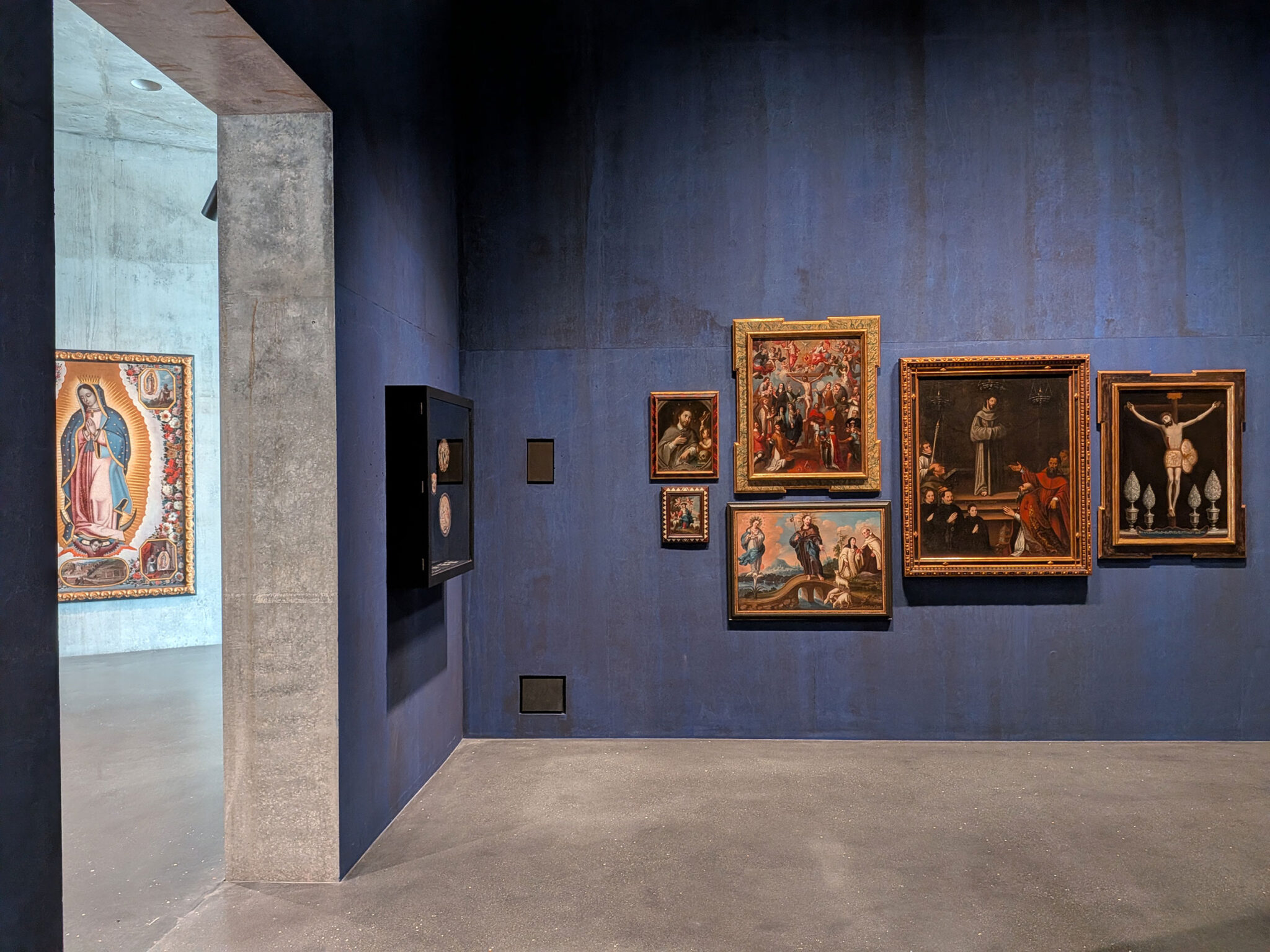
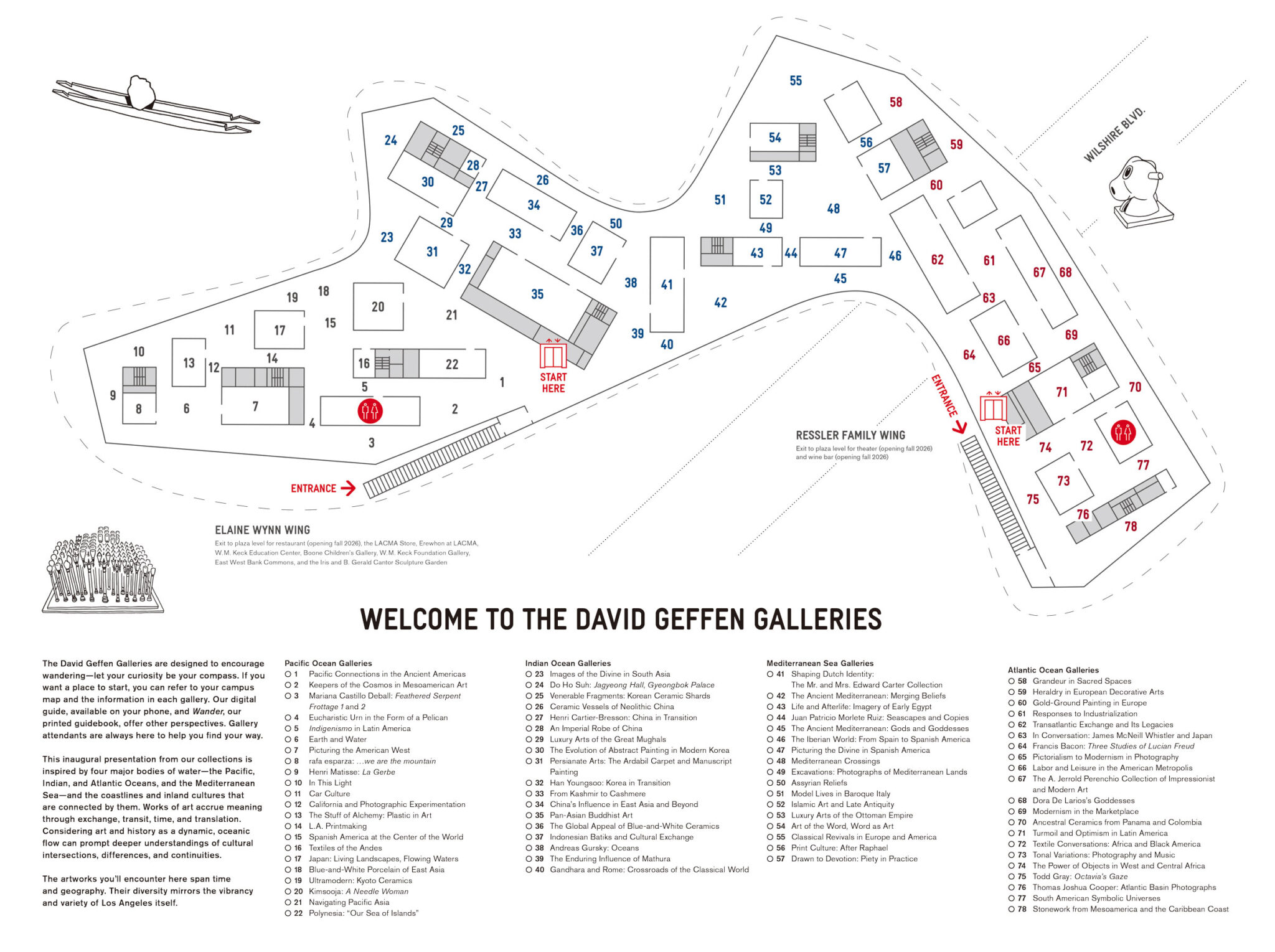
Forty-five curators working across areas of study collaborated on the inaugural installation of the David Geffen Galleries, in which works of art from the museum’s collection fill 110,000 square feet of gallery space.
Departing from traditional narratives, the installation uses the Pacific, Indian, and Atlantic Oceans and the Mediterranean Sea as a framework to explore innovative ways to connect cultures and artistic traditions, and tell multiple stories that renew a singular art historical narrative, creating vital and surprising connections across time and place.
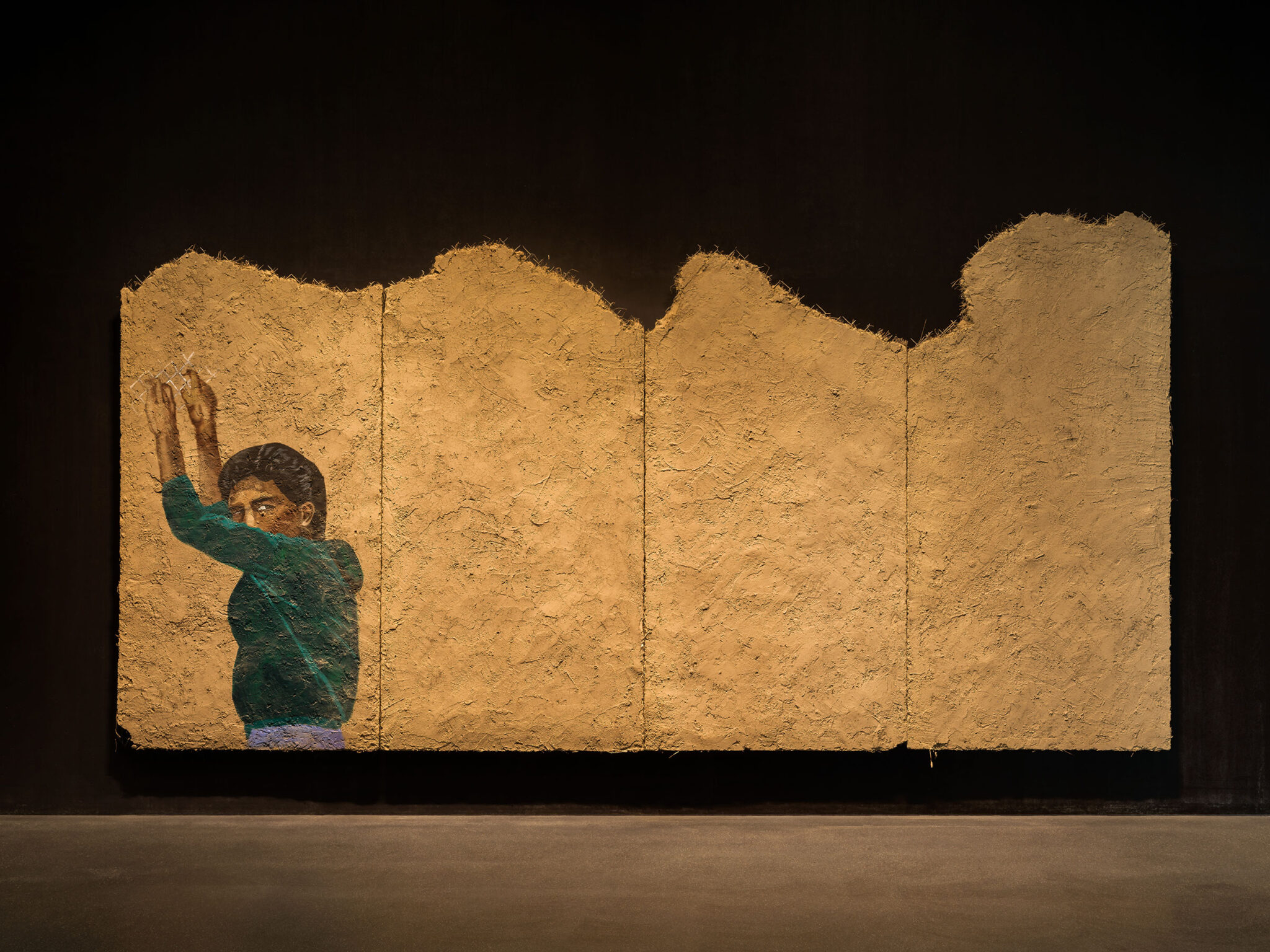
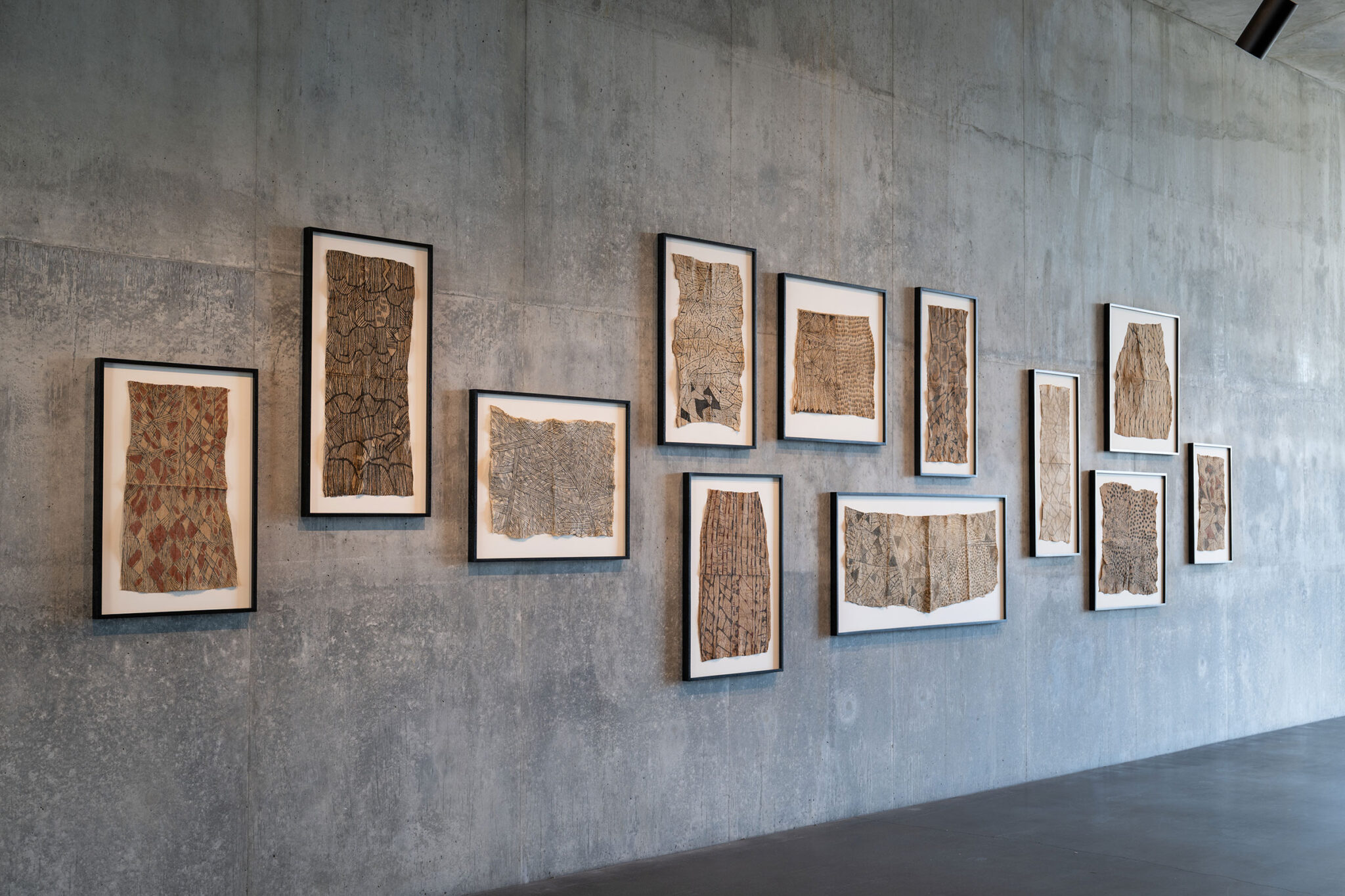
Works in the Atlantic Ocean galleries tell the story of how artistic traditions developed independently around the Atlantic rim for millennia and how the arrival of Europeans in the Caribbean initiated permanent contact between Europe and the Americas, transforming trade and artistic practice. Works in these galleries include African and Black American textiles; modern Latin American paintings, sculpture, and furniture; LACMA’s deep holdings of 20th-century photography; art of the United States across media; and highlights from LACMA’s expansive collection of decorative arts and design.
The Pacific Ocean galleries explore the dynamic exchange of the region, shaped by Indigenous voyaging, imperial expansion, and global trade. In this section are works from across Oceania; figurative ceramics from West Mexico to the Pacific Coast of Peru; objects reflecting Spanish America as a global mercantile center; and blue-and-white porcelain from East Asia; works that explore the historical and mythical aspects of the American West; and experimentation in design, printmaking, and engineering long associated with California.
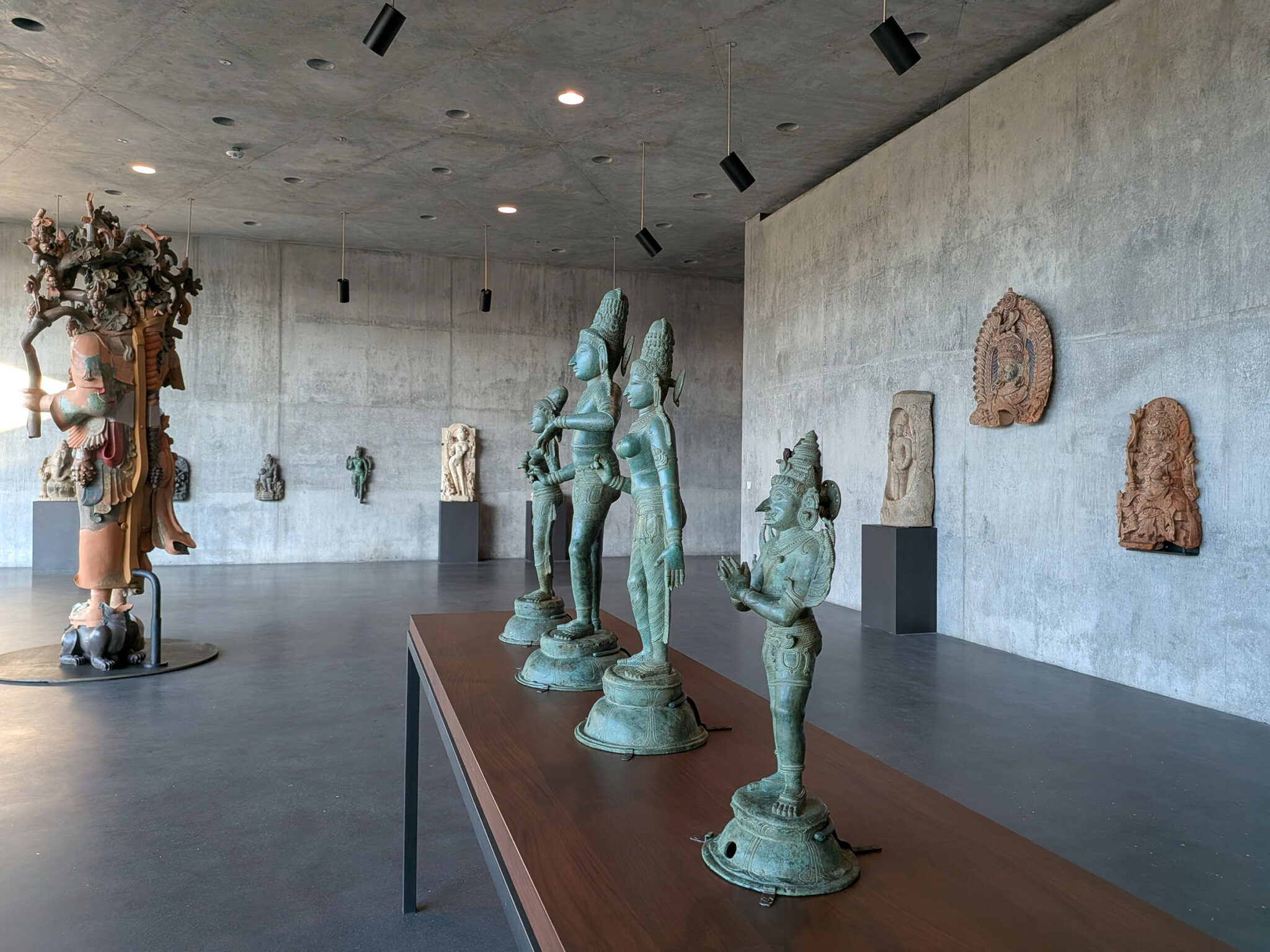
The Indian Ocean is one of humankind’s longest maritime exchange networks and home to many of the world’s oldest port cities, connecting robust maritime networks with overland routes, including the so-called Silk Road. Artworks in these galleries span the full chronological range of the collection. Sculptures from South and Southeast Asia—one of the LACMA collection’s strengths—are considered in a variety of contexts, including religious practice, historical significance, and stylistic development. Textiles are also prominently featured, from Indonesian batiks and Kashmir shawls to the grand Ardabil Carpet.
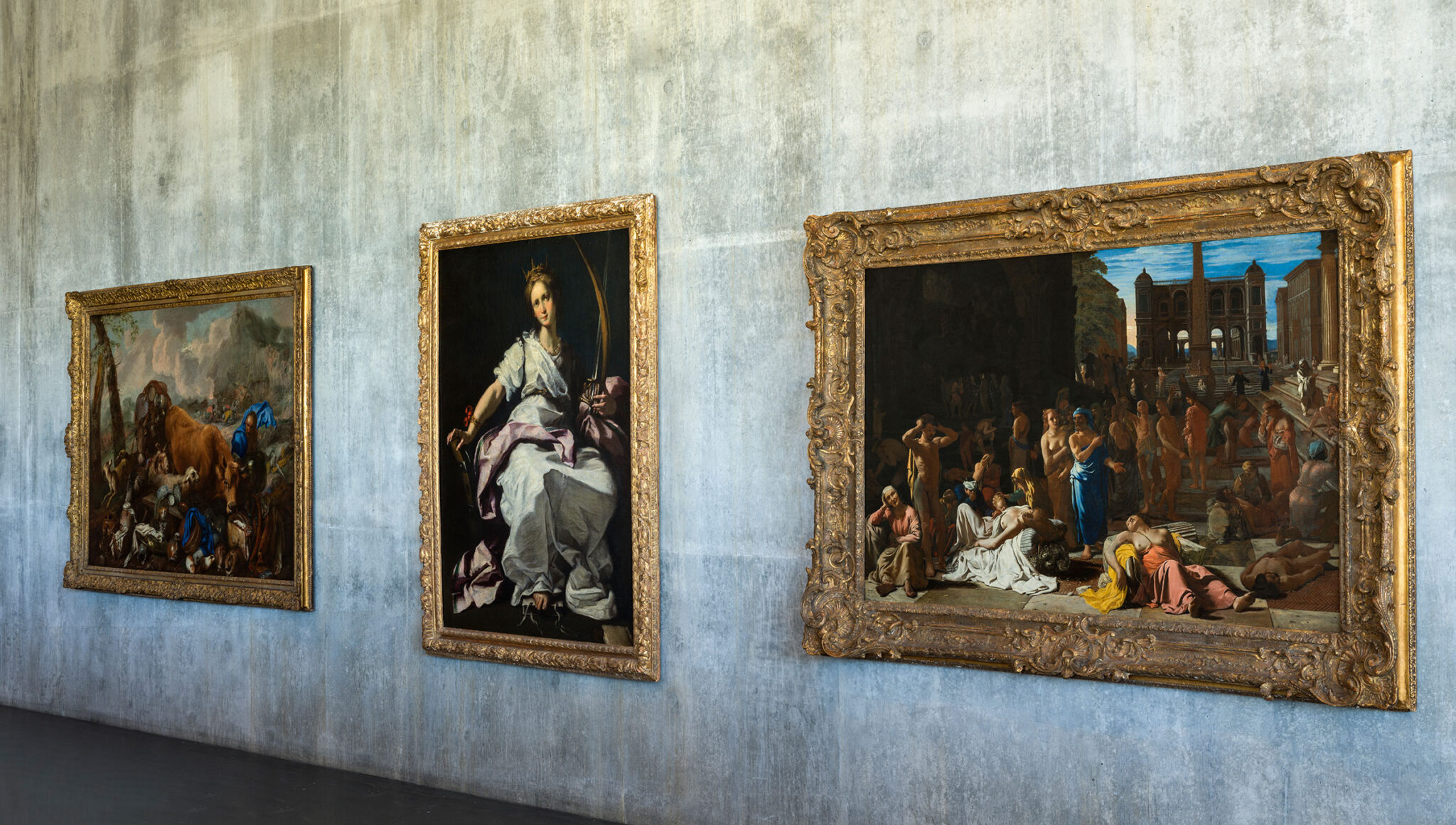
The Mediterranean Sea galleries consider the region’s cultural interconnectedness expressed through shared materials, techniques, and stylistic practices. They feature paintings, drawings, sculpture, and decorative arts from the Islamic world and Europe; highlights of the arts of territories once ruled by Spain; Egyptian, Greek, and Roman antiquities; Baroque masterpieces that represent classical revivals in Europe and America alongside objects from which they drew inspiration; an elaborate reception room from Damascus, Syria, and much more.
Plaza and Public Art
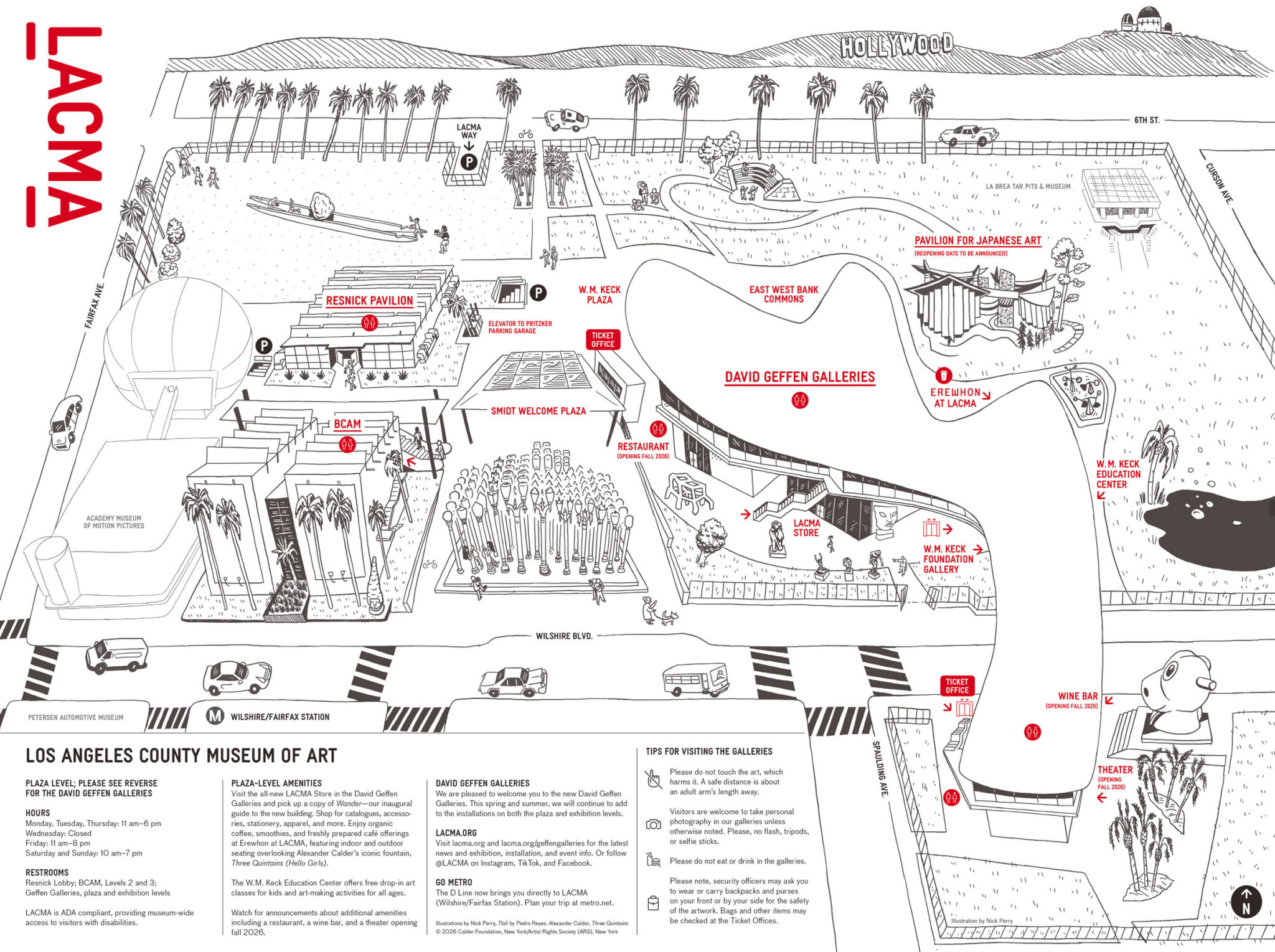
The exhibition level of the David Geffen Galleries is supported by seven pavilions that provide space for education and public programs, a theater, retail, and restaurants. The spaces between and around the pavilions, shaded by the main floor above, offer thoughtfully designed open areas for public art at the plaza level, including the East West Bank Commons and the W.M. Keck Plaza on the north side of Wilshire Boulevard. The LACMA Store and Erewhon at LACMA will open on April 19, with the W.M. Keck Education Center opening May 3. LACMA’s restaurant will open in the fall, along with the theater and wine bar.
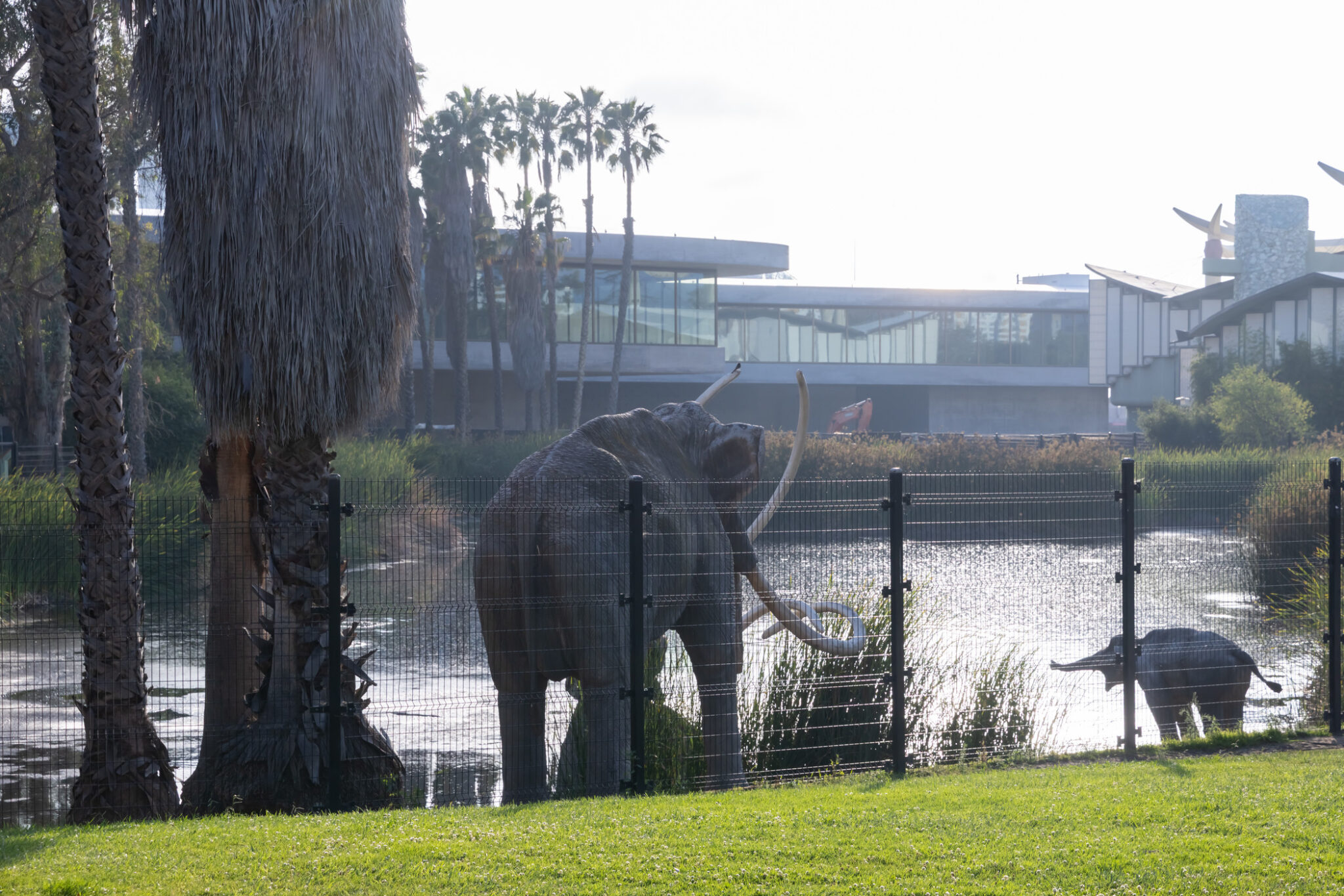
The entire 207,000-square-foot ground plane of the plaza is a commissioned artwork by Mariana Castillo Deball titled Feathered Changes. Working closely with Peter Zumthor, Castillo Deball created a work that connects the new building to the site’s history as a nourishing marshy ecosystem, in an expansive meditation on time, place, and geologic history.
Additional commissioned works installed on the plaza include Pedro Reyes’s Tlali (2026), an 18-foot-high stone carving set against the backdrop of the museum’s facade, and Diana Thater’s light installation Five Days in Claude Monet’s Garden (2026), which takes shape beneath the portion of the building that crosses Wilshire Boulevard. A sculpture by Shio Kusaka titled Beam (2026), commissioned for the plaza, will be installed this summer.
Anchoring the spaces south of Wilshire Boulevard is Jeff Koons’s Split-Rocker, the 37-foot-tall living sculpture that was recently acquired by LACMA. Inspired by the tradition of topiaries in 18th-century European gardens, Split-Rocker comprises more than 45,000 flowering plants that have been chosen for Southern California’s climate.
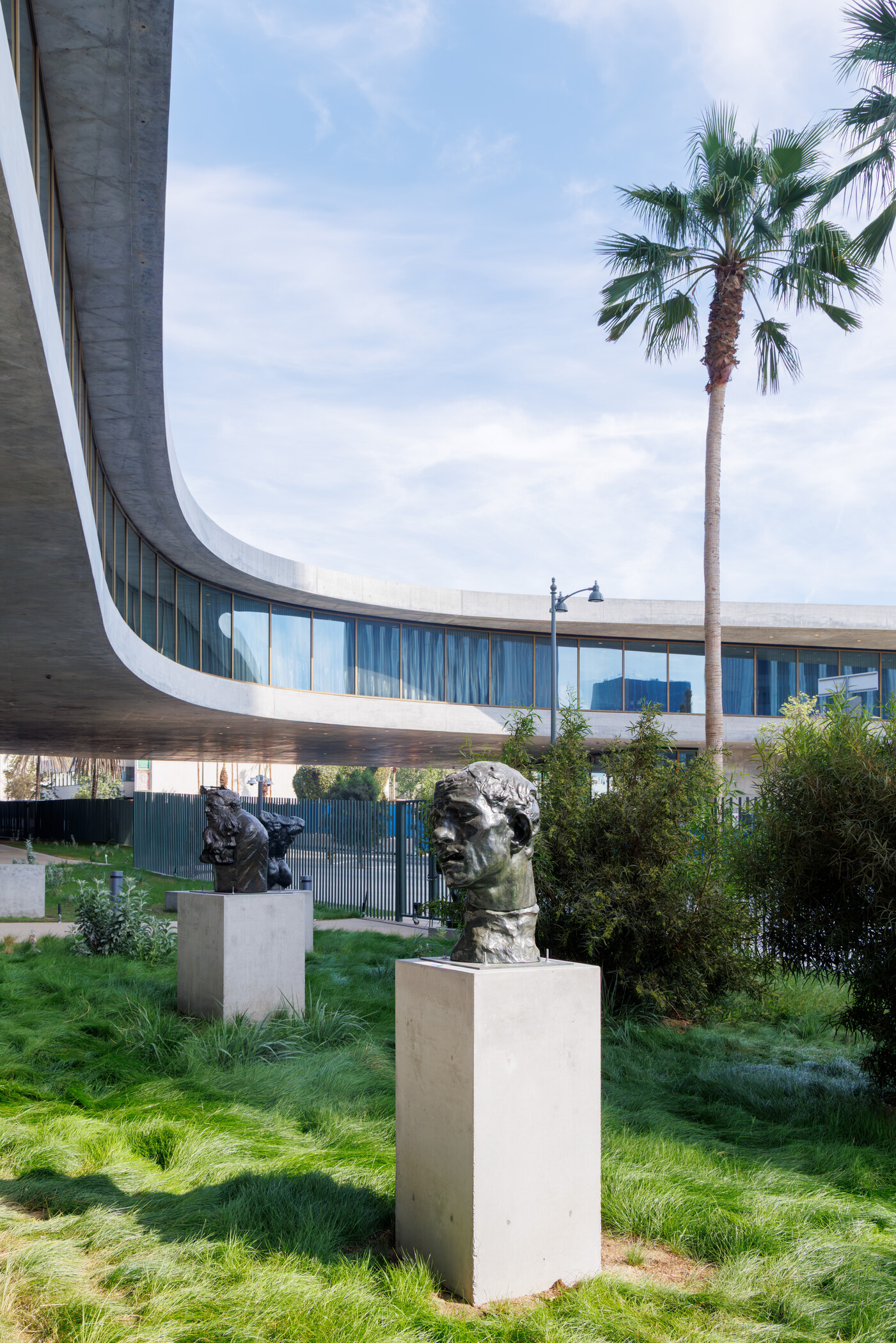
Beloved sculptures that have become synonymous with the museum, such as Tony Smith’s monumental Smoke (1967), are back on view. Alexander Calder’s Three Quintains (Hello Girls) (1964), one of his few fountain works, has been reimagined within a new pool designed for it by Zumthor. LACMA’s significant collection of large-scale works by Auguste Rodin has been reinstalled in the new 8,000-square-foot Iris and B. Gerald Cantor Sculpture Garden along the north side of Wilshire Boulevard, paired with sculptures by Los Angeles contemporary artist Liz Glynn.
■建築概要
Location: 5905 Wilshire Boulevard, Los Angeles, CA
Architect: Atelier Peter Zumthor & Partners, Skidmore, Owings & Merrill
Project Timing: Construction commencement: Fall 2020, Opening: April 2026
Specifications: Building size: approx. 347,500 square feet
Building Cost: $724 million
Project Leadership: Michael Govan, CEO and Wallis Annenberg Director
───
Design and Construction Team:
Design Architect: Atelier Peter Zumthor & Partners
Collaborating Architect: Skidmore Owings & Merrill
Project Manager: Aurora Development
Cost Estimator: Directional Logic
Structural Engineering: Skidmore Owings & Merrill
MEP Engineering, Lighting Design and Sustainability/LEED: Buro Happold
Landscape design: OLIN
Civil Engineering: KPFF
Geotechnical Engineering: AECOM
Archeological/Paleontological Consultant: Cogstone
Contractor: Clark Construction
Concrete Subcontractor: Largo Concrete
Glass Subcontractor: Seele
Electrical Subcontractor: SASCO
Mechanical and Plumbing Subcontractor: ACCO
Exhibition furniture family designed by Peter Zumthor, fabrication by MASH STUDIOS
アーキテクチャーフォトで、先週(期間:2026/4/13-4/19)注目を集めたトピックスをまとめてご紹介します。リアルタイムでの一週間の集計は、トップページの「Weekly Top Topics」よりご覧いただけます。(弊サイトでは、作品記事についてSNS広告を活用した再発信を行う場合がありますが、その流入はランキングに影響しないよう設定しています)